 |
 American Morse DCP Paddles
 24 May 2012 | by
 Now that things are starting to settle down, tomorrow evening I will probably begin building my American Morse DCP Paddles that were my birthday gift. I don’t think I am going to go real fancy and mirror polish the aluminum pieces; but I probably will go over them very well with either some steel wool or perhaps the Dremel with a polishing wheel.
There’s a set of Palm mini paddles up for bid on eBay I would really like a set of those. Yesterday, the high bid was about $26 – today it’s up to $76 with five more days to go. The auction includes the Code Cube keyer, so the “buy new” price for both is about $195 (this is the gray model). Knowing eBay, I am willing to wager that by the time the auction is over, the selling price is not going to be that much of a bargain.
It has been my experience that folks can get “caught up in the moment” and bid wildly just so as to not “let it get away”. This can be great if you’re the seller – and if you’re one of the bidders, unless you REALLY want the particular item, it can cause you to sigh, shrug your shoulders and walk away.
If I get time during lunch tomorrow, there’s an Eastern Mountain Sports store near where I work. I just might head on over there and start looking at padded cases to store the KX3 in when I place it in my knapsack or rucksack. I want to keep the new radio in as good condition as my K1 was, even after nine years. It literally looked brand spankin’ mint new – like it just came out of the box.
From one of the QRP e-mail reflectors, someone made me aware of this 6 X 9 padded pouch from Maxpedition padded cases. For $33, it looks like a nice solution – but I’d still like to see what the outdoors store has in stock.
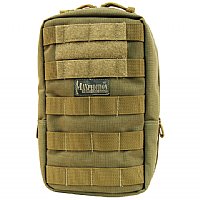
The idea, of course, is to keep this all as light and small as possible. Antenna, battery and radio should be able to fit quite nicely into my small CQ knapsack that I purchased at Dayton back in the 90s. I don’t think I am going to flip for a whole new case – like the Lowepro Traveler 140 camera case that has been bandied about by some of the guys. But I have to admit, after watching this YouTube video about the Lowepro Traveler 150 by TJ, W0EA, I could be persuaded if I could find one at a good price.
Maybe I’ll head on over to the local WalMart this weekend and see if I can find one at a real good price like TJ did.
72 de Larry W2LJ
QRP – When you care to send the very least!

Larry Makoski, W2LJ, is a regular contributor to AmateurRadio.com and writes from New Jersey, USA. Contact him at [email protected].
More bad news
From the ARRL:
SB SPCL @ ARL $ARLX006
ARLX006 Former ARRL First Vice President Steve Mendelsohn, W2ML (SK)
ZCZC AX06 QST de W1AW Special Bulletin 6 ARLX006:
From ARRL Headquarters Newington CT May 23, 2012
To all radio amateurs
SB SPCL ARL ARLX006 Former ARRL First Vice President Steve Mendelsohn, W2ML (SK)
After a courageous battle with pancreatic cancer, Steve Mendelsohn, W2ML, of Dumont, New Jersey, passed away May 23. He was 67. An ARRL Life Member, Mendelsohn began his time with ARRL in 1983 when he was elected as Vice Director of the Hudson Division. After two terms as Vice Director, he was elected as Hudson Division Director in 1987. In 1996, the ARRL Board of Directors elected Mendelsohn as its First Vice President, where he served until 2000. The next year, he was again elected as the Hudson Division Vice Director, serving through 2004.
Outside of his League activities, Mendelsohn was active both as the Communications Director of the New York City Marathon and, along with his wife Heidi, W2MLW, as the Game Day Frequency Coordinator (GDC) for the New York Jets. The November 2007 issue of QST featured Mendelsohn on its cover along with an article about him and the GDC program. Mendelsohn was inducted into the CQ Hall of Fame last week for his contributions to the ARRL, the New York City Marathon and the National Football League.
Mendelsohn was a 30 year veteran of the US Navy, rising to the rank of Senior Chief Petty Officer, with a Cryptologist rating. He received two Navy Achievement Awards for creating an important national security database for personal computers. While stationed in Scotland in the late 1960s, Mendelsohn was GM5AHS. He was a member of the North Jersey DX Association (NJDXA) and was the current President of the Bergen Amateur Radio Association (BARA). At one point, Mendelsohn served as President of both organizations simultaneously.
”Steve’s passing is a great loss in the world of Amateur Radio,” said ARRL Hudson Division Director Joyce Birmingham, KA2ANF. ”I will always treasure the times I spent with Steve over the many years I knew him. To me, and to all of Amateur Radio, he was a strong leader, dedicated mentor and most importantly, a true friend to many of us throughout the entire Amateur Radio community. Most recently, as a courageous fighter, Steve battled pancreatic cancer, but still continued to serve the ham community until the end and enjoyed many hours on the air. Our prayers go out to his family and his beloved Heidi. Rest now, my friend, you are at peace. We will miss you.” ‘
‘Steve brought a unique personality and perspective to the ARRL Board,” said ARRL President Kay Craigie, N3KN. ”Our thoughts are with his family and friends at this time of loss.”
Funeral arrangements are pending.
Further information about Steve’s life may be found on the web at, http://www.arrl.org/news/former-arrl-first-vice-president-steve-mendelsohn-w2ml-sk.
(End)
I knew Steve through my time as President of the Piscataway Amateur Radio Club and oddly enough, through this blog. Some of you may remember that I posted about him early on after his initial diagnosis. We had maintained some e-mail communications from time to time about Amateur Radio and other things.
Above all, he was a boon to the Ham community and a true, true gentleman. He will be sorely missed.
72 de Larry W2LJ
QRP – When you care to send the very least.

Larry Makoski, W2LJ, is a regular contributor to AmateurRadio.com and writes from New Jersey, USA. Contact him at [email protected].
CQ WPX contest + DXCC = Jubilee…….
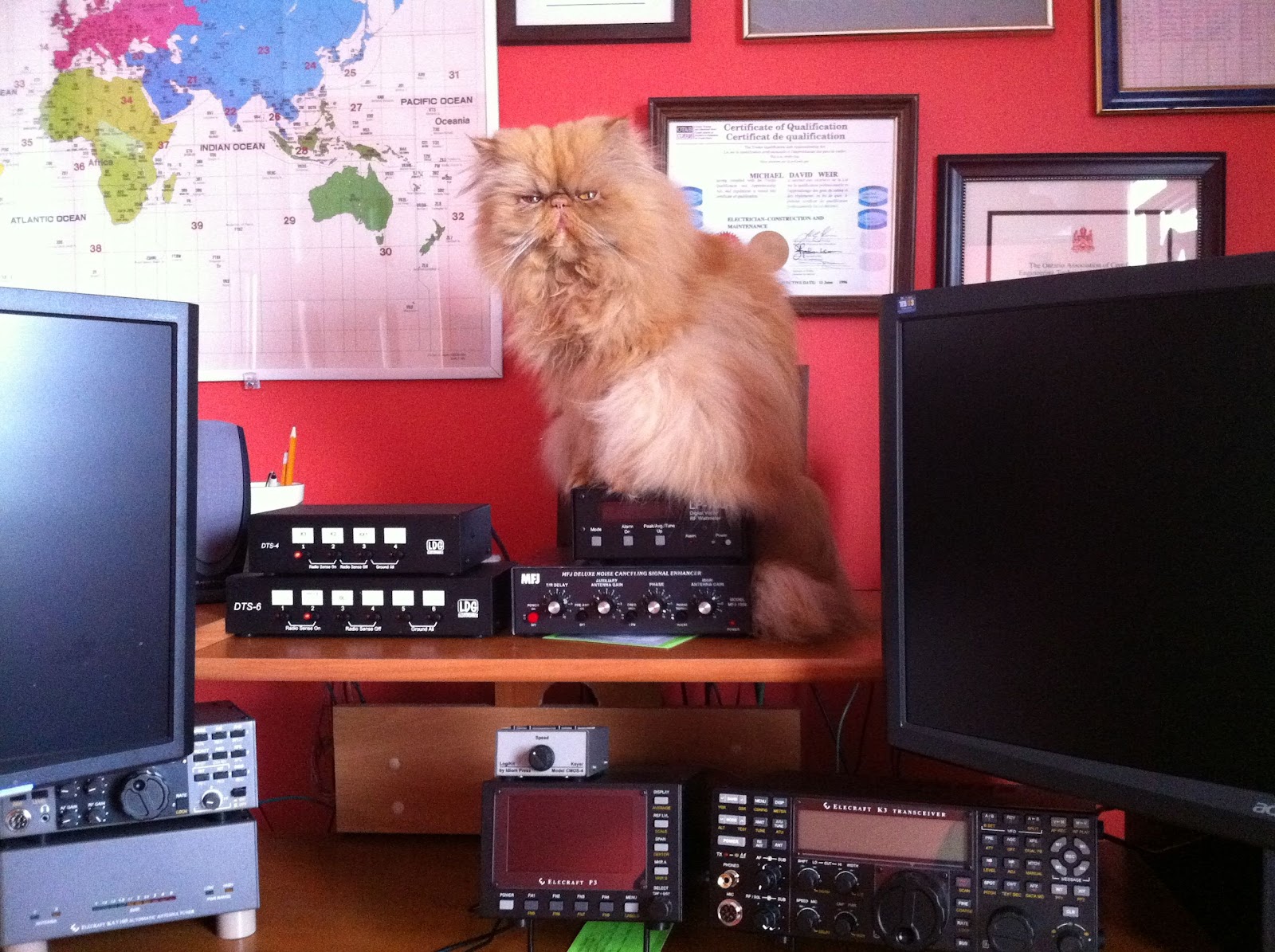
Other goals for the weekend adventure
1. I have been playing with the Morse runner program each day working on keyboard copying....we will see how that works in a contest situation.
2. I want to take advantage of my sub receiver in my Elecraft K3. Use it to scope out other bands or listen for pileup's to die down.
To everyone participating in the contest all the best. May the propagation god's be smiling on us this weekend......rest up hammy's and hope to see you on my Elecraft P3!!!
Good luck all!

Mike Weir, VE9KK, is a regular contributor to AmateurRadio.com and writes from New Brunswick, Canada. Contact him at [email protected].
Handiham World for 23 May 2012
Welcome to Handiham World.

You can do it!
Today, just as we did last week, we are going to begin with Troubleshooting 101 as part of our initiative to help new ham radio operators (and even some of us older ones) learn how to do some basic troubleshooting for ourselves. Yes, it can be tempting to ask someone else to do things for us. This can become a bad habit when it keeps us from learning new things, especially things that we could – with a bit of practice – learn to do for ourselves. Knowing these basic things can serve us well in the future when no help is available.
Troubleshooting 101

Let’s get to today’s troubleshooting question:
Question: This question has to do with my workshop. Let me explain; over the years I have collected quite a few electronic parts and lots of hardware used in electronics and computers. While I have built some projects in the past and have done some repairs on various pieces of equipment, it seems like I seldom use many of these parts that I have saved up. My wife told me that the basement is getting to be kind of a mess and that I should clean out some of the “extra junk” from my shop. My question is, “How does one decide what to keep and what to throw away?”
Interestingly enough, I was just thinking about this very problem recently. It seems like whenever I have to work on something in my own shop, almost invariably I will have to go out and buy something to complete the repair or project. I am almost never able to pick something out of my junk box and make it work. Since I have been an amateur radio operator for decades, I have saved up a collection of really good stuff that I am possibly going to use some day – for something. The problem is that I have stuff that has been in the same place in the shop for 20 years and has never been touched. Now, you may be thinking that my workshop is such a mess that I just can’t find anything. That is not the case. I pretty much know where things are, but I just don’t seem to ever need them for a project or repair even though that is the reason I am keeping them.
Does any of this sound familiar?
I’ll bet it does; just about every other amateur radio operator does exactly the same thing. We might find an interesting treasure at a hamfest or swap meet, but we really don’t know what we would do with it other than use it for a project that never seems to materialize. So to answer the question, you need to come to terms with the reality of the situation. Let’s lay it out and be as honest as possible:
- Technology advancement: Technology has marched on, but your junk box collection has not. The fact of the matter is that most of the stuff you have collected might have been good for fixing electronic equipment that was in vogue 20 years ago or more. Today’s electronics use different kinds of parts and sometimes are not even user-repairable. Those vacuum tubes and wire wound resistors in that box underneath the workbench are probably not going to be much good to anyone but a person who restores old radios. If you are not such a person, then it is time to get rid of those kinds of parts. I could go on about other parts for radios and computers, but you get the general idea. If it is not likely to be used in current technology, get rid of it.
- Time is limited: Be honest about your time. You do not have unlimited time. You’re busy, perhaps busier than you have ever been, especially if you are still in your working years and are raising a family. Do you really have time to work on projects that will take many hours or even weeks or months to complete? It may be better to pare down your collection of project parts and keep only the most essential. Your reward for doing this is a tidier shop and less clutter. This will make it easier to do the projects that you do actually have time to complete.
- Your interests have changed: At one time you were interested in packet radio and by gosh, you still have that old terminal node controller on the shelf. Along with that, there is an old computer that used to run DOS and that would be “perfect” for your packet station. After seeing a club program about rhombic antennas, you decided to start collecting wire to make that rhombic antenna someday. Of course, you are also interested in getting several of those old computers you have saved back into service. Maybe you can put Linux on them. Well, guess what? If you haven’t done anything with these items for several years, your interests have probably changed and you are not likely to get around to any of these projects – ever. Give as much of this stuff away as possible and recycle the rest. Most counties and municipalities have some kind of recycling program for computers and electronics.
Just how honest can you be with yourself? After years of collecting all this junk, it can be difficult to admit that you are never going to get around to using any of it and that you are better off just getting the workshop cleaned out and tidied up so that you will have more space to work and less clutter.
Over the years I have seen some real junk collections. A few of them have been jaw-droppingly amazingly enormous collections worthy of being a swap meet in and of themselves. I could never imagine how anyone could have deluded themselves to the point that they actually believed all of this stuff would someday be useful! It would’ve been impossible for the person to use half of this stuff in two lifetimes, let alone one lifetime. One guy, an elderly gentleman, had a basement full of shelves arranged in rows, all stacked with equipment and parts at least 30 years old. Another had a basement and an additional storage building with row upon row of shelves holding old parts and radio gear. It is not as uncommon as you might think.
We have to face up to the fact that keeping things simple, actually expedites project-building and troubleshooting. When you have too much stuff, you waste time moving it around or digging through it to find some little part you think you might have. This is usually not worth the time and effort. You are better off buying a new part that will be exactly the right one when you need it. Furthermore, too much junk and clutter can make you prone to simply putting off a troubleshooting project because it is too much effort to work in your shop. If that is the case, you REALLY need to do some serious organizing.
At Radio Camp we will be talking about the essentials of a good, efficient home workbench. We won’t go into this lean and mean list of shop basics right now, but I will reveal that it is surprising how little one needs to have a really effective troubleshooting and project space.
Email me at [email protected] with your questions & comments.
Patrick Tice, WA0TDA
Handiham Manager
A dip in the pool

It’s time to test our knowledge by taking a dip in the pool – the question pool, that is!
Today we are taking a question from the Extra Class pool:
E4C09 asks: “Which of the following is most likely to be the limiting condition for sensitivity in a modern communications receiver operating at 14 MHz?”
Possible answers are:
A. The noise figure of the RF amplifier
B. Mixer noise
C. Conversion noise
D. Atmospheric noise
Long ago, when receivers used vacuum tubes and discrete components and when a VFO could drift like a rowboat in a hurricane, we reveled in the “good old days” of radio. Yes, these were the times when we sometimes listened with our hand on the tuning knob, either to follow a drifting signal or to try to find a sweet spot where we might hear a signal through all the noise. In retrospect, they were really “the bad old days”, because our equipment is so much better now. Receivers are so good that they have noise figures below noise that would occur naturally in the atmosphere and stability that rivals crystal control. Thanks to these advances atmospheric noise is now the biggest worry, so answer D is correct. In essence, engineers have done everything possible to the receiver itself to eliminate internally generated noise. It’s hard to do much about atmospheric noise, but now modes of operation have evolved to fight back against poor conditions. PSK-31, for example, is amazing – it works even on days when you would be hard pressed to hear a CW signal. As far as receivers go, if you are looking for the good old days, we are living in them right now!

Pat Tice, WA0TDA, is the manager of HANDI-HAM and a regular contributor to AmateurRadio.com. Contact him at [email protected].
Have Handheld, Will Travel — First Stop: University of Notre Dame!
My wife and I are on the way to Toronto, Ontario for a wedding. Right now I’m dashing this off before laying my head down to sleep in the apartment of a dear friend of ours in South Bend, Indiana. She’s a PhD student at Notre Dame and will be hitching a ride with us since she’s the maid of honor. My daughter, one of the bridesmaids, is already in Toronto since she went out a day ahead of us with the bride’s family. My son had to stay home since his passport didn’t show up in time — he was disappointed but getting to stay with friends made up for it.

NØIP at the Gates of the University of Notre Dame
Anyhow, I brought along my Wouxon KG-UV6D. I would have brought along my HW-8 but space was at a premium. I didn’t use my HT on the drive (I simply didn’t have time to figure out the repeaters on the way and program them on my radio), but once we got into South Bend I hit two repeaters that both came in full-quieting — one a 2m repeater in town and the other a 70cm repeater belonging to the University of Notre Dame Amateur Radio Club. I’m sorry to say that despite many calls I have yet to hear anybody on the two repeaters. Perhaps it has something to do with my timing; the academic year has just ended and things are unusually quiet around here.
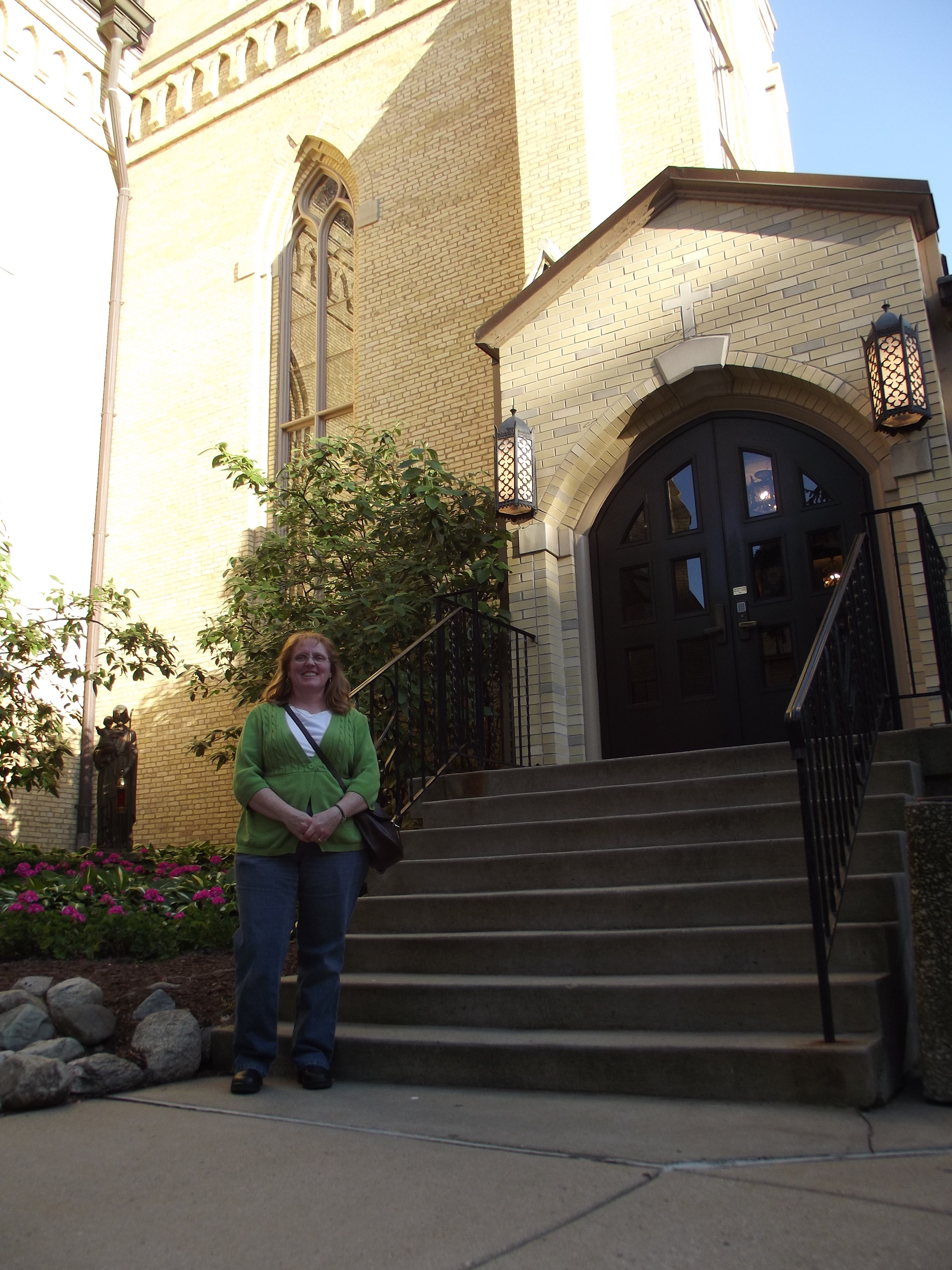
My XYL outside the Basilica, University of Notre Dame
I had high hopes of setting up an impromptu visit to the Jerome Green Amateur Radio Station (click here), but I also knew my hopes weren’t realistic since it was a last-minute idea. Next time I’ll try to remember and search out such opportunities in advance.

Basilica, University of Notre Dame
We had a great time exploring the Notre Dame campus, touring the grotto, basilica, and bookstore. (Already bitten hard by the academic bug, I nearly melted when I got near the philosophy section!) Eventually we went out for a late supper at Fiddler’s Hearth, which serves up the best Reuben I’ve ever had in my life (and I’ve had a few).

Basilica, University of Notre Dame
Next stop, Toronto! I am using this website (click here) to find repeaters by clicking on a Google map, so I have the frequencies, offsets, tones, etc. all printed out and in the car with me.
If only I had that HW-8 with me . . .


Todd Mitchell, NØIP, is a regular contributor to AmateurRadio.com and writes from Minnesota, USA. He can be contacted at [email protected].
Pinch me…
so I can be sure I’m not dreaming!
Is it true? I guess it is! This finally appeared in my “inbox” today:
“Dear KX3 Customer,
Your KX3 order is expected to ship during the week of 5/23 to 5/29. The exact day is not known at this time.
(Snip)
If you have any corrections or changes to your order please let us know.
If you need the shipping delayed for any reason that is fine. We can ship at the later date you specify. (You’re kidding, right?)
Once we have received your confirmation your order will ship as soon as possible. (That was sent immediately!)
The day it ships you will receive an email from the shipper ( either UPS or USPS) with the shipping notice. The KXBC3 (didn’t order one) is currently on backorder. It will not be included with your KX3 shipment. As soon as it is available, we will ship it to you.
We look forward to your reply and shipping your KX3 order. Be sure to reply!!! (I did, I did !!!!)
Regards, Vicki Seavy
Hallelujah!
72 de Larry W2LJ
QRP – When you care to send the very least!

Larry Makoski, W2LJ, is a regular contributor to AmateurRadio.com and writes from New Jersey, USA. Contact him at [email protected].
Introducing the PARP Plus Weekly Edition

A new weekly audio edition of the Practical Amateur Radio Podcast, called PARP Plus is now available. PARP Plus will feature a rundown of all the amateur radio happenings taking place on the bands for the upcoming week and weekend. If you enjoy working special event stations, contests, dxpeditions…but just don’t have time to track down what is taking place and where, then I believe PARP Plus will help you.
If you have 15 minutes each week to listen to the podcast, I’ll run through all you need to know for all the on-air activities taking place in the week ahead.
Each weekly PARP – Plus Edition will release on Monday evening around 0000z and will cover the week/weekend ahead. Just listen and make note of the various special events, contests, dxpeditions, hamfests etc. that I discuss…then just work them.
You’ll still get your BIG PARP episode each month. PARP 56 will be available in June, just before Field Day.
I hope this new weekly format helps you. I also plan to mix in other content from time to time. So please download and listen. If you are already receiving PARP, you’ll get PARP – Plus the same way.
PARP Plus, episode 001 covering the week of May 22 through May 28 is available now at MyAmateurRadio.com.
73 de KDØBIK
Jerry Taylor, KD0BIK, is a regular contributor to AmateurRadio.com and writes from Colorado, USA. He is the host of the Practical Amateur Radio Podcast. Contact him at [email protected].
 Ham Radio Deluxe |
 W5SWL Electronics |
 Ham Radio Prep |
 KB3IFH QSL Cards  Hip Ham Shirts  HamRadioAuctions HamRadioAuctions Reliance Antennas Reliance Antennas Enigma Shop Enigma Shop |  morseDX  Ni4L Antennas  R&L Electronics R&L Electronics antennas.us antennas.us QRV QRV |
- Matt W1MST, Managing Editor
