 |
 ICQ Podcast S05 E12- Buying 1st Amateur Radio Rig (3 June 2012)
 3 June 2012 | by
 Series Five Episode Twelve of the ICQ Podcast has been released. News Stories include :-
- Operators needed for Canal Festival
- Volunteers wanted for RSGB Centenary Working Group
- Yaesu FT1D Digital Handheld
- Italian radio amateurs help out after quake
- New transatlantic 144MHz beacon GB3WGI
- Radio transmitter causes bomb scare
- Cuba's Radio Hams get new Digimodes
- Balloon Crossband Repeater Payload over USA
- ACO exam pass = Amateur Radio Foundation pass
- Change in IRTS 40 Metre News Frequency
- 2012 Torch route tracked on APRS
- Worked All Britain Olympic flame award
Chris Howard (2E0CTH and N4CTH) discusses Buying your first amateur radio rig.
Colin Butler, M6BOY, is the host of the ICQ Podcast, a weekly radio show about Amateur Radio. Contact him at [email protected].
It lives !!!

As anticipated, the remainder of the KX3 build did not take long at all. If truth be told, I am technically not finished – I still have to calibrate the roofing filter. But I am done to the point where I have a working radio.
I left off at the point where I had to install the battery holders and the KXAT3 auto tuner.
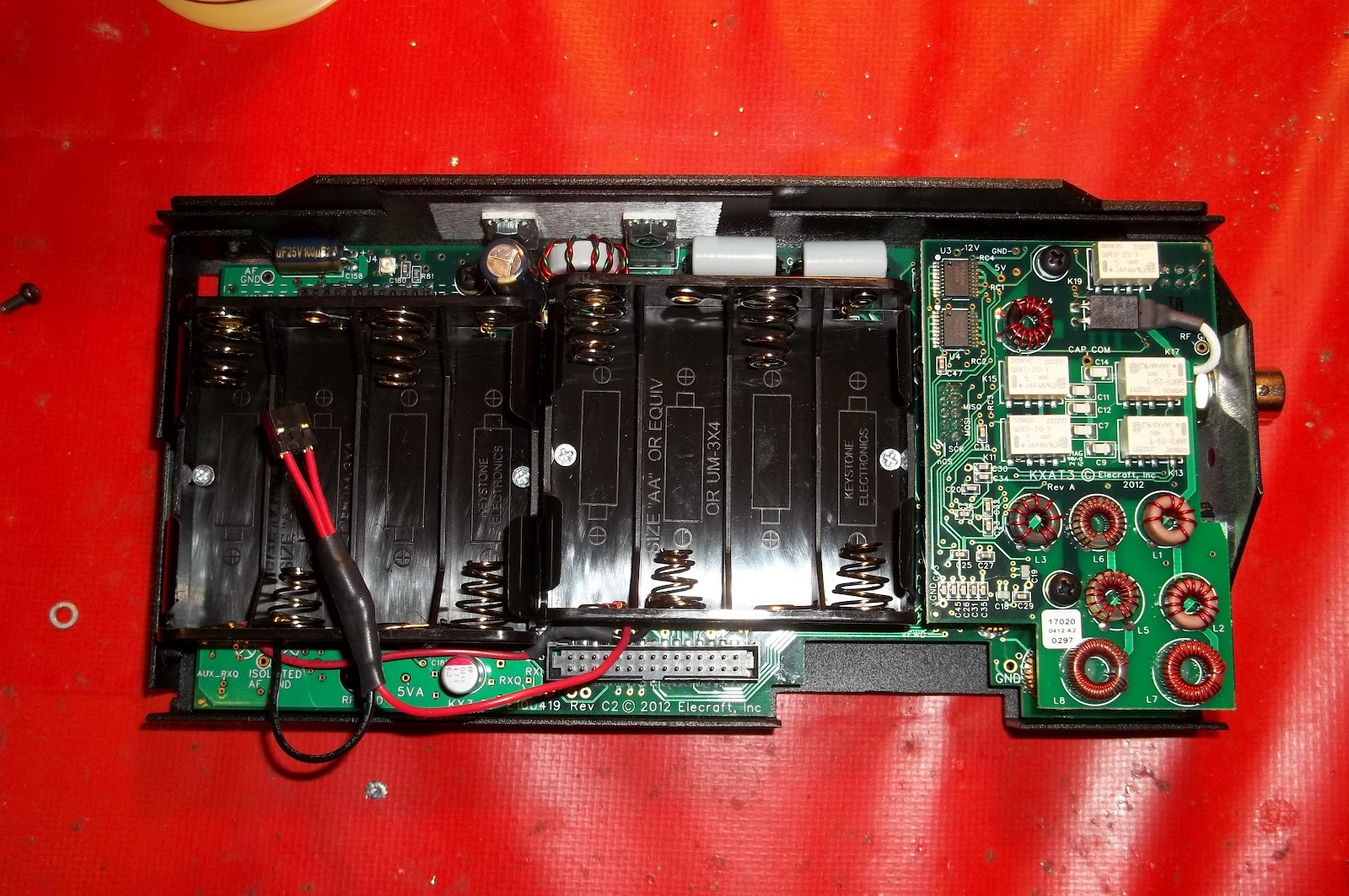
That is them installed. I am not sure if I am going to bother with internal batteries. The option is available to me if I ever decide to; but that li-on battery I bought is so small and light! And if I don’t have to open the case – that makes me happy, also. You can see the auto tuner to the right. Here’s a close up:
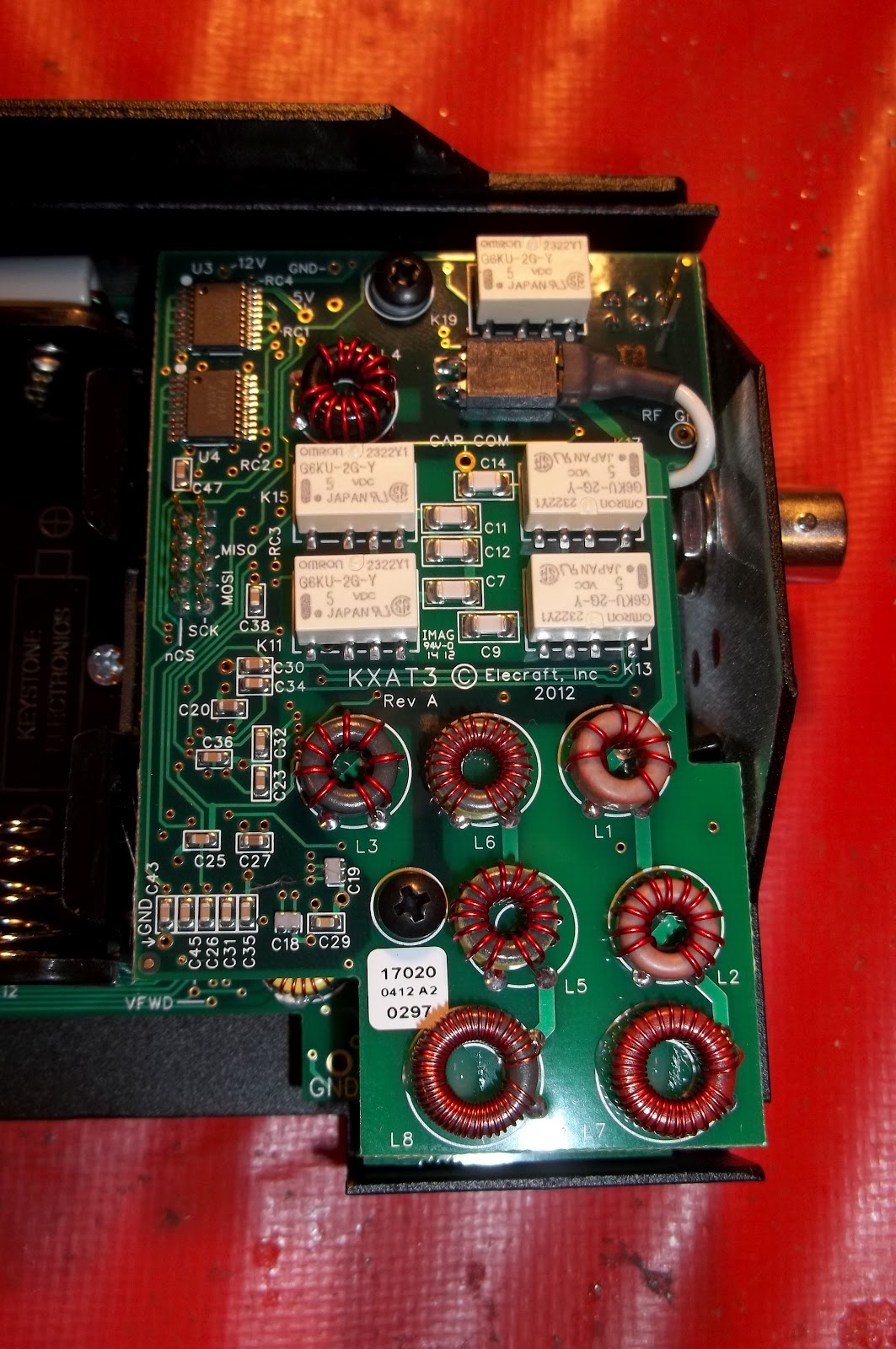
It’s quite a piece of work! Once I turned the KX3 on, I had to go through the menu and select it so that the radio “knew” it was there. The tricky thing was that once you turn it “on”, for the first time, you have to turn the radio off and then back on, so that it initializes with it there. A bit different than selecting options with the K2.
Next came the roofing filter board:
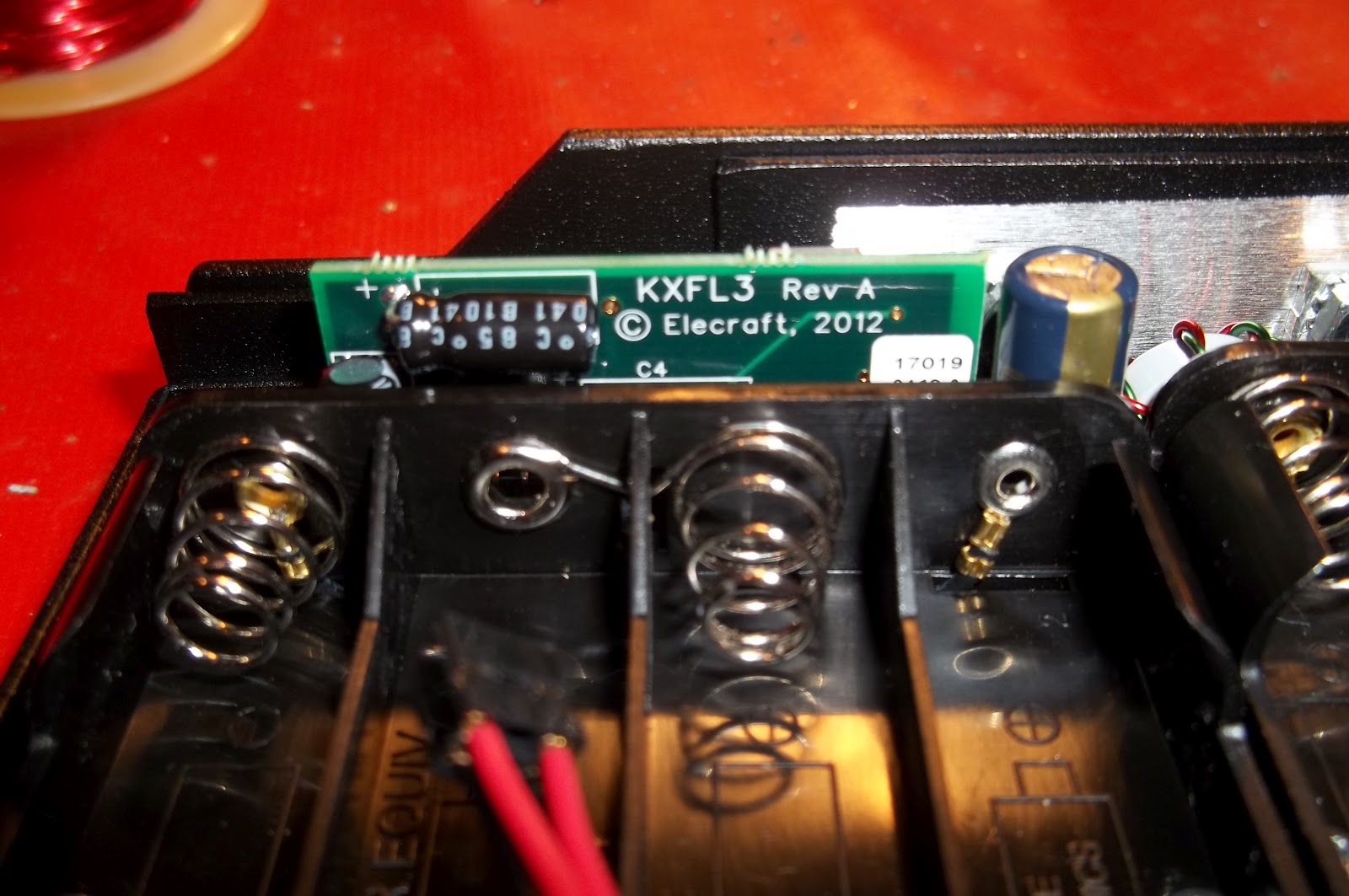
There it is, right behind one of the battery holders. When you install the KXFL3 you have to take out one of the chassis screws. It is replaced with a much longer one that actually extends through a hole in the KXFL3 circuit board. This is to prevent the roofing filter circuit board from becoming jostled loose accidentally if the going gets rough on the trail.
Then came connecting the two halves with the ribbon cable, which was a snap. Connecting the battery holders to their connector and then mating the two halves together and buttoning the radio up.
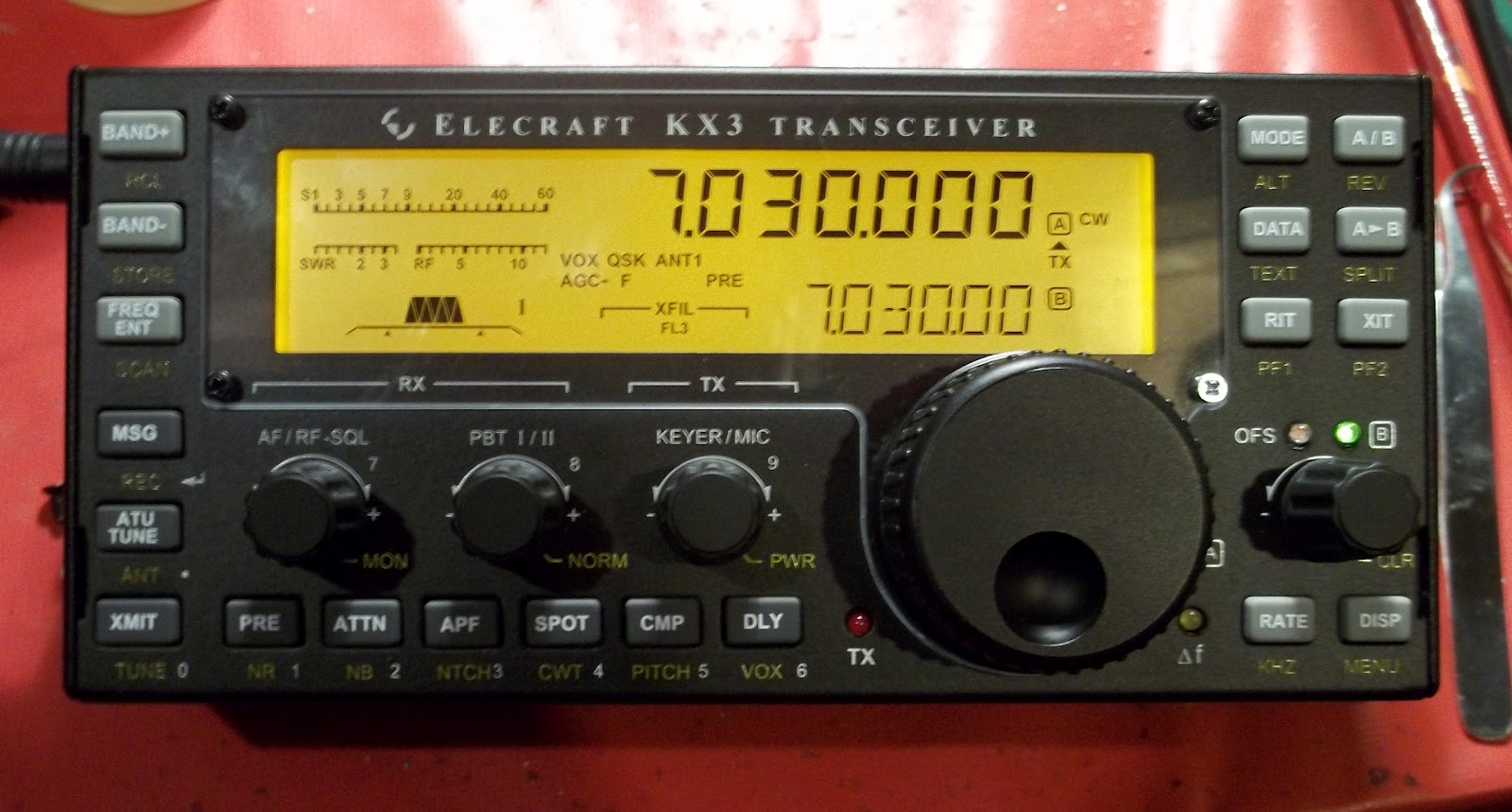
The first thing to be done was to hook up the battery, cross my fingers and say a small “No smoke, please!” prayer. When the moment of truth arrived, the display came up and static came out the speaker. No smoke, no disasters, no disappointment. From there, it was off of the workbench and onto the shack table we go!
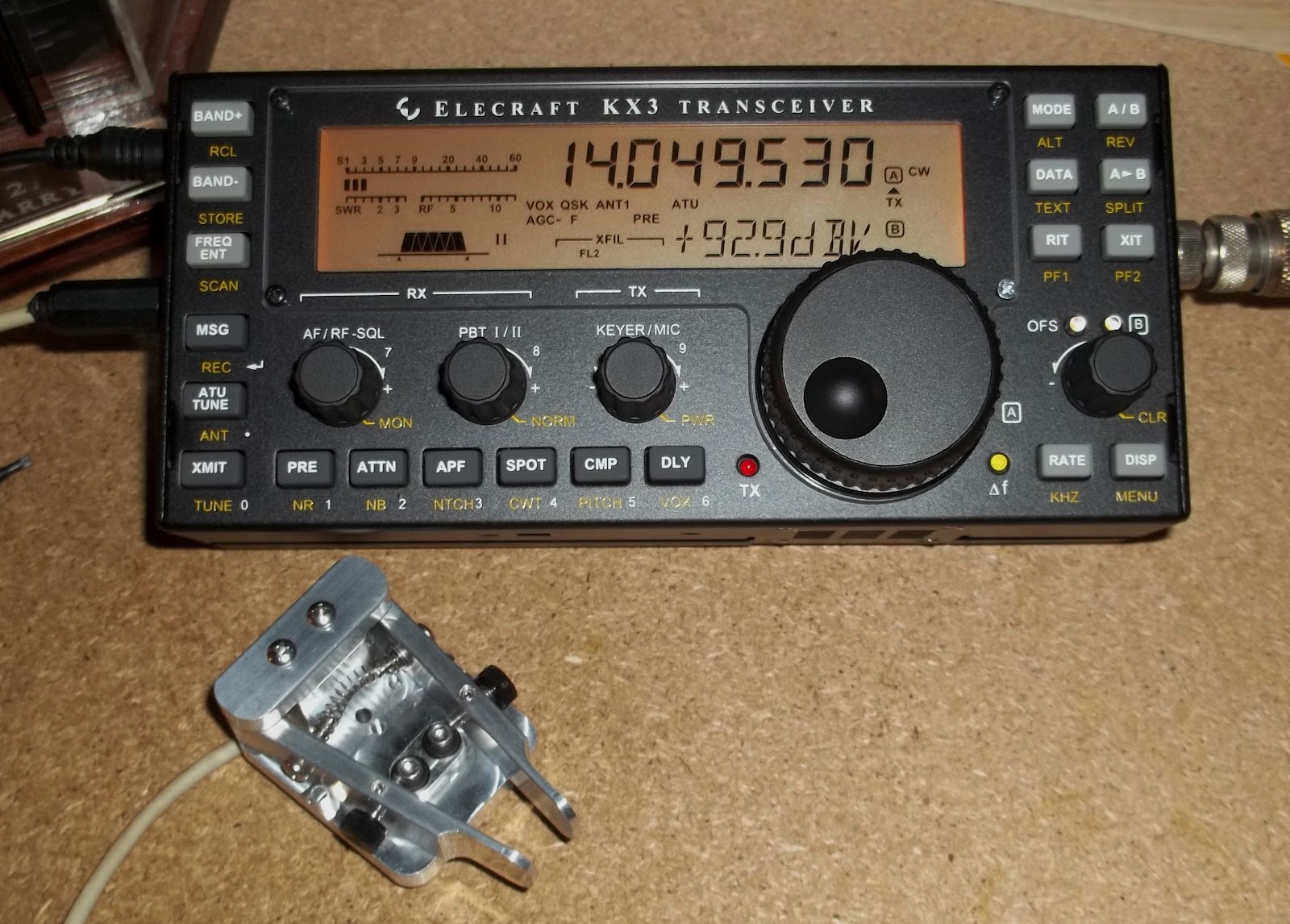
I hooked up the DCP paddles and antenna and made a contact on 20 Meters in whatever 4 land QSO party is going on this weekend. I have it written downstairs; but I think it was K4SAV. Second QSO was on 40 Meters – G5LO in Great Britain.
There’s going to be a learning curve here because this is definitely more complex and sophisticated than my K2. For now, I just want to make a few QSOs and play around a bit. I will intensely study the Owner’s Manual and will probably try to calibrate the roofing filter tomorrow. Right now, it’s back down to the shack to play!
Thanks to all of you who went for this ride with me, beginning last year, when I started saving and selling things to raise the needed funds. Thanks for sticking with me as I ordered and began the, what seemed to be, interminable waiting period.
Now that the radio is built and seems to be working, I can truly say it was worth the wait and am looking forward to many hours of fun filled QRPing.
72 de Larry W2LJ
QRP – When you care to say the very least!

Larry Makoski, W2LJ, is a regular contributor to AmateurRadio.com and writes from New Jersey, USA. Contact him at [email protected].
Solar Power for QRP
-

- 3.37 Amps in the Sun
-

- Brace Detail
-

- Close Up of Curved Leg End
-

- Close Up of Leg Braces
-

- Close Up of Leg Braces 2
-

- Close up of Solar panel controller
-

- Corner Detail of Leg Attachment
-

- Corner Detail of Leg Attachment For Other Leg
-

- Curved Leg Section Cut Away to Allow Legs to Swing Out, Avoiding Panel Damage
-

- Drilling to Set Legs in Place
-

- Go Box on the Left, 100 Watt 5 Amp Solar Panel on the Right
-

- Legs Attached to the Solar Panel Allows it to be Self Standing
-

- Legs Fold Into the Solar Panel Frame for Easy Storage
-

- Rear of Solar Panel, Controler is mounted with Velcro
-

- Right Leg Attached to Panel Frame
-

- Solar Panel Stored in its shipping case.
I’ve always wanted to operate my radio on Solar Power. This was a fun to do project. I can’t wait to bring it to a Field Day Event.
I bought the aluminum from Metals Depot in Kentucky. (link attached) They have lots of aluminum shapes and parts to choose from. The parts arrived via UPS. It nice to have a good source like this for ham radio projects.http://www.metalsdepot.com/
HQRP is a good company to buy solar panel parts and controlers from. The QRP part of their name is just coincidental to this being a QRP project. http://hqrp.com/
de AA1IK
Ernest Gregoire
72
Ernest Gregoire, AA1IK, is a regular contributor to AmateurRadio.com and writes from Florida, USA. Contact him at [email protected].
Stupid UV-3R tricks

Baofeng UV-3R Mark II
So, as some of you may have guessed, I like to tinker. For some reason I’m never satisfied with things the way they are when I buy gadgets. I have an Acer NetBook running Mac OS X, an old Windows Mobile phone running Android Froyo, and a $50 CVS 7″ WinCE NetBook running Debian Linux. If there’s a mod, I want to know about it. I had been reading about the Baofeng UV-3R and its capabilities before I ordered the his and hers models and made sure I ordered a programming cable too, so that I could attempt the 220 mod that’s been talked about. I ordered the cable from someone different than the radios, so as of Thursday it had not arrived yet. Could I wait? Of course not.
I also own a Radio Shack Pro-137 scanner. This is a 1000-channel model that was marketed as a racing scanner. You can usually pick them up on the cheap because of the racing moniker. In reality, these are great all-around scanners, with a stalker function that helps when testing commercial radios. I have a programming cable for the pro-137 that I used, along with ARC software and a RadioReference account, to load all of the local frequencies I wanted. I was thinking that day, after dealing with several other forms of USB-to-serial adapters that these cables are not all that different. Just the pins are different. The scanner uses a 3-conductor 3.5mm plug, and the Baofeng uses a 4-conductor one.
I examined the pinouts for both radios, and realized that the ground and first ring are the same, but the third ring on the scanner’s plug corresponds to the fourth ring on the Baofeng, so it was probably not going to work. I know this because when you plug standard stereo headphones into the UV-3R, you short

Radio Sack 20-047
out pins 3 and 4 in the radio, causing the radio to transmit. When using headphones though, if you pull the plug out just a little (about a mm), you get one ear (left) of sound. I wondered if this would work with the programming cable. I started the software. and hit the button to download the radio memories onto my computer. After a couple of tries I found the sweet spot. About a mm out there is a slight detent you can feel. That is where you need to be. It works! I will post the results of my experimenting with the software and the mod later. If any of you have one of these cables laying around, it will work. The stock drivers in Vista and Win7 will even work! Some Radio Shack’s have these on closeout still. Stock number 20-047.
The funny thing is this: Guess what was waiting in the mail when I got home?
–Neil W2NDG
Neil Goldstein, W2NDG, is a regular contributor to AmateurRadio.com and writes from New York, USA. Contact him at [email protected].
A couple of thoughts about the KX3 build
I have a bunch of chores and chauffeuring to do today. I probably won’t get around to continuing the build until this evening. To paraphrase John Lennon’s quote: “Real life is what happens while you’re busy making Ham Radio plans”.
However, here are a couple of thoughts about the progress so far, for those of you who might be inclined to get one of these but are undecided. This isn’t meant to sway anyone either way – just some observations.
The assembly manual is superb. No ambiguities at all. Each step is very clearly outlined. If you have any questions, they are always readily answered on either the regular Elecraft reflector or the KX3 reflector. It’s a big community. Even though the number of kits shipped so far has been less than the number of factory built units shipped, the Elecraft folks and the Field Testers are quick to supply answers.
Elecraft was super quick to answer my query about missing screws and supplied me with a tracking number the next day.
In the opening pages of the manual, the words appear “Even easy for first time kit builders”. This is true – don’t think that just because you’ve never built a kit before that you can’t undertake this. I know that the price point can make the effort seem foreboding, but it’s really not.
Do make sure to do the parts inventory, though. I am sure the missing screws incident is due to the haste to get product out the door. As the opening rush subsides, I am sure missing parts will become rare. I ordered my K1 and my K2 way after the initial release and neither of those kits were missing anything. Indeed, I had excess screws which are proving to be a real life saver now. But in the meantime, if you have ordered a kit and will be getting it soon – DO THE INVENTORY.
Hopefully, I’ll be posting more photos later tonight.
72 de Larry W2LJ
QRP – When you care to send the very least!

Larry Makoski, W2LJ, is a regular contributor to AmateurRadio.com and writes from New Jersey, USA. Contact him at [email protected].
Putting the bunting out for the jubilee on the radio
Although the special callsigns for the Queen’s Diamond Jubilee have been available for some weeks, I had decided only to use mine over the immediate Jubilee period.
I’m only using it for a bit of fun rather than to generate pileups!
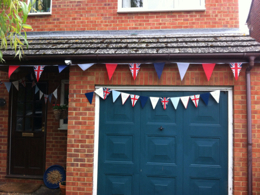
As I said to Richard G4ERP last night, it’s the radio equivalent of putting it the bunting and celebrating our Queen’s jubilee.

Tim Kirby, G4VXE, is a regular contributor to AmateurRadio.com and writes from Oxfordshire, England. Contact him at [email protected].
This Spewed Out of the Internet #22
 The internet keeps spewing forth a river of bits, some of it actually useful information.
Reliable sources tell me that the date for the 2013 Hamcon Colorado has been set: June 28-30 in Estes Park, Colorado. This event is the best hamfest in Colorado and happens every 4 years. (It is the ARRL Rocky Mt Division Convention which rotates between Colorado, Utah, Wyoming and New Mexico.) The date is a little later in the year than previous Hamcon Colorado’s which I think will be even better for attracting out of state visitors. The 2012 division convention will be held July 27-29 in Bryce, Utah.
The ARRL June VHF QSO Party is coming up on June 9-11. This is my favorite ham radio event of the year, since it stimulates VHF activity and (usually) has some good propagation on 50 MHz. Get on the air and have some fun!
For the EEs in the crowd, my friend Ken Wyatt (WA6TTY) is now writing an EMC Blog for Test and Measurement World. Ken is a industry expert on Electromagnetic Compatibility and a pretty darn good author as well.
This article in The Atlantic says that people are using their WiFi SSID to share their political position (“I Heart Obama”). This is sad, really sad.
Neil Armstrong is one my personal heroes, not just because he was the first man on the moon (I mean, if you believe that really happened). He has had every opportunity to promote himself as a celebrity but instead he keeps a low profile. I like that. I came across the video of an excellent (and rare) interview with him on an Australian web site.
There is a new ham radio podcast on the air: Ham Radio Podcast. Check it out and give it a try. And, in case you haven’t found this one, check out the Practical Amateur Radio Podcast by my friend Jerry Taylor (KD0BIK).
The ARRL has launched the digital version of QST magazine. It seems to work but it’s not a very satisfying experience on my little netbook. Probably better with a large monitor. See comments from AA6E and KE9V.
- 73, Bob K0NR
Bob Witte, KØNR, is a regular contributor to AmateurRadio.com and writes from Colorado, USA. Contact him at [email protected].
 Ham Radio Deluxe |
 W5SWL Electronics |
 Ham Radio Prep |
 KB3IFH QSL Cards  Hip Ham Shirts  HamRadioAuctions HamRadioAuctions Reliance Antennas Reliance Antennas Enigma Shop Enigma Shop |  morseDX  Ni4L Antennas  R&L Electronics R&L Electronics antennas.us antennas.us QRV QRV |
- Matt W1MST, Managing Editor
