 |
 My Son Passed His Tech!
 15 June 2012 | by
 My 16-year-old son, Antonio, has been studying hard for his Technician license, and yesterday evening three VE’s — Dean, NYØI, Scott, KBØNLY, and Terry, KCØQED — paid us a house call. When they showed up, I was out in the driveway installing a dual-band antenna on my pickup. They crowded around, watching me, helping where they could, and chatting while Antonio grilled steaks in the back yard. Pretty soon the aroma of grilled ribeye had our mouths watering!

Terry, KCØQED, left, and Antonio (nervously contemplating the exam), right
After one of the biggest feasts we have ever had, the testing began. Antonio was pretty nervous at first, but he breezed through the test easily. Terry scored it, turned to me and gave me a thumbs up! While the other two VE’s scored Antonio’s test, I went and got the Wouxon KG-UV6D HT (with leather case, high-gain antenna, speaker-mic, and emergency AA-battery pack) I’ve had waiting for him. He smiled as he opened the box and started taking things out and putting them together.  Antonio called Grandpa Mitchell, NØARQ, to share the good news. Just for fun he also took the General exam, and surprised himself by coming closer to passing than he expected — now he wants to study for that!
Antonio is interested in ARES® (he got an ARES vest yesterday, too), but he’s also interested in other aspects of amateur radio. Yesterday evening he said he would like to start up our CW lessons again so he can work HF CW, and he also wants to join the ARRL and the West Central MN Amateur Radio Club.
Here’s a slide show with a few more snapshots from yesterday evening. Congratulations, Antonio!


Todd Mitchell, NØIP, is a regular contributor to AmateurRadio.com and writes from Minnesota, USA. He can be contacted at [email protected].
Interesting night on 20 Meters
I kept the radio tuned to 20 Meters for the evening and had a variety of QSOs.
The first was with CO6RD, Reynaldo in Cuba. This wasn’t a long QSO as Reynaldo was working “contest style” racking up the QSOs. But I did get him on the first shot, even though a lot of stations were calling.
Next up was a busted QSO with Mike AA6WQ, who was operating from TN. We got through the QSO basics, only to have the band pull the rug out from under us. One minute we were going at it, next minute we couldn’t hear each other anymore. I guess that’s the way the cookie crumbles, sometimes.
With two short QSOs under my belt, I was thinking that might be how the evening was going to go. But my fears turned to be for nothing as the next QSO was an almost hour long rag chew with Paul W4KLY in Stone Moutnain, GA. This was an Elecraft to Elecraft QSO. Paul was using his K1 and (of course) I was on the KX3. QSB had a role to play; but in all honesty, when the band was not in fade mode, our signals were 599 both ways. We talked about rigs, portable ops and antennas and summer vacation plans. It was very enjoyable and it is truly amazing to see how fast an hour can go by on you when you’re having fun.
The last QSO for the night was with Rumi LZ2RS in Bulgaria. He was calling “CQ QRP” and I was lucky enough to be heard on my first call. Rumi was at 5 Watts; but what really made the QSO was his Yagi at 12 meters up, pointed my way. I was on the 88′ EDZ pumping out 5 Watts from my end also. Signals were a legitimate 559.
The bands have been so good lately! Not the best I’ve ever witnessed; but after the past few pitiful years, this is like Heaven (comparatively). I sure hope it stays this way for a while and doesn’t take a fast dive off a cliff into oblivion.
On another note, this new 9 cell battery that I got for the Acer is fantastic! I got it Monday and attached it to the netbook for charging. I’ve used it Tuesday, Wednesday, and tonight – about two to three hours per night. The indicator says it still has about another two hours left in it. Of course, I have Windows set for “Max Battery Life” through the control panel, but even so, this is way outlasting the old battery. That one gave me about two hours computer time, tops. This battery should be able to get me through a four hour sprint (outdoors) without breaking a sweat.
72 de Larry W2LJ
QRP – When you care to send the very least!

Larry Makoski, W2LJ, is a regular contributor to AmateurRadio.com and writes from New Jersey, USA. Contact him at [email protected].
Have you taken a shine to social media?
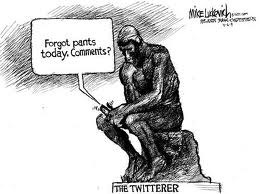
How about those who have jumped into the pool of social media how is it working for you? Where and how does it fit in with Amateur radio?

Mike Weir, VE9KK, is a regular contributor to AmateurRadio.com and writes from New Brunswick, Canada. Contact him at [email protected].
To cross, or not to cross?
I’ve seen several times in various forums, when people ask about setting up cross-band repeaters, some Hams mention that they cannot think of a use for that feature. Here is your example.
With a second car coming sometime in the next few weeks, the YL and I have been keeping our eyes open for a second dual-band mobile. We had 2 vehicles up until about a month ago, when my old minivan got to the point where my investment in repairs exceeded my nostalgic affection for it. I had a chance to get rid of it quickly when my mechanic said he had someone interested in taking it, as-is, for more than scrap value (steel is high out here, so don’t laugh).
I have a Radio Shack HTX-242. My first mobile rig. A great eBay find last year, but it was not holding up to everyday use. It’s also a little numb in the receiving department, so it’s currently sitting on my elmer’s workbench. The goal there is to get it receiving well enough to use a my doppler receiver. The main radio is an Icom IC-207H dual-band with the option for remote mounting. Jill gets to use that one during the week, as I’m in the car for less than 10 minutes while she drives me to the train. The 207H will probably go into the new car when it comes, because of the remote mounting. I want to keep the install as clean as possible. That leaves the Buick as my daily driver, and without a decent rig. I decided to look for something that can do cross-band repeat for my next rig, and finally picked up a used IC-2350H the other day. It needs a little TLC, but nothing too complicated. As-is, it transmits OK on the 440 side, but it will not let you hear anything received, even though it IS receiving. The 2 Meter side is functioning great. Some quick troubleshooting shows that the volume/squelch pot for the 440 side is damaged, but fixable.
I tried the cross-band repeat function last night, which works great, even with the problem. I now have solved an issue that I was having in my home. We live in a bit of an RF hole, about halfway between my club’s Eastern, and Western Long Island repeaters. I can hit the Western repeater fine from the living room, with a rig attached to my homebrew wire antenna. Anywhere else in the house, though, I cannot. Sometimes during a few of the nets that I like to participate in, I need to be in the kitchen, or at my desk, or outside at the grill. With the cross-band repeater, I can use my little Baofeng UV-3R to transmit through to the Western repeater’s input, and still be able to hear the output directly on the Baofeng.
To work correctly this requires the use of the programming software on the Baofeng to set up a split channel (receive on 2M, and transmit on 440). I’m running the 2350H at 10 Watts, which is enough. It is passing the PL tone from the Baofeng so no need to encode again. The only feature I’m missing is tone-squelch on the Icom, so that un-authorized people don’t get in. Even if they do though, the chances of them using the correct tone to pass through to the repeater I’m targeting are slim. This weekend I’m going to test the receiving range of this setup with the mobile. I think this will even cure some of the dead spots that I have issues with in the neighborhood.
I intend to use this elsewhere too. We go on excursions up to the Adirondacks to my friend’s farm. Cell phones are marginal there, at best, and my Sprint phone just laughs at me when I try to use it. This would be a great way to communicate on his property. I can turn it on in the car, before we go hiking. I expect my son to also have his license soon, as well as Jill’s oldest, so we’ll have 4 licensed Hams when we go up there. Definitely a good investment.
–Neil W2NDG
Neil Goldstein, W2NDG, is a regular contributor to AmateurRadio.com and writes from New York, USA. Contact him at [email protected].
Activity breeds activity: or the difference your CQ can make
When I’m mobile with the FT8900, I generally have one of the VFOs on one of the local repeaters and the second one scanning about 40 channels for activity. This morning, the scanning stopped on 145.500 and I heard G4APL/M call CQ.
It’s fairly rare for me to hear a simplex CQ on 145.500, so after a quick bit of button pressing, I called Paul G4APL/M. It turned out that he was on the A40 between Witney and Burford, some 15 miles away from me. We had a good QSO, with signals getting weaker as I approached Abingdon.
I signed with Paul and was pleased to be called by Alan, G3SLI in Wootton near Abingdon. I occasionally work Alan on 70MHz FM and it had been quite a while since we spoke. I got the impression speaking to Alan that he hadn’t made too many QSOs recently – so a bit of simplex activity was welcome. We could also hear that Paul, G4APL/M was working a portable station closer to him in Burford on another frequency. I told Alan that I’d come across his callsign in connection with his activities frrom Gibraltar on 70MHz in the early 1960s when I was looking at Mike, G3JVL’s QRZ page the other day. A really nice QSO with Alan, talking about aerials and VHF propagation.
It struck me that unless Paul had made his CQ on 145.500 – those great QSOs wouldn’t have happened. A great reminder that activity really does breed activity and that I should call CQ on simplex myself more often!

Tim Kirby, G4VXE, is a regular contributor to AmateurRadio.com and writes from Oxfordshire, England. Contact him at [email protected].
Good night on the bands
Got QSOs on four different bands tonight – they all seemed to be in decent shape.
CN8KD in Morocco on 20 Meters
UA3TCJ in European Russia on 17 Meters
UT6UD in the Ukraine on 30 Meters
EW7LO in Belarus on 40 Meters
No rag chews tonight – just quickie kind of DX contacts. The QSOs on 17 and 20 Meters were completed through the Butternut HF9V and the QSOs on 30 and 40 Meters were made through the 88′ EDZ antenna. As per the little NA5N propagation box, conditions on all the bands I used were pretty good.
Just for the heck of it, I hooked both antennas up to my coax switch and then to the KX3. You could actually hear the signals being attenuated by the switch. The difference between direct hookup to the rig and going through this crummy switch was like night and day. I’ll have to try and see if I can find a good quality coax switch at the hamfest this weekend to replace this piece of junk.
It would be nice to be able to switch real quickly. Take the QSO with CN8KD for example. When I first heard him, I was on the wire. I called and called and called with no result. I switched over to the vertical and bingo – first try resulted in a QSO. Maybe it was coincidence, but in my mind, in this case the vertical made all the difference in the world. The wire is a much better performer on 80 and 40 Meters. It sure would be nice to be able to switch at the flick of a button.
72 de Larry W2LJ
QRP – When you care to send the very least!

Larry Makoski, W2LJ, is a regular contributor to AmateurRadio.com and writes from New Jersey, USA. Contact him at [email protected].
Ham Nation 52

http://dts.podtrac.com/redirect.mp4/twit.cachefly.net/video/hn/hn0052/hn0052_h264b_864x480_500.mp4
http://dts.podtrac.com/redirect.mp4/twit.cachefly.net/video/hn/hn0052/hn0052_h264b_640x368_256.mp4
http://www.podtrac.com/pts/redirect.mp3/twit.cachefly.net/hn0052.mp3
Hosts: Don Wilbanks (AE5DW), George Thomas (W5JDX) and Gordon West (WB6NOA)
Bob at the Rock and Roll Hall of Fame, Colorado fires update, building an Elecraft kit, and more.
Guests Amanda Alden (K1DDN), and Cheryl Lasek (K9BIK)
Download or subscribe to this show at http://twit.tv/hn.
We invite you to read, add to, and amend our show notes at wiki.twit.tv.
Thanks to Joe Walsh who wrote and plays the Ham Nation theme.
Thanks to Cachefly for the bandwidth for this show.
Dr. Bob Heil, K9EID, is the founder of Heil Sound and host of TWiT.tv's Ham Nation which streams live each Tuesday at 6:00pm PT (9:00pm ET) at http://live.twit.tv. Contact him at [email protected].
 Ham Radio Deluxe |
 W5SWL Electronics |
 Ham Radio Prep |
 KB3IFH QSL Cards  Hip Ham Shirts  HamRadioAuctions HamRadioAuctions Reliance Antennas Reliance Antennas Enigma Shop Enigma Shop |  morseDX  Ni4L Antennas  R&L Electronics R&L Electronics antennas.us antennas.us QRV QRV |
- Matt W1MST, Managing Editor
