 |
 Are you a gambling ham?
 16 July 2012 | by
 The Good News
TAPR have opened up the shop for Hermes SDR customers.
The Bad News
The transceiver is set to cost around $1000 with no real warranty. If you want one you’ve got until the 25th to place an order. After that its not going to happen.
Hermes is the next generation SDR developed by hams from round the world and when I originally saw one I immediately felt my jaw hit the floor. The receiver was excellent and the whole thing was very versatile. TAPR have long supported the project from what I can see but the terms and conditions leave a lot to be desired. Initial estimates have increased a touch and that’s ok with me. There are always additional costs which may not have made it into the original estimate but as unit without any form of safeguard that it would turn up working at your doorstep I find it underwhelming. In fact I’m not even sure it is legal to supply goods to the UK where the buyer takes responsibility prior to it being received. Caveat Emptor indeed.
The rig has a list of features that rival the outstanding Elecraft K3 and whilst the power output currently isn’t the same and no doubt the operating form factor does not appeal to everyone it does offer something different. The unassuming silver Hammond case I saw at the recent club meeting gave little in the way of clues as to what was going on inside and its definitely not a rig for those who like to wield a soldering iron. But, it is a rig for those who are into SDR or who want to get into the bleeding edge of technology without shelling out multiple thousands of pounds for huge desktop devices that are equally at the bleeding edge but in a different form factor.
So the choice was to gamble a grand on something I really wanted in what would need a PA of sorts to compliment it further and turn an excellent rig into a world class station. Or to save selling my existing rig ready for the upgrade and putting the money to one side and hope that TAPR can offer it with a slightly less roulette wheel approach. I’m not a gambling man, especially with so much money.
To say that I’m gutted is an understatement. I have waited quite a while since seeing prototypes in one of the key project members shacks. Seeing one just a couple of weeks ago watching one in action at the club just added fuel to that desire. Unfortunately, that desire has been stamped on by some unacceptable terms and conditions. Imagine parting with the cash only to find your rig doesn’t work and you can only partially claim compensation from a shipper if you can prove they were at fault. I suppose the IC-7000 will be on the desk for a little while longer.
Alex Hill, G7KSE, is a regular contributor to AmateurRadio.com and writes from Cumbria, UK. Contact him at [email protected].
Price of New Wouxun Mobile Higher Than Anticipated
Despite widespread speculation that Wouxun would release a low priced mobile rig, it appears that the rig will be priced significantly higher than anticipated.
According to Ed Griffin of Wouxun.us, Wouxun has set a price of between $320-$330. He indicated that at this price the radio won’t be competitive.
I agree with Ed. At this price point there are better choices out there (and he indicated that he may have some mobile radio alternatives coming from Anytone and others).
After the unprecedented success of Wouxun’s HTs, this is a disappointment for sure.
Here is an excerpt from the email:
On June 21 I was informed that Wouxun would supply a small number of these radios to selected dealers (max of 10). At that time they also quoted a dealer costs that I thought was outrageous. The dealer costs was almost what I have always considered the retail price would be. In an email I told them sternly that with any dealer markup at all, the radio would not sell in the US and I would decline to purchase samples.
Wouxun response was that when full production began, the dealer costs would be lower. Since I’ve invested hundreds of thousands of dollars building a market for this company over the past few years, I decided I would not let others bring this radio to market before I did. I reluctantly placed an order for 10 radios, figuring I would sell them at costs, to get them to market.
After my order was shipped, Wouxun informed me that these sample radios must NOT be sold for less than $320-$330. They went on to say “If we found you or your dealer’s end price was lower this range without our permission in advance, then we will stop supplying this model to you.”
For the past two years, I’ve repeatedly told Wouxun that this radio must sell for no more than $250-$275 for it to be competitive with the big three Japanese companies. It appears this advice has fallen on deaf ears.
These pre-production radios lack some of the features the full-production radios will have. These will not be FCC Certified for Part 90 use. They will have narrow band capability but will not have the 2.5 kHz tuning step required for Part 90 radios beginning in 2013. The frequency range will be RX:136-174 & 350-480 and TX: 136-174 & 400-480. They did not indicate if any wide-band receive, such as 118 MHz AM, would be available on these pre-production models.
Although these radios may lack some of the bells and whistles we’ve expected, I imagine they will still be good dual band radios for the ham market. BUT, I still don’t feel they are worth $325.
Matt Thomas, W1MST, is the managing editor of AmateurRadio.com. Contact him at [email protected].
Introducing Ham Radio School
 For several years now, I’ve been teaching a Technician License course with a team of instructors from our local radio club. We use a very successful 2-day format (90% success rate on the FCC exam), holding the class on 2 consecutive Saturdays at the local fire station. Our next session starts on Sept 29th.
For this compressed two-day class, we’ve been using the Gordon West Technician Class book and (optionally) encouraged the class to read the ARRL Ham Radio License Manual. The Gordon West book is very focused on the exam questions, with some explanation around each one. The ARRL book is more thorough and deeper technically, so it is a good reference to round out the student’s understanding. Basically, the Gordon West book is good for “teaching the exam questions” and the ARRL book is good for providing a more comprehensive understanding.
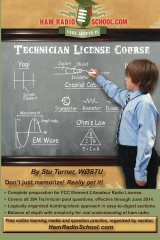 My fellow instructor, Stu Turner WØSTU, got the idea into his head that it would be good to create a license manual that gave a solid treatment of the material while still highlighting the specific questions on the exam. The next thing you know, he is off creating a new book, Ham Radio School.com Technician License Course. Stu did an excellent job writing this book, keeping it focused on the relevant topics but going beyond just teaching the exam questions. He also has a good knack for keeping it interesting.
The story didn’t end there. One thing led to another and the book concept blossomed into a integrated learning system that includes a web site, iPhone/iPad app and (of course) the book. The web site offers some written content and interesting videos that help people learn about amateur radio. I will be contributing some material to the web site from time to time.
The Ham Radio School iPhone app is really sweet…check it out on iTunes. All the questions from the current Technician question pool are included in both review-style quizzes and in properly weighted, full 35-question practice exams, just like the one you’ll take at your VE session.
The most important thing is that the book, the web site and the iPhone app are coordinated and work together as a system. We all have different learning styles, so the system approach allows the student to focus on what suits them best.
73, Bob K0NR
Bob Witte, KØNR, is a regular contributor to AmateurRadio.com and writes from Colorado, USA. Contact him at [email protected].
The things you find at Hamfests …..
Today was the Sussex County Amateur Radio Club Hamfest, up at the Sussex County fairgrounds in Augusta, NJ.
I went along with two good friends, Tim AB2ZK (who graciously volunteered to drive) and Marv K2VHW. Both are fellow South Plainfield Hams and fellow CERT Team members. At the outset, I thought we were in for trouble, as it was very overcast and gloomy as Tim drove up to the house. I even made sure to bring my CERT poncho along – better to be safe than sorry. Good fortune would be ours, though, as by the time we got up to Augusta the sun was breaking through the clouds.
I met many good friends up there, and was especially happy to hook up with Charles W2SH, who lives all of about 18 miles from me in Millington, NJ. Chas, as he goes by, is a fellow Fox hunter, who represents NJ very well in the QRP Fox hunts. If you don’t find my call in the Fox’s log for any particular night, the chances are good that Charles will be in the log. He is the veteran of many hunts and does extremely well, as one of the baying hounds. I will have to put the bug in his ear some time about considering to volunteer as a Fox. I think he would do an outstanding job!
I was also very pleasantly surprised to be tapped on the shoulder by Robert, N2SU who is a regular reader of this blog, as well as John K3WWP’s diary. Robert is an all CW guy and has over 300 countries worked with a barefoot rig and simple wire antennas. Not a small feat by any means; but all the more impressive considering he’s not going the HI QRO/beam/tower route. Thanks for the tap on the shoulder, Robert, it was so nice to meet you!
My purchases were limited to some ARRL mini log books for the portable ops bag, two sets of tweezers (one set straight tips, one set curved tips), two BNC to SMA adapters, and some solderless “O” ring connectors.
The SCARC Hamfest is one of the bigger ones in New Jersey and I am always glad when I can make it, as it usually conflicts with our Lake George vacation. I received a flyer for next year’s event and am glad to say that I will be able to make next year, too!
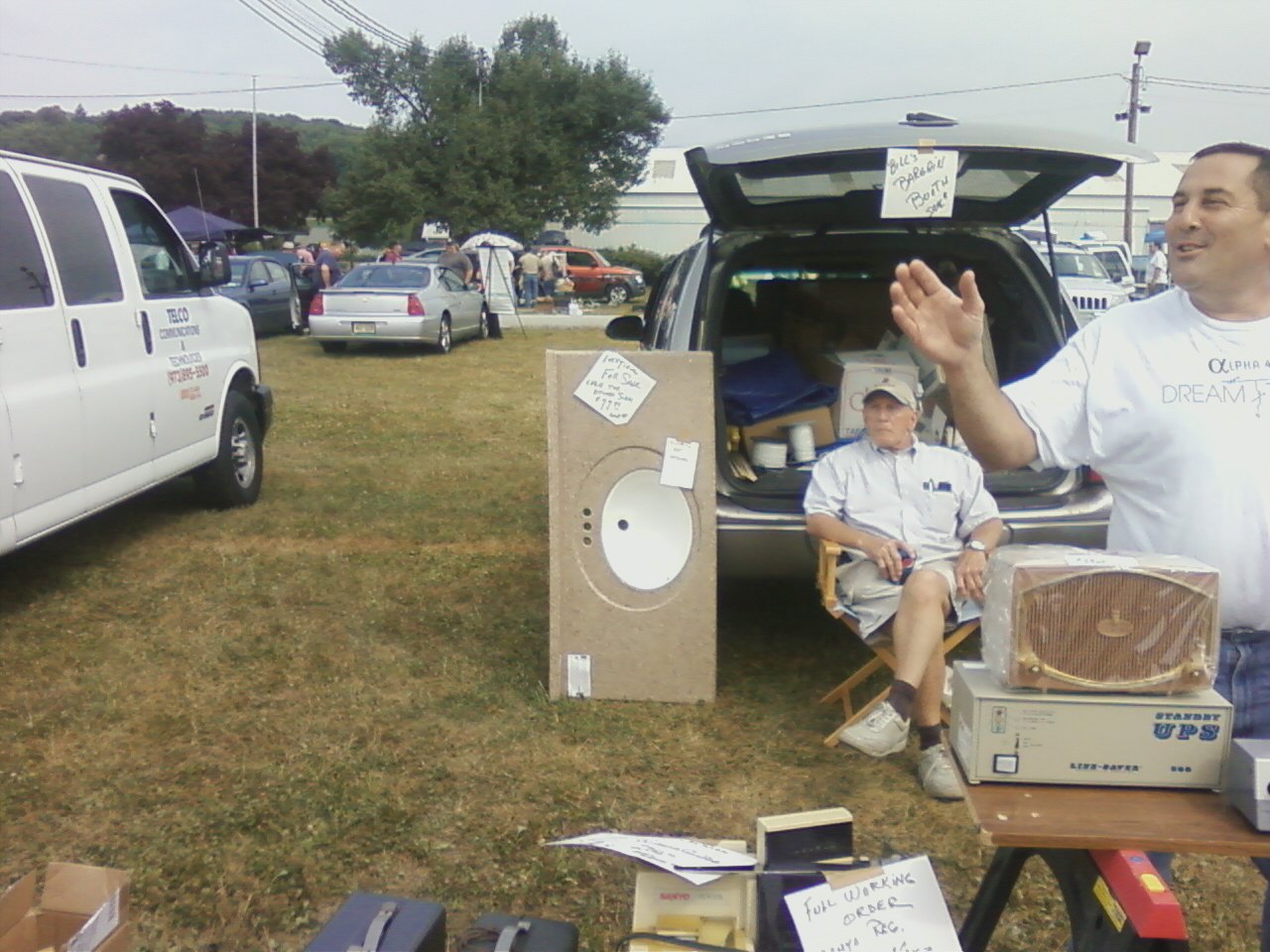
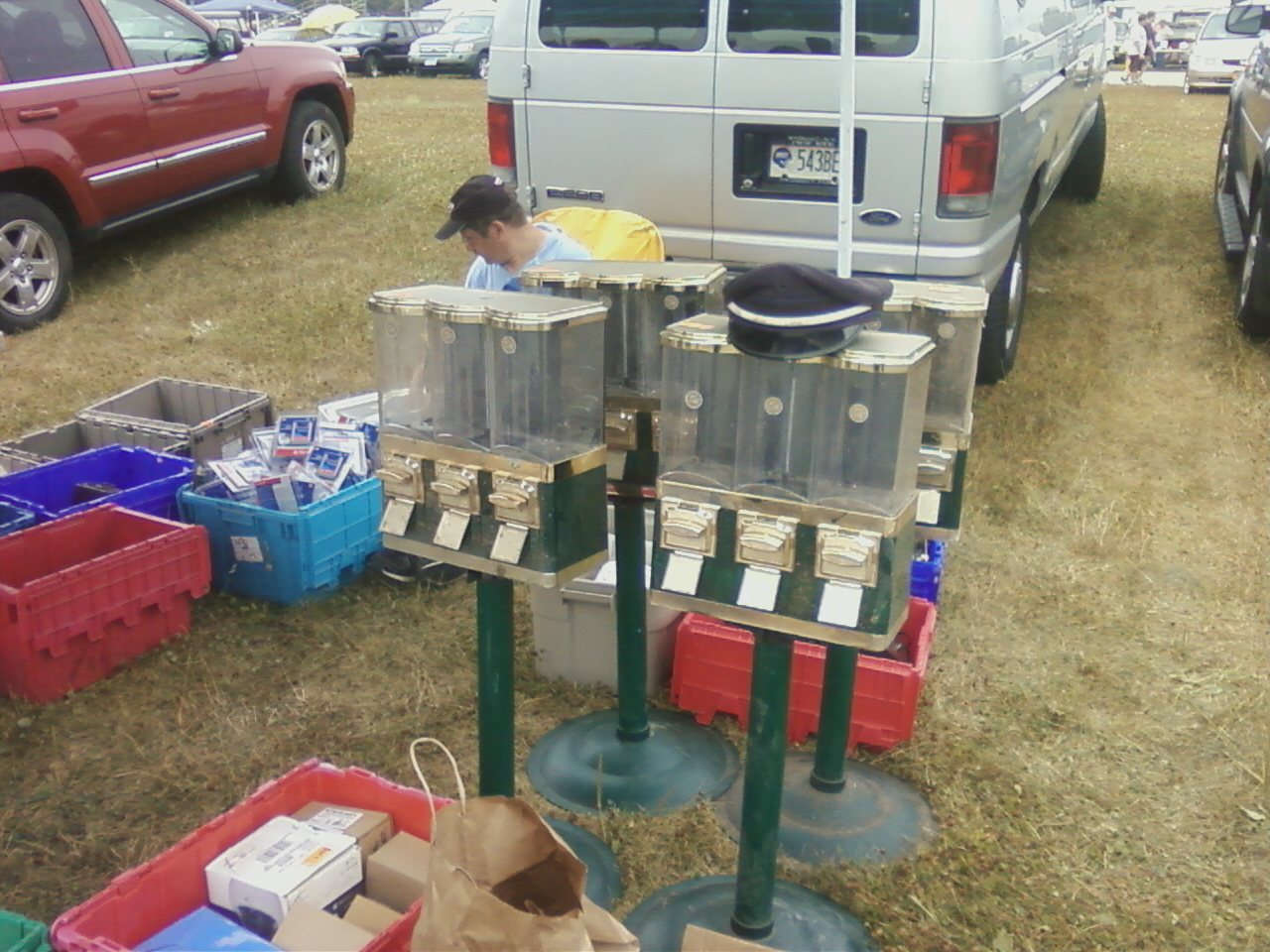
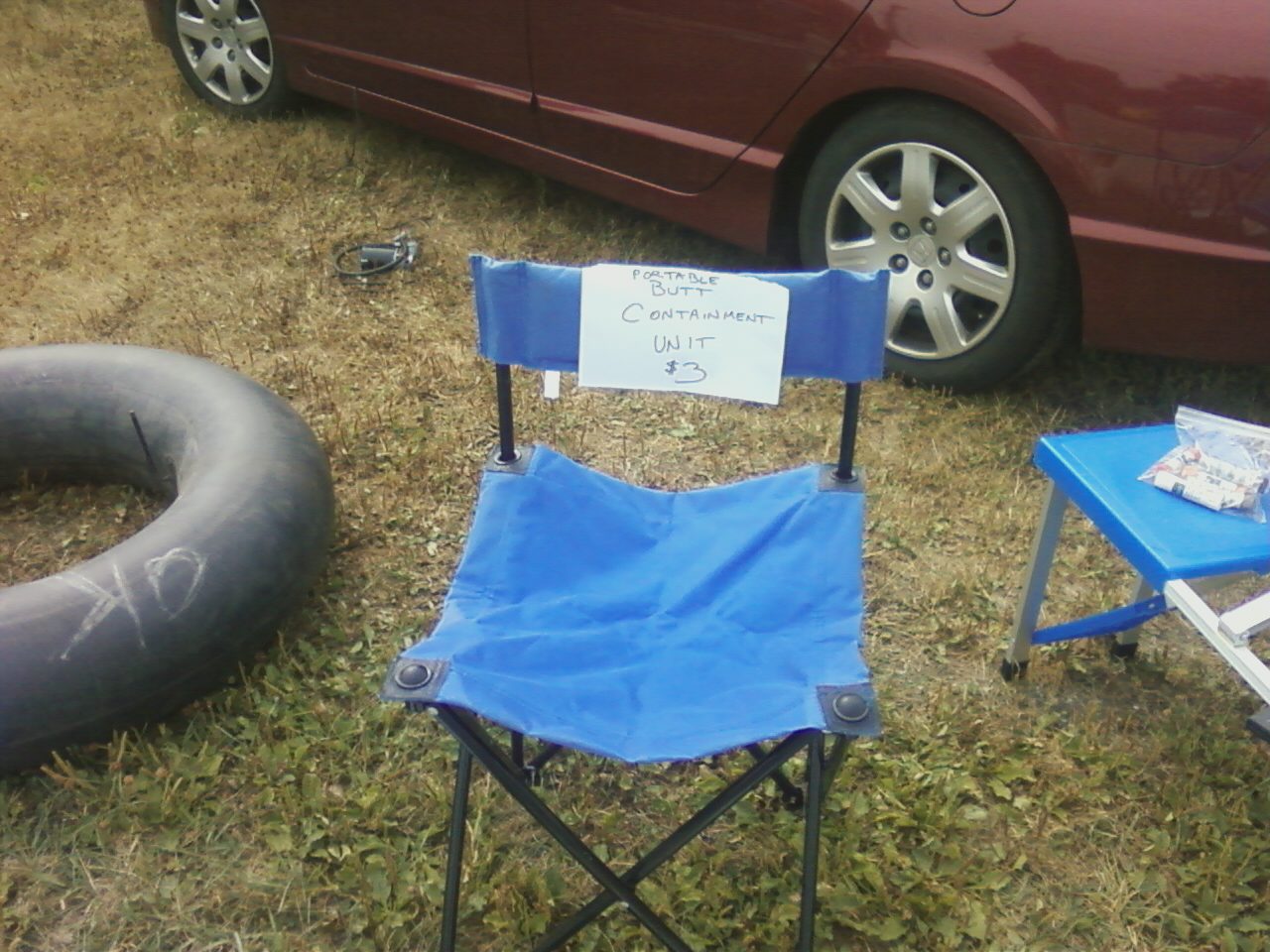
It strange what you can find at a Hamfest, though. It’s not all radios, keys, computer parts, and junk. There are actually some very interesting finds at these electronic flea markets:
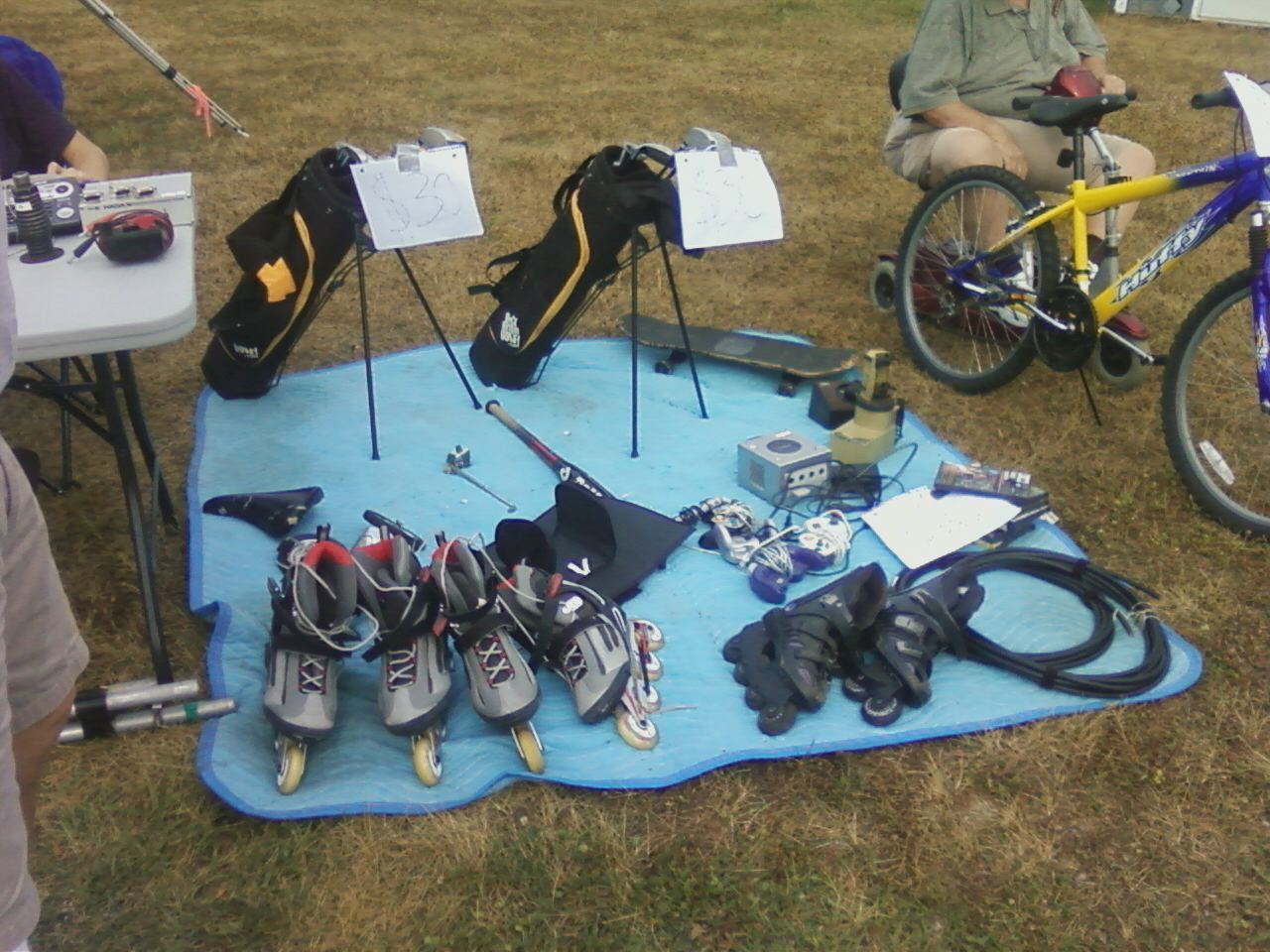
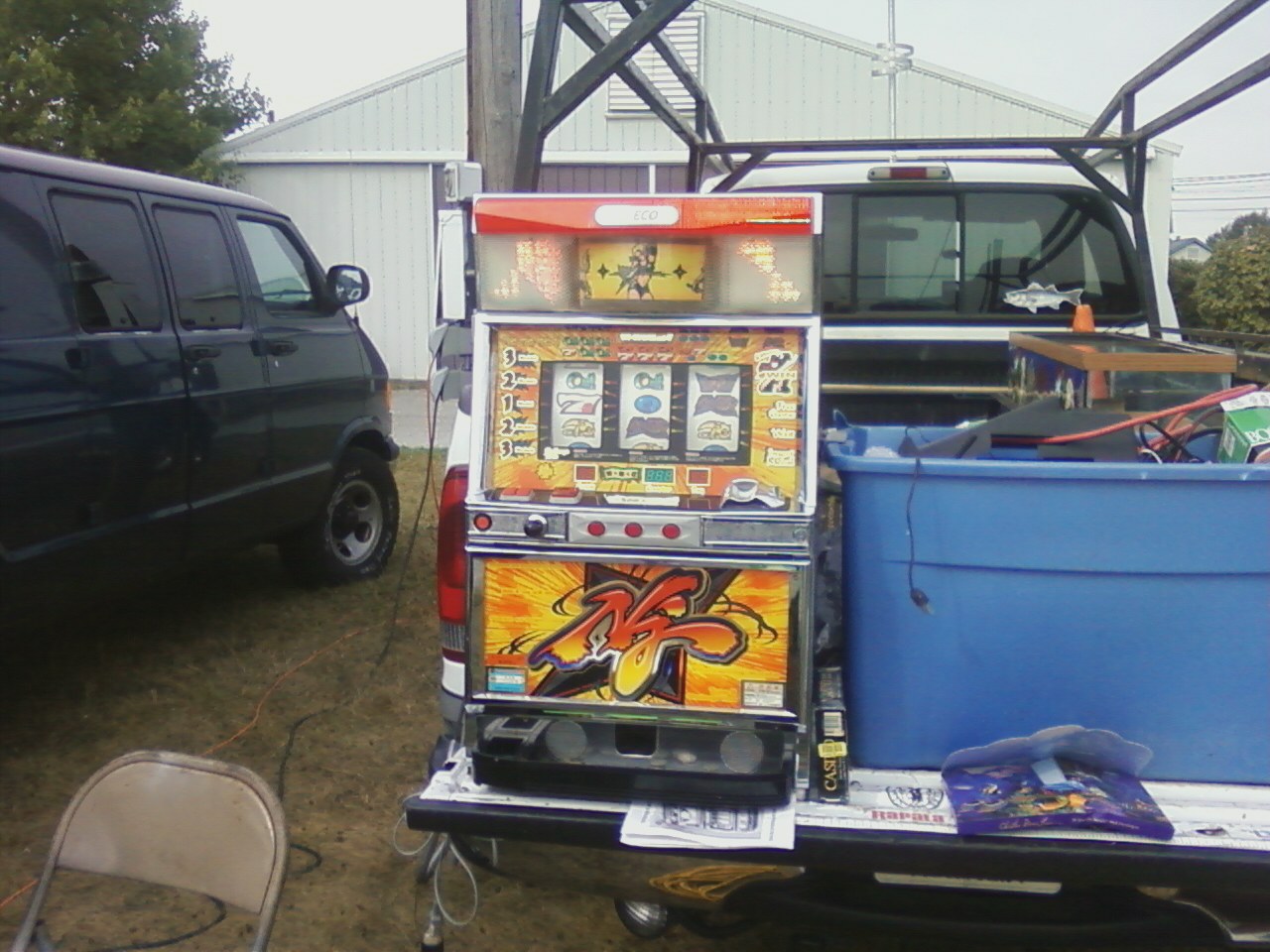
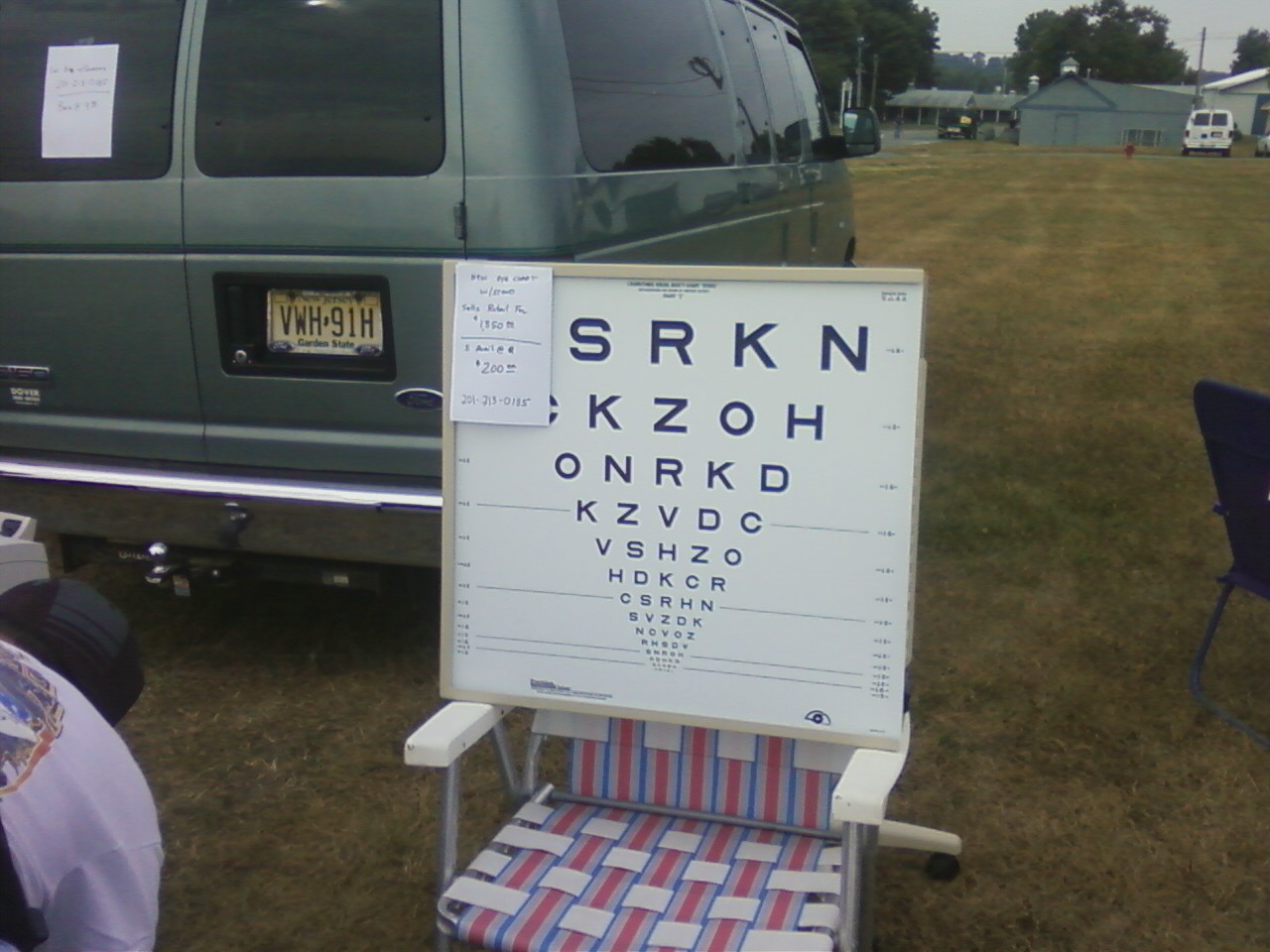

Larry Makoski, W2LJ, is a regular contributor to AmateurRadio.com and writes from New Jersey, USA. Contact him at [email protected].
IARU contest QRP/QRPp event
So how did all this solar mumbo jumbo affect the contesting goals at VE3WDM?? My first goal and last goal of having fun and enjoying the contest was accomplished. As for adding to my DXCC count I only was able to grab one DXCC. The spotting networks were alive with South Pacific and Asia but at VE3WDM nothing at all was heard. My openings seemed to be centered around Europe with the occasional South American tease.
This contest for me was not about gathering points and contacts. It was taking advantage of a large amount DX and working them with the least amount of power as possible. This meant the contest was slow going and not worrying about total contacts and points. 99% of my contacts were made with QRPp power and some with QRP. Each potential contact started with trying to make the contact with as little as 50Mw's. I had to stop at 50Mw's as my LP100A meter will not measure any lower power output. Back when I ordered and built this meter I never thought I would ever be operating as low as 50Mw's......my thinking was "an attic dipole antenna at QRP of 5 watts I am pushing it" funny how things change over time. I have a device on order that will allow me to measure power output into the nano watts...not that I will ever go there......but you never know!! I was not able to top my all time miles per watt high of 45,868 well maybe next time.
ITU 9
HQ contacts 6
Points 46 UPDATE: score was actually 690 have to stop using that new math!!

Mike Weir, VE9KK, is a regular contributor to AmateurRadio.com and writes from New Brunswick, Canada. Contact him at [email protected].
My first auroral QSOs in about 15 years
For one reason or another, I’ve not heard an aurora for ages! Being in the south of the country with fairly little aerials means that it’s not a particularly productive propagation mode for me. However, if a big one comes along and I hear something….
Like this afternoon! I knew there was an aurora going on – but hadn’t really worried about it much. I tuned across 144MHz and to my surprise there were some auroral signals. GM4BYF was loudest and I was delighted to work him. Other G stations were heard tone-A including G0CUZ, G7RAU and G3LTF none of whom are very far from me! Missed Clive GM4VVX who it would have been nice to work. GM0HTT on Orkney was a decent signal on SSB, but had quite a pileip, so I didn’t get involved.
I heard GM3WUX weakly on 50MHz also, but he didn’t come back to a couple of calls. An hour or two later, I tuned across 50MHz and found PA2M calling CQ with an Auroral tone. Despite my little signal from the vertical – not ideal for an Auroral QSO – we completed the QSO. Good ears, Frank – thank you!
I wonder if the Aurora will be visible this evening.

Tim Kirby, G4VXE, is a regular contributor to AmateurRadio.com and writes from Oxfordshire, England. Contact him at [email protected].
Sad SDR News
Put my birthday gift (an RealTek RTL2832U based TV stick) in the suitcase to bring along with me on my family visit to the Netherlands. It worked fine in Taiwan but it was DOA when we arrived here. A pity since everyone is now talking about great sporadic E conditions. Only US$11, so no major monetary loss. I still have my HT and APRS setup to play with, but now my tracker is also not responding any more! Luckily the HT is still working fine and I’m having a good time talking to fellow hams on the local repeaters.
Hans "Fong" van den Boogert, BX2ABT, is a regular contributor to AmateurRadio.com and writes from Taiwan. Contact him at [email protected].
 Ham Radio Deluxe |
 W5SWL Electronics |
 Ham Radio Prep |
 KB3IFH QSL Cards  Hip Ham Shirts  HamRadioAuctions HamRadioAuctions Reliance Antennas Reliance Antennas Enigma Shop Enigma Shop |  morseDX  Ni4L Antennas  R&L Electronics R&L Electronics antennas.us antennas.us QRV QRV |
- Matt W1MST, Managing Editor
