 |
 20 Meter Skunk
 19 July 2012 | by
 The 20 Meter QRP Fox hunt did not pan out tonight.
I heard Arn K0ZK fine for the first half hour; but could not break the pile up. Then his signal faded into oblivion, even with the K3’s APF feature going full bore.
TJ W0EA was just the opposite. He came up into hearing range in the last half hour; but I couldn’t break the pileup there, either.
Sometimes you’re lucky and sometimes you’re not. Tonight was not a lucky night.
72 de Larry W2LJ
QRP – When you care to send the very least!

Larry Makoski, W2LJ, is a regular contributor to AmateurRadio.com and writes from New Jersey, USA. Contact him at [email protected].
LHS Episode #086: W9YA on YFKTest
 A lot of interest has been focused on contest logging of late. We’ve had several comments and questions on the topic. With the recent passage of Field Day and Hamvention, many hams wanted to know what options there were for Linux. As it happens, YFKTest has been on our radar for some time. In order to get the full scoop, we invited Bob, W9YA, the current lead developer of YFKTest to come on the program and let us know what’s going on with YFKTest, what Russ has been doing wrong with it, and where it’s headed in the future.
It turns out that while simple, YFKTest is a competent and fully featured contest logger for many different contests. It works for CW and SSB logging, has rig control built in, and in the future may support network capable logging. There are many more features too numerous to name here. So sit back and let W9YA give you all the ins and outs. And stay tuned to the end of the show where our intrepid hosts tackle feedback from you, the listener. Best of luck in all your upcoming radio ventures.
73 de The LHS Guys
Russ Woodman, K5TUX, co-hosts the Linux in the Ham Shack podcast which is available for download in both MP3 and OGG audio format. Contact him at [email protected].
Sad news – W5PG (SK)
Fellow blogger, Chuck W5PG passed away suddenly, yesterday.
http://pc4t.blogspot.nl/2012/07/chuck-w5pg-silent-key.html
In hist last post, Chuck talked about working up towards doing a Century (100 mile bike ride) later this summer.
Chuck was a good guy and will be missed. Prayers and condolences are with his family.
Larry W2LJ

Larry Makoski, W2LJ, is a regular contributor to AmateurRadio.com and writes from New Jersey, USA. Contact him at [email protected].
Waxing nostalgic

43 years ago, this week, I was a 12 year old geek (of course) in love with the United State’s Manned Spaceflight program. Some of my earliest TV memories were of watching the Mercury launches of Alan Shepard and John Glenn.
43 years ago, this week, the epitome, the apex, the goal was reached. On Wednesday, July 16th we watched as Apollo 11 was launched from Pad 39A from Cape Kennedy.

Three days later, on July 20th, we listened (breathlessly) and Neil Armstrong broadcast, “Houston, Tranquility Base here, the Eagle has landed”. As kids we were ready to go to bed as the EVA (moon walk) was scheduled for the next day. But Neil Armstrong and Buzz Aldrin must have been on an adrenalin high, however, as they asked Houston for permission (and received it) to begin the moonwalk within hours of landing. Our parents suspended bed time rules and allowed my sister and I to stay up and watch all the history being made.


And watch, we did! We watched the TV spellbound as ghostly images appeared on our screens. Walter Cronkite and Wally Schirra were our guides as Neil Armstrong uttered those now famous words, “That’s one small step for man, one giant leap for mankind”. I specifically remember the cameras cutting to Walter Cronkite as events unfolded. He understood the significance of the moment and was almost in tears.

Looking back on it, the accomplishment is even more amazing! The Lunar Module landed on the moon with an on board computer that had less processing power than a scientific calculator or cell phone of today’s vintage. Those were the days when the sky was the limit, we had the national will to do great things and the horizon looked endless. I miss the enthusiasm, the attitude and the ambition of those heady days.
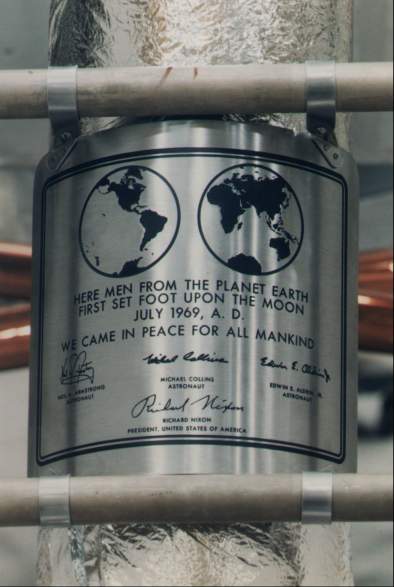
To this day, when I find myself outdoors at night and the moon is out – I still look up there and think to myself, “Wow! We actually went there!”.
72 de Larry W2LJ
QRP – When you care to send the very least!

Larry Makoski, W2LJ, is a regular contributor to AmateurRadio.com and writes from New Jersey, USA. Contact him at [email protected].
Anyone for 10m AM?
By way of something different, I listened to AM CB on the way home. It’s always interesting to hear signals fading up and down and to work out where they’re from. This, for me, is all about DXing – regardless of band or mode.
I’m not sure I have ever listened to AM before – at least narrowband AM! What great quality – almost melodious.
So, does anyone operate 29MHz AM? It could be fun 🙂

Tim Kirby, G4VXE, is a regular contributor to AmateurRadio.com and writes from Oxfordshire, England. Contact him at [email protected].
Kits for the club
Monday night was club night
I must have been a bit tired from the long bike ride I did at the weekend but I offered to run a construction evening based on a simple kit. This was really to help build confidence in soldering and making ‘stuff’ that might be handy for the up and coming ham’s shack.
Anyone who knows me will know that I can build a kit but can’t design a circuit for toffee. So the hunt for a suitable kit began, Julian, G4ILO happened to mention at nerly the same time that a QRSS TX is available through Hans Summers which looks like a cheap and simple one to go for and a company called radio kits do a simple needle based SWR kit or a digital one.
The crucial thing is to be able to talk around the principle of operation as well as the construction otherwise the exercise is missing a trick. I’ll be ordering the bits very shortly and making sure I know they work long before I let myself in for an overly complicated explanation to a bunch of blank faces. Especially if they are wielding soldering irons.
Price is obviously an issue as the club has members with a variety of incomes, but if there are other kits about that could be made up. I would really like to hear of an 4m FM TXRX’s that can be built. For some reason most of the members have an obsession with that band. Otherwise its a suitable SSB HF rig for a long term project. First off though is the easy one. Famous last words?
Alex Hill, G7KSE, is a regular contributor to AmateurRadio.com and writes from Cumbria, UK. Contact him at [email protected].
Chinglish!
I have just found a wonderful example of “Chinglish” on the base of the desk charger for a Baofeng UV-5R.

Let me know if you find any better ones!

Julian Moss, G4ILO, is a regular contributor to AmateurRadio.com and writes from Cumbria, England. Contact him at [email protected].
 Ham Radio Deluxe |
 W5SWL Electronics |
 Ham Radio Prep |
 KB3IFH QSL Cards  Hip Ham Shirts  HamRadioAuctions HamRadioAuctions Reliance Antennas Reliance Antennas Enigma Shop Enigma Shop |  morseDX  Ni4L Antennas  R&L Electronics R&L Electronics antennas.us antennas.us QRV QRV |
- Matt W1MST, Managing Editor
