 |
 Fake or genuine?
 5 August 2012 | by
 Buying radio gear on eBay is like gambling. It’s addictive, but often you lose. You win often enough to keep you coming back in the hope of finding that absolute bargain.
 |
| Is the antenna on the right a fake? |
I thought that I would buy a dual-band handheld antenna that was long enough to have a bit of gain but not too long to use in the shack. (I have several gain antennas but at over a metre in length they are not suitable for indoor use.) I have a Nagoya NA-701 which works very well for its length (22cm) so I thought I would get a NA-771 which is 40cm in length and ought to perform a couple of dBs better. I know only too well that there are a lot of fake antennas on eBay so I bought this one from 409shop, or rather from radiobanker which is one of the eBay IDs used by 409shop. The general consensus is that 409shop is a trustworthy trader and doesn’t sell fake stuff.
When the antenna arrived I was concerned to see that instead of the silver-on-black label showing the make and model number the details were printed on in blue. I have had other fake antennas with printed-on labels, even ones with the same shade of blue so it was not a good omen. When I tried the antenna on one of my handies I found that it performed no better than the much shorter NA-701.
 |
| SWR of the alleged NA-771 |
I put it on my AA-200 antenna analyzer and found that the SWR at 145.000MHz was about 4:1. There were two dips to the HF of the 2m band, the best of which was at 195.000MHz with 2.7:1. This is not the worst I have found but it explains why the antenna did not perform optimally.
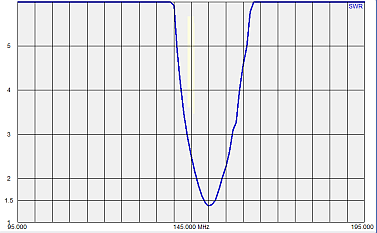 |
| SWR of Nagoya NA-701 |
For comparison I looked at the SWR of the NA-701 with the silver-on-black label. This was a really good match – better than 1.5:1 at 150.000MHz though closer to 2:1 at 145.000MHz. Given that the resonance at any given time will be affected by conditions surrounding the hand-held antenna that’s close enough.
So is the NA-771 from radiobanker a fake or not? The plastic sleeve the antenna came in bears a silver hologram label that says “Nagoya”, and the name “Reuex Industrial Co. Ltd.” That is the name of the company that manufactures Nagoya antennas and apparently they do use blue lettering.
So I conclude that this antenna is probably genuine and performs as well as it was meant to, which unfortunately happens to be not as well as I hoped. The Nagoya NA-771 is not worth its extra length.
FYI using an SWR/power meter I measured the SWR of the two antennas at 433.000MHz to be: NA-701 3.4:1, NA-771 4:1.

Julian Moss, G4ILO, is a regular contributor to AmateurRadio.com and writes from Cumbria, England. Contact him at [email protected].
Happy Dance Time!
Turned on the radio to around 14.060 MHz, hoping to hear some QRPers, only to hear “CQ NA”. I didn’t remember that the North American QSO Party was this weekend. Regular readers of this blog know that except for short QRP Sprints, W2LJ is not big into contests. I have nothing against them; just can’t force my butt into a chair for a long enough period of time to make it interesting for myself.
So instead of kvetching, I pushed the band button on the K3 and took ‘er up the road to 17 Meters. I love 17 Meters! When the band is open there is usually all kinds of good DX. Tonight was no different – and since 17 Meters is a WARC band – no contesting!
So, as is my usual routine, I started at the bottom of the band at 18.068 MHz and slowly twiddled the VFO dial upward. I came to a stop at around 18.074 MHz. D3AA calling “CQ UP” – not too many takers, a small pile up building, but still not bad yet.
Where the heck is D3AA? I quickly plop D3AA in to AC Log. Angola. Hot dog – Angola is a new one! Never worked Angola – QRP or QRO (100 Watts) before.

I throw my call out a couple of times; but no dice. D3AA is up and down. One time he calls, he’s 599 – next time, 569. So I’m thinking to myself that he’s going to fade and that I missed the best propagation (as usual). But no! As time goes along, he’s actually getting louder; but the pile up is also growing, commensurately. The K3 makes it pretty easy to figure out where he’s listening as he stated he was listening up. So I go to where I heard the last few stations he worked and figured out that for the time being, he was staying put and not drifting up after each contact.
Patience and persistence are a big part of QRP and this time was no different. I stayed at it for about 15 minutes and finally, I interjected “W2LJ” at just the right moment and was rewarded with “W2LJ 599 TU”, to which I responded in return, of course.
Coolest of the cool beans! A new African country – a new country via QRP (or ANY power level for that matter). I opened up Chrome on my netbook and figured I would post this to QRPSPOTS. Most of the time I figure that if I was able to work a station with my simple antennas, then a lot of other QRPers should be able to, also. I posted anyway, but saw that I was beat to the punch by my good bud, John AE5X – Amateur Radio op, DXer and QRPer and photographer extraordinaire
Anyway, that’s the reason for “The Happy Dance” tonight.
72 de Larry W2LJ
QRP – When you care to send the very least!

Larry Makoski, W2LJ, is a regular contributor to AmateurRadio.com and writes from New Jersey, USA. Contact him at [email protected].
Busy, Busy: ARES Incorporation and My Son’s Enrollment in an Electrician AAS Program
It’s been too long since I’ve posted; for those waiting for my next post on the ARRL Radiogram, please pardon the delay. The last couple of weeks have been unusually busy. More important matters have largely taken precedence over ham radio and blogging, but ham radio has by no means died at the QTH of NØIP and KAØCEM!
ARES® has been thriving here. On July 5, Yellow Medicine County ARES®, Inc. was incorporated. We filed our articles of incorporation with the MN Secretary of State and also obtained vanity call sign WØYMC (Yellow Medicine County) from the FCC! Two nights ago, the board of directors held their organizational meeting at which they adopted bylaws, elected officers, etc. Now we are ready to make application for 501(c)(3) status with the IRS. Hopefully I will get to that next week.
We had one emergency operation in July, though I sort of backed into it. After I received a phone call from a friend, my son and I assisted in searching for a missing girl. At first I wasn’t even thinking in terms of ARES. Intending to just help our friends, I told my son to throw on his ARES vest to be more visible, I grabbed mine, and we brought our HT’s so we could communicate. Upon arrival at the scene we found ourselves in the midst of many similarly-clad firefighters and EMS personnel as well as police officers and deputies. Long story short, by the time the search was concluded, many more firefighters would be involved as well as local K9, bloodhounds from Watertown, SD and the MN State Patrol Helicopter. Thanks be to God, the girl eventually turned up safe.
The weekly Yellow Medicine County ARES Training Net continues. In July I covered the ARRL radiogram, an introduction to the Incident Command System, and spent one session discussing lessons learned in the search for the missing girl. Thus concludes the latest ARES news from Yellow Medicine County.
And on the home front it appears that by elmering my son Antonio, KAØCEM, I have unwittingly steered him toward a career as an electrician! This past Wednesday he was admitted to the Electrician AAS program of MN West Community College, Canby, as a PSEO (Post-Secondary Enrollment Option) student in his last two years of highschool/homeschool. He surprised me a couple months ago by asking about this, and now he’s all registered for classes and already has a pile of books to study.
That’s all I have time for right now. After dashing this off it’s back to work for me. Hopefully I’ll get back to regular posting next week.


Todd Mitchell, NØIP, is a regular contributor to AmateurRadio.com and writes from Minnesota, USA. He can be contacted at [email protected].
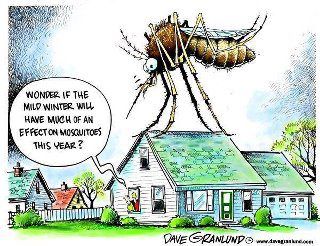
Now THAT’S a Skeeter
Courtesy of my good friend George N2JNZ, who sent it along with his Skeeter number request e-mail:

Larry Makoski, W2LJ, is a regular contributor to AmateurRadio.com and writes from New Jersey, USA. Contact him at [email protected].
The "other" side of the pile up!
Daunting, isn’t it? Just goes to show that there were some superb ops up there on CY9M!
72 de Larry W2LJ
QRP – When you care to send the very least!

Larry Makoski, W2LJ, is a regular contributor to AmateurRadio.com and writes from New Jersey, USA. Contact him at [email protected].
Soon there will be a new KX3 coming to town…
 |
| Elecraft KX3 |
As for my kit from DIY electronic kits the USB 0-500mhz USB power meter kit has been soldered and is all together BUT is seems it has to be calibrated as the output of the rig is not even close to the readings I am getting with the kit. I have emailed the DIY electronics company over and over again but nothing.......seems that was 90.00 down the drain. I am going to keep it up and if I can I want to find a phone number I will then call them and demanding a refund!!! On an up beat note I posted a short time ago about a kit that I ordered and put together call the QRPometer. This kit is a great QRP watt meter and SWR meter but it only goes done to 500mW's..........now for most of you that is just fine but not here at VE3WDM!!! I like to operate now and then at QRPp levels. This means I need a meter that will give me good and reliable wattage readings from about 10mWs up to 100mWs. This was the reason for me ordering the USB 0-500mhz USB power meter it brags of getting down to the low mW levels..........IF YOU CAN GET IT TO WORK AND GET THE DAM TECH SUPPORT TO EMAIL YOU.........take a deep breath......ahhhmmmm.........ok Im back. Talking with the 4 state qrp group (those who produce the QRPometer) I am told the meter can have it's decimal place changed!!! This would give me the QRPp readings I need. This is a project that is now in the works and I will keep the blog readers posted as to it's progress.

Mike Weir, VE9KK, is a regular contributor to AmateurRadio.com and writes from New Brunswick, Canada. Contact him at [email protected].
The other thing I wanted to talk about tonight
is the new book out by Don Keith N4KC. If you haven’t read about it on his blog, then I am going to tell you about it here.
The name of the book is “Riding the Shortwaves: Exploring the Magic of Amateur Radio“
.jpg)
I purchased it the other day, and this book is fantastic, IMHO!
If you have someone that you know is thinking of becoming a Ham, has inclinations about becoming a Ham, or is actively studying to become a Ham, or recently became a Ham – direct them to this book! Don is an accomplished, published author – and this book showcases his writing skill.
It is written in friendly, plain language, with just the right amount of Ham jargon infused (fully explained) that is perfect for those who are getting into or just got into the hobby. And the primary focus of this book is getting on the HF bands. How many new Hams do you know that get their license and then just seem to stagnate on VHF/UHF, get bored and leave the hobby?
That situation vexed Don N4KC also, and this is his effort to solve that problem. The first thing he does (and does it really well!) is to inform the prospective or new Ham just how great operating on the HF bands is. He puts “The Magic” that is HF into words better than I’ve ever read before. Then he builds upon that by covering how to set up your station, how to choose and set up an antenna, which are just a few of the topics covered in this book. I have to tell you, that in all honesty, I wish this book was out 34 years ago when I first got started.
This book has all the stuff that we OT HF operators learned the hard way. Now it’s written down in a book that is a delightful and very entertaining read. Hey, there’s even stuff in here that’s a good review for us OT’s, too! Learning and having fun while doing it – what could be better than that?
72 de Larry W2LJ
QRP – When you care to send the very least!

Larry Makoski, W2LJ, is a regular contributor to AmateurRadio.com and writes from New Jersey, USA. Contact him at [email protected].
 Ham Radio Deluxe |
 W5SWL Electronics |
 Ham Radio Prep |
 KB3IFH QSL Cards  Hip Ham Shirts  HamRadioAuctions HamRadioAuctions Reliance Antennas Reliance Antennas Enigma Shop Enigma Shop |  morseDX  Ni4L Antennas  R&L Electronics R&L Electronics antennas.us antennas.us QRV QRV |
- Matt W1MST, Managing Editor
