 |
 2012 Challenge–One Quarter to Go
 2 October 2012 | by
 As the subject line reads, I’ve reached the final quarter of 2012 in my 2012 Challenge of having at least one QSO per day. This update is for the month of September.
September was a busy month for me with a total of 346 QSO’s. This surge in QSO numbers is of course due to my participation in the Colorado QSO Party. I also spent a great deal of time organizing the new ham shack and even found time to attempt and successfully activate my sixth SOTA summit.
While it was looking grim on adding a new DXCC entity in September, Uruguay entered the logbook on 28 September to keep my streak alive of also adding at least one new DXCC each month in 2012. I also had a fairly active month in working DX with 18 QSO’s logged.

The QSO breakdown for September is as follows:
Mode
Number QSO’s
JT65
38
SSB
302
PSK31
1
2m FM
5
Additional notes of interest:
DX Stations Worked in September – 18
New DX Entities in September – 1
Total QSO’s for 2012 – 1283
Total consecutive QSO days – 274
Days left in 2012 – 92
Until next time…
73 de KD0BIK
Jerry Taylor, KD0BIK, is a regular contributor to AmateurRadio.com and writes from Colorado, USA. He is the host of the Practical Amateur Radio Podcast. Contact him at [email protected].
Designing PCB’s
It seems that most of us hams make a lifelong commitment to learning. Mainly about technical stuff to do with the hobby but occasionally about yourself. Yesterday I learnt that designing a simple PCB for my shack clock was going to take longer than a couple of hours.
Starting at the beginning I did the usual Googling about to find the right piece of software that would “easily” and “simply” turn my ideas into reality (I’m paraphrasing the marketing blurb but you know the kind of thing). I must be in a minority but this isn’t simple or easy. My shack clock is simple a radio controlled clock that receives a signal from the MSF 60KHz transmitter in Anthorn, Cumbria. No more than 30 miles from the house. An Arduino microprocessor converts the signal from the receiver into a simple LCD display. Currently the clock runs from a USB cable into the Arduino and into a heap of cables and wires on the desk. It has a certain aesthetic quality but not one you’d particularly call ‘3 year old boy proof’ (Sam likes to pull the wires out).
So downloading the freeware version of Eagle and firing it up, running through a bunch of tutorials and within a few short hours I had a schematic up on the screen. Even after wrestling about with some of the vast array of included libraries and checking of specs of things on various websites and ‘guessing’ my way through I think the schematic looks about right.
For this part of the project the Arduino had been replaced with the barebones microprocessor from Hobbytronics. Switching to the board layout gives a complete mess of wires and components that need shifting round. I now realise that this isn’t going to be a quick design. Normally at this point I’d share a picture of the work in progress. This time I will keep it to myself, until I can stop the board looking like a, well I don’t really know what it looks like but I know it isn’t a PCB yet.
Onwards and upwards!
Alex Hill, G7KSE, is a regular contributor to AmateurRadio.com and writes from Cumbria, UK. Contact him at [email protected].
Can I Use My Ham Radio on Public Safety Frequencies?
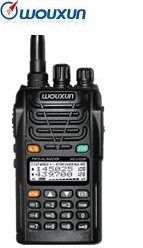 We have quite a few licensed radio amateurs that are members of public safety agencies, including fire departments, law enforcement agencies and search and rescue. Since they are authorized users of those public safety channels, they often ask this question:
Can I use my VHF/UHF ham radio on the fire, police or SAR channel?
It is widely known that many amateur radios can be modified to transmit outside the ham bands. The answer to this question used to be that amateur radio equipment cannot be used legally on public safety channels because it is not approved for use under Part 90 of the FCC Rules. (Part 90 covers the Private Land Mobile Radio Services.) The only option was to buy a commercial radio with Part 90 approval and a frequency range that covered the desired amateur band. Some commercial radios tune easily to the adjacent ham band but some do not. The commercial gear is usually two to three times as expensive as the amateur gear, and just as important, does not have the features and controls that ham operators expect. Usually, the commercial radios do not have a VFO and are completely channelized, typically changeable only with the required programming software.
The situation has changed dramatically in the past two years. Several wireless manufacturers in China (Wouxun, Baofeng, etc.) have introduced low cost handheld transceivers into the US amateur market that are approved for Part 90 use. These radios offer keypad frequency entry and all of the usual features of a ham radio. It seems that these radios are a viable option for dual use: public safety and amateur radio.
Here is a short list of the most common radios on the market:
| Model | Features | Price |
| Wouxun KG-UV2D, KG-UV3D | Several different models with slight variation in features, check carefully before ordering 136-174/420-470 MHz 5 kHz is smallest frequency step | $120 |
| Wouxun KG-UV6D | Several different models with slight variation in features, check carefully before ordering 136-174 / 420-520 MHz 2.5 kHz frequency step | $175 |
| Baofeng UV-5R, UV-5RC | The UV-5RC is an updated case style 136-174 / 400-480MHz 2.5 kHz frequency step | $65 |
Some Things to Consider When Buying These Radios
- The manufacturers offer several different radios under the same model number. Also, they are improving the radios every few months with firmware changes and feature updates. This causes confusion in the marketplace, so buy carefully.
- Make sure the vendor selling the radio indicates that the radio is approved for Part 90 use. I have seen some radios show up in the US without an FCC Part 90 label.
- Make sure the radio is specified to tune to the channels that you need.
- The 2.5-kHz tuning step is required for some public safety channels. Your particular set of frequencies may or may not need it. For example, a 5-kHz frequency step can be used to select frequencies such as 155.1600 MHz and 154.2650 MHz. However, a 2.5 kHz step size is needed to select frequencies such as 155.7525 MHz. There are a number of Public Safety Interoperability Channels that require the 2.5-kHz step (e.g., VCALL10 155.7525 MHz, VCALL11 151.1375 MHz, VFIRE24 154.2725). The safest thing to do for public safety use is to get a radio that tunes the 2.5-kHz steps.
- Although these radios have two frequencies in the display, they only have one receiver, which scans back and forth between the two selected frequencies. This can be confusing when the radio locks onto a signal on one of the frequencies and ignores the other.
Recommendation
I own 3 different models of Wouxun radios and two Baofeng UV-5R radios. I think they are all great radios for what they do. For serious public safety use, I would recommend getting the Wouxun KG-UV6D with the 2.5-kHz frequency step. The controls of the Wouxun are superior, including a knob for channel/VFO selection and RPT key for changing repeater shift. The Wouxun software works much better than Baofeng’s (which is really a mess). Also, if you show up at an incident with the Baofeng, your fellow first responders will think it is a toy. If you are absolutely sure you don’t need the 2.5-KHz frequency step, then you might consider one of the other Wouxun models.
I have purchased several radios from importcommunications.com and have been very satisfied with the service. You may want to shop around for the best price.
73, Bob K0NR
Bob Witte, KØNR, is a regular contributor to AmateurRadio.com and writes from Colorado, USA. Contact him at [email protected].
World Wide Radio Tele Type contest
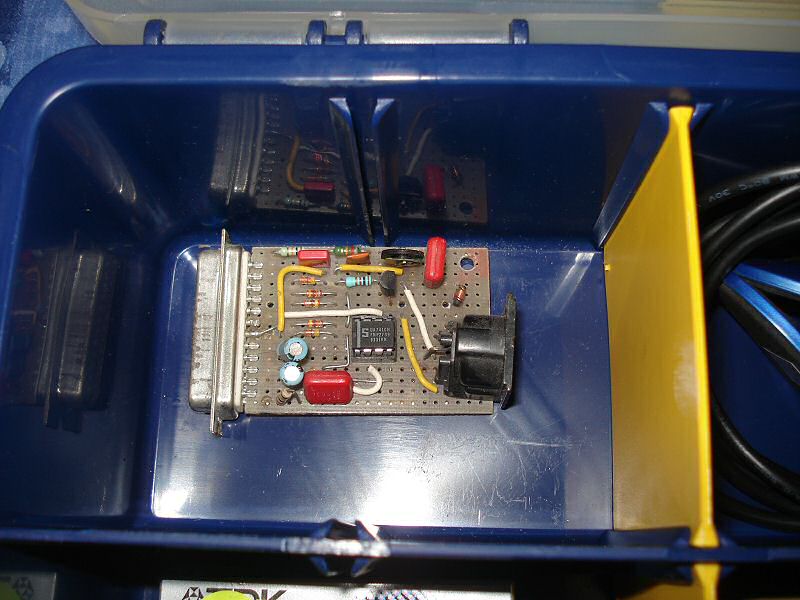
Recently I came across my old RTTY hamcom modem when cleaning my garage. Built from scrap parts and inspired by Peter PA1SDB at the time we were both experimenting on CB. I even remember we transmitted kind of a RTTY bulletin on CB every sundayevening at that time. And after we got our licenses we regulary were found on the 2 Meter band receiving the local World Link RTTY bulletin by PA3ESF. Most of the HAMs involved used software called Intercom by PA3BYZ at that time. All nice RTTY memories for me, but things can get more crazy as before my first efforts with RTTY and before my time there were the old mechanical Telex machines. There are still HAMs like PE1ARD Arnold who have these telex machines working and use them in their radioshacks, incredible! Find a video here: http://youtu.be/ku_JlxlTLIA and take a look at around 10:40. And so….we’re doing a RTTY contest these days on HF. A antique mode used to do contest inspired by the past I think. As there is a large number of stations participating it is very populair. not really my mode outside contesting, I prefer something modern like PSK or JT65. Most interesting RTTY contest is probabely last weekends CQWW RTTY contest which has lots of DX stations that participate. Unfortenately I had less time Saturday and in the evening 10 and 15m were closed. So I made some QSOs on 80, 40 and 20m. Sunday was better and I could attend the shack in the morning with my harmonic Anneli. When starting the computer I checked the 11m band as always to check propagation possebilities on 10m. I heard an old CB radio friend and made a QSO with him first. After that I moved to 10m and made my first QSO to Japan, the next station was my neighbourstation PA0O Jaap. I made a small sked with Jaap on 70cm FM, Jaap told me that propagation would be not as good as saturday because of a magnetic storm. He told me also he heard Hawaii and Guam on 10m, but it was hard to make the QSO because of the pile-ups. So unfortunate I thought I was too late for DX….well after all I think I did make some:
10m RTTY most interesting DX worked: JR4GPA Japan, KG6DX Guam, NH2T Guam, P49X Aruba, FM5CD Martinique, FR5GS Reunion isl., AY8A Argentina, CW90A Uruquay, 4M5IR Venezuela, HK1R Colombia, HI8PLE Dominican Rep., PY2NY Brazil and of course lots of USA and Canada both east and west coast.
Bas, PE4BAS, is a regular contributor to AmateurRadio.com and writes from Groningen, Netherlands. Contact him at [email protected].
LHS Episode #091: Messed Up in the Head
 Good mushroom, everyone, and welcome to another episode of Linux in the Ham Shack. This time around, we get a little bit ham geeky. That’s not a bad thing for those of you who are computer enthusiasts. We all delve into some scientific topics like electro-magnetic radiation, skywave propagation, atmospheric layers and other topics that are sure to tickle a few neurons and axons. We manage to keep everything at a level even non-geek-weenies will be able to understand. Somehwere in the middle, Russ goes on a tirade so you don’t want to miss that either. While you’re listening, take a moment to click on a link or two, sign up for the mailing list or maybe donate a couple of bucks to the show. We will love you long time if you do. Promise.
73 de The LHS Guys
Russ Woodman, K5TUX, co-hosts the Linux in the Ham Shack podcast which is available for download in both MP3 and OGG audio format. Contact him at [email protected].
Progress
Recently it’s been quiet here on Radio Artisan and I’ve been somewhat absent on AmateurRadio.com. The usual excuses apply, with work consuming most of my intellectual energy and time. It’s unfortunate we have to work so hard to live and have some fun. In this culture we seem to be on an endless treadmill that goes faster and faster, but goes nowhere. But needless to say I’m still alive and have been actually doing some amateur radio stuff these days.
Daily I receive correspondence about my CW Keyer and Rotator Controller, most of it coming from Europe and Australia. Originally with the Rotator Controller I just wanted to interface my Yaesu rotator to the computer, but it’s gone beyond the original scope with notes from folks interfacing homebrew rotators and some amateurs with really cool ideas. I continue to write bug fixes and minor feature updates for the CW Keyer, which now has two parties offering hardware kits.
The main project garnering the most attention right now is the Arduino Antenna Tuner. It’s going slower than anticipated, but I’m pleased to say I’ve been making some progress with a good portion of the tuning network built, the I2C interface hardware working, and the frequency counter prescaler built on the hardware prototype. I’m currently working on an SWR bridge and I’m having some issues. I’ve built a Bruene bridge and a Tandem Match bridge, and both have rather mediocre directivity, in the neighborhood of 12 to 14 dB.

Both of my SWR bridge prototypes are “good enough” to use for software coding and testing, however I want the final product to be better. Any feedback from anyone with hands-on experience building SWR bridges would be appreciated. Once I get the hardware prototype to a reasonable level, I can dive into the coding. Some of this work was completed earlier this year as I wrote some SWR reading and calculation subroutines and some LCD interface code. I’m really giddy to get coding. Although I really like building stuff I guess I’m more of a software guy than hardware. I find algorithms, protocols, networking, and interfacing exciting.
I continue to enjoy working with folks, helping them get code working and talk about ideas. It’s neat to be able to email someone halfway around the world a code snippet and have them load it up on their hardware, use it, and have fun with it. Although the Internet has made the world seem smaller, and amateur radio is no longer the only way to talk to folks in far off lands, amateur radio adds another dimension to the Internet and vice versa giving us more opportunity to help each other and promote international goodwill.

The Elecraft KX3 has a pulse……..
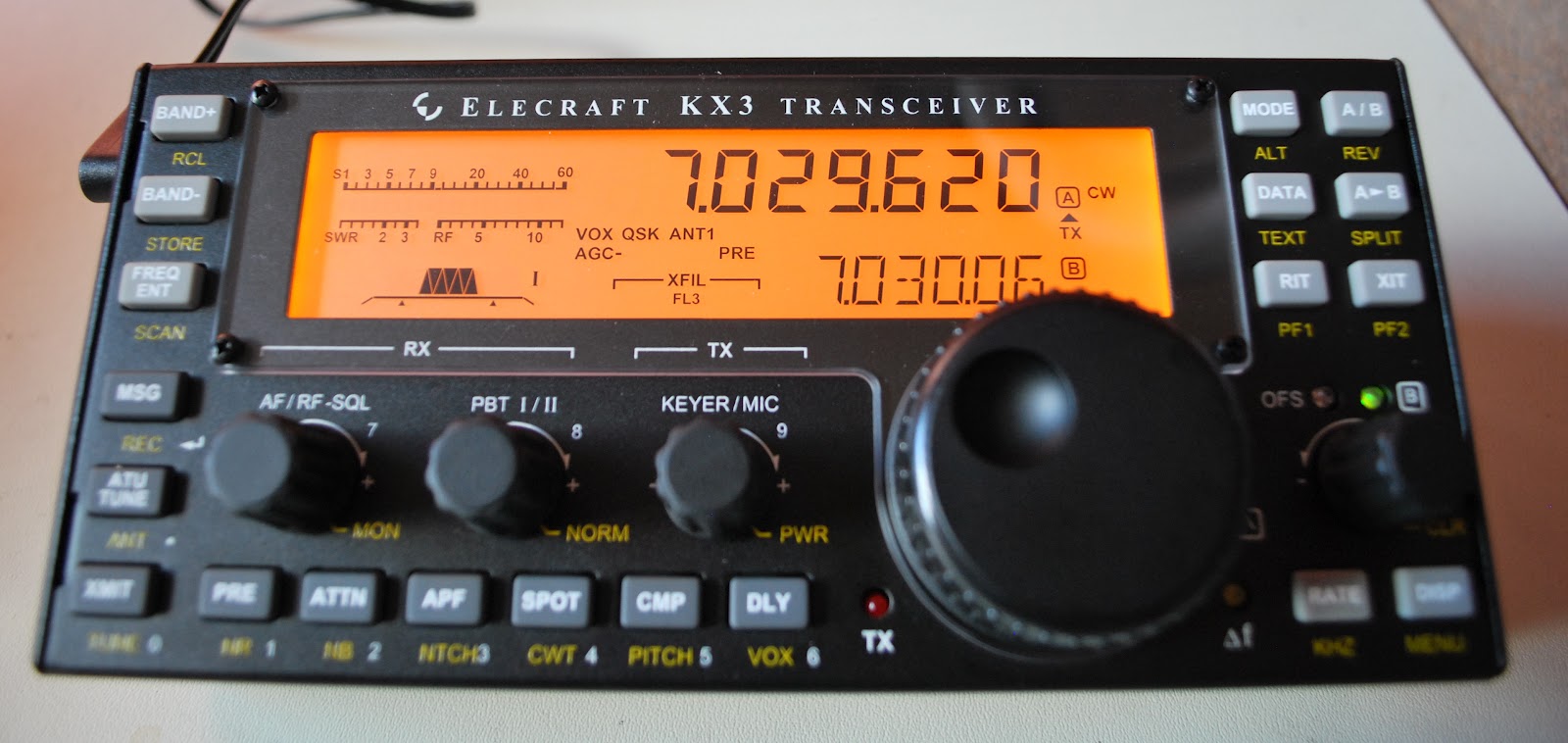 |
| KX3 serial number 1990 |
Mike Weir, VE9KK, is a regular contributor to AmateurRadio.com and writes from New Brunswick, Canada. Contact him at [email protected].
 Ham Radio Deluxe |
 W5SWL Electronics |
 Ham Radio Prep |
 KB3IFH QSL Cards  Hip Ham Shirts  HamRadioAuctions HamRadioAuctions Reliance Antennas Reliance Antennas Enigma Shop Enigma Shop |  morseDX  Ni4L Antennas  R&L Electronics R&L Electronics antennas.us antennas.us QRV QRV |
- Matt W1MST, Managing Editor
