 |
 A glorious fusion of old and new on 29MHz AM
 23 October 2012 | by
 When I got back to the car this evening around 1815z I switched on the 10m rig. It was tuned to the CW end and it immediately became apparent that conditions were still good – with a fierce pileup being audible. I didn’t stick around to see who it was.
I headed up to 29MHz to look for AM stations. One or two were audible, but the one that caught my ear was Rob W1AEX who was coming in really well. As I drove out of the station and towards home, I listened to Rob making some QSOs. To my surprise, rather than using boat anchor type gear, it turned out that Rob was using up to date SDR gear, a Flex radio. It sounded great! I laughed when Rob explained he was using a $2.79 microphone! There was quite a pileup going, so sadly I couldn’t attract Rob’s attention, but the story doesn’t end there.
I heard Malcolm, G8NRP calling Rob too. When it was clear neither of us had got through the pileup, I asked Malcolm if he had time to QSY and make a contact. We did, and it was a first AM QSO for both of us, which was a lot of fun. Not great DX, being 10 miles or so, but it’s a start!
Meanwhile, checkout Rob W1AEX’s station here

Tim Kirby, G4VXE, is a regular contributor to AmateurRadio.com and writes from Oxfordshire, England. Contact him at [email protected].
10m WSPR spots 23 Oct 2012
 |
| 10m WSPR spots @ G4ILO 23 October 2012 |
Fell asleep after lunch so the WSPRing went on uninterrupted. This was the result.

Julian Moss, G4ILO, is a regular contributor to AmateurRadio.com and writes from Cumbria, England. Contact him at [email protected].
The things that memories of solar cycle peaks are made of…
When you look back on the peaks of solar cycles, I find that some of the memories usually feature 28MHz. Last cycle I spent loads of time on 28MHz CW working across the US and beyond from a tiny garden in Windsor, with a stealth wire antenna! The cycle before that, I remember listening to mobiles driving around Tokyo on 29MHz FM on my converted CB set with a small antenna in the loft.
I wonder what this cycle’s memories will be? Maybe some of the low power WSPR and JT65A. But this evening, driving home would be a contender. The KQ2H repeater was end stop on the Anytone and absolutely jammed with people trying to access it. After a couple of abortive attempts to put a call through, I sat back and listened.
6Y5SJ was working into the UK and Germany. A mobile in London was working a fixed station in Essex- over a path of 7000 miles or so! But what was brilliant was listening to (I think – this is from memory) K2SLJ/P using a UHF portable working another portable in New York through a UHF link. One of them was using 1W from a Baofeng UV-3R. How cool that their signals are crossing the Atlantic and beyond.

Tim Kirby, G4VXE, is a regular contributor to AmateurRadio.com and writes from Oxfordshire, England. Contact him at [email protected].
10m WSPR spots 22 Oct 2012
 |
| 10m WSPR spots @ G4ILO 22 October 2012 |
Another nice haul with 2w and an attic dipole

Julian Moss, G4ILO, is a regular contributor to AmateurRadio.com and writes from Cumbria, England. Contact him at [email protected].
Site changes
I’ve just spent half a day when I could have been working 10m DX updating the website and blog templates. The main difference is that I have made all the text about 10% larger, which should help those – including myself – who find small print increasingly hard to read.
I have also made the main content section wider so it makes better use of the screen. Most people have bigger monitors than when I first started G4ILO’s Shack, from which the blog inherited its template. I dare say there will be a few using older, smaller screens who will find this change annoying. Sorry.
I have taken advantage of this change to include larger pictures and screenshots. Another benefit – though some may question that – is that I can use a wider ad format, which Google has been pestering me to do recently. I’m sure that some of my readers would have liked me to get rid of the ads altogether. However, they make far too much money to simply forgo it – not enough to live on but certainly enough to pay for my hobby and G4ILO’s Shack’s web hosting.
I wouldn’t advise anyone on the basis of this to start publishing Google ads on their own ham radio sites or blogs – not unless you have G4ILO’s Shack’s level of visitor traffic. The ClustrMaps widget at the bottom of the left hand column will give you an idea how much that is, if you’re interested.

Julian Moss, G4ILO, is a regular contributor to AmateurRadio.com and writes from Cumbria, England. Contact him at [email protected].
Seventy Three
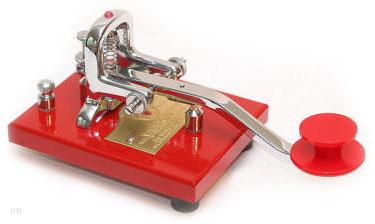 Like many technical activities, amateur radio has its own set of jargon and protocols used both on and off the airwaves. As part of our Technician license course, we cover basic jargon but also encourage the use of plain language. A new Technician recently asked about the use of the term “73″ on the local FM repeater, so I am posting this short piece.
Much of amateur radio history and practice is rooted in Morse Code, which traces back to the electrical telegraph. Two shorthand codes you’ll hear on both voice and Morse Code communications are:
73 means Best Regards
88 means Love and Kisses (sometimes Hugs and Kisses)
These codes originated with telegraph operating and are listed in the Western Union 92 Code, a set of numerical shorthand codes. On voice (phone) transmissions, you often hear something like this:
“Great to talk to you, Joe. Thanks and Seventy Three. This is K0NR, clear.”
Since 73 is often used at the end of a radio contact, it almost takes on the meaning of “best regards and goodbye.” “Eighty Eight” is used in a similar manner but is heard much less frequently on the ham bands.
Sometimes you’ll hear 73 expressed as “Seven Three”, which corresponds to how the Morse characters were sent. It is incorrect to say “Seventy-Three’s” since this would literally mean “Best Regards’s”. Of course, most of us have made this error from time to time, very similar to grammatical errors in the English language. (“Somes time we forget to talk good.”)
QRP operators often use 72 instead of 73 because low power operating is all about getting by with less. See W2LJ’s blog.
And I normally use 73 at the end of most ham radio related email messages.
73, Bob K0NR
Bob Witte, KØNR, is a regular contributor to AmateurRadio.com and writes from Colorado, USA. Contact him at [email protected].
Single wire Cobwebb antenna
Last summer I built myself a Cobwebb antenna and was fairly pleased with the results. I did think it was a bit heavy and was looking to repeat the build with some lighter weight wire until I came across this article from a well-known antenna buff, G3TXQ. It looked like just the ticket so I copied the design and low and behold after a few evening work I finished it off. Here it is during the tuning phase of work which I completed over the weekend (which by the way is as simple as tuning any dipole).

By the way the tropical weather (read blue sky) in St Bees is a welcome change from the recent flooding. I doubt it’ll last though!
You can see the usual antenna laying down in the background, which is a Hustler 6-BTV vertical which has suffered at the hands of the strong winds and salt air we get here. Once I had assembled both the antenna’s I was able to make a bit of a comparison between the two. The vertical is a good S point down on the Cobwebb on 20m, 17m and 15m and about the same on 12m and 10m (at that height!). To be fair it doesn’t have the 17m stub so that’s a bit of a poor comparison. I did managed to get it a little higher with the fishing pole but need to work on the mounting point and ‘environmental protection’ that it’ll need to be used here. Either that or it’ll go into the loft with the 40m dipole that’s up there at the moment.
For some reason I really enjoy these antennas, either to build or use but Michael, ZS1RJQ who I’m in regular contact with over email has built a fair few more than me. His are far more robust than mine but between us we’ve discussed the hardware side plenty of times and before long we’ll end up with an optimised lightweight design. This one is so far the most compact and well worth a tinker if you’re into that. Thanks to G3TXQ for the original design.
With Halloween coming up shortly maybe I’ll put a spider on it!
Alex Hill, G7KSE, is a regular contributor to AmateurRadio.com and writes from Cumbria, UK. Contact him at [email protected].
 Ham Radio Deluxe |
 W5SWL Electronics |
 Ham Radio Prep |
 KB3IFH QSL Cards  Hip Ham Shirts  HamRadioAuctions HamRadioAuctions Reliance Antennas Reliance Antennas Enigma Shop Enigma Shop |  morseDX  Ni4L Antennas  R&L Electronics R&L Electronics antennas.us antennas.us QRV QRV |
- Matt W1MST, Managing Editor
