 |
 10m WSPR spots 23 Oct 2012
 23 October 2012 | by
  |
| 10m WSPR spots @ G4ILO 23 October 2012 |
Fell asleep after lunch so the WSPRing went on uninterrupted. This was the result.

Julian Moss, G4ILO, is a regular contributor to AmateurRadio.com and writes from Cumbria, England. Contact him at [email protected].
The things that memories of solar cycle peaks are made of…
When you look back on the peaks of solar cycles, I find that some of the memories usually feature 28MHz. Last cycle I spent loads of time on 28MHz CW working across the US and beyond from a tiny garden in Windsor, with a stealth wire antenna! The cycle before that, I remember listening to mobiles driving around Tokyo on 29MHz FM on my converted CB set with a small antenna in the loft.
I wonder what this cycle’s memories will be? Maybe some of the low power WSPR and JT65A. But this evening, driving home would be a contender. The KQ2H repeater was end stop on the Anytone and absolutely jammed with people trying to access it. After a couple of abortive attempts to put a call through, I sat back and listened.
6Y5SJ was working into the UK and Germany. A mobile in London was working a fixed station in Essex- over a path of 7000 miles or so! But what was brilliant was listening to (I think – this is from memory) K2SLJ/P using a UHF portable working another portable in New York through a UHF link. One of them was using 1W from a Baofeng UV-3R. How cool that their signals are crossing the Atlantic and beyond.

Tim Kirby, G4VXE, is a regular contributor to AmateurRadio.com and writes from Oxfordshire, England. Contact him at [email protected].
10m WSPR spots 22 Oct 2012
 |
| 10m WSPR spots @ G4ILO 22 October 2012 |
Another nice haul with 2w and an attic dipole

Julian Moss, G4ILO, is a regular contributor to AmateurRadio.com and writes from Cumbria, England. Contact him at [email protected].
Site changes
I’ve just spent half a day when I could have been working 10m DX updating the website and blog templates. The main difference is that I have made all the text about 10% larger, which should help those – including myself – who find small print increasingly hard to read.
I have also made the main content section wider so it makes better use of the screen. Most people have bigger monitors than when I first started G4ILO’s Shack, from which the blog inherited its template. I dare say there will be a few using older, smaller screens who will find this change annoying. Sorry.
I have taken advantage of this change to include larger pictures and screenshots. Another benefit – though some may question that – is that I can use a wider ad format, which Google has been pestering me to do recently. I’m sure that some of my readers would have liked me to get rid of the ads altogether. However, they make far too much money to simply forgo it – not enough to live on but certainly enough to pay for my hobby and G4ILO’s Shack’s web hosting.
I wouldn’t advise anyone on the basis of this to start publishing Google ads on their own ham radio sites or blogs – not unless you have G4ILO’s Shack’s level of visitor traffic. The ClustrMaps widget at the bottom of the left hand column will give you an idea how much that is, if you’re interested.

Julian Moss, G4ILO, is a regular contributor to AmateurRadio.com and writes from Cumbria, England. Contact him at [email protected].
Seventy Three
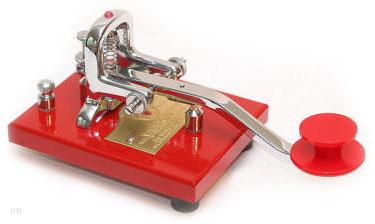 Like many technical activities, amateur radio has its own set of jargon and protocols used both on and off the airwaves. As part of our Technician license course, we cover basic jargon but also encourage the use of plain language. A new Technician recently asked about the use of the term “73″ on the local FM repeater, so I am posting this short piece.
Much of amateur radio history and practice is rooted in Morse Code, which traces back to the electrical telegraph. Two shorthand codes you’ll hear on both voice and Morse Code communications are:
73 means Best Regards
88 means Love and Kisses (sometimes Hugs and Kisses)
These codes originated with telegraph operating and are listed in the Western Union 92 Code, a set of numerical shorthand codes. On voice (phone) transmissions, you often hear something like this:
“Great to talk to you, Joe. Thanks and Seventy Three. This is K0NR, clear.”
Since 73 is often used at the end of a radio contact, it almost takes on the meaning of “best regards and goodbye.” “Eighty Eight” is used in a similar manner but is heard much less frequently on the ham bands.
Sometimes you’ll hear 73 expressed as “Seven Three”, which corresponds to how the Morse characters were sent. It is incorrect to say “Seventy-Three’s” since this would literally mean “Best Regards’s”. Of course, most of us have made this error from time to time, very similar to grammatical errors in the English language. (“Somes time we forget to talk good.”)
QRP operators often use 72 instead of 73 because low power operating is all about getting by with less. See W2LJ’s blog.
And I normally use 73 at the end of most ham radio related email messages.
73, Bob K0NR
Bob Witte, KØNR, is a regular contributor to AmateurRadio.com and writes from Colorado, USA. Contact him at [email protected].
Single wire Cobwebb antenna
Last summer I built myself a Cobwebb antenna and was fairly pleased with the results. I did think it was a bit heavy and was looking to repeat the build with some lighter weight wire until I came across this article from a well-known antenna buff, G3TXQ. It looked like just the ticket so I copied the design and low and behold after a few evening work I finished it off. Here it is during the tuning phase of work which I completed over the weekend (which by the way is as simple as tuning any dipole).

By the way the tropical weather (read blue sky) in St Bees is a welcome change from the recent flooding. I doubt it’ll last though!
You can see the usual antenna laying down in the background, which is a Hustler 6-BTV vertical which has suffered at the hands of the strong winds and salt air we get here. Once I had assembled both the antenna’s I was able to make a bit of a comparison between the two. The vertical is a good S point down on the Cobwebb on 20m, 17m and 15m and about the same on 12m and 10m (at that height!). To be fair it doesn’t have the 17m stub so that’s a bit of a poor comparison. I did managed to get it a little higher with the fishing pole but need to work on the mounting point and ‘environmental protection’ that it’ll need to be used here. Either that or it’ll go into the loft with the 40m dipole that’s up there at the moment.
For some reason I really enjoy these antennas, either to build or use but Michael, ZS1RJQ who I’m in regular contact with over email has built a fair few more than me. His are far more robust than mine but between us we’ve discussed the hardware side plenty of times and before long we’ll end up with an optimised lightweight design. This one is so far the most compact and well worth a tinker if you’re into that. Thanks to G3TXQ for the original design.
With Halloween coming up shortly maybe I’ll put a spider on it!
Alex Hill, G7KSE, is a regular contributor to AmateurRadio.com and writes from Cumbria, UK. Contact him at [email protected].
Amateur Radio Kit Roundup – Updated
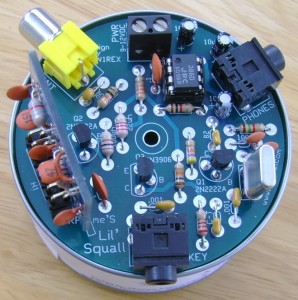
QRPme.com Lil’ Squall Transceiver
- BitX20A/17A SSB Transceiver. The BitX20A and BitX17A are complete SSB kits with board, all parts, digital display and custom powder coated and punched case that is based on the BitX20 that was designed by Ashlan Farhan. Output is about 10 Watts. $180.00 + S&H
- PFR-3a 3-Band Portable Field Radio. Bands : 40 meters, 30 meters and 20 meters. Tuning range: Full band coverage. Mode: CW only. $240.00 + S&H
- NADC30/40 CW Transceiver. Nearly All Discrete Component CW Transceiver for either 30m or 40m. Tuning range ~ 60 kHz. Power output: 3.5 watts. Full Kit: $130.00 + S&H
- Ft Tuthill 15 Meter CW Transceiver. Two 60 KHz tuning ranges, ~ 21.000 – 21.060 and 21.075 – 21.135 MHz. Power Output: 5 Watts. Complete Kit (w/ case and digital dial) $130.00 + S&H
- Ft Tuthill 160 Meter CW Transceiver. Two 30 KHz tuning ranges, ~ 1800 – 1835 and 1830 – 1865 MHz. Power Output: 5 Watts. Complete Kit (w/ case and digital dial) $130.00 + S&H
- –DISCONTINUED–Red Hot 40 Meter Transceiver. A high performance QRP CW transceiver kit for the 40m band. It has been designed to operate well in the presence of large out-of-band (shortwave broadcast) and in-band (contest station just down the road) unwanted signals. Frequency range is a (nominal) 70KHz segment of the CW end of 40m. Output power 0 to 5 Watts nominal (7 Watts typical). Full Kit: $250.00 + S&H
- –DISCONTINUED–MMR-40 CW/SSB Transceiver. The MMR-40 features both CW and SSB operation, the first rig kit in this price class to do so. Transmitter power out: 6 watts CW/pep typical at 13.8V supply. Typical tuning range: SSB: 7.280 to 7.150 MHz CW: 7.100 to 6.700 MHz. Full Kit: $225.00 + S&H
- –DISCONTINUED–TwoFer Plus CW Transmitter. The TwoFer Plus is a simple transmitter that will be offered on 40, 30, and 20 meters. The kits come with crystals in the qrp region of the band. It will put out approximately 1 Watt using a 2N3053 transistor for the final. It has a crystal based VXO that will give about 1.5kHz on 40, and 3kHz on 20. It also has a built in T-R switch on the board that mutes the receiver during transmit. We have upgraded the kit with a custom prepunched case that was designed by Ken LoCasale, WA4MNT. The kit comes complete, with all parts, connectors, case, knobs, wire, and our usual commercial quality double sided, plated through, silkscreened solder masked board. $35.00 + S&H
- DCxxB Board Only Trasceiver Kit. These radios are the next generation of the popular DC40 transceiver that was also designed by Steve Weber. The kit will come with 1 crystal for the band specified. 7.040 for DC40, 10.120 for DC30, 14.060 for DC20. Board-Only kit with decals: $30.00 + S&H
- Weber Tri-Bander. The Weber Tri-Bander can be built for any three of these bands: 80, 40, 30, 20, 17, or 15. 5 Watts out on all bands at 13.8 VDC. Built in Iambic keyer with 5 to 40 wpm code speed. DDS VFO for rock steady stability with 50 Hz and 200 Hz tuning rates. Many more features! $200 + S&H
- Scout Regen Receiver. A simple 2 band regenerative radio receiver that is capable of receiving signals from 3.5 to 11 MHz. A complete kit with L shaped aluminum chassis, quality doublesided silkscreened soldermasked board, all parts, hookup wire, board mounted battery holder. This kit is ideal for the first time builder. $50.00 + S&H
- –NEW– SMK-2 40m Surface Mount CW Transceiver. The SMK-2 is a fully functional surface mount component 40 meter transceiver. It has an independently tuned transmitter and direct conversion receiver. Full break-in TX with sidetone, and a modest 350mW output. The crystal VXO on receiver allow about 3 kHz+ tuning range on the crystal frequency. It was originally conceived as the SMK-1, a platform to teach SMT construction techniques. Transceiver Kit: $40.00 + S&H, Optional switched crystal board: $10.00 + S&H
- –DISCONTINUED– TJ2A 2 Band SSB / CW Handheld Transceiver. Can be set to operate on 2 bands from 160m – 10m. Output power 3.5 – 4 Watts. Rechargeable. Many band combinations available. $169.00 + S&H
- TJ4A 4 Band Backpack HF Trasceiver. Available in 2 TX models: 80,40,20,15, or 40,20,15,10. New general coverage receiver capability. 20 Watts output (adjustable), SSB, CW, AM. Full Kit: $399.00 + S&H
- –NEW– TT1A 2 Band CW Tube Transmitter Kit. This is a 2-tube 4-watt transmitter kit. Comes with crystals for 40 and 20 meters, but can operate from 60 to 20 meters with different crystals. Power supply kit coming soon, as well as custom case. $129 + S&H
- MFJ-8100K World Band SWL Receiver Kit. Regenerative general coverage receiver covering 3.51 – 4.31 MHz, 5.95 – 7.40 MHz, 9.56 – 12.05 MHz, 13.21 – 16.4 MHz, and 17.6-22 MHz. $79.95 + S&H
- MFJ-93xxK QRP Cub Transceiver Kits. QRP Transceiver available in 80, 40, 30, 20, 17, or 15. Output 2 Watts (except 1 Watt on 17 and 15).
- Too many kits to list here. They sell several different Transmitter, Receiver, and Transceiver kits, as well as shortwave converters for the car. A couple of the items seem to be kit versions of MFJ products.
- Similar assortment to Vectronics above, with several transmitter, transceiver and receiver projects.
- G11 5 band SDR Transceiver Kit. Power output 10 W. SMT components factory pre-assembled, buyer to assemble only large through hole components. Price in AUS$: $299.00 + S&H
- –LIMITED AVAILABILITY–G59 All Mode 160-6M SDR transceiver kit. The G59 is an all-mode 160-6m SDR transceiver with 10mW of output power. The output is boosted to 10W with the GPA10 linear amplifier. Genesis kits are produced in batches of 50 units at a time. Current demand for the G59 is much greater than our production capability. The best way to get a hold of a Genesis kit is to subscribe to our GenesisRadio Yahoo group and watch for announcements. G59: $349.00 + S&H, GPA10: $129.00 + S&H
- SoftRock RX Ensemble II Receiver Kit. The SoftRock RX Ensemble II Receiver Kit includes the components for building the kit for LF, 180kHz through 3.0 MHz, operation or for HF, 1.8 MHz through 30 MHz. $67.00
- SoftRock Lite II Combined Receiver Kit. The SoftRock Lite II kit now includes the components to build it for one of the following bands: 160m, 80m, 40m, 30m or 20m. This replaces prior Lite II kits that were set to a specific band when ordered. The SoftRock Lite II provides a simple to build SDR receiver with a fixed center frequency to be used with a sound card that can sample at 96 kHz, providing band coverage from 48 KHz below the center frequency to 48 KHz above the center frequency. $21.00
- SoftRock RXTX Ensemble Transceiver Kit. The SoftRock RXTX Ensemble Transceiver Kit provides a 1 watt SDR transceiver that can be built for one of the following four band groups: 160m, 80m/40m, 30m/20m/17m or 15m/12m/10m. $89.00
- SoftRock 6m/4m/2m RX Ensemble Receiver Kit. The SoftRock 6m/4m/2m RX Ensemble Receiver Kit may be built from the parts included in the kit for one of the three VHF frequency ranges. $68.00
- QRP Transceiver Kits (20,30,40, or 80 meters). 3 watts power output. covers a 50 kHz segment determined by you at the time of construction. With pre-labeled and painted case. $124.00 + S&H
- 9 Band Regenerative Receiver. 1.760 – 1.990 MHz, 3.3 – 4.150 MHz, 5.5 – 6.9 MHz, 6.9 – 8.5 MHz, 8.5 – 11 MHz, 10.1 – 13.2 MHz, 12.5 – 16 MHz, 14.7 – 18.5 MHz, 18.5 – 21.5 MHz Integrated audio amp IC for clean robust audio from internal speaker or headphones. includes parts, circuit board, assembly manual, battery holder, speaker, complete enclosure, and knobs. $93.00 + S&H
- 4 Band Regenerative Receiver. 5.9 – 6.4 Mhz, 6.9 – 7.4 Mhz, 8.5 – 10.2 Mhz, 11.5 – 16.5 Mhz. Comes with finished front panel. No knobs or case. $41.95 + S&H
- Digital Readout Superhet Receiver. 100 Khz to 20 Mhz coverage. This is the radio that Jay, KC2YSK built and wrote about in the Log previously. Several option available to improve performance from 3rd parties. $205.00 + S&H
- Any Band Direct Conversion Receiver Kit. Includes all of the parts and instructions to let you build the receiver (or change it to) ANY band of your choice (160, 80, 75, 40, 30, 20, 17, 15, 12 or 10 meters). $39.00 + S&H
- K3 Modular Kit. The K3 is Elecraft’s top of the line. Available in 10 and 100 watt versions and with a multitude of options. The modular kit comes with mostly pre-assembled boards that need to be plugged in. The K3 kit starts at $1549.95 and increases depending on what options you choose.
- KX3 Modular Kit. The KX3 is Elecraft’s newest transceiver. Similar to the K3 in features, but in a compact portable package. This is a modular kit like the K3 that requires you to assemble the pre-soldered boards. Many options available. Starts at $899.95
- K2 Kit. The K2 is available only as a full kit. This is not a modular kit like the two above, but a full kit for the advanced kit builder. The K2 is a full-featured transceiver available in 10 and 100 watt versions, and with many options. Basic kit starts at $739.95
- K1 Kit. The K1 is a small portable CW transceiver available as either a 2 or 4 band rig. You choose which bands you want at the end of the kit build. Adjustable output from 0 to 5 watts. The 2 band model starts at $299.95
- KX1 Kit. The KX1 is an ultra-portable CW transceiver. Available with 2 bands in the basic model, and upgradeable to 4. ! to 4 watt output. Starting at $299.95
- Hamtronics offers a variety of VHF and UHF receiver and exciter kits as well as many other interesting items.
- Emtech is currently out of stock on their NW-series radios. Check back. In the meantime, they have the excellent ZM-2 QRP tuner kit.\
- Series one kits. Three kits available. All DDS controlled, covering 80, and 40 meters. RX1 Receiver, 74.80€, TX1 Transmitter, 80.33€, and TRX1 Transceiver, 169.00€.\
- Series two kits. Two kits available. Both are high dynamic range, 10W output, SSB and CW transceiver kits, using quadrature sampling techniques for demodulation and modulation with low noise phasing. VFO is DDS controlled for a good frequency stability. TRX2 2-band model (80 and 40) 395.00€, and TRX2A 80 thru 10 model with general coverage receiver, 499.00€
- R1 Code Practice Receiver. High quality fixed frequency CW receivers designed for simple operation. Standard models are available for W1AW frequencies in the 80, 40 and 20 meter bands. $29.95 + S&H
- Rock Mite CW Transceiver. The Rock-Mite is a crystal-controlled direct-conversion transceiver available for 80M, 40M, 30M or 20M. $29 + S&H some accessories available.
- –Discontinued– The Retro 75. This is a nostalgic kit. A crystal controlled AM Transceiver with 2 watts carrier, 8 watts peak. $69 + S&H
- –OUT OF STOCK– Simple Superhet Receiver (SST). The SST is an optimized, superhet rig with an extremely low parts count . This may be the easiest to build superhet ever, and it comes with a miniature custom enclosure. 2 Watts output. $90 + S&H
- Nor Cal 40a. The revision B NorCal 40A is a third-generation 40-meter QRP transceiver kit, designed by Wayne Burdick, N6KR. The rig covers any 40KHz portion of the CW band, with a very stable VFO operating in the 2MHz range. The receiver is a superhet with crystal filter, AGC, and RIT. 3 Watts output. $145 + S&H
- –OUT OF STOCK– Sierra. The Sierra is the only compact, low-current, multiband transceiver kit available. Designed by N6KR and extensively field-tested by the NorCal QRP Club, the Sierra has been completely upgraded for Wilderness Radio–including a painted and silk-screened enclosure and improved performance on both transmit and receive. Uses plug-in band modules for 80, 40, 30, 20, 17 and 15 meters. 1.5 to 3 watts depending on band. LCD display. Starts at $245 + S&H with 1 band module.
- Ham Can Transceiver. A crystal-controlled CW transceiver, delivering 1/2 to 1 watts. Easy thru-hole kit. Crystal for 7122 included. $30 includes shipping.
- NS-40 Transmitter. Ideal first kit. There are only 14 electronic components, and NO TOROIDS or COILS of any kind to wind – NONE! All inductors are incorporated directly on the PC board as etched spirals. 5 watts at 13.6 volts. $30 includes shipping.
- SS-40 High Performance 40M Receiver. The SS-40 high performance receiver is the latest design effort from Jim Kortge, K8IQY. SS stands for “Stable and Sensitive”. It exhibits the signature IQY extremely quiet amplifier chain. Disconnect the antenna and the receiver’s noise floor is almost undetectable. A matched crystal IF filter provides a steep sided 500 cycle bandpass and outstanding opposite sideband rejection. Covering the 40M QRP “watering holes”, a Super VXO provides 25-30 kHZ of smooth stable tuning, and no perceptible drift even from a cold start.. While easy to build, this is not a trivial kit. There are 150 parts, and when completed the resulting high quality receiver is a pleasure to use. $60 + S&H
- Several inexpensive kits for the radio hobbyist, mostly supplied as a “bag of parts” with a schematic.
- A nice collection of kits including keys, keyers, and clocks.
- Little Joe Transmitter Kit. A small kit with board and parts from the book QRP Classics. Available for 80, 40, 20, and 10/15. Does not include crystals. $19.95 + S&H
- Cubic Incher Transmitter Kit. A small kit available for 40 or 80 meters. Crystals not included. Currently on closeout for $6.50 + S&H
- Sienna Transceiver Kit. This is a high end, full-featured transceiver with many options. The Sienna can be a full-control stand-alone rig, or a computer-controlled-only rig. Available in 10 and 100 watt version. Kits start at $2098 + S&H for the computer-only 10 watt model.
- HT-7 7Meter AM Walkie Talkie. The HT-7 is a simple AM handie-talkie that operates on the 40M AM calling frequency. $149.99 + S&H
- OHR 100A single band CW transceiver kit. Offered in 80, 40, 30, 20, and 15 Meter versions. Each can be aligned to cover 70-80Khz. 5 Watt output. $149.95 + S&H
- Micro 80D. Small tunable 80 meter CW transceiver kit. $35 + S&H
- Lil Squall Transceiver. A version of the Pixie Transceiver. A tinkerers delight. It fits in a small tuna can. Includes a socket for the FINAL transistor for easy experimenting with output power. Likewise, the feedback caps in the oscillator circuit also have sockets making it easy to experiment with new bands. The crystal also has a socket for easily moving the operating frequency about a band. Comes will ALL the parts necessary to complete the transceiver and a 7122 crystal for operating the Lil’ Squall ][ in an area where other minimalist rigs hang out, AND the ‘officially unofficial’ TUNA NET frequency for tuna can gatherings. $35 + S&H
- Super Tuna II+. A version of the Sudden Transmitter from the GQRP Club. Transmitter section is comprised of an oscillator, buffer and final driver transistor. Produces 2 watts at 12.6 volts. Frequency dependent components are mounted on an easily changed band module. The basic kit comes with a band module for 40 meter operation. $40 + S&H
- Tuna Tin 2 30th Anniversary Isuue. A re-issue of the original TT2 transmitter. Parts are laid out on the board in the exact same way the schematic is drawn. Simple, and easy to build. Comes with crystal for 7.030. $25 + S&H
- EZ Build Two-Tinned-Tuna Transmitter. EZ build version with no toroids to wind. Several socketed parts for experimenting and comes with 2 crystals for 40 meters. $30 + S&H
- Sudden Storm Receiver Kit. Great companion to any of the tuna can transmitters. Comes with components for 40 meters but can be operated on 80, 30, and 20 using the upgrade kit. $35 + S&H
- Reggie II Transceiver Kit. A lesson in minimalist design. The Reggie uses the Limerick construction technique. Output is about 100mW. $40 + S&H
- MKARS80 SSB Transceiver. This kit is based on the same design that is used in the BITX20 from Hendricks, but modified for 80 meter use. Main changes from Ashhar’s original design are the inclusion of a frequency counter and a Huff and Puff frequency stabilizer. Covers from 3.5 to 3.8 Mhz with about 5 Watts output. This kit is a bargain! Ranging from a basic no-case kit for £55.00 shipped to the USA, to full kit with connectors, knobs, and an undrilled case for £68.50
- Hunter SDR Receiver / Panadapter. This looks like an interesting and economical SDR kit, that can also be controlled by an existing rig for use as a panadapter. £87.00 shipped to the USA
- Soft66Lite. Small monoband SDR that can be built for different ranges depending on the bandpass components installed. Easily switchable by plugging in homemade bp modules setup on IC sockets. $18 shipped to USA
- BITX Kits. I won’t list the kits individually because the website is a bit confusing. They seem to have several different options from a basic kit with just the board and specialty components only for $18 to a deluxe complete kit with digital readout for $85
- AVALA SDR board only. There are a few sites supporting this SDR. Not sure if I’m ready to tackle something like this, but it does look interesting. Board only: $10
- Pixie II Kit. This includes the components for 80 and 40 meter versions of the famous Pixie II kit. It does not come with crystals, but HSC has them available individually or in a 6-pack. $9.95 + S&H
–Hans Summers dot com. http://www.hanssummers.com/qrsskitmm.html. Hans sells the Ultimate QRSS kit. The website lists many other projects and experiments.
- Ultimate QRSS kit. The ultimate QRSS Transmitter Kit is produced by Steve G0XAR and Hans G0UPL in 30, 40 and 80m versions. Supports many different modes: QRSS, FSK/CW, DFCW, WSPR, Hellshreiber, CW, and more. The kit contains the PCB, LCD, programmed microcontroller and all board-mounted components. 15.39 GBP + S&H
Neil Goldstein, W2NDG, is a regular contributor to AmateurRadio.com and writes from New York, USA. Contact him at [email protected].
 Ham Radio Deluxe |
 W5SWL Electronics |
 Ham Radio Prep |
 KB3IFH QSL Cards  Hip Ham Shirts  HamRadioAuctions HamRadioAuctions Reliance Antennas Reliance Antennas Enigma Shop Enigma Shop |  morseDX  Ni4L Antennas  R&L Electronics R&L Electronics antennas.us antennas.us QRV QRV |
- Matt W1MST, Managing Editor
