 |
 10m WSPR spots 25 Oct 2012
 25 October 2012 | by
  |
| 10m WSPR spots @ G4ILO 25 October 2012 |
No WSPR map yesterday as I spent too much time making phone (SSB, FM) and digital (PSK31) contacts on 10m. Today it seems as if half the stations I hear (or see) I have already worked!

Julian Moss, G4ILO, is a regular contributor to AmateurRadio.com and writes from Cumbria, England. Contact him at [email protected].
Get your head in the cloud.
Even though my day job is completely centered around Information Technology I still miss changes and shifts in technology that happen practically under my nose. As much as I hear vendors speak about “The Cloud” I haven’t had much time to investigate and discover if this “new technology” is something I can put to use.
If you already know what “The Cloud” is then you can skip the following paragraph, otherwise please read on:
The easiest way to understand the cloud is to think of it as a utility, like electricity. When you plug a device into a wall outlet, electricity flows. You didn’t generate the electricity yourself. In fact, you probably have no idea where the electricity was generated. It’s just there when you want it. All you care about is that your device works. Cloud computing works on the same principle. Through an internet connection (the equivalent of an electrical outlet), you can access whatever applications, files, or data you have opted to store in the cloud–anytime, anywhere, from any device. How it gets to you and where it’s stored are not your concern (well, for most people they’re not).
There is no end to the stream of interesting projects that are being developed “in the cloud” and its hard to keep track of them all. Some projects have turned into things that we’re all familiar with; Flickr, Facebook & Twitter are a few examples. Some appear and vanish like the proverbial “Flash in the pan” and, since you generally lose access once they run out of steam, it can be disappointing if you have invested any time in those applications.
I’ve collected a few cloud based applications/services here that might be of interest to the radio amateur and/or experimenter. They look like they should stick around for a while and have already reached a fair level of maturity:
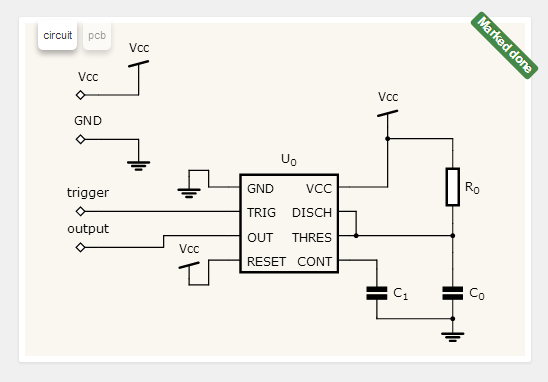
circuits.io: Described as a free circuit editor in your browser, it is actually a lot more. You can not only design practically any kind of circuit using just a web browser, you can turn that circuit into a printed circuit board and then BUY that PCB board online. Several different technologies had to come together to make this into an effective tool. This tool is fairly new but is becoming very popular. Hopefully it will stick around and continue to mature into something great.
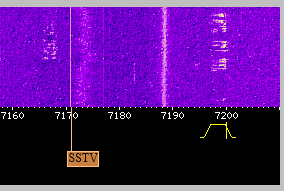
WebSDR: While arguably not a “cloud application” it does allow you listen to software defined radios, using a web browser, from anywhere you have internet access.
There are multiple sdr receivers located across the globe using a variety of receivers and antennas. Some are tuned to the HF bands while others cover VHF & UHF bands.
This is an invaluable free service provided by institutions and individuals at their own cost.
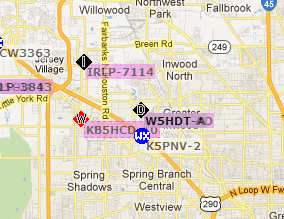
APRS.fi: The distributed network of Automatic Packet Reporting System stations, repeaters, clients and map servers could be considered to be “of the cloud” before the cloud even existed. With an APRS equipped radio you can log your position from a GPS, over the air & through another ARPS receiver. This is then sent out (usually) across the internet to other systems which in turn can map your location or update other APRS clients or radios. APRS has also been extended to include the ability to text message which is particularly useful in locations where cell phone SMS messages or email are not possible!
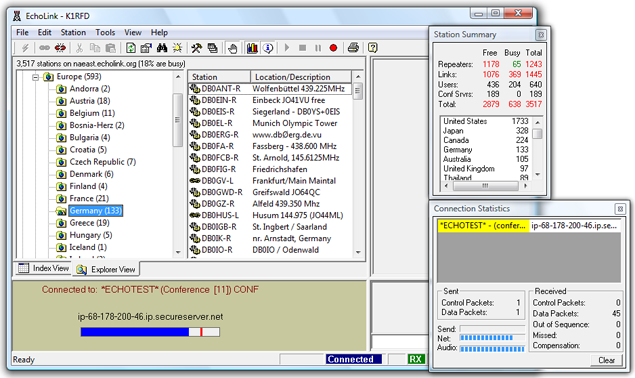
Echolink: Like APRS, Echolink links the Internet to amateur radio. However Echolink links the audio and PTT (push to talk) signals from a radio or software client to a radio in another physical location. If you’re stuck in a hotel room or another location without access to a radio you can still “get on the air” using an Echolink client on your Windows, Linux, iOS or Android computer & handheld device. Most Echolink connected stations are VHF/UHF but there are HF stations connected as well. Echolink is not designed to replace radio to radio communications but instead increases the connectivity of amateur radio operators and allows hams, who otherwise would not be able to operate, the pleasure of getting on the air.
As you can see, some of these “cloud apps” pre-date the idea of cloud computing by quite a while. Just another example of amateur radio folks being ahead of the curve without even realizing it.
Owen Morgan, KF5CZO, is a regular contributor to AmateurRadio.com and writes from Texas, USA. Contact him at [email protected].
Another Fall Hike on Shute Hill
I hiked again on Shute Hill today. It was a glorious, warm day with a brilliant blue sky. Once again I worked GM0HCQ/MM, the Royal Research Vessel, James Clark Ross. The vessel is on its way to the Falkland Islands and today was a bit north of the Equator… at about the same latitude as Equatorial Guinea in Africa. I also worked California, NC and TN.

It was nearly 70F on the ground where I sat beneath an oak tree. I set up on 15 meters with a 22 foot wire and the ATS-4. I tuned the wire with an Elecraft T-1. First I heard Andy, KN6ZA calling CQ and answered. My report was only 449 but he copied most of the exchange. “Enjoy UR hike X UR 4W is working,” he sent. Going up the band a bit I heard Mike, GM0HCQ/MM finishing up a QSO, and I called him. I had worked him the other day, and I was excited to hear him once again.

-Mike, GM0HCQ in the radio room of the James Clark Ross-
Mike gave me a 449 and gave his QTH at 5N/20W. He was about a 579. It’s always thrilling for me to work a ship at sea. Here’s a photo of the vessel.

-The James Clark Ross entering the harbor at Uruguay-
After contacting the ship, I moved to 20 meters and worked two stations in the CW Ops sprint. The first was N4AF in NC; the second was N4ZZ in TN. These were quick exchanges with name and number.
Shute Hill is a beautiful area to hike and operate. It’s absolutely quiet and the afternoon sun is a welcome as the days get cooler.
Jim Cluett, W1PID, is a regular contributor to AmateurRadio.com and writes from New Hampshire, USA. Contact him at [email protected].
Handiham Word for 24 October 2012
Pat Tice, WA0TDA, is the manager of HANDI-HAM and a regular contributor to AmateurRadio.com. Contact him at [email protected].
Interesting what 500 mW can do.
| NY3A |  W2LJ W2LJ | 3560.4 | CQ [LoTW] | 9 dB | 20 wpm | 0112z 24 Oct |
| K3MM | W2LJ | 3560.4 | CQ [LoTW] | 5 dB | 19 wpm | 0112z 24 Oct |
| W4KKN | W2LJ | 3560.4 | CQ [LoTW] | 13 dB | 19 wpm | 0111z 24 Oct |
| KM3T | W2LJ | 3560.4 | CQ [LoTW] | 8 dB | 19 wpm | 0111z 24 Oct |
| NY3A | W2LJ | 7041.0 | CQ [LoTW] | 11 dB | 19 wpm | 0109z 24 Oct |
| K1TTT | W2LJ | 7041.0 | CQ [LoTW] | 7 dB | 19 wpm | 0109z 24 Oct |
| W4KAZ | W2LJ | 7041.0 | CQ [LoTW] | 5 dB | 20 wpm | 0108z 24 Oct |
| W2RDX | W2LJ | 7041.0 | CQ [LoTW] | 12 dB | 19 wpm | 0108z 24 Oct |
| KQ8M | W2LJ | 7041.0 | CQ [LoTW] | 5 dB | 19 wpm | 0108z 24 Oct |
| AA4VV | W2LJ | 7041.0 | CQ [LoTW] | 8 dB | 19 wpm | 0108z 24 Oct |
| W4KKN | W2LJ | 7041.0 | CQ [LoTW] | 16 dB | 19 wpm | 0108z 24 Oct |
| KM3T | W2LJ | 7041.0 | CQ [LoTW] | 7 dB | 20 wpm | 0108z 24 Oct |
| K3MM | W2LJ | 7041.0 | CQ [LoTW] | 16 dB | 20 wpm | 0107z 24 Oct |
| W3LPL | W2LJ | 7041.0 | CQ [LoTW] | 7 dB | 20 wpm | 0107z 24 Oct |
| WA7LNW | W2LJ | 10116.0 | CQ [LoTW] | 9 dB | 21 wpm | 0105z 24 Oct |
Antenna was the 88′ EDZ – rig was the K3 – power out was 500 mW.
No QSOs, but interesting to see where I was heard via the Reverse Beacon Network.
72 de Larry W2LJ
QRP – When you care to send the very least!

Larry Makoski, W2LJ, is a regular contributor to AmateurRadio.com and writes from New Jersey, USA. Contact him at [email protected].
A Useless Machine with delay and howl
The useless machine or ultimate machine originates from Claude Shannon, the scientist who figured out how to find the channel capacity in a communications system. I bought the basic machine as a kit from Solarbotics.
But then I added a few features:
- A delay circuit that makes it look more alive as it gives the impression of doing some thinking before it responds to the switch.
- Sound that varies with how open the lid is and the amount of light that hits the photosensitive resistor. It was inspired by the design of the Growl and Scream Altoids of FightCube.
- A couple of LEDs, a red one when it opens and a blue one when it closes.
The circuits were built on small pieces of veroboard and the circuit diagram can be downloaded from here. In retrospect I’m not completely happy with the sound, it could have growled and screamed even more, but then how much effort can one really justify putting into a project which is – useless – anyway?
Sverre Holm, LA3ZA, is a regular contributor to AmateurRadio.com and writes from Norway. Contact him at [email protected].
A glorious fusion of old and new on 29MHz AM
When I got back to the car this evening around 1815z I switched on the 10m rig. It was tuned to the CW end and it immediately became apparent that conditions were still good – with a fierce pileup being audible. I didn’t stick around to see who it was.
I headed up to 29MHz to look for AM stations. One or two were audible, but the one that caught my ear was Rob W1AEX who was coming in really well. As I drove out of the station and towards home, I listened to Rob making some QSOs. To my surprise, rather than using boat anchor type gear, it turned out that Rob was using up to date SDR gear, a Flex radio. It sounded great! I laughed when Rob explained he was using a $2.79 microphone! There was quite a pileup going, so sadly I couldn’t attract Rob’s attention, but the story doesn’t end there.
I heard Malcolm, G8NRP calling Rob too. When it was clear neither of us had got through the pileup, I asked Malcolm if he had time to QSY and make a contact. We did, and it was a first AM QSO for both of us, which was a lot of fun. Not great DX, being 10 miles or so, but it’s a start!
Meanwhile, checkout Rob W1AEX’s station here

Tim Kirby, G4VXE, is a regular contributor to AmateurRadio.com and writes from Oxfordshire, England. Contact him at [email protected].
 Ham Radio Deluxe |
 W5SWL Electronics |
 Ham Radio Prep |
 KB3IFH QSL Cards  Hip Ham Shirts  HamRadioAuctions HamRadioAuctions Reliance Antennas Reliance Antennas Enigma Shop Enigma Shop |  morseDX  Ni4L Antennas  R&L Electronics R&L Electronics antennas.us antennas.us QRV QRV |
- Matt W1MST, Managing Editor
