 |
 Two new pages added to blog
 4 November 2012 | by
WOW this is the shortest blog post I have ever done......enjoy them and do comment on them as I would like the feed back.....always room to improve you know!!
Mike Weir, VE9KK, is a regular contributor to AmateurRadio.com and writes from New Brunswick, Canada. Contact him at [email protected].
Go To blazes
Is it just me or do you also get irritated when you see or hear someone abusing the term “go to”? As in “The Buddipole is my go to portable antenna” or “G4ILO’s Shack is my go to website for interesting articles about ham radio”. Okay, I made the last one up.
What are they trying to say? That the Buddipole is their preferred antenna or mine is their favourite website? If so, why don’t they just use the perfectly good words that have existed for years to say so?
Who started this? I think I first saw it in a computer magazine about a year ago. Journalists are responsible for spreading many linguistic abominations. I should know. I was one.
I assume that this is an Americanism which has recently crossed the Atlantic but I have no evidence to back that up.

Julian Moss, G4ILO, is a regular contributor to AmateurRadio.com and writes from Cumbria, England. Contact him at [email protected].
28MHz WSPR today and WSPR/WSJT on Raspberry Pi news
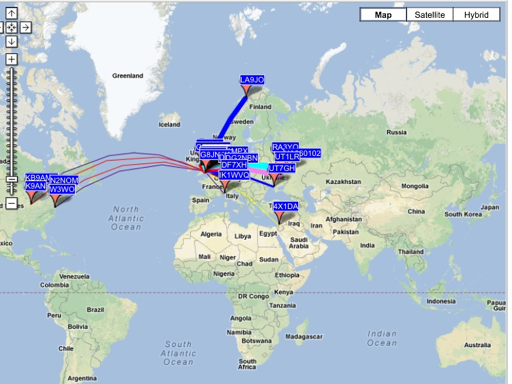
First thing this morning I played some 28MHz JT65A and was pleased to work ZS2I. After that I got on with a few other things so left the WSPR gear running.
There was an interruption to WSPR service this afternoon whilst Dave G4FRE and I did some interesting JT65B tests on 70MHz. Dave had got WSJT (as well as WSPR) running on his Raspberry Pi computer.
Nice to get a couple of reports, back on 28MHz WSPR from the east coast of the US, just before the band faded.
Tim Kirby, G4VXE, is a regular contributor to AmateurRadio.com and writes from Oxfordshire, England. Contact him at [email protected].
10m WSPR spots 4 Nov 2012
 |
| 10m WSPR spots @ G4ILO 4 November 2012 |

Julian Moss, G4ILO, is a regular contributor to AmateurRadio.com and writes from Cumbria, England. Contact him at [email protected].
Getting ready for the next one.
Sandy’s visit through the area has taught me a lot. I thought I was prepared; and for the most part, I was. But things can always be improved upon – some points for me to remember, that I think are worth sharing:
1) You can’t have enough ice. If you don’t have / want / or use an emergency generator, you can’t have enough ice. I bought four huge bags last Sunday, the day before the storm hit. I could have used twice that – and I should have been making my own, filling plastic containers with water and sticking them in the freezer. As it was, after the third day, I had begun to run out of ice and all the perishable items in the refrigerator had to be tossed.
2) Generators. Lots of folks purchased generators after their experience with Hurricane Irene last year. That was fine until the gas ran out, then they were in the same boat as me. Most of the gas stations around here had plenty of fuel, but also lacked the electricity they required to pump it. I have ordered an 1100 Watt AC inverter that was mentioned in SolderSmoke and I am going to purchase a couple deep cycle marine batteries and a charger. Once I start using them after a power outage they may not last for long, but at least I will be able to power up the freezer and refrigerator for a while.
Related to this – if you know that a big storm or blizzard is headed your way – gas up those vehicles! All of them! You don’t know how long gasoline might be in short supply afterwards. Go and Google “long New Jersey gas lines after Sandy” if you want a dose of stark reality.
3) Candles. You can never have too many. I thought I had an adequate supply; and I did. Our power was out for close to five days. If it had been out much longer, I would have started to reach the “uncomfortable zone” of running out. Oh, and if you’re like me, make sure your emergency candles are the unscented variety. It might have lifted someone else’s spirits; but I didn’t need the house smelling like a flower shop.
4) Flashlights. Forget the big honker ones that use “D” batteries. I bought some “D” batteries and flashlights, and they are a waste as far as “bang for the buck” goes. I have purchased two LED camping style lanterns that use four “D” batteries each and they will last a lot longer while providing tons more light than normal flashlights. For regular flashlight usage, get the small handheld LED flashlights. I had two of them and am going to get more. Each of these babies used three “AAA” batteries which are still plentiful in the stores (I mean really, most people use “AAA’s” for their remotes, right?). They were used throughout this crisis and they were as bright on the final day as the first. Also, those headband LED lights? Some may consider them “dorky”, but I am going to purchase a few. They will be invaluable for the times you have to do something in the dark that requires both hands. (I.E. – shaving on the morning darkness with one hand holding the safety razor and the other holding the flashlight was less than ideal. Trying to move ice around from cooler to freezer with one hand – less than ideal).
5) Firewood / Fire logs. I had a small supply left over from the last heating season. I should have laid in a bigger supply. I didn’t run out; but was running uncomfortably low, and it was starting to get chilly here. I would wake up in the morning, and go look at the thermostat to see that the house temperature had fallen to 56F (13C) overnight.
6) Charge up everything! All my handhelds, HF radio batteries, cell phones were charged to the max ahead of time, I also broke out my solar panel and had it ready to charge up 12V gel cells if needed as this wore on.
Food and water were no problem We had the stove top available for cooking. The electronic ignitors didn’t work; but kitchen matches did the job (I have multiple boxes of those). We had an AM / FM radio for news/entertainment. That was a necessity – however, I want to purchase one of those offered with the built in hand crank generator. This will cut down on the amount of batteries needed and many of these models also have USB ports so that you can use the hand crank generator to charge up your cell phone, kindle, Nook, Kobo, etc.
What did bother me when we would listen to the radio; and the announcers would say, “To report (such and such) please go to this Website ……..” How the heck am I supposed to go to the Internet when there’s no electricity? Also, going through my e-mails after the fact yesterday, I saw there were calls for ARES radio volunteers at the Middlesex County hospitals. The requests came via e-mails. How was I supposed to have seen those? I am one of the last persons in the world NOT to have a smartphone and my “18th century” cellphone handles e-mail, well, …… let’s just say “crappily”. Maybe that’s just a personal problem and I need to get “with it”. Not going to sweat that one for now.
The KX3 was invaluable and a God send – thank you Lord, for Elecraft! But seriously, any battery powered HF rig (PFR3, ATS, MTR, Yaesu FT-817, etc) is so essential if for nothing more than to ward off boredom. I would come home after work, eat dinner and then ………. nothing. Too early to turn in, I took afore mentioned LED flashlight and headed down to the basement shack and spent the night on the bands. I worked a fair amount of DX and even had a QSO with DL3GA who commented that “It is nice to hear a station on the air from New Jersey”. Hey, how many times have you heard THAT before? Maybe, never? (LOL!)
But I was also able to keep in touch with a lot of my QRP friends, including Jim W1PID who would check in with me every night. Just those brief, continual QSOs did a lot to improve my psyche and moral, knowing that there were folks out there that I personally knew that I could stay in touch with.
This is by no means an exhaustive treatise on being prepared for an emergency – it was one of some personal observations. But do yourself a favor. If you’re given enough notice that a big storm / blizzard / whatever, is coming your way – get ready and try not to wait until the very last moment to do so!
72 de Larry W2LJ
QRP – When you care to send the very least!

Larry Makoski, W2LJ, is a regular contributor to AmateurRadio.com and writes from New Jersey, USA. Contact him at [email protected].
ICQ Podcast S05 E23 – Ham Radio eBooks (04 November 2012)
Series Five Episode Twenty-Three of the ICQ Podcast has been released. News Stories include :-
- Ham radio back in vogue at St. Charles High School
- New Zealand hopes to get 50-51 MHz
- Ofcom - ECC Decision on AM SSB CB apparatus
- Pico Amateur Radio Balloons
- PRISM available for Amateur Radio AX.25 Packet
- Clipperton Island DXpedition
- 100 MHz to 6 GHz Transceiver Project for $300
Listener mailbag and Martin (M1MRB) reveiws Amateur Radio eBooks.
Colin Butler, M6BOY, is the host of the ICQ Podcast, a weekly radio show about Amateur Radio. Contact him at [email protected].
Sandy, oh Sandy!
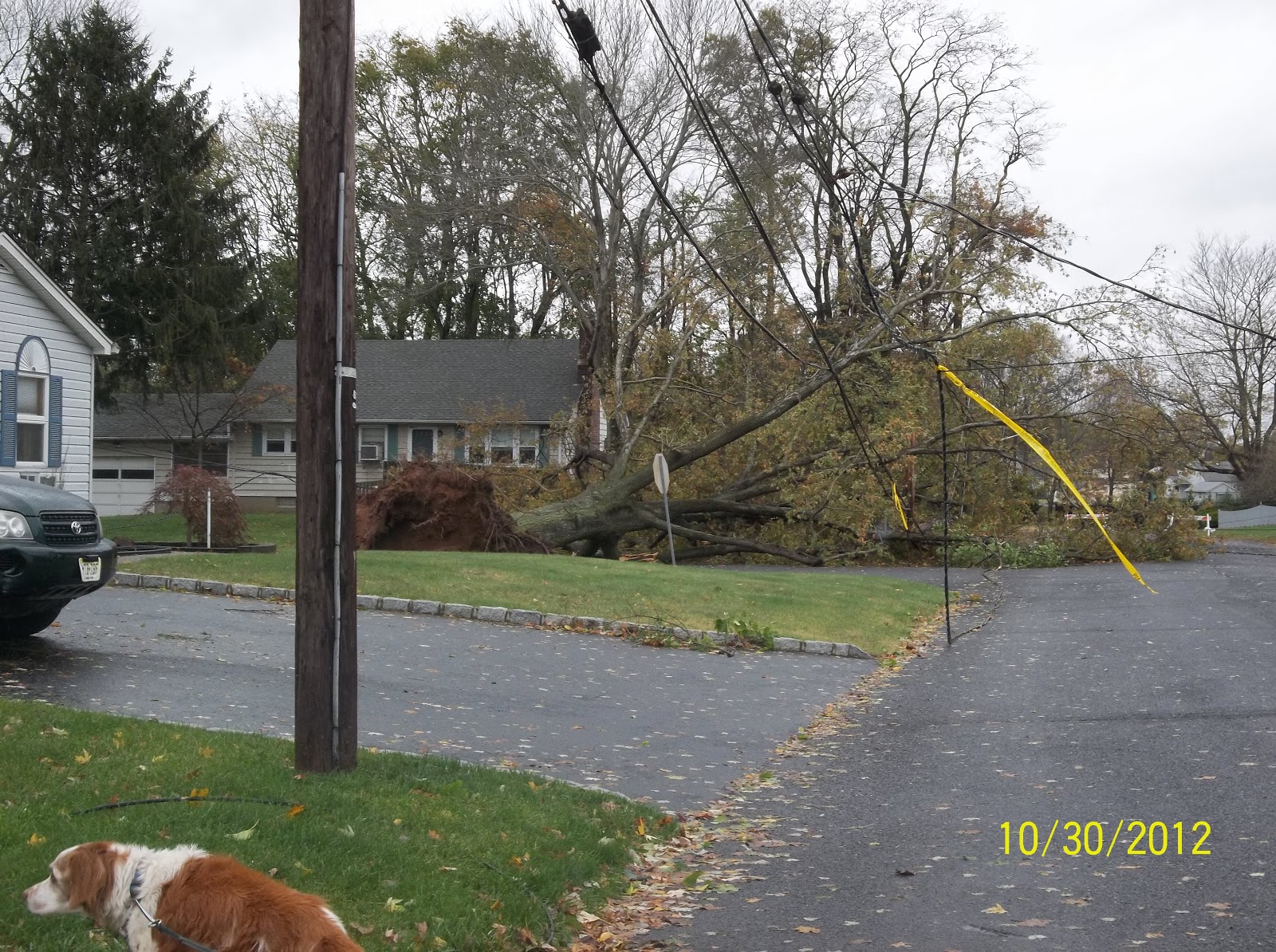
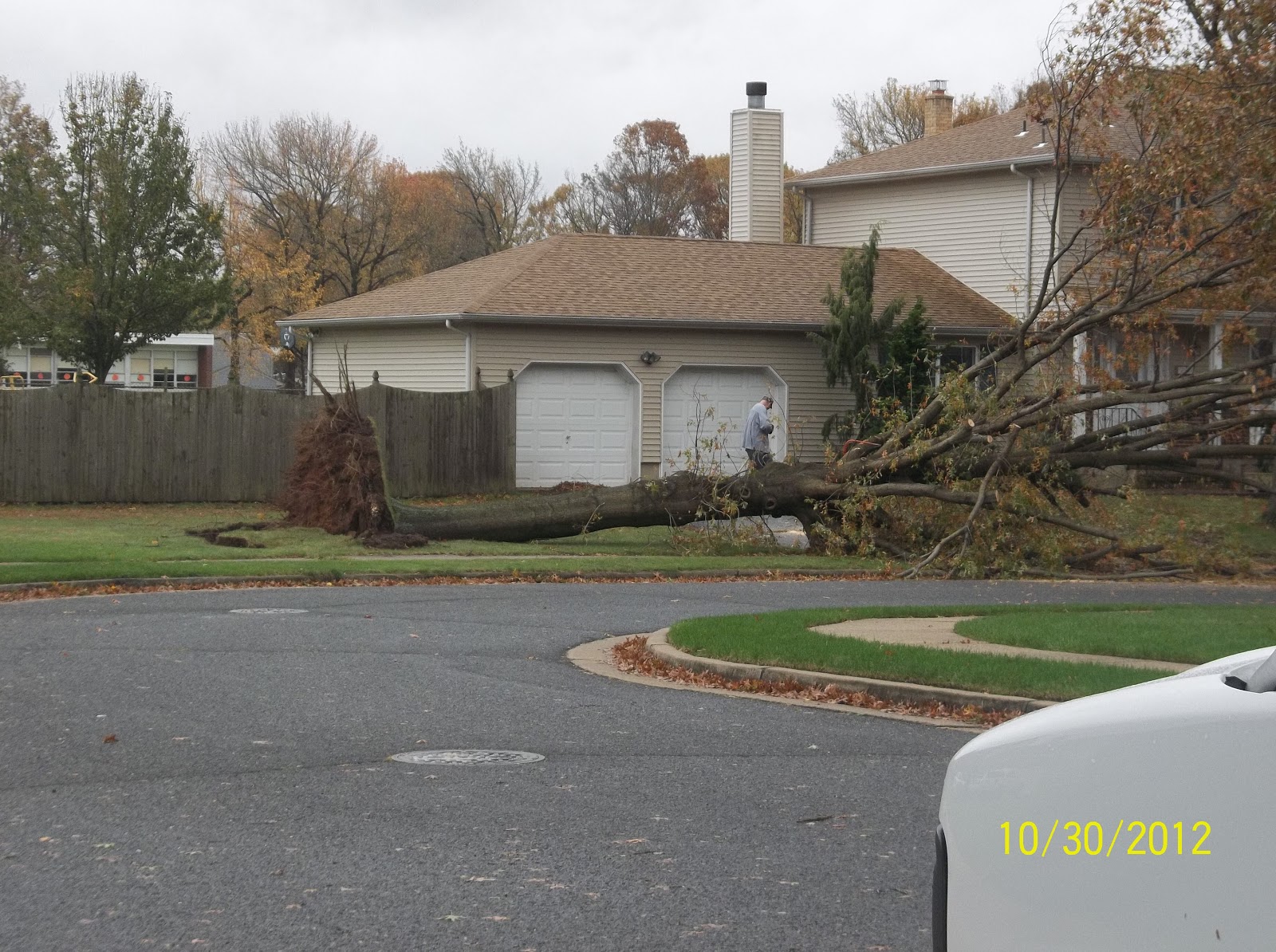
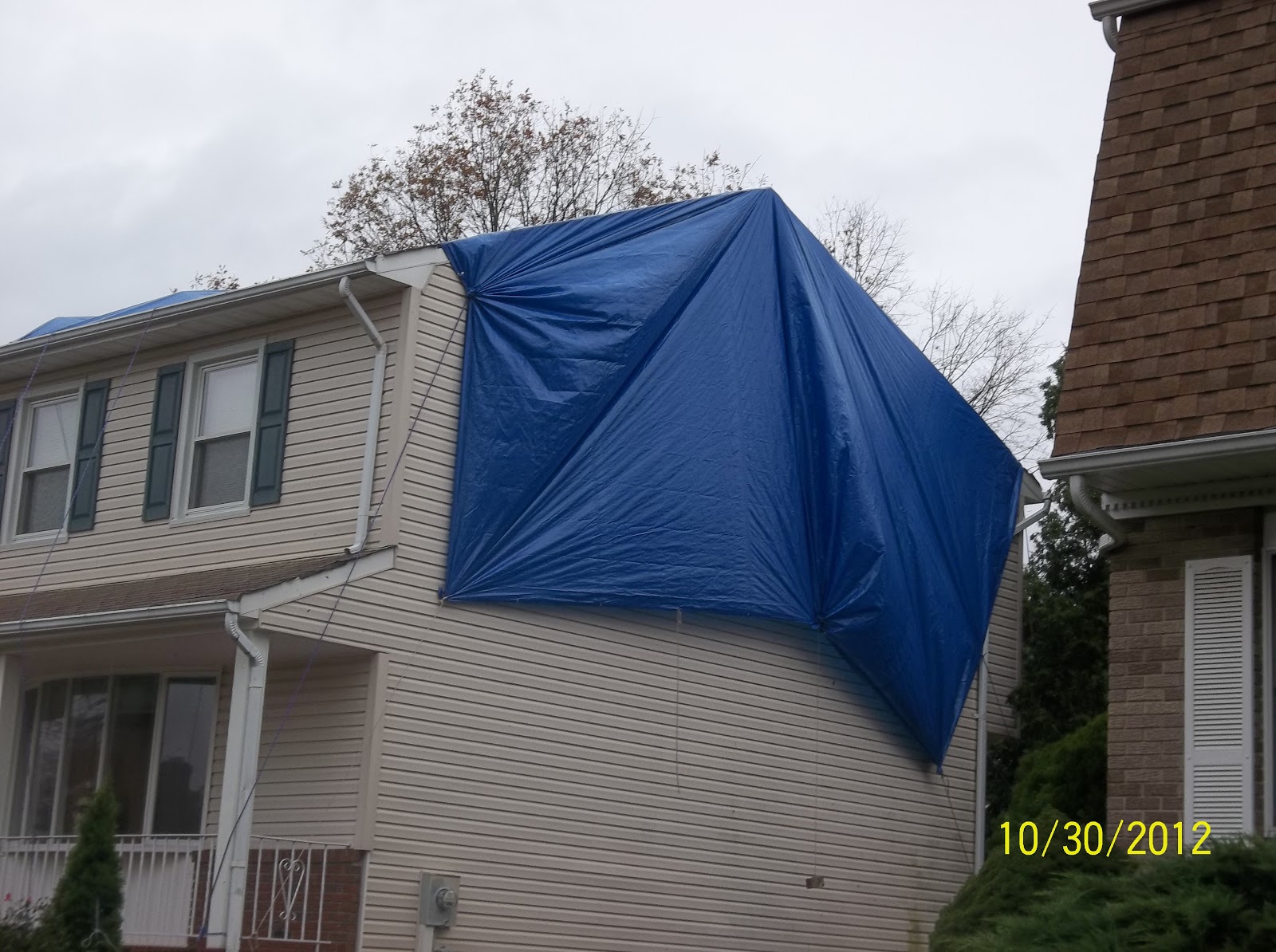
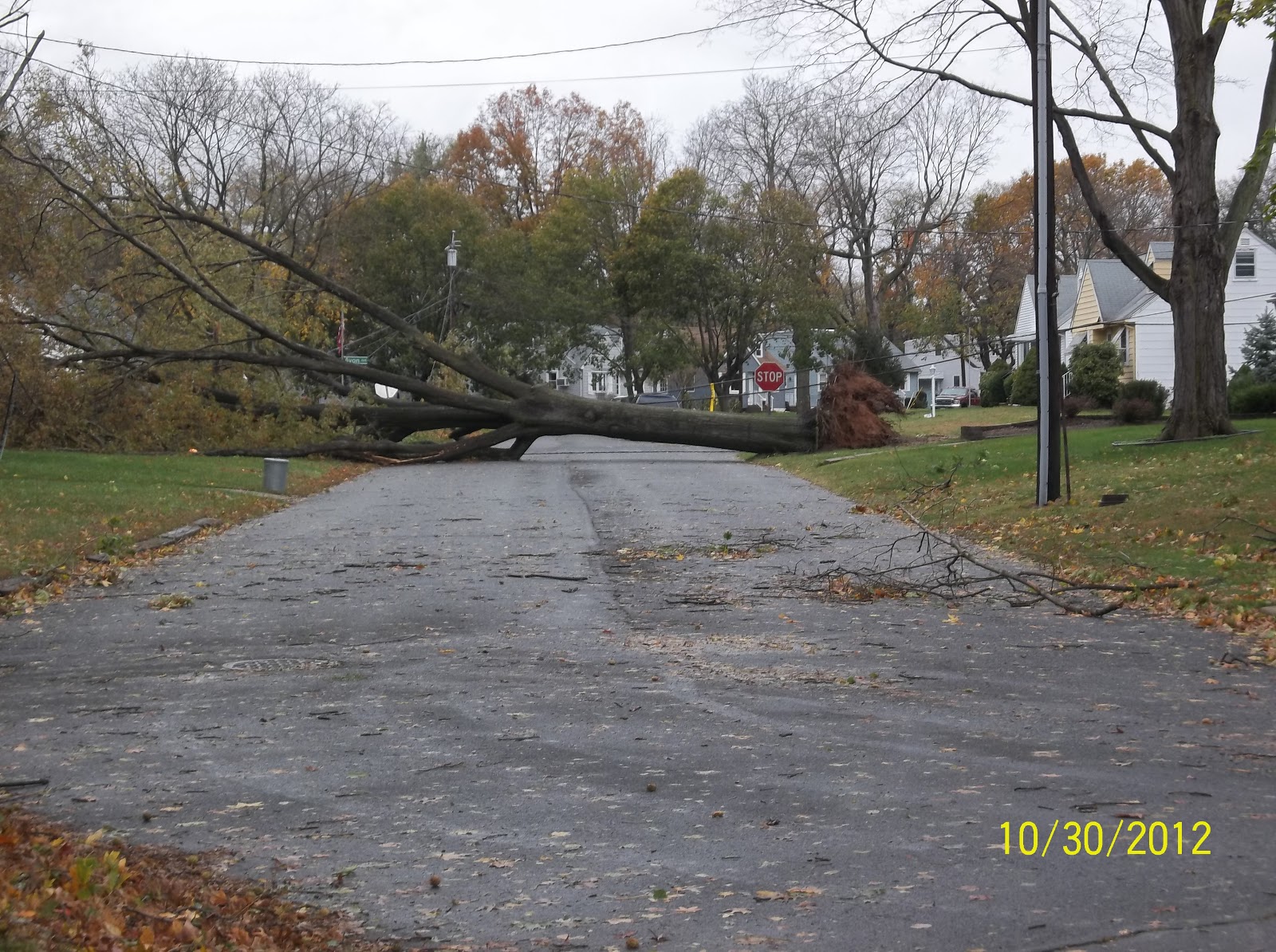
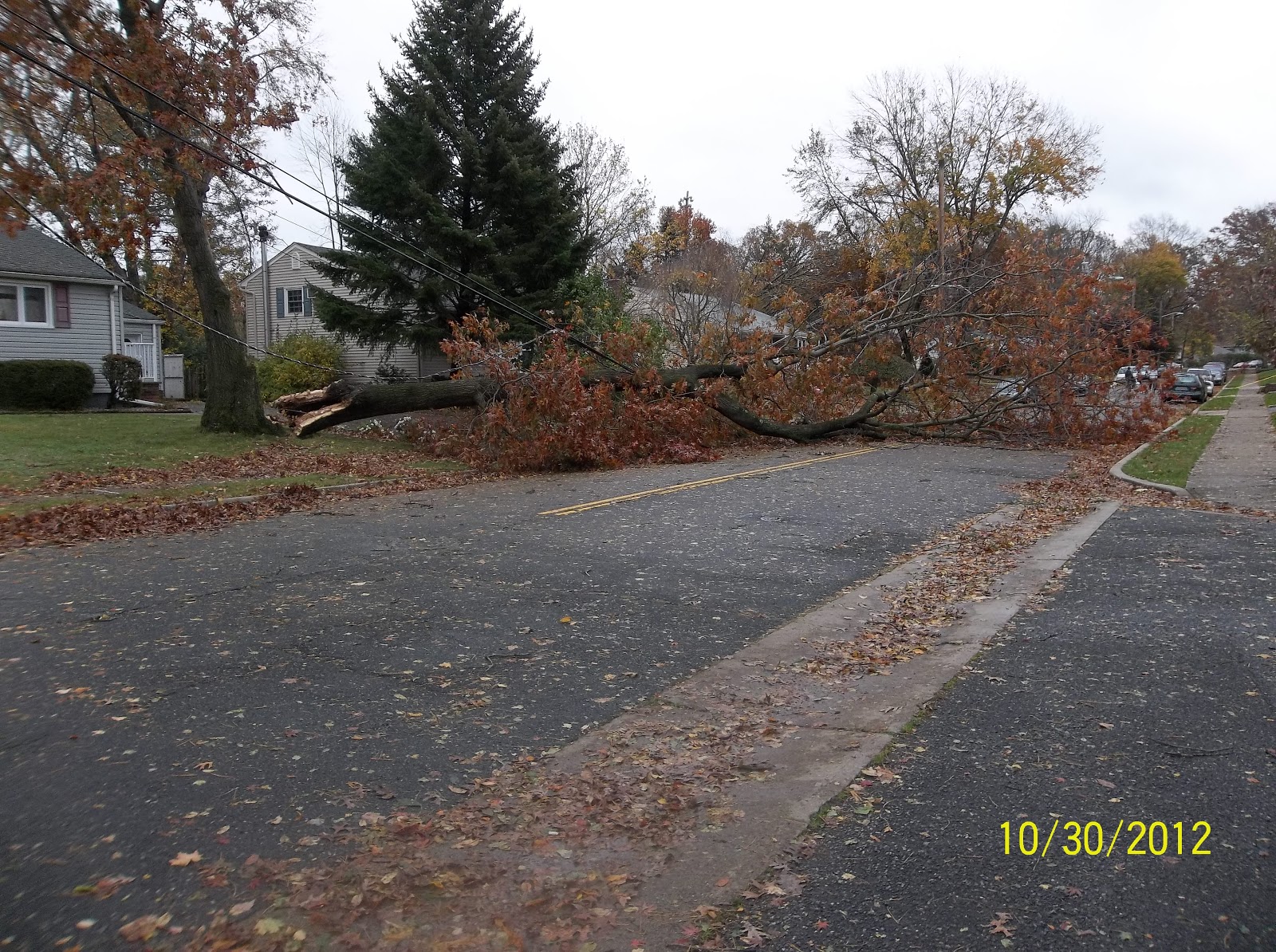
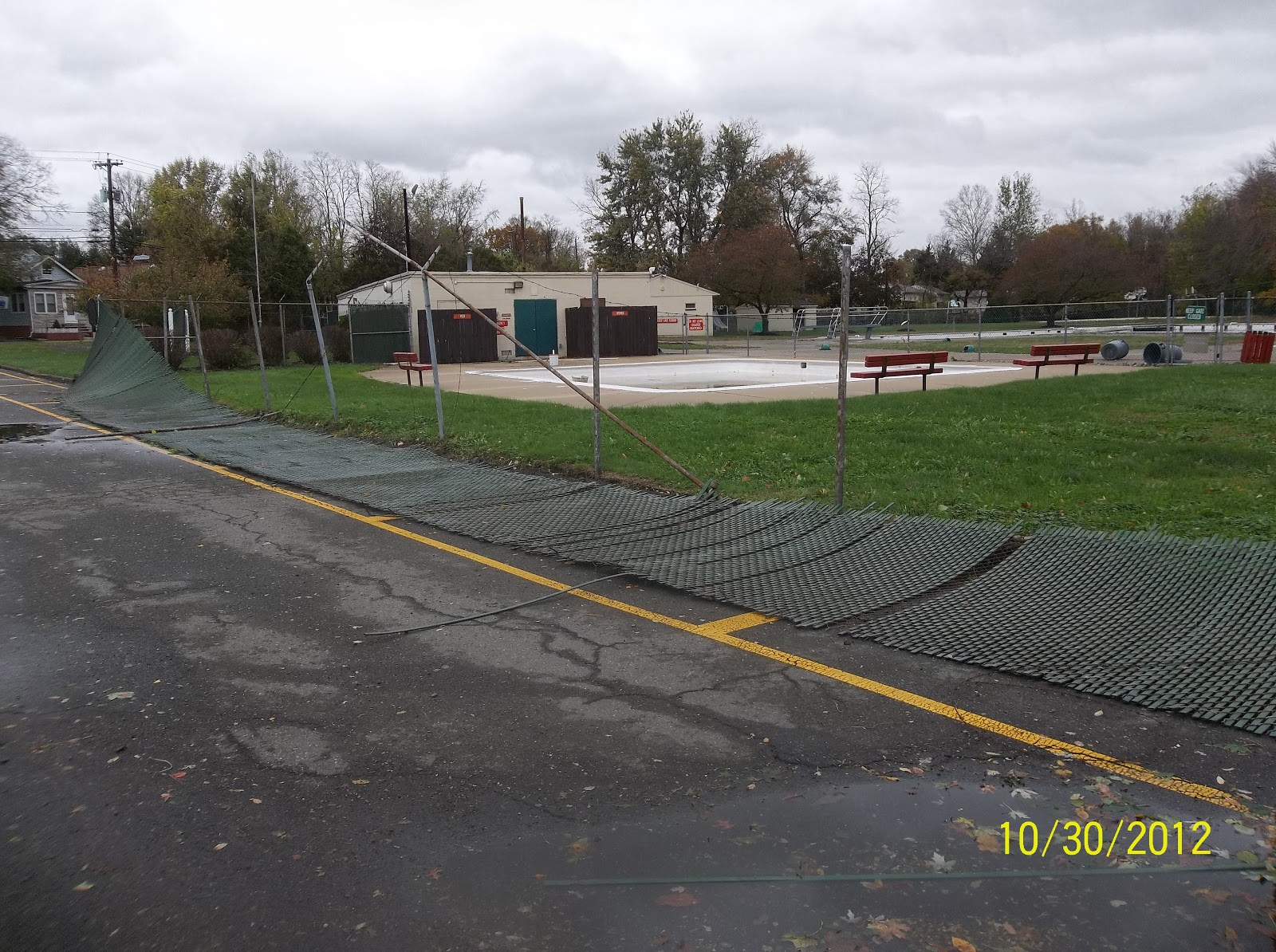
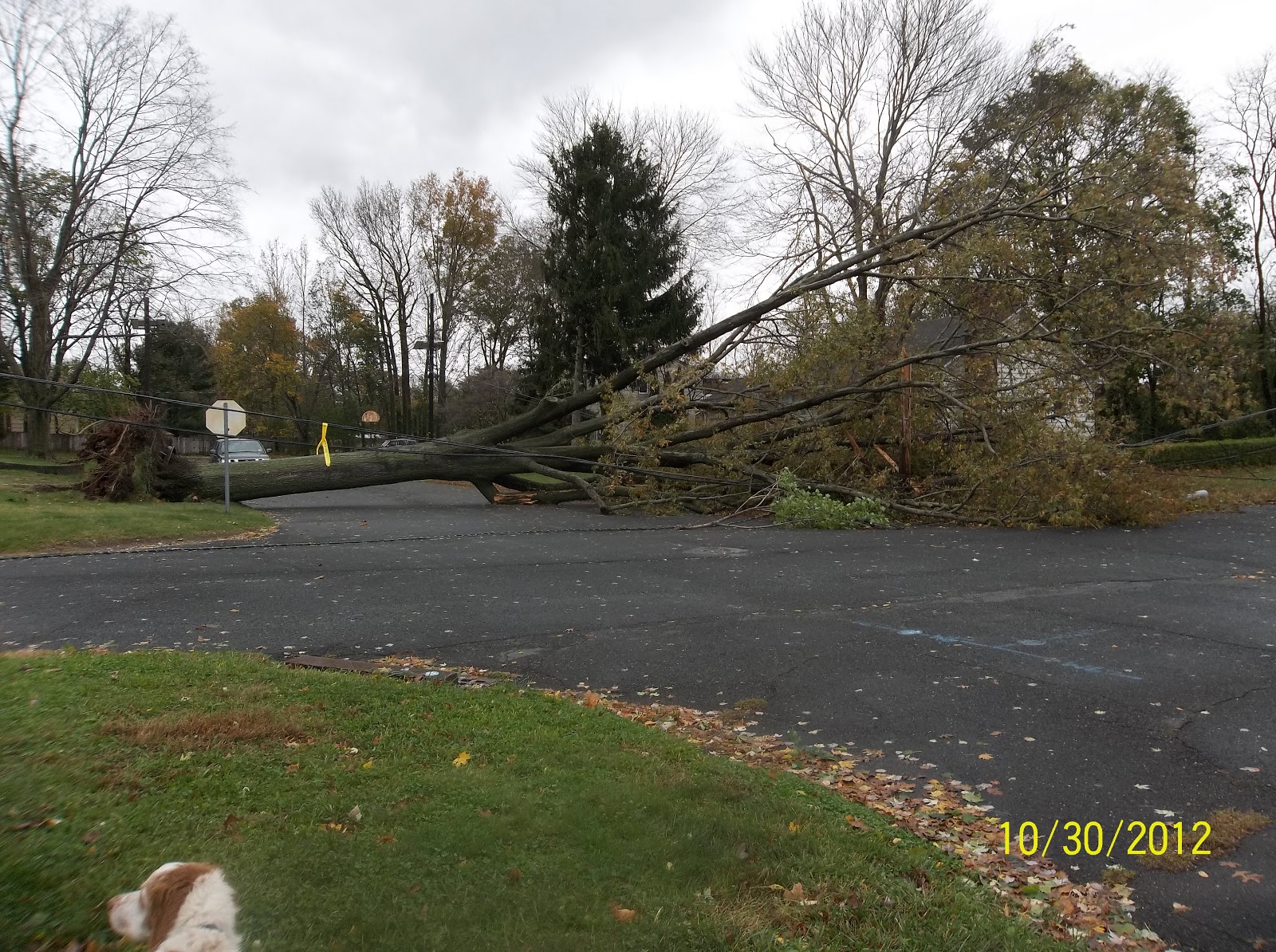
You’ve undoubtedly seen photos of the destruction that Sandy wreaked in Manhattan, Staten Island and the Jersey shore. This storm was nothing like anything I have experienced before. I have been through quite a number of hurricanes in my 55 years, and flooding was ALWAYS the major issue. Except for Manhattan, Staten Island and the Jersey shore, flooding was NOT the big issue – the wind was.
We waited for the rains to come – and they did. Maybe 3 to 4 inches of rain? Not a lot by hurricane standards. The winds however, were unearthly. You know how you hear tornado survivors say the winds sounded like a freight train going by? That was what this was like. Laying in bed Monday night, trying to fall asleep and listening to the wind shriek and howl quite unlike anything I have heard before, was so unsettling.
Waking up Tuesday morning, the rain was falling gently and the winds were very calm – nothing like the night before. As I woke up to get dressed and get ready for work (yes, I was expected in), the world was dark and quiet. I decided at the last minute to bring my camera with me. My wife Marianne also took a camera with her later that afternoon when she took our dog Jesse, for his walk.
Here’s just a small sample of the sights we saw in South Plainfield, NJ. Our town looked like something from a war zone or a movie set. We took a lot more photos – and please note, this all happened within walking distance of our home.
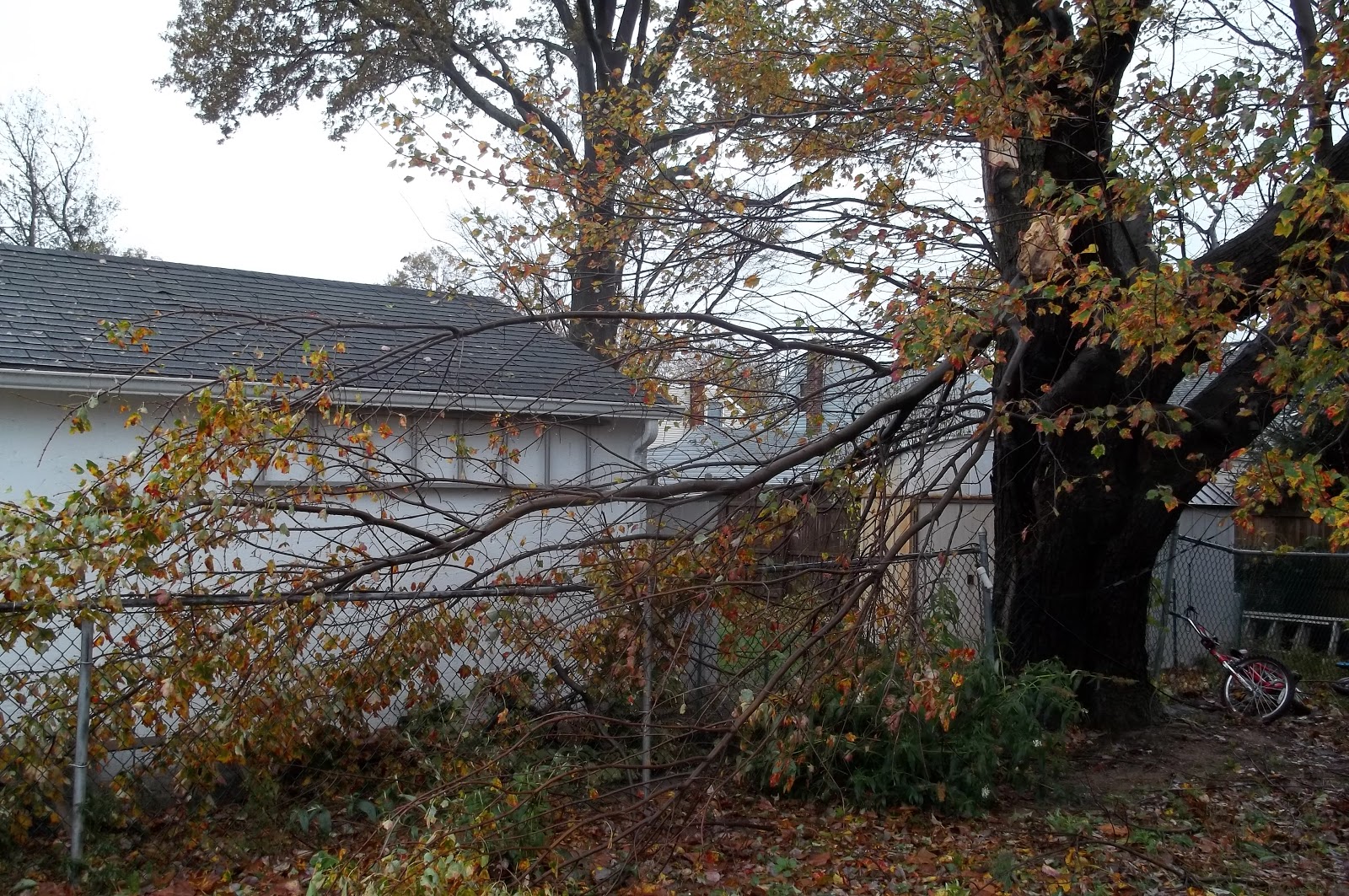

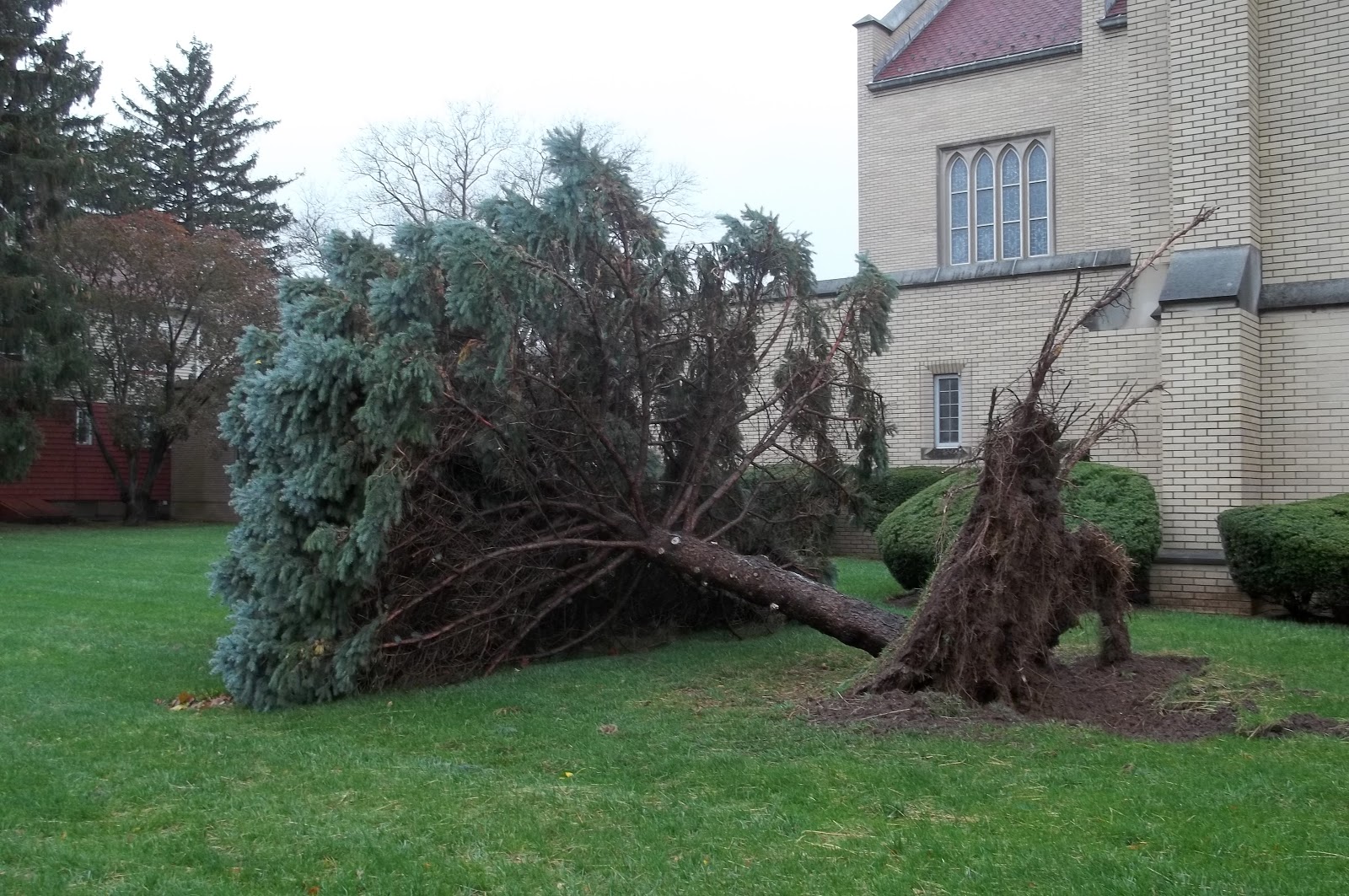
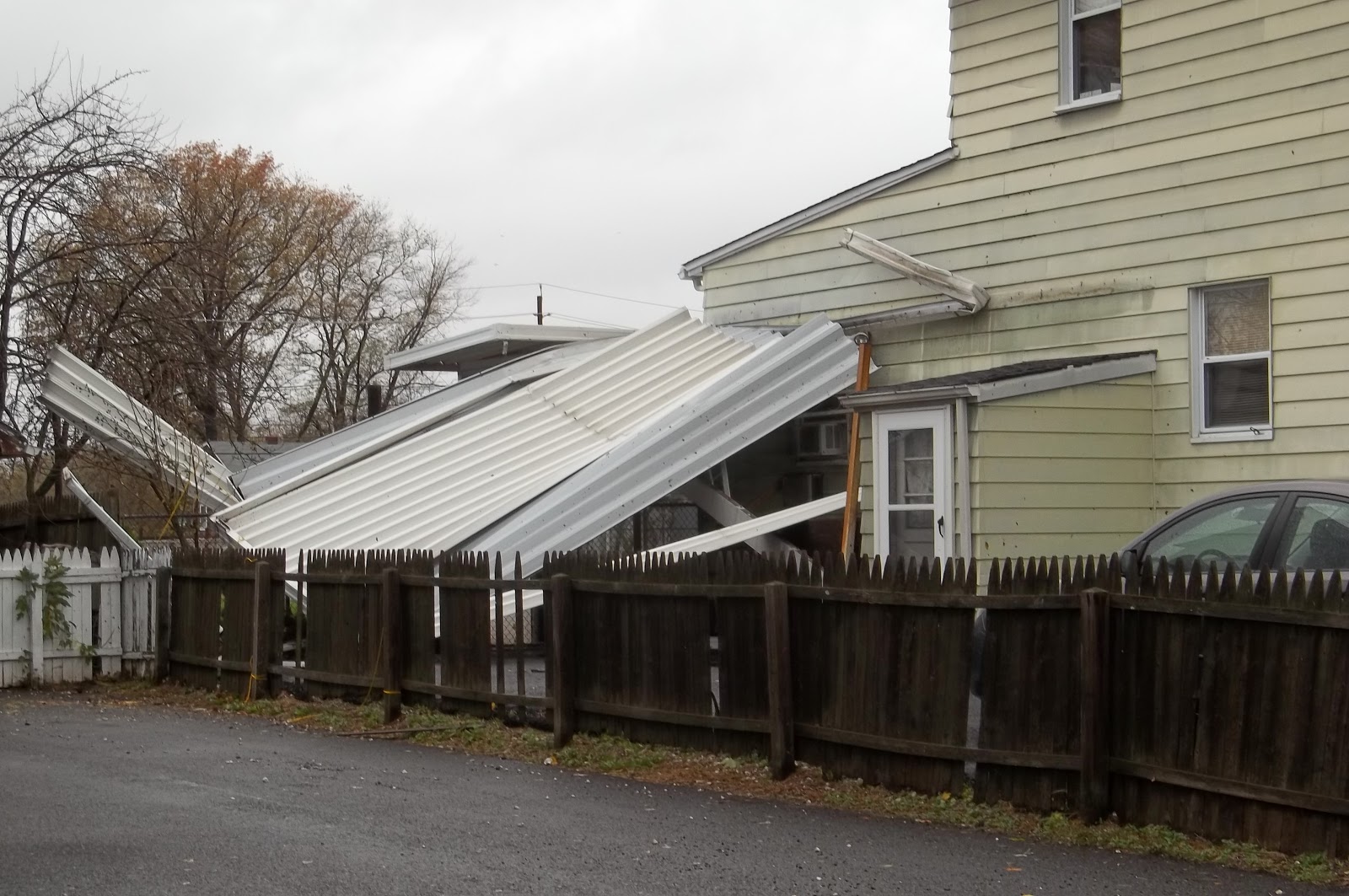
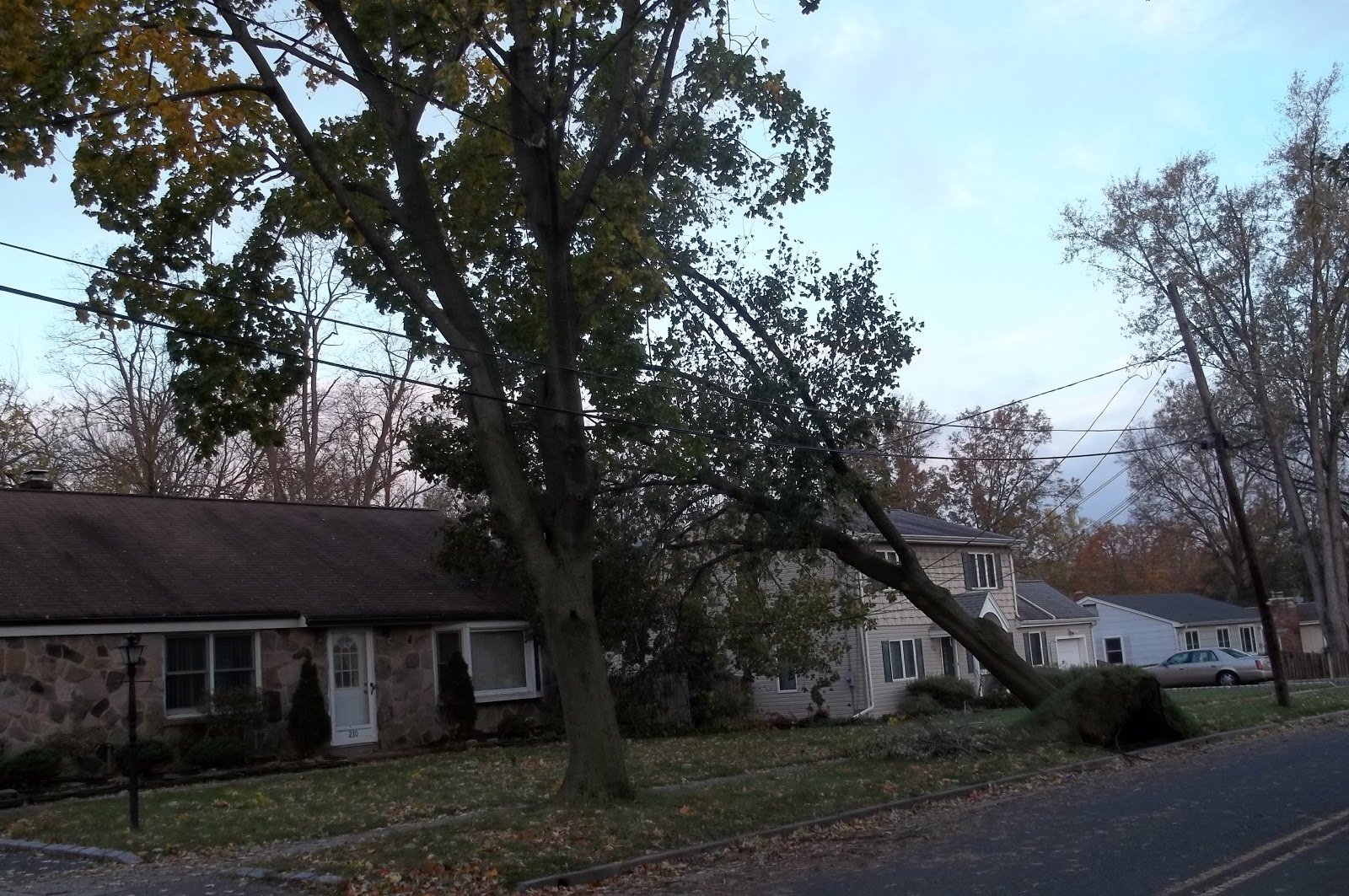

Larry Makoski, W2LJ, is a regular contributor to AmateurRadio.com and writes from New Jersey, USA. Contact him at [email protected].
 Ham Radio Deluxe |
 W5SWL Electronics |
 Ham Radio Prep |
 KB3IFH QSL Cards  Hip Ham Shirts  HamRadioAuctions HamRadioAuctions Reliance Antennas Reliance Antennas Enigma Shop Enigma Shop |  morseDX  Ni4L Antennas  R&L Electronics R&L Electronics antennas.us antennas.us QRV QRV |
- Matt W1MST, Managing Editor
