 |
 Long Delayed Echo on VOA Chinese Service
 28 February 2013 | by
Thierry, F4EOB from Paris is still hearing strange echoes on the VOA Chinese service broadcasts. There isn’t really any good explanation for this phenomenon.
Now during winter he is hearing it both on 13650 kHz from 9 to 12 UTC and on 21590 kHz from 9 to 11 UTC. The 21590 kHz transmission has been heard by him for a long time and I mentioned it here last year also. As then the echo is about 2 seconds. Thierry also made a youtube video of it with a recording.
The transmitter locations are in Asia. The 19 m band site is on the Mariana Island (Tinian) and the 13 m band transmitter is in Tinang in the Philipines.
In my blog last year I discussed possible explanations such as multiple transmitters or multiple round-the-world travel. But since the delay is so consistent and has had the same delay for such a long time, the probability that it is man-made is rather large.
Thierry tells me that this LDE can easily be heard with the WebSDR at the University of Twente in the Netherlands also. I would be curious to hear from people outside Europe who could compare the Dutch WebSDR with their own local reception and see if the same echoes are heard everywhere.
Sverre Holm, LA3ZA, is a regular contributor to AmateurRadio.com and writes from Norway. Contact him at [email protected].
New method to produce graphene may lead to a revolution in battery technology

Graphene Supercapacitor
This is a small article I wrote for our office newsletter. Major implications for portable Amateur Radio equipment and emergency communications.
Batteries. They have become a huge part of our everyday lives. Think of how many devices we use that need to be recharged regularly. Cell Phones, iPads, laptops, digital cameras, cordless vacuums, electric razors, and now cars too. Tesla and other pioneers in the electric car industry are slowly moving toward technology that resolves a lot of the capacity issues in their devices, with some models now reaching a 300 mile range. The iPhone has become another great example of what engineering can do for battery capacity, with newer models able to go for a day or more between charges with normal use. Capacity is no longer the issue it once was. Charging time is now what’s holding battery technology back in applications like cars, industrial machinery, and tools. Even using one of the Tesla Superchargers takes about 30 minutes to charge a Tesla S to 50 percent capacity, and most cell phones still take an hour or more for a full charge.
The answer to this problem may lie in a substance called graphene. Graphene was invented in 2010 at the University of Manchester, UK. The two scientists who came up with the process were awarded the Nobel Prize in Physics. Graphene is a single layer of carbon, forming a thin sheet, one molecular layer thick, and has amazing properties both physically and electrically. Graphene is extremely conductive, and shows promise in the field of electronics, helping to create faster and smaller semi-conductors, as well as many other practical uses.
The original method to create graphene is extremely low-tech, and not very practical. The Scientists at the University of Manchester were able to pull a single layer of carbon molecules off of a piece of graphite by using Scotch Tape. This proves to be impractical on a large scale though, and a new method was needed. Last year at UCLA, researchers found a way to make graphene out of graphite oxide dispersed in water using low powered lasers. The lasers they used however, were the ones in an ordinary DVD burner. By coating a DVD with graphite oxide, and burning it on the label side using LiteScribe technology, they were able to create sheets of graphene, opening the door to a cheap method of creating this substance.
The real surprise came when one of the researchers attached a square of graphene to a light bulb, and managed to keep it lit for 5 minutes, after a charge time of only a few seconds. What they had stumbled on, was a new way of creating something called a super capacitor. Capacitors store electricity like batteries do, but charge and discharge rapidly, sometimes many times a second. A super capacitor combines the properties of both a battery and a capacitor, giving us a component that can charge rapidly, but behave like a battery once charged.
Thanks to the new method of creating graphene, this technology is closer to reality than most. Imagine being able to recharge device in seconds instead of minutes or hours. The possibilities this brings to the computer and auto industries are fantastic. It also opens up the idea of cordless, rechargeable devices to a host of new industries. Keep an eye on this, as it is going to change the way we look at portable devices, and energy storage.
Neil Goldstein, W2NDG, is a regular contributor to AmateurRadio.com and writes from New York, USA. Contact him at [email protected].
Kit building
While listening to the bands this evening, I finished my NorCal QRP Dummy Load kit that I purchased a few years ago.
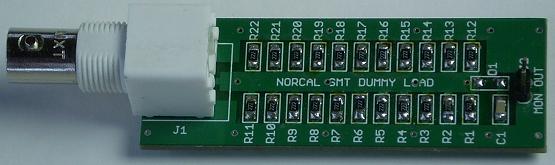
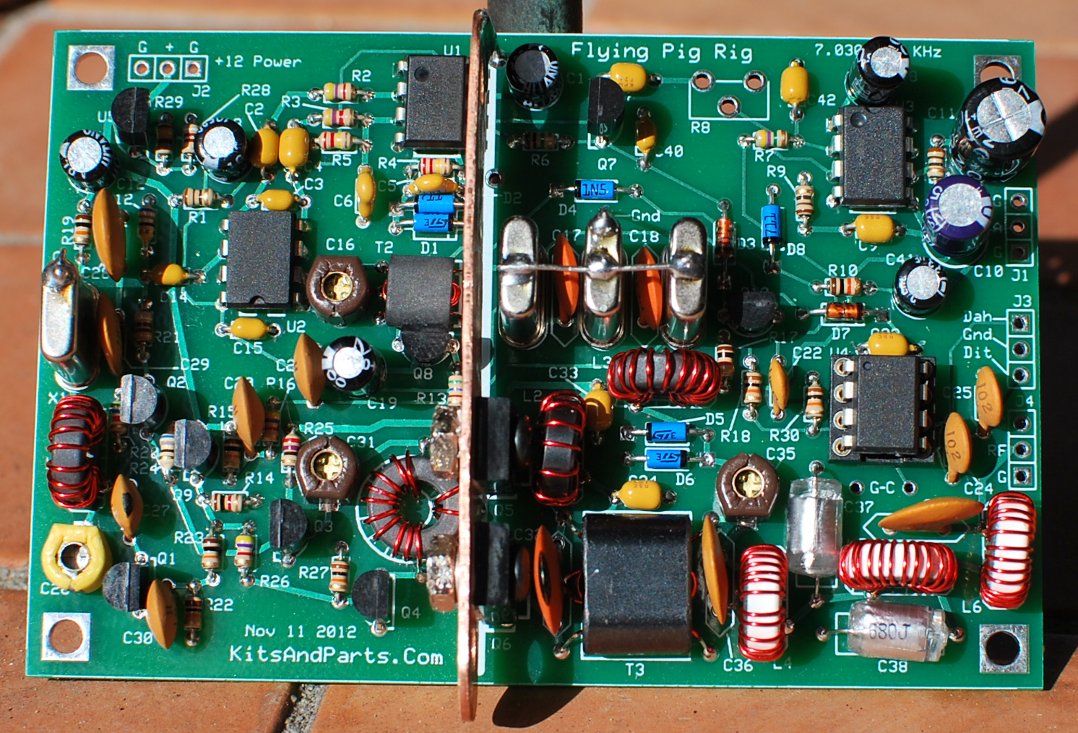
Larry Makoski, W2LJ, is a regular contributor to AmateurRadio.com and writes from New Jersey, USA. Contact him at [email protected].
CW Academy FB
Yesterday I had my final CW Academy session. As an indication of how good it was and how much we valued it, not one of the five of us ever missed a single session! There were sixteen hour-long sessions over two months. And it was all free!
Late last year I noticed a couple of messages from Jack W0UCE inviting hams keen to improve their CW skills to join in and pointing them to this page detailing the thinking behind CW Academy’s approach.
What was on offer was a series of online sessions in a small online group re-learning the code. The hour-long sessions are designed to get you to read in your head and to break or avoid habits (like writing everything down) that will prevent you from increasing speed later.

The target for our beginner group was around 20wpm. The sessions took place using Oovoo which is like Skype for groups. (Apparently it’s important that the instructor can see who is having difficulties.) We logged on twice a week. In between times we were expected to practice daily using a nifty online tool, Morse Translator. This neat web app lets you practice listening to code and adjust both character speed and Farnsworth spacing. Our default setting from day one was 20wpm character speed with gaps to yield an effective speed of 10wpm. Morse translator is a great model to help practice sending as well. I found including sending practice helped lock in recognition of words.
Our teacher or Elmer was Rob K6RB. He shared his intense enthusiasm for CW with us as well as his experience on air. After a few weeks of walking us through the alphabet, numbers and prosigns and practising new letters and words, Rob gradually upped the speed. Then the rubber hit the road about week five when we were QSOing back and forth. Rob patiently introduced us to the format of the typical QSO, contesting and even handling a DXpedition. His aim was to prepare us for these so that we’d know what to expect and what was expected of us when we joined in. We got the benefits of decades of operating experience in these sessions.

The CW Academy is an initiative of the CW Operators Club. CWops is international in focus and it was great to be accommodated as the token DX in the group. As they say on the webpage “available to anyone, anywhere”.
The training has got me confident to get back on the air with a practical code speed and as a bonus, interested for the first time in having a go at contesting, initially the CWops fortnightly Mini-CWT contest which we spent a couple of sessions rehearsing.
A big TU to CWops and Rob K6RB for all their efforts running the CW Academy.
Stephen Rapley, VK2RH, is a regular contributor to AmateurRadio.com and writes from New South Wales, Australia. Contact him at [email protected].
Monitor RFI issue…..
 |
| RFI from new monitor |
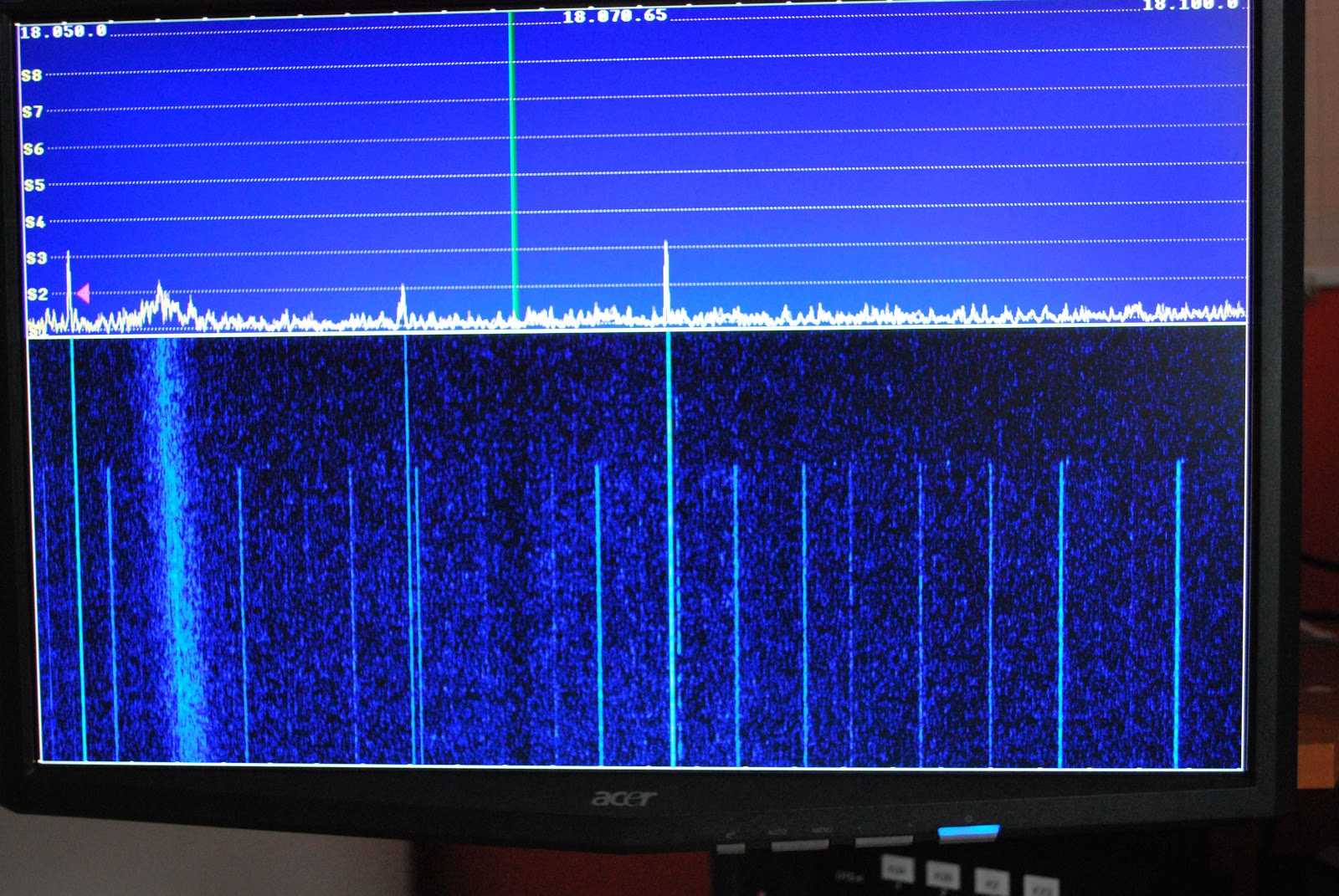 |
| Both monitors off |
Mike Weir, VE9KK, is a regular contributor to AmateurRadio.com and writes from New Brunswick, Canada. Contact him at [email protected].
Handiham World Weekly E-Letter for 27 February 2013
Pat Tice, WA0TDA, is the manager of HANDI-HAM and a regular contributor to AmateurRadio.com. Contact him at [email protected].
Name calling
Something that’s been puzzling me for the last couple of years, particularly on the digital modes, is the number of people who address me by name before I’ve told them. These are not stations I’ve worked before – KComm will alert me to those. But increasingly often when I reply to a station they will come right back with “Good afternoon, Julian.” I’ve even had people end JT65A contacts with “TU JULIAN 73”, despite the fact that the operator’s name is not part of the exchange.
I’m not egotistical enough to think that half of hamdom know my name because of my blog. I’ve had people address me as “Mr Julian Moss” which I think is a bit formal for the amateur bands. But it makes me suspect that some database is involved.
It would shake my faith in the parsimony of hams to think that 50% – because that’s about how often it happens nowadays – have stumped up for a subscription to QRZ. But if they haven’t, where do they get the information from? Is there a free callsign lookup database I haven’t heard of? And if there is, doesn’t the fact that you can access a station’s details at the click of a button render somewhat pointless the rest of the QSO?
Julian Moss, G4ILO, is a regular contributor to AmateurRadio.com and writes from Cumbria, England. Contact him at [email protected].
 Ham Radio Deluxe |
 W5SWL Electronics |
 Ham Radio Prep |
 KB3IFH QSL Cards  Hip Ham Shirts  HamRadioAuctions HamRadioAuctions Reliance Antennas Reliance Antennas Enigma Shop Enigma Shop |  morseDX  Ni4L Antennas  R&L Electronics R&L Electronics antennas.us antennas.us QRV QRV |
- Matt W1MST, Managing Editor
