 |
 Easter Sunday – Resurrection Sunday
 31 March 2013 | by

Larry Makoski, W2LJ, is a regular contributor to AmateurRadio.com and writes from New Jersey, USA. Contact him at [email protected].
Picked up one of these today
It’s called the Music Bullet.


Larry Makoski, W2LJ, is a regular contributor to AmateurRadio.com and writes from New Jersey, USA. Contact him at [email protected].
QRP ARCI Spring QSO Party Next Weekend!
From the QRP ARCI Website:
Saturday 6 April 2013, 1200z – Sunday 7 April 2013, 2359z
This is one of the “Big Ones” !
The Spring QSO Party and the Fall QSO Party are the two most popular QRP ARCI Contests. This contest is also a very good way for you to increase your QSO totals if you are involved with the 2013 QRP ARCI operating event known as ‘The QRP Challenge’ where the goal is to work at least 100 QRP ARCI club members to qualify for The BIG 13 Award. You can also use the Spring QSO Party to increase your QRP totals for various QRP ARCI Awards. Or you can just get on the air and have some fun whether you’re a serious competitor or a casual participant the Spring QSO Party is for you !
You can enter as an all band, single band, high band or low band station and then pick the antenna and power category that matches your personal setup and compete with similar equipped stations around the country and around the world.
Read the complete rules and get on the air for the Spring QSO Party !
Thanks to Hank N8XX for posting the reminder!
I am so glad about this! It seems like the last few years, the Spring QSO Party has fallen on Easter weekend. I may actually get to participate this year.
72 de Larry W2LJ
QRP – When you care to send the very least!
Larry Makoski, W2LJ, is a regular contributor to AmateurRadio.com and writes from New Jersey, USA. Contact him at [email protected].
Hike to Profile Falls
Hanz W1JSB and I hiked down to a beautiful point on the Pemigewasset River in Bristol. We worked England, Germany, Ohio and Tennessee. It seemed like the first really warm day of spring.

We were hoping to hike to Sky Pond, but there was just too much snow… at least a foot. So we changed plans. We headed to Bristol to a spot where Profile Brook flows into the Pemi. We hiked down the old Northern Railroad right-of-way.

We crossed a few snowy spots and a few muddy places, but it was grand… 52F and sunny! We sat down right on an old stone railroad bridge abutment. We tossed a line high into a nearby ash tree and pulled up a half wave wire for 20 meters. We used the Chinese HB-1B. The band wasn’t full of DX, but we snagged a few. I took the first turn and called my old friend Tom, G3HGE in England as he finished up a QSO. He was strong to me… 599, but there was also significant QSB. He dropped as low as 569. He gave me a generous 549. I’m sure he was unable to copy at times. “DX is below par,” he sent. I told him I’d send some photos of our operating spot. He was pleased with the idea… “That will put flesh on the skeleton,” he sent, and we signed.
Next I called Serg, DL1DGS. I had worked him just yesterday from the shack. He was also strong, but only gave me a 539. Even so, he sent, “UR 4W OK.” With that I handed the key to Hanz.

Next I called Serg, DL1DGS. I had worked him just yesterday from the shack. He was also strong, but only gave me a 539. Even so, he sent, “UR 4W OK.” With that I handed the key to Hanz.
With four QSOs under our belts, we headed back. We went straight to the river through the woods and walked back by a different route. What a pleasure to walk on almost-dry land for the first time in four months.
—-
For a version of this story with imbedded video see http://www.w1pid.com/easter/easter.html
Jim Cluett, W1PID, is a regular contributor to AmateurRadio.com and writes from New Hampshire, USA. Contact him at [email protected].
K1EL Winkeyer USB complete
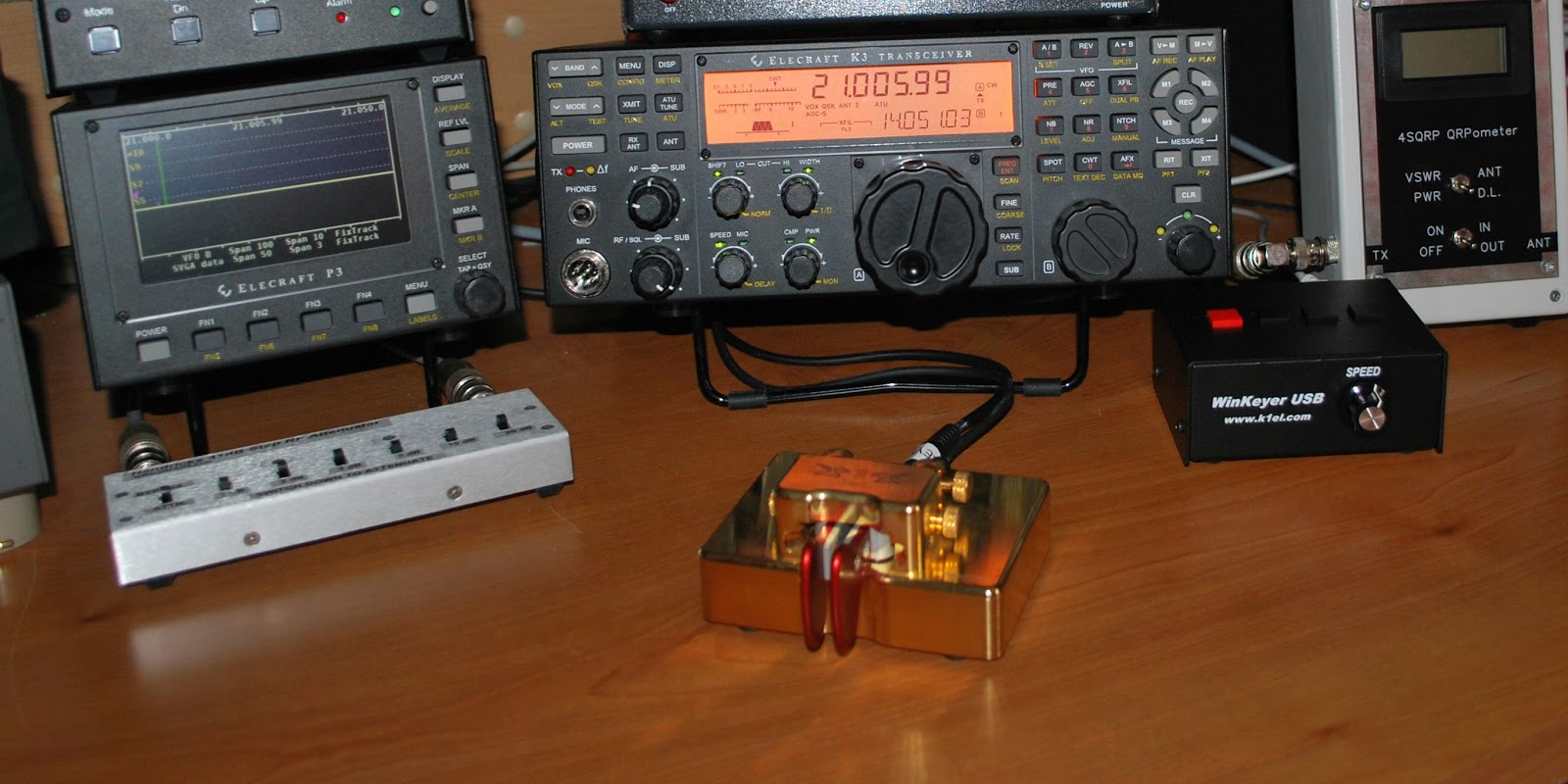 |
| K1EL Winkeyer ready for action |
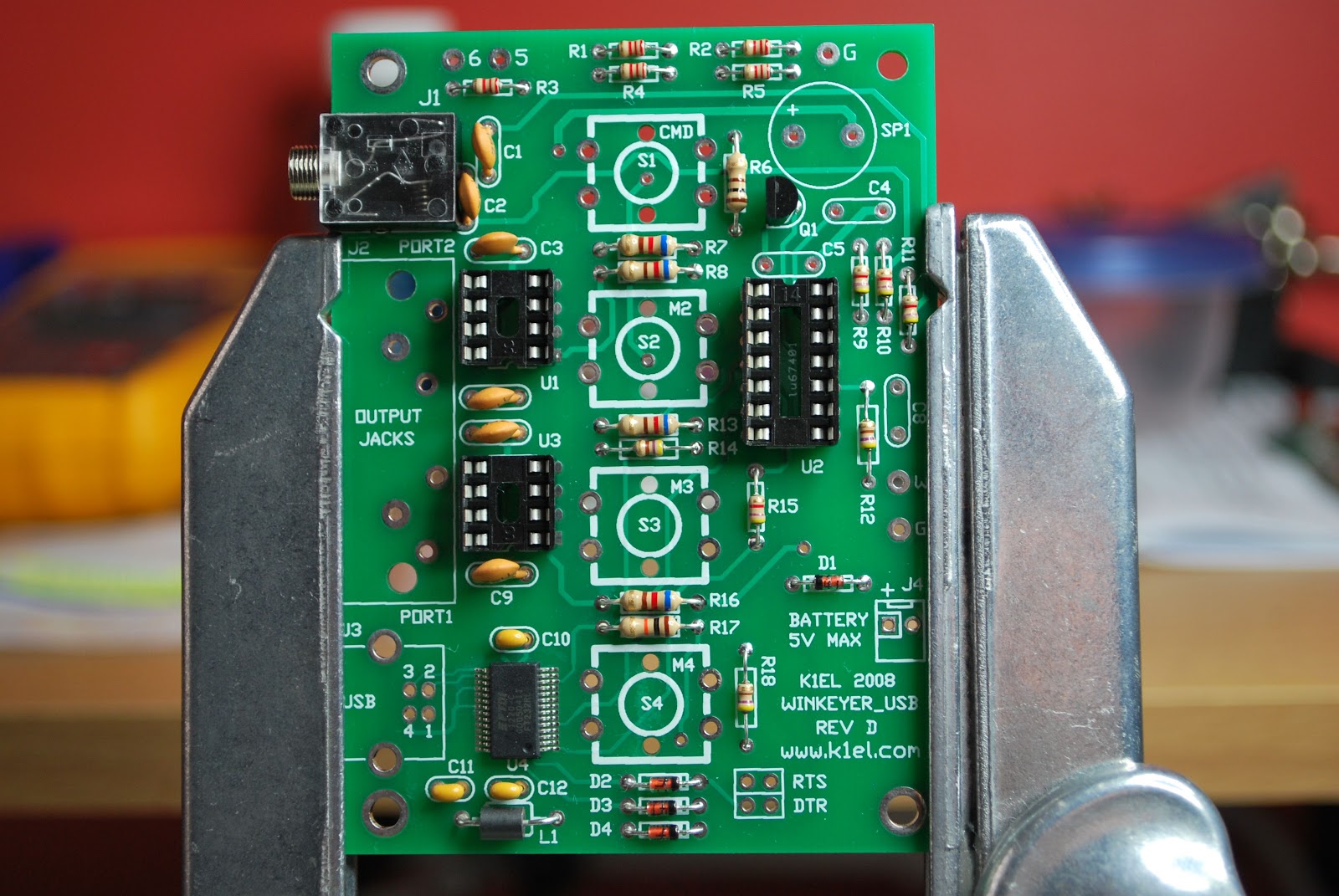 |
| The first day of assembly |
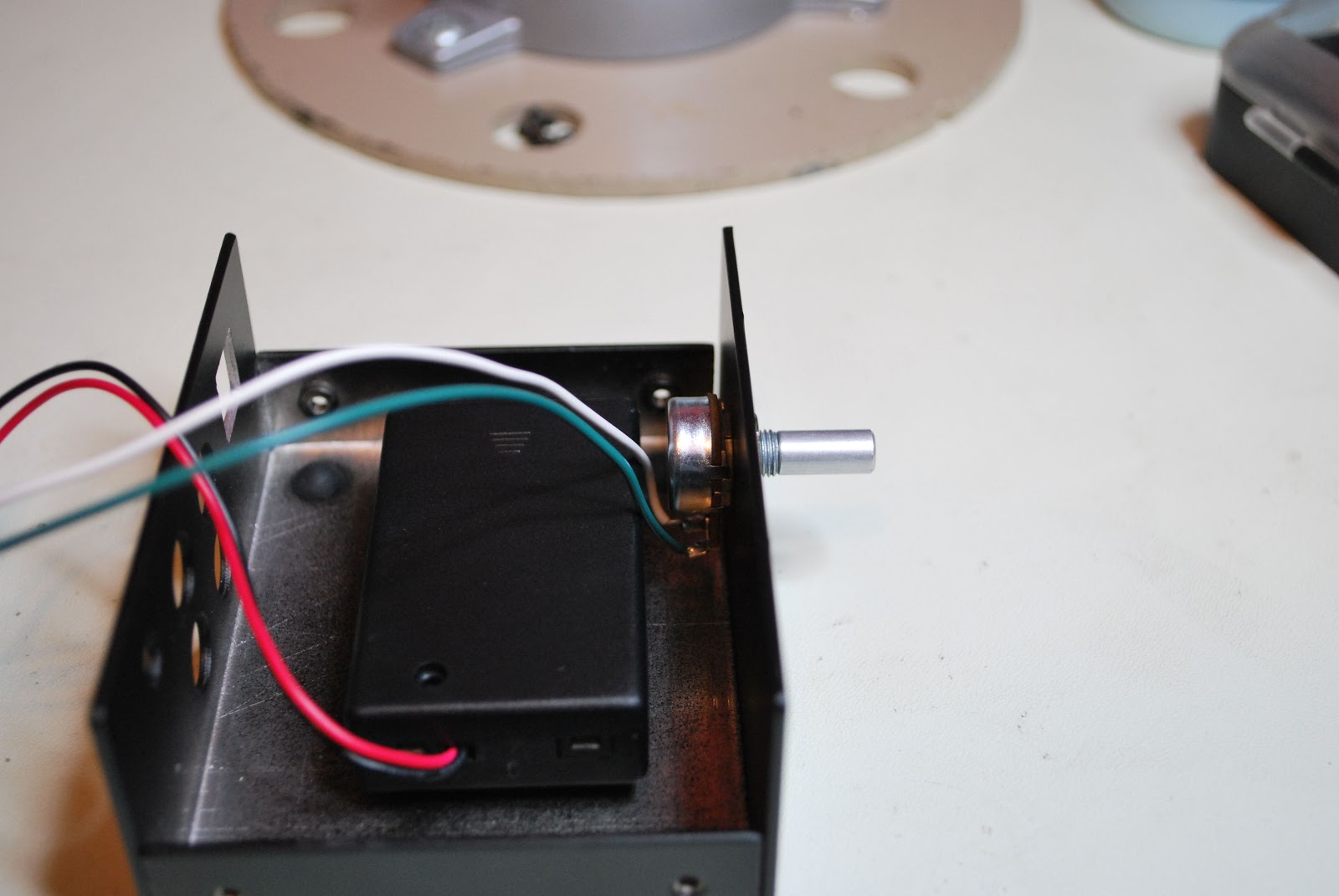 |
| Battery holder |
building will be a smooth experience. Take your time building the unit, it's not a race as certain components such as USB connector, 1/8 jack and 4 way RCA jack should be mounted with care. This makes the final assembly of the two metal covers fit without any surprises.
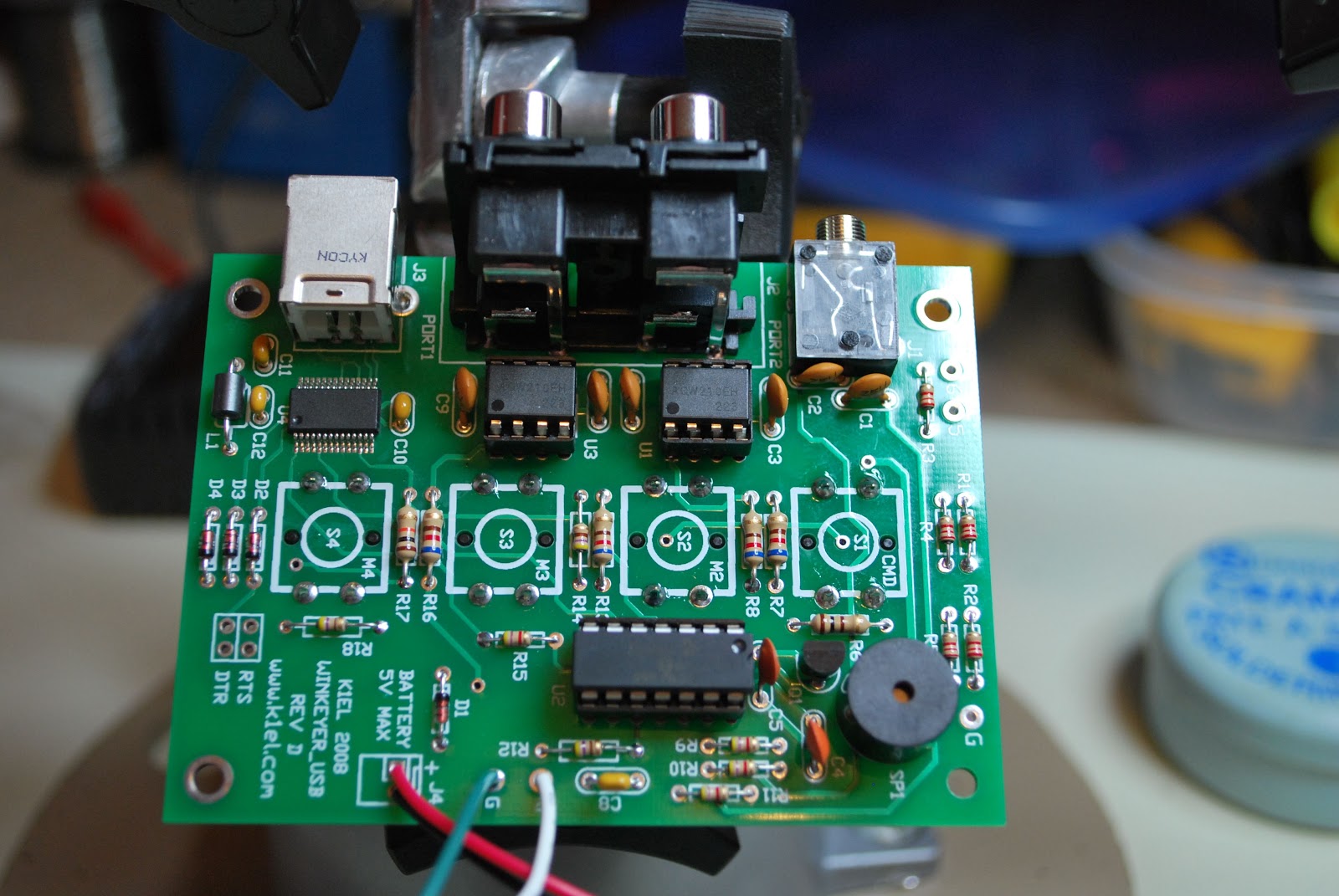 |
| Kit complete |
1. There is a 10k potentiometer and the shaft was just a bit to long and I had to trim it. This was only for looks as I did not like the knob extended away from the keyer.
2. No hookup wire was provided to go from the potentiometer to the board. This is no big deal either as I did have the wire...but.....it would had been nice to include it in the kit.
 |
| Pot before mod |
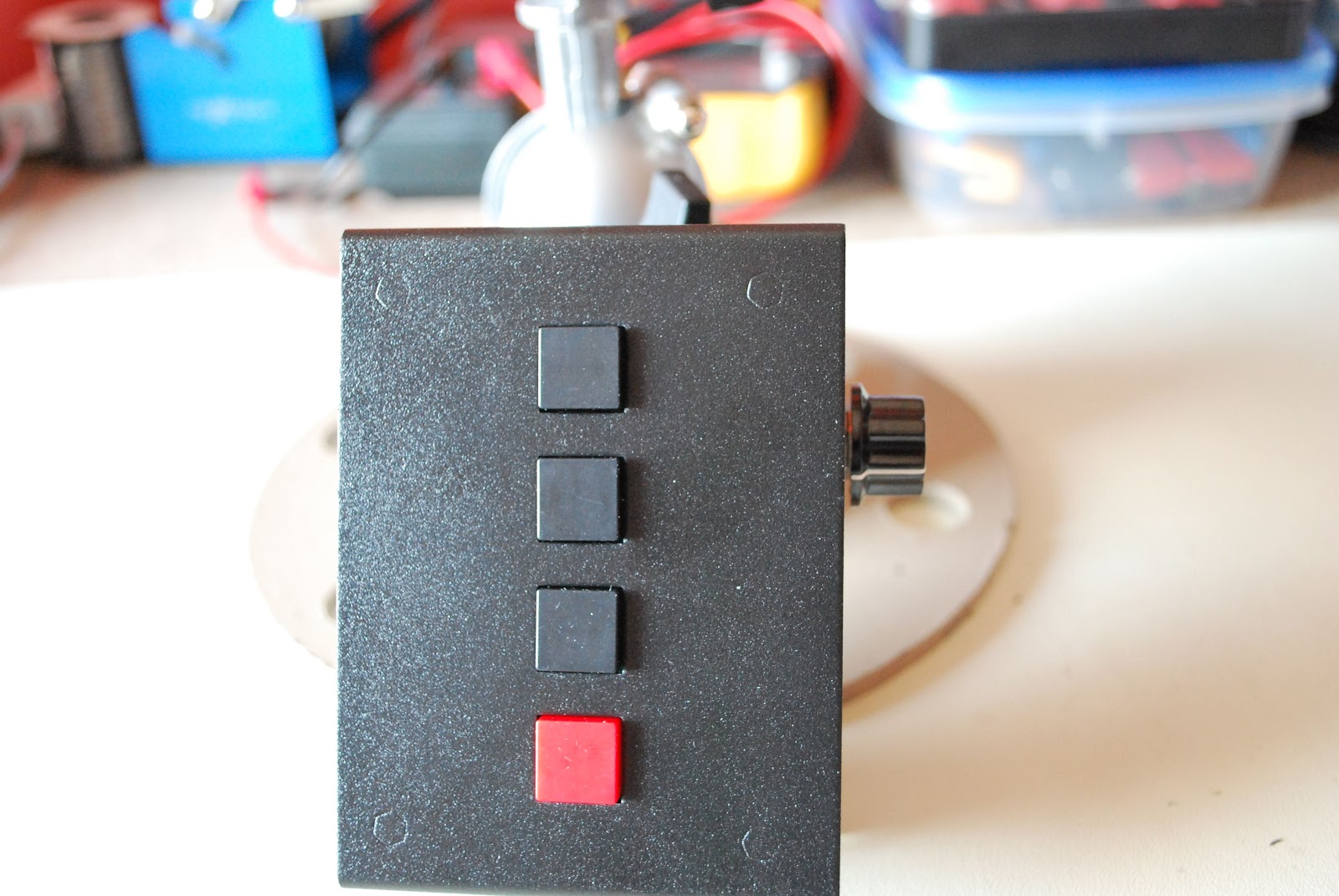 |
| Pot after mod |
Mike Weir, VE9KK, is a regular contributor to AmateurRadio.com and writes from New Brunswick, Canada. Contact him at [email protected].
JT9-1 with 1W
I see that some bloggers have complained that HF propagation today was not too good. My 5W JT9-1 signal on 20m was spotted several times at reasonable strength by VK3AMA so this afternoon I thought I would see how far I could get with 1 watt.
 |
| Reception of JT9-1 signal from G4ILO using 1W to attic dipole |
Julian Moss, G4ILO, is a regular contributor to AmateurRadio.com and writes from Cumbria, England. Contact him at [email protected].
Holy Saturday

Something strange is happening—there is a great silence on earth today, a great silence and stillness. The whole earth keeps silence because the King is asleep. The earth trembled and is still because God has fallen asleep in the flesh and he has raised up all who have slept ever since the world began. God has died in the flesh and hell trembles with fear. -from an ancient homily on Holy Saturday
Larry Makoski, W2LJ, is a regular contributor to AmateurRadio.com and writes from New Jersey, USA. Contact him at [email protected].
 Ham Radio Deluxe |
 W5SWL Electronics |
 Ham Radio Prep |
 KB3IFH QSL Cards  Hip Ham Shirts  HamRadioAuctions HamRadioAuctions Reliance Antennas Reliance Antennas Enigma Shop Enigma Shop |  morseDX  Ni4L Antennas  R&L Electronics R&L Electronics antennas.us antennas.us QRV QRV |
- Matt W1MST, Managing Editor
