 |
 QRP Philosophy 101 – Expectation/Frustration Syndrome
 14 April 2013 | by
 I have been casually reading , The Joy of QRP by Adrian Weiss, W0RSP. This book is a comprehensive book on everything QRP to the minute details. There aren't enough pictures in the book to suit my taste, but then again, I'm not a highly technical QRP'er, but there are some nuggets in the book for everyone. In the very first chapter on page 2 of the book the author talks about the enemy of QRP operation and that is "Frustration". On the surface I think most of us would agree that you to have a certain measure of patience to enjoy QRP.
To paraphrase Weiss he describes the "expectation-frustration syndrome" as a manifestation of this frustrated condition. Says Weiss, "Quite simply, their expectations exceed the limits imposed by Nature's laws upon the phenomena which they are attempting to manipulate. In other words, they are expecting to achieve objectives that are either impossible, or at best, highly improbable" So what discourages a lot of wanna be QRP'ers is the fact that they can't work the same DX they can with their high power stations, get frustrated and give up on QRP.
Well I have to take exception to Weiss's observations. I approach a big pile-up with my QRP rig with the expectation of failure, but with the hopefulness that I might get lucky. So I am always surprised by what I can work on QRP. Last Friday night QSO's are listed below. These exceeded my expectation.
7T9A 5,886 miles 1,177 miles/watt
VK9/OH1VR 7,338 miles 1,467 miles/watt
TZ6BB 6,000 miles 1,200 miles/watt
After such a successful QRP session I didn't have "expection/frustation syndrome", I had "exceed expectation/celebration syndrome"
Oh the True Joy of QRP, "exceeding expections".
Mike Crownover, AD5A, is a regular contributor to AmateurRadio.com and writes from Texas, USA. Contact him at [email protected].
Downhill fast
As great as conditions were on Friday night, that’s how fast they went downhill over the weekend. Not sure how things went for the state QSO parties, but for casual DXing, things were the pits.
Personally, I would reckon this was all the side effects from the geomagnetic disturbance that resulted from the CME that recently occurred. As a result, most of the DX stations that I were able to hear were very weak, and the QSB was fast and deep. For instance, I was listening to EA2DD today on 17 Meters. One second, he was as high as 569 – the next he was ESP.
Even though the SSN & SFI numbers remained favorable, the A & K indices rose high enough to be troublesome. The good news is that things should change for the better rather quickly. Maybe when I get home from work tomorrow evening, things will be better.
One consolation this weekend was hooking up fellow blogger, John N8ZYA. We had a decent rag chew type QSO on Saturday evening, and that made up for the otherwise lackluster Saturday and Sunday.
72 de Larry W2LJ
QRP – When you care to send the very least!
Larry Makoski, W2LJ, is a regular contributor to AmateurRadio.com and writes from New Jersey, USA. Contact him at [email protected].
Begali Key for KX3

The link to the Begali website is http://i2rtf.com/html/adventure.html
I have no commercial interest in the Begali, but I thought it worthy of mention. It is a little pricey, but such is life.
Mike Crownover, AD5A, is a regular contributor to AmateurRadio.com and writes from Texas, USA. Contact him at [email protected].
Nick N1IC – How to Save Ham Radio – Part 2 – Pay it Forward (5 Part Series)
Nick N1IC – How to Save Ham Radio – Part 2 – Pay it Forward (5 Part Series)
Thanks for all the feedback on the first part of my conversational view of how to Save Ham Radio. Now I know “SAVE” is a strong word and it’s not that we are “IN TROUBLE” but it’s always good to do some self-refection on the hobby from time to time.
Pay it forward is a simple concept – do something that will have in impact on others and help to do it for the next person.
How does that work for us being Hams? Well, I have thought of a few things but would love to hear your comments on things I might have missed:
- Operate – Actually use all that gear you have. When you do talk to someone new or get out of the normal net you’re in or circle that you always talk too. Sometimes talking to someone new will provide you a new view on the world, topic or life. You could even learn something!
I hear from new Ham’s as well as have experienced it myself – I got my license, my rig, antennas up and I get on the air and no one comes back to me. Or they are talking to people and are rude if I want to join in.
http://nicktoday.com/nick-n1ic-how-to-save-ham-radio-part-2-pay-it-forward-5-part-series/
Nick Palomba, N1IC, is a regular contributor to AmateurRadio.com and writes from Florida, USA. Contact him at [email protected].
EME with the washing line – maybe?
A few weeks ago, Julie bought a new rotary washing line. Our old one was almost 10 years old and had seen better days. At the time I eyed it up and decided it ought to be good for making into some sort of antenna, although I didn’t work out quite what – so I stored it down at the bottom of the garden.
When this month’s Practical Wireless arrived through the door, I laughed. For there in Bob G3NRT’s Antenna Workshop was the tale of how he’d turned a rotary washing line into an antenna support – and another one into an antenna.
Well, after I’d finished some of my garden work today I decided to take Bob’s lead and fashion it into a tripod. It’s nice to be able to try out antennas in the back garden without too much hassle and I’d always fancied having a tripod.
And here it is!
.JPG)
EME with the washing line? Maybe not yet, but I have an idea….!!
Tim Kirby, G4VXE, is a regular contributor to AmateurRadio.com and writes from Oxfordshire, England. Contact him at [email protected].
Time to do some kit building
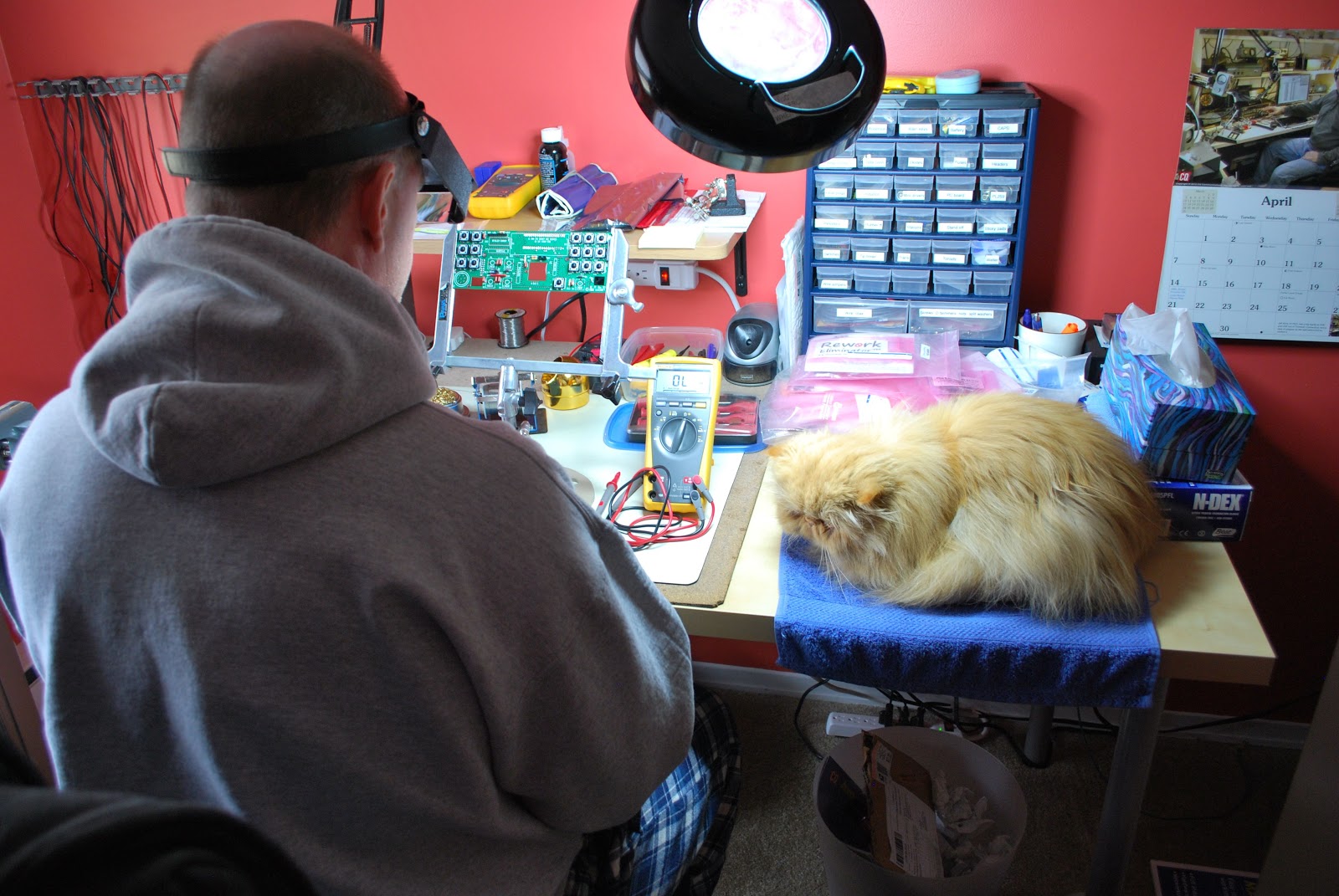 |
| Oliver is keeping an eye on things |
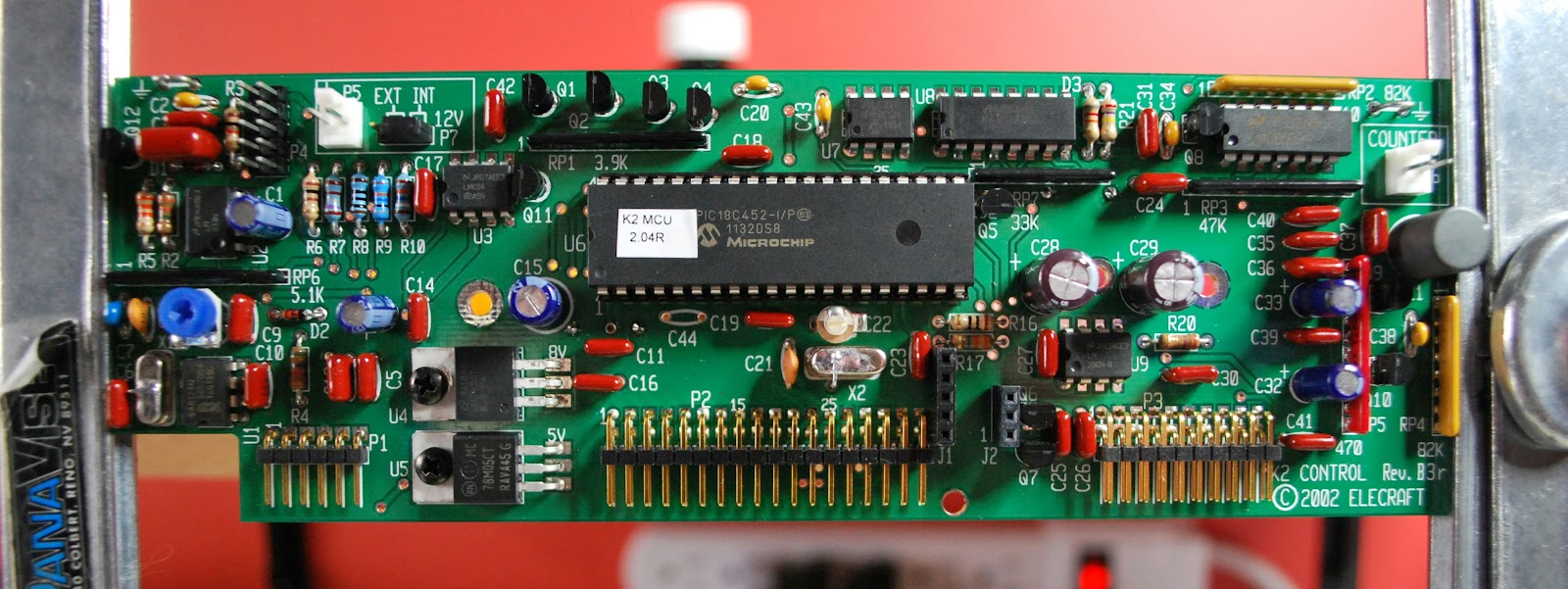 |
Control board completed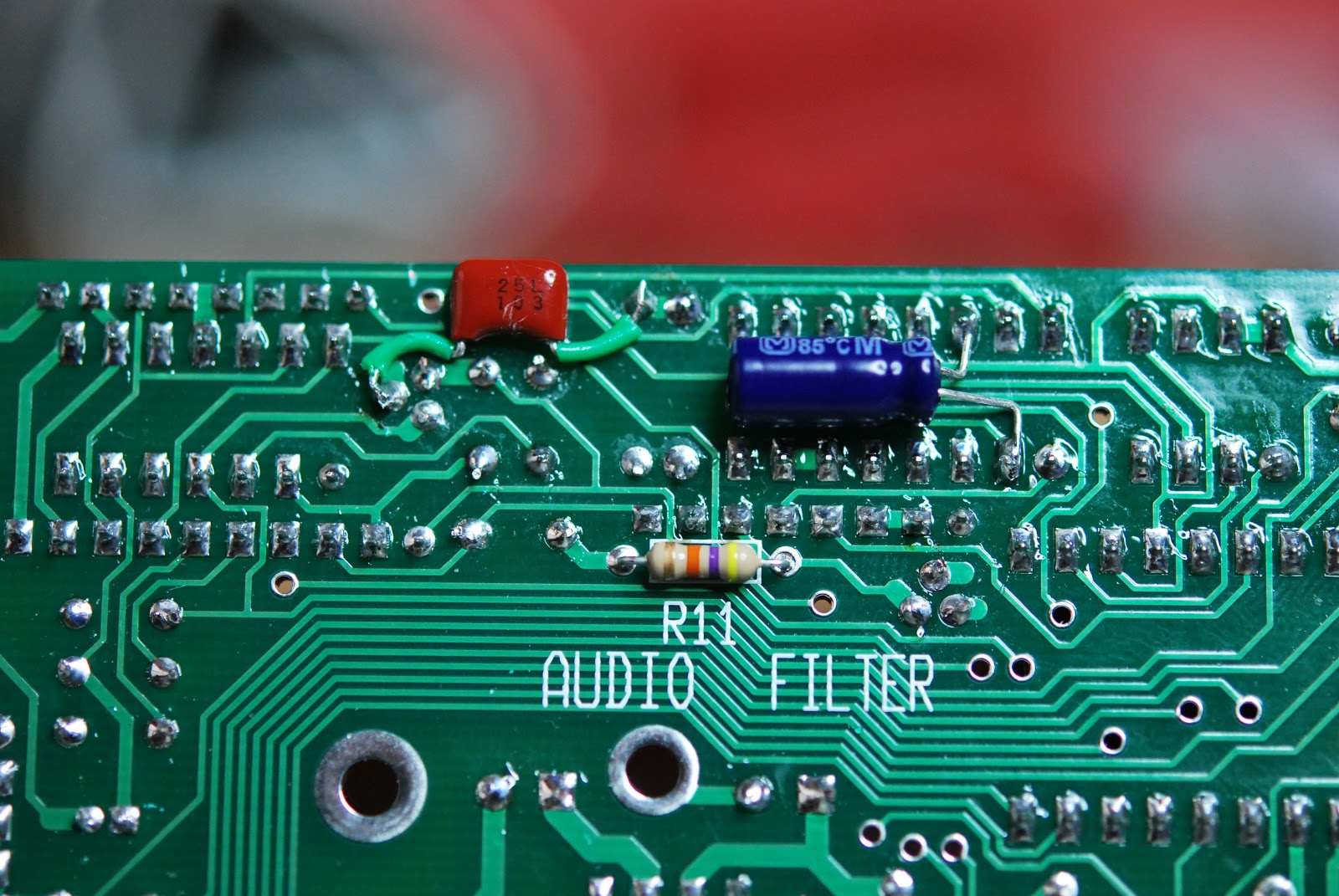 |
As was said I am in the process of building another Elecraft K2 and I have another blog that deals with the build. I wanted to blog the progress but also highlight other areas such as toroid winding, what was needed to be a kit builder and so on. There are specific posts about the K2 build it self making mention of tricky sections of the build and how it was handled. It's now time to see if the bands have come alive!!
Mike Weir, VE9KK, is a regular contributor to AmateurRadio.com and writes from New Brunswick, Canada. Contact him at [email protected].
Solder fume extractor
If you were wondering why you hadn’t seen any more about the Iler 40 transceiver kit I bought then here’s the reason. First I was distracted by making contacts using the new JT9-1 mode. But I also decided to get a solder fume extractor so I have been waiting for that to arrive.
It’s probably a bit late in the game to start worrying about the carcinogenic effects of flux and lead solder fumes. But as the price of peace of mind was only £20 on eBay, I thought “better late than never” and decided to get one.
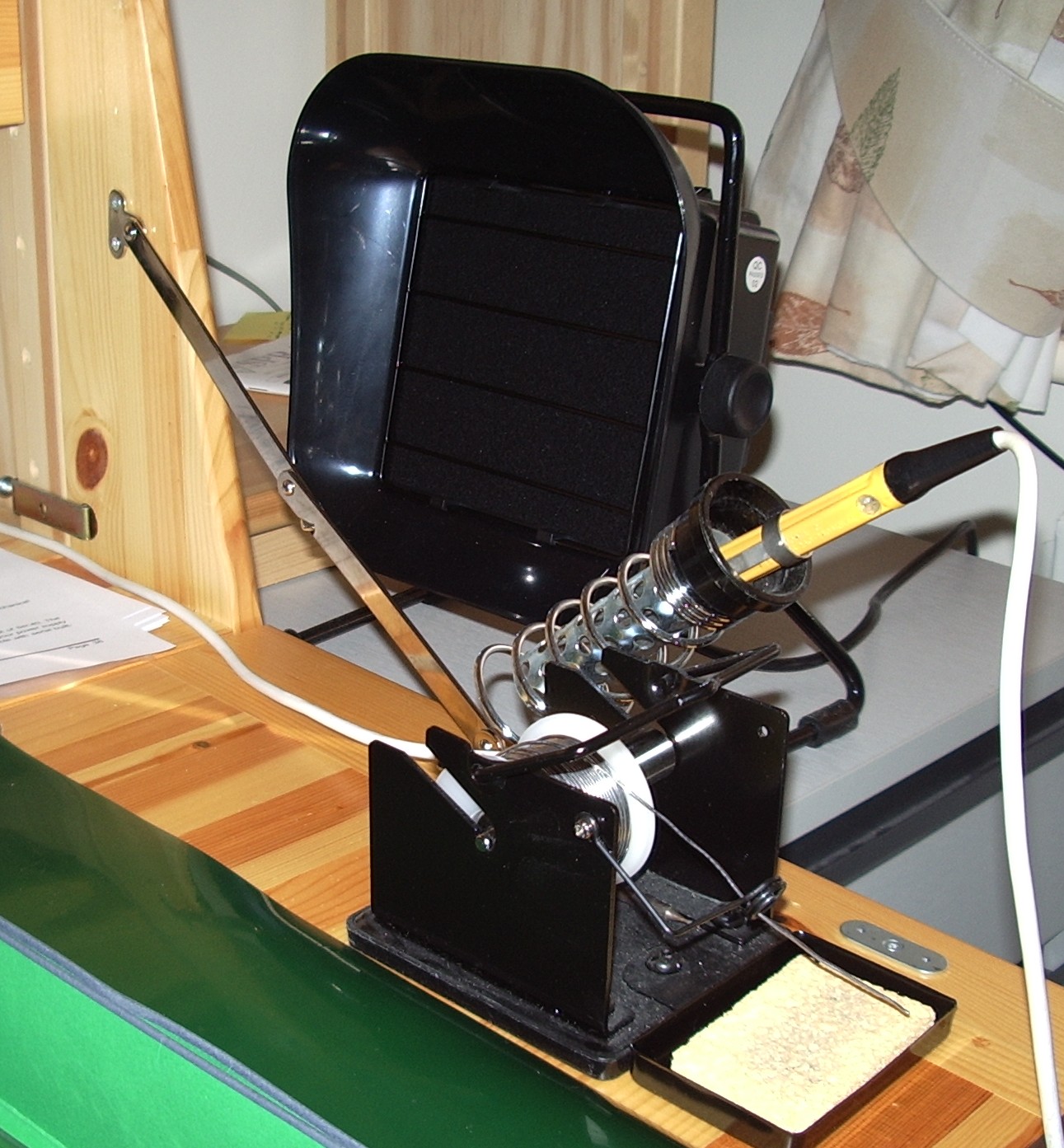
I was a bit surprised by how big it was. I was expecting something more the size of a 12 volt computer fan. But it sits nicely on the filing cabinet next to my drop-down workbench. I just have to think of somewhere to put it when it is not in use!
Julian Moss, G4ILO, is a regular contributor to AmateurRadio.com and writes from Cumbria, England. Contact him at [email protected].
 Ham Radio Deluxe |
 W5SWL Electronics |
 Ham Radio Prep |
 KB3IFH QSL Cards  Hip Ham Shirts  HamRadioAuctions HamRadioAuctions Reliance Antennas Reliance Antennas Enigma Shop Enigma Shop |  morseDX  Ni4L Antennas  R&L Electronics R&L Electronics antennas.us antennas.us QRV QRV |
- Matt W1MST, Managing Editor
