 |
 Elecraft K3 Final Build Assessment and First On Air Testing
 20 April 2013 | by
 Elecraft K3 Final Build Assessment and First On Air Testing
So the Elecraft K3 build is finished ☺ Yes it has been a long process for me but only because of my time and schedule. I think this is a project you could finish in a weekend if you really put dedication into it but I’m not sure you would want to. I will explain this as I go along…
The first questions I got were why would you do this? There are so many radios out there to purchase and some could argue many better. Well, that’s subjective of course and I’m a big fan of my Yeasu 1000mp, which I believe is my third one. I also love what Icom is doing with their new rigs but I remember a hobby that I used to table and build circuit boards, solder resisters and diodes and even build a Heathkit or two. I wanted to regain that experience in the hobby…. Get on air with something I assembled and tuned… something my hands were inside and I know where everything is and could replace if needed. How comfortable would you be installing a filter in your radio? I could do it in 10 mins now ☺ so that is a big part of the why.
The second part – FUN. Yes, if you read my posts you will see some frustration in my build. There are a few reasons but one is I was sick during the first phase… I was diagnosed with Ulcerative Colitis and was in the midst of an episode when I was doing the first few days of assembly. Take that out and I think you would find that I was having much more fun. ☺ Also – I have a really busy with work, life and family so I wanted something that I could have to sit down and take my mind away. This project seemed like a great one.
So here are the videos of assembly if you haven’t seen them and then I will provide you my overall thoughts below:
http://nicktoday.com/elecraft-k3-final-build-assessment-and-first-on-air-testing/
Nick Palomba, N1IC, is a regular contributor to AmateurRadio.com and writes from Florida, USA. Contact him at [email protected].
WOTA in RadCom
The front cover of the May 2013 issue of RadCom features an article about “Activating Wainwrights.”
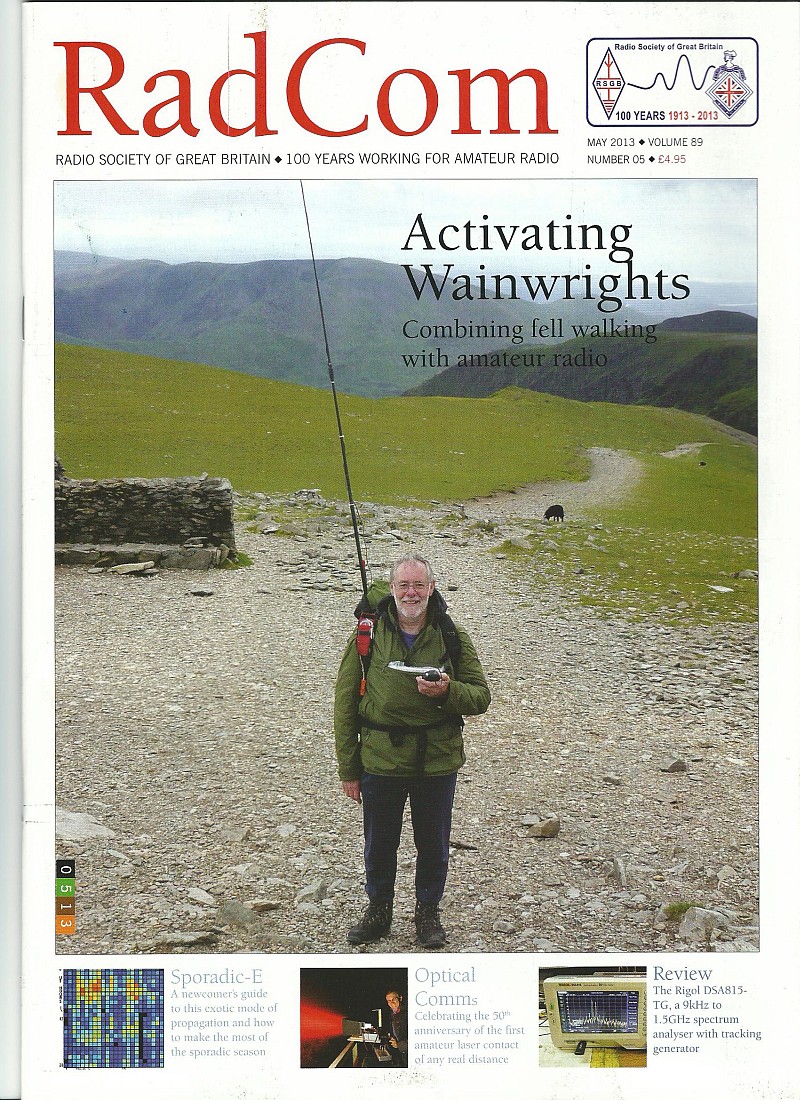
Inside there is an excellent article by David G0EVV about the Wainwrights On The Air scheme (WOTA).
Julian Moss, G4ILO, is a regular contributor to AmateurRadio.com and writes from Cumbria, England. Contact him at [email protected].
The RockMite And Then Again It Might Not
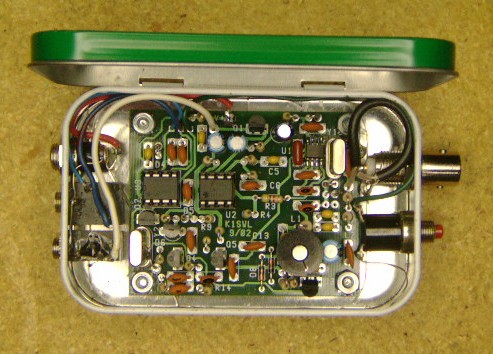
Years ago I built a Rockmite. It is a fun project. When I finished it, I didn't take the time to put the antenna connector on it or the dc plug, I simply use alligator clips to get everything working. I remember calling CQ for a few minutes made a QSO, which the station on the other end actually recorded to let me know how my 400 mw sounded. Pretty cool and this milliwatt stuff isn't all that bad.
While cleaning my shack a few years later, since I had never used the RockMite since that first QSO, I threw it away. The day after the garbage man took it I'll admit I was a little remorseful. Ever since I have been watching the auction sites for a Rockmite to replace it. I didn't want to go to all the trouble to build another one, I just wanted one to have and play around with occasionally. The other day that replacement arrived at the house. I hooked it up and called CQ for an hour, some of you may have seen my spots on QRPspots.com. A few guys tried to hear me but couldn't. Today I came home from work and hoped to make a QSO with a local during the afternoon and called CQ for another hour. Lastly I tried again tonight. No joy. Probably 2.5 hours of CQing with the Rockmite and no QSO. So it is a little frustrating. What else could I have done with my life during those 2.5 hours. After calling so fruitlessly with a QRPp, rock bound rig, the KX3 now looks like a QRO rig.
Oh well, I'll try it again. QRPp is a little like fishing, they might not bite today, but they might be tomorrow, at least that is the optimistic way to look at it.
Mike Crownover, AD5A, is a regular contributor to AmateurRadio.com and writes from Texas, USA. Contact him at [email protected].
QRPTTF Practice
It was a very unseasonably warm day today in Central NJ. I took advantage of temperatures in the mid 70s, and headed out to a park near work during my lunch break. North Branch Park is all of about five minutes away.
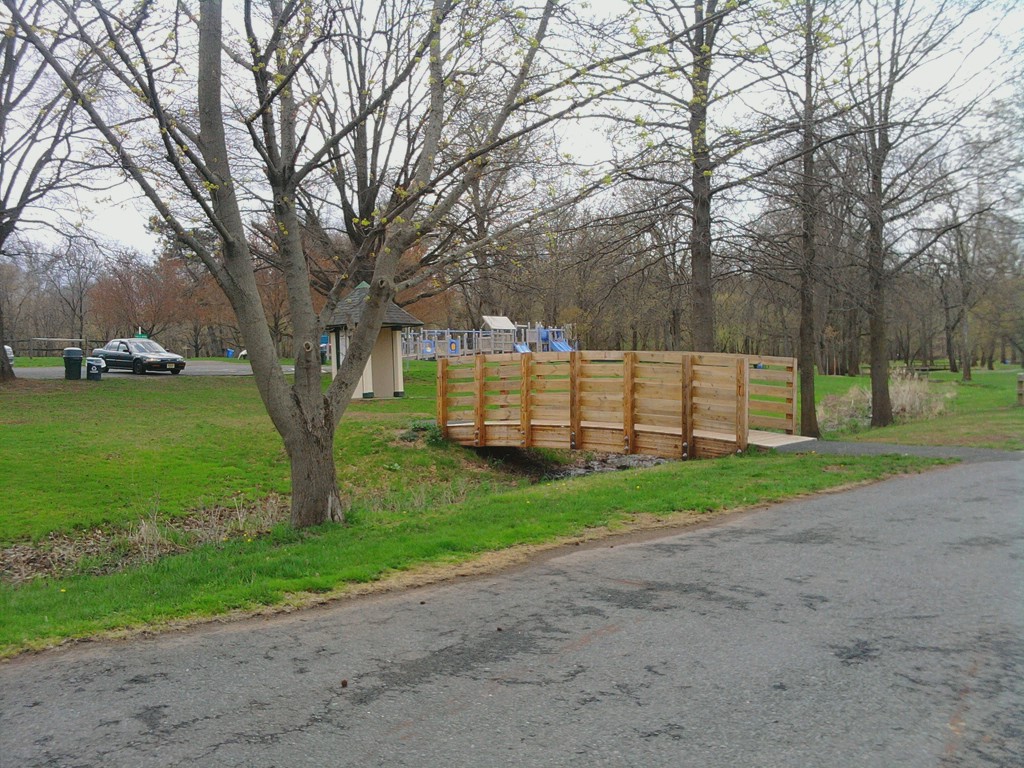
I decided to use the Buddistick on the mag mount on top of the Jeep, so set up was a snap. After getting to the park, I was on the air within just a few minutes. There was a ton of activity towards the low end of 20 Meters, but it was all contest traffic. I probably could have worked a few DX stations, but I didn’t know the exchange, so I headed towards the QRP watering hole instead.
There, I ran into Martin KØBXB in Burlington, WI. We had a short QSO as I didn’t have a lot of time. It was very pleasant however. Martin was 579 into NJ and I received a 539 in return. Martin was using his IC-7000 at 5 Watts into a G5RV.
Later on, back in the building, I saw that Martin is quite the accomplished Ham. He builds, he experiments, and he was the winner of the May 2012 QST Cover Plaque Award.
So it just goes to show, you never know who you’re going to run into when you turn on the rig! In addition to learning more about Martin, I did a little research on his town of Burlington, WI. It’s an old town that was settled somewhere around 1835 by the sons of some Revolutionary War soldiers. Burlington is nicknamed “Chocolate City, USA” because of the Nestle chocolate factory that is located there (pssst …… don’t tell the folks in Hershey, PA ……. OK?). Burlington was also the home of a lot of notable and famous people. But one in particular, caught my eye. Burlington, WI once was “home” to Gregory Itzin. If you’re a fan of the TV series “24” then you know Mr. Itzin better as President Charles Logan – unfortunately, not one of the good guys.

But getting back to the topic of QRPTTF practice, I wanted to share with you all how I carry my portable QRP equipment out and about. My KX3 is my pride and joy, so I want to protect it as best possible. A tip o’ the QRP hat to TJ WØEA for recommending the Lowe Pro Traveler 150. We’re having thunderstorms tonight, and I’m off the air, so I made a little video:
Hope you enjoy it – I’m certainly no WGØAT or K6BBQ, but you’ll get the idea.
72 de Larry W2LJ
QRP – When you care to send the very least!
Larry Makoski, W2LJ, is a regular contributor to AmateurRadio.com and writes from New Jersey, USA. Contact him at [email protected].
Overmodulated JT65 on HF?
Sometimes it is crowded on JT65 on HF due to too little bandwidth. When only 2 kHz is available and each signal needs 175 Hz that’s understandable. But then others seem to complain that some overmodulate their transmitters so that they occupy more than the 175 Hz, making it even harder to fit an extra signal in the band.

My first impression from using the new JT9 mode is that the problem is much smaller there than for JT65, so maybe something like what I am discussing here has been done in the decoder software. But as far as I know, the source code has not been releasted into the public domain yet by K1JT, so I cannot verify it now.
But it seems clear to me that what looks like splatter has much less to do with overdriving and overmodulating transmitters than one may think, and more to do with the particular way that the spectral estimate is found in the JT65 decoder software. Combined with the variable propagation which is an intrinsic feature of HF and which may create a highly variable signal strength, this is what seems to create the spillover.
Sverre Holm, LA3ZA, is a regular contributor to AmateurRadio.com and writes from Norway. Contact him at [email protected].
On 40m at last… (Part I)
Using a Buddipole antenna (BP) for my SOTA activations leaves me high and dry when it comes to the 40 m band. I was never able to build an efficient BP for these frequencies and received many ‘complaints’ that I never activate on 40m, thereby leaving out the ‘local’ chasers. This is going to change now…
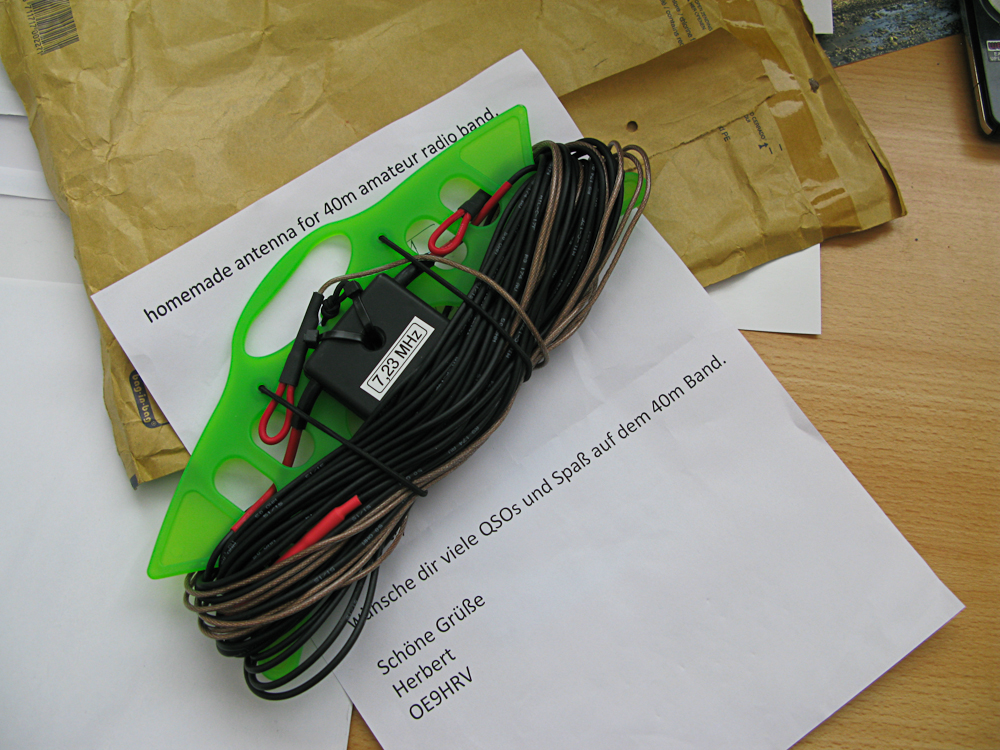
Yesterday I received a package from my buddy and SOTA Mountain Goat Herbert/OE9HRV, containing a home brew double Bazooka for 7 MHz based on RG174 coax. Herbert is my go-to guy when it comes to antennas. On our joint SOTA activations in OE he always carries an impressive assortment of home brew antennas to the summits, and due to this weight I would NOT want to carry his backpack – seriously. To see some examples of his creations, check out his FLICKR stream and/or QRZ page.
I had not known about double Bazookas before being educated by Herbert. It’s an efficient and quiet single band antenna based on 50 ohm coax cable, with the shield split at the center and feed line attache to it. It can be used in a flat top or inverted vee configuration – the latter more suitable for SOTA. To save on weight, Herbert made it out of RG174 with a BNC connector, and used a wire-winder to create a small and easy to manage package. The final antenna is around 310 g (~ 11 ounces) and about 25 cm x 8 cm (~ 9.5″ x 3″ ). With any luck you might hear me on 40m over the week-end.
For more pictures head over to my blog.
73, Matt/KØMOS
Matt Schnizer, KØMOS, is a special contributor to AmateurRadio.com and writes from Colorado, USA. Contact him at k0mos at schnizer.com.
Portable ops
We Radio Amateurs in general, and QRPers in particular, take so much for granted when we want to enjoy both our hobby and the great outdoors together. It really takes no effort at all to pop a small, lightweight radio into a backpack along with a lithium battery and a hunk of wire, and find yourself on the air – literally in minutes. What’s your pleasure? An Elecraft KX1, K1, KX3? A Sierra? A Yaesu FT817 or an Icom IC-703? A Steve Weber ATS or MTR? A Hendricks PFR3A? One of the HB radios from either YouKits or one the Ten Tec models? One of Dave Benson’s Small Wonder Labs models? There are many other models from other manufacturers that will fill the bill just as well, too.
But it wasn’t always this way. Before the days of transistors, ICs and other semi-conductors, radio equipment was (for the most part) big, bulky and destined to a life in an indoors environment. When radio equipment was needed for outdoor use by the military, conventional equipment was often modified for use outside, on the battlefield. Here’s the story of how Hallicrafters served our country during WWII:
Obviously, I’m comparing apples to oranges. First off, today’s military doesn’t rely on HF as in years past. A majority of military communications take place in the UHF and higher frequency parts of the radio spectrum. Also today’s military makes extensive use of satellite communications. But for the moment, let’s forget that. If HF was the still predominate playing field today, like it was during WWII, think what a small radio like a Yaesu FT857D (capable of 100W output), a small generator, or a deep cycle marine battery and an antenna like a Buddipole could do. This would be a lot more convenient (and portable) than the equipment shown in the YouTube video.
My point? We’ve come a long way, baby!
72 de Larry W2LJ
QRP – When you care to send the very least!
Larry Makoski, W2LJ, is a regular contributor to AmateurRadio.com and writes from New Jersey, USA. Contact him at [email protected].
 Ham Radio Deluxe |
 W5SWL Electronics |
 Ham Radio Prep |
 KB3IFH QSL Cards  Hip Ham Shirts  HamRadioAuctions HamRadioAuctions Reliance Antennas Reliance Antennas Enigma Shop Enigma Shop |  morseDX  Ni4L Antennas  R&L Electronics R&L Electronics antennas.us antennas.us QRV QRV |
- Matt W1MST, Managing Editor
