 |
 My Elecraft KX3 has a ping??
 28 April 2013 | by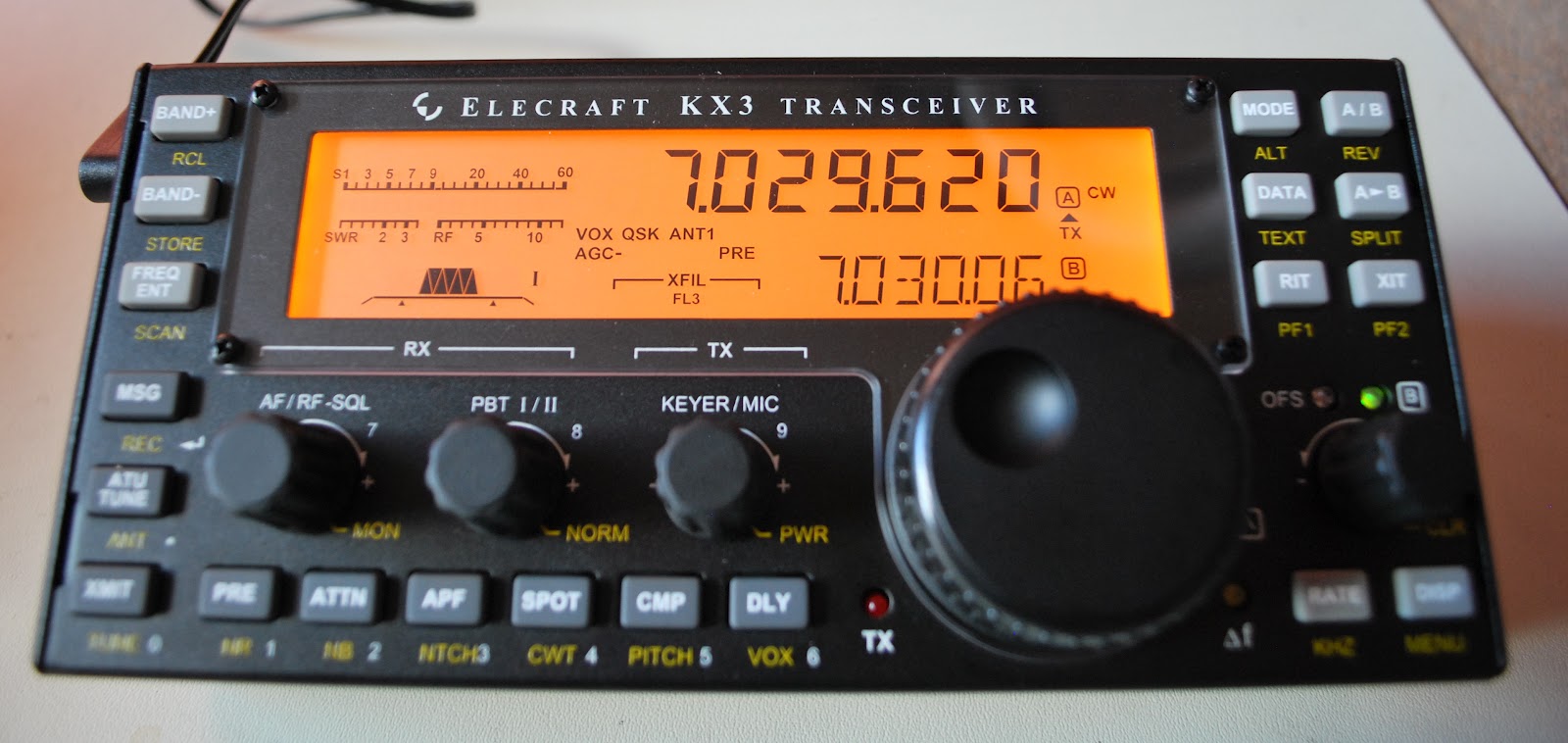
Problem has just been solved seems if I have the rig on dual RX and VFO A and B are very close to each other I am picking up "me" on VFO B. Which makes sense and when in dual mod the head phones are split with VFO A in one ear and VFO B in the other. This would explain why the ping was only heard in one ear!
Mike Weir, VE9KK, is a regular contributor to AmateurRadio.com and writes from New Brunswick, Canada. Contact him at [email protected].
How to Save Ham Radio – Modes – Part 3 (5 Part Series)
How to Save Ham Radio – Modes – Part 3 (5 Part Series)
I have been thinking and getting feedback about this series and Ham Radio overall there are several great points I have been hearing from people and I as I have said in the past… yet maybe SAVE is to strong of a word… Strengthen is a good one or expand is another… but let’s stick with SAVE for the article.
In a long list of items I think about the next one are modes of operation –
http://nicktoday.com/how-to-save-ham-radio-modes-part-3-5-part-series/
Nick Palomba, N1IC, is a regular contributor to AmateurRadio.com and writes from Florida, USA. Contact him at [email protected].
QRP To The Field (QRPTTF)
If you missed the event or just wondering what it's about, this is the link to this years event, http://www.zianet.com/qrp/qrpttf/2013.htm
Happy Trails (and Summits) to you.
Mike Crownover, AD5A, is a regular contributor to AmateurRadio.com and writes from Texas, USA. Contact him at [email protected].
JT9 and 100 Hz ghosts
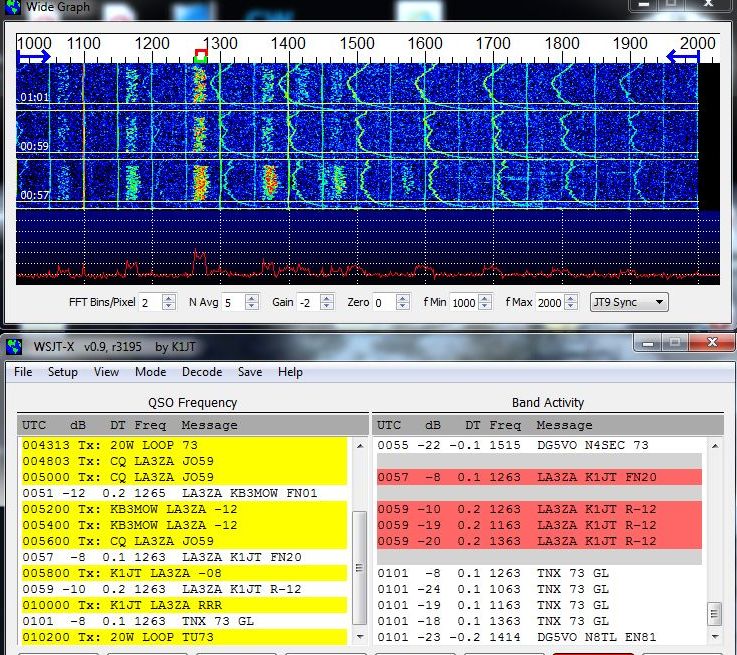 |
| Multiple decodes at 100 Hz spacing of K1JT on 30 m on 28 April 2013, 0101 UTC |
From time to time I receive duplicate ‘ghost’ decodes at 100 Hz intervals on either side of the main signal. Last night I saw the phenomenon on 30 m. You will notice here that I have decoded the message: “TNX 73 GL” four times (press image for better readability):
- -24 dB, 1063 Hz
- -19 dB, 1163 Hz
- -8 dB, 1263 Hz
- -18 dB, 1363 Hz
See also “Overmodulated JT65 on HF?
Sverre Holm, LA3ZA, is a regular contributor to AmateurRadio.com and writes from Norway. Contact him at [email protected].
TTF = FUN
It’s just about 11:00 PM and the day is almost done. It was a busy one! After this blog post is finished, then I am finished too! I will head upstairs to hit the sack.
The day started off with a visit to the Doctor’s office. Nothing serious, just some blood work as my cholesterol was just a tad on the high side when I saw him last autumn, He wanted a follow up visit in six months, and today was the day. Before I left however, my lawn mower repair guy called and said my mower was fixed and ready to pick up. That was good news; but I really wasn’t expecting it until Monday.
After getting my arm stuck at the Dr’s office, I came home for a quick lunch. Then I packed up the car with my radio gear and went to pick up the mower. On the way home, I headed off to Thomas Edison Memorial Park for a few hours of QRPTTFing. I was surprised when I got there. This what the memorial tower usually looks like:
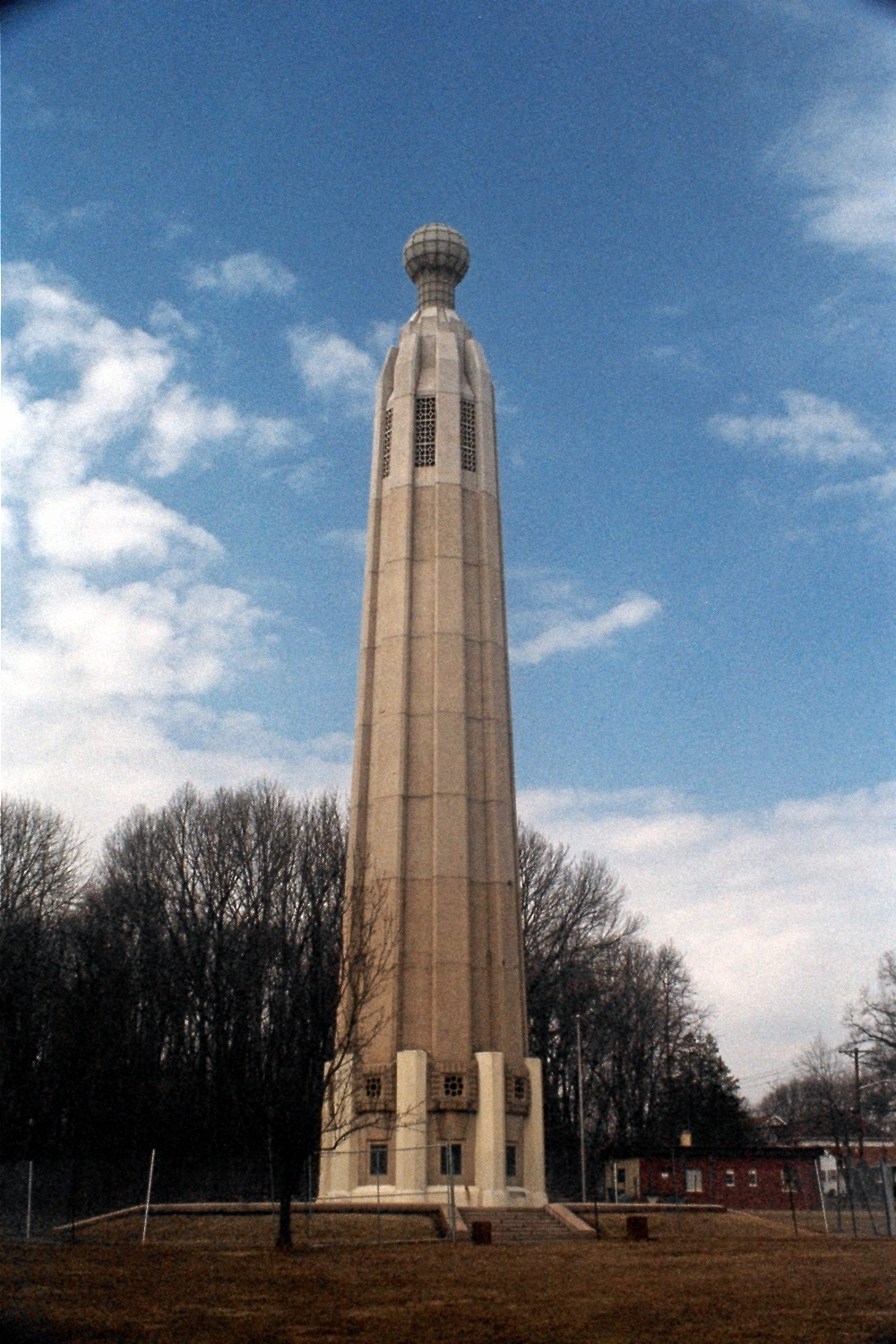
My surprise was that I knew the tower was being refurbished. But for some reason, I thought all the work had been completed. It turns out that so far, only the accompanying museum has been refurbished. This is what the tower currently looks like. It should be finished sometime later this year or perhaps early 2014.
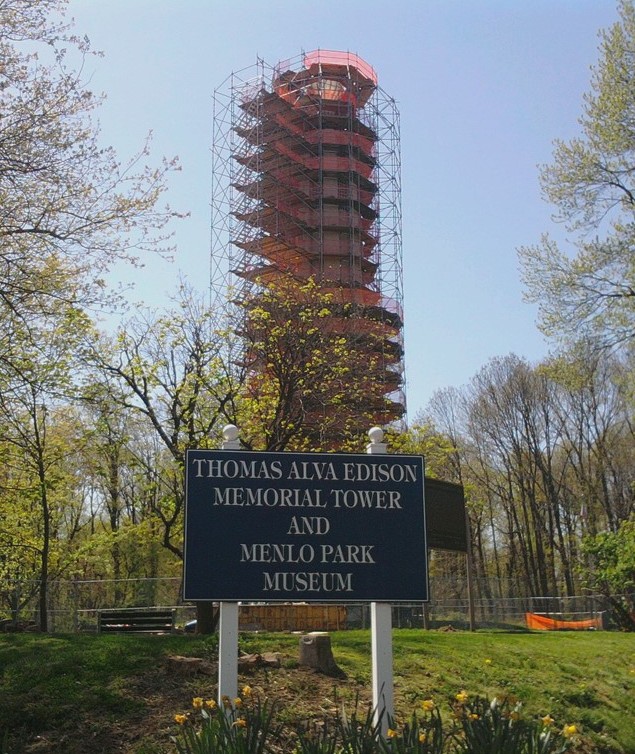

And in accordance with the QRPTTF theme for 2013, I was only a block away from NJ Route 27, which is officially part of the Lincoln Highway, America’s first intercontinental highway – definitely an historic trail.
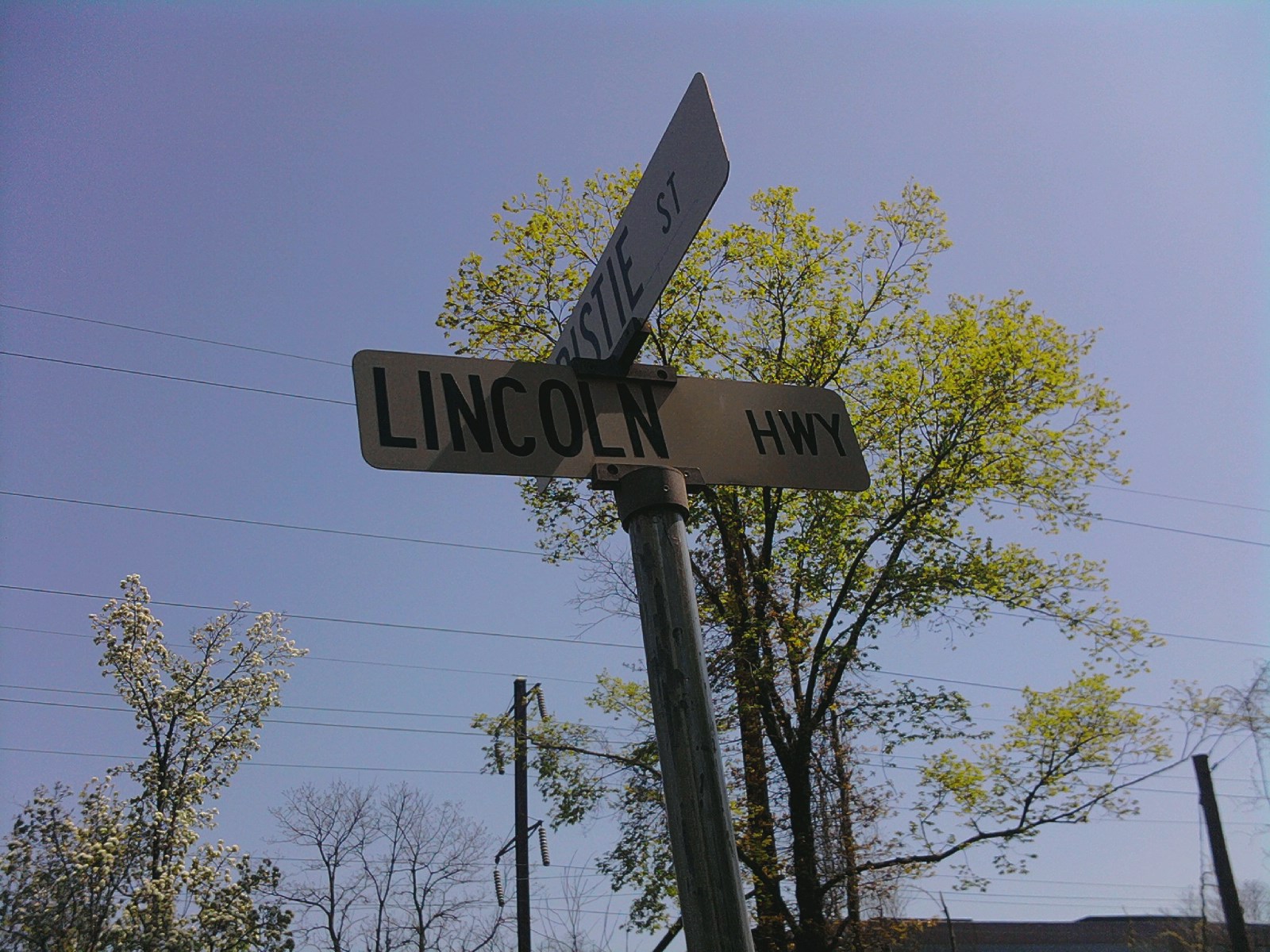
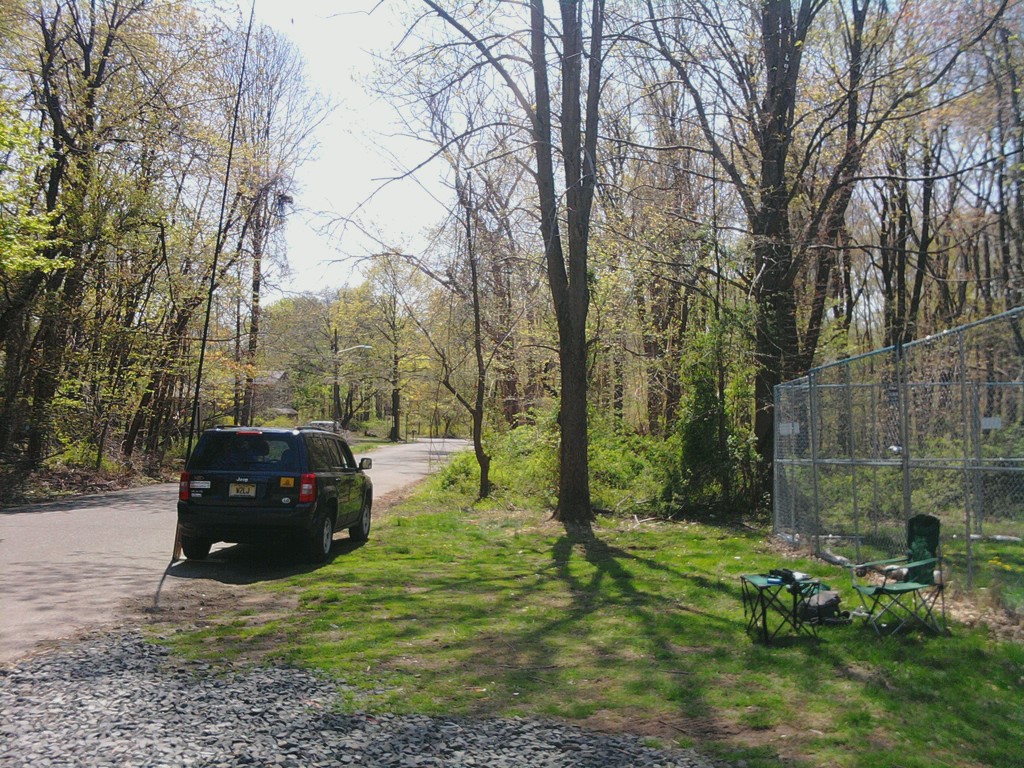
Larry Makoski, W2LJ, is a regular contributor to AmateurRadio.com and writes from New Jersey, USA. Contact him at [email protected].
QRP to the Field at Profile Falls
This afternoon Dick N1LT and I headed to Profile Falls in Bristol for the annual QRP to the Field event. What a perfect day we had… lots of contacts… dazzling scenery, even a little break for tea and cake!

We set up right at the edge of the Pemigewasset River not far from where the Smith River enters the Pemi from Profile Falls. This year’s theme for the QRP to the Field event is historic trails. This spot fit in perfectly. There are TWO historic trails here. We were only several hundred yards from the old Northern Railroad route between Franklin and Bristol and just a little farther from the old road that ran between the two New Hampshire towns. Both have been out of service since the 1940’s when the Corps of Engineers took over the area for flood control.
We ran two separate stations. Dick set up about 70 feet from me. He operated in my VW camper with an FT-817 and a Par End Fed 40, 20, 10. I don’t have his log, but he worked a dozen or so stations on 20 meters in about an hour and a half of operating.

As shown in the first picture, I set up on a picnic table in front of the river. I ran a K2 to a 21 foot piece of wire (half wave on 15M) tuned with an Elecraft T-1 tuner. I operated almost exclusively on 15 meters. The band was sparse, but now and then a strong station appeared and I was able to work him. Here’s my log for the event.
Date UTC Freq Call Mode MY His QTH Name
————————————————————-
27 Apr-13 1753 21.023 RA2FF CW 599 599 Russia
27 Apr-13 1758 21.061 AA5CK CW 559 599 OK Ted
27 Apr-13 1802 21.062 N7KE(?) CW 439 559 WA
27 Apr-13 1808 7.034 W2M CW 599 599 NY Morse event
27 Apr-13 1820 21.037 AA4PP CW 599 599 FL
27 Apr-13 1825 21.060 WT5RZ CW 229 559 NM Ron
27 Apr-13 1828 21.009 HB9BMY CW 599 599 SOTA
27 Apr-13 1830 21.029 WD4AHZ CW 599 599 FL
27 Apr-13 1833 21.033 F6FEA CW 569 599 France Didier
27 Apr-13 1920 21.034 K4LQ CW 599 599 FL
27 Apr-13 1925 21.017 I2TAO CW 559 599 Italy
27 Apr-13 1930 21.057 DF2GN/P CW 559 559 SOTA Germany Klaus
27 Apr-13 1937 18.073 WT0S CW 579 599 ND Don
27 Apr-13 1944 18.077 TM0SI CW 599 599 Sein Isl
It’s a mix of DX, SOTA, FL QSO Party and a couple of QRPTTFers. My QSO with Didier F6FEA in France lasted more than 20 minutes and I received a very cordial email from Didier. He was most patient with my weak signal!
About three quarters of the way through the afternoon we stopped for a quick cup of tea and some lovely orange cake that my wife sent along with us. I had brought along a gas stove, a pot, and some cups and plates. What a wonderful treat.
Before packing up, we went across the road to Profile Falls. It’s a popular swimming hole in the summer. A bit cold right now!

Dick and I have operated this event together at least 4 years out of the last five. It’s something we look forward to each year with good reason. Thanks to Paul NA5N for putting the event together.
Jim Cluett, W1PID, is a regular contributor to AmateurRadio.com and writes from New Hampshire, USA. Contact him at [email protected].
SOTA Activation: Aspen Ridge (W0/SP-084)
Spring is finally coming to the Colorado high country so it was time for a SOTA (Summits on the Air) activation. I don’t know which idea comes first: let’s go hiking or let’s play SOTA. I suppose it doesn’t really matter.
I’ve had my eyes on activating Aspen Ridge, which is near our family cabin but I wasn’t sure if the road was open. It turned out to be an easy Jeep ride down Forest Service Road 185 to get close to the summit. Then a half mile hike around and over the occasional snow patch got Joyce K0JJW and me to the summit.
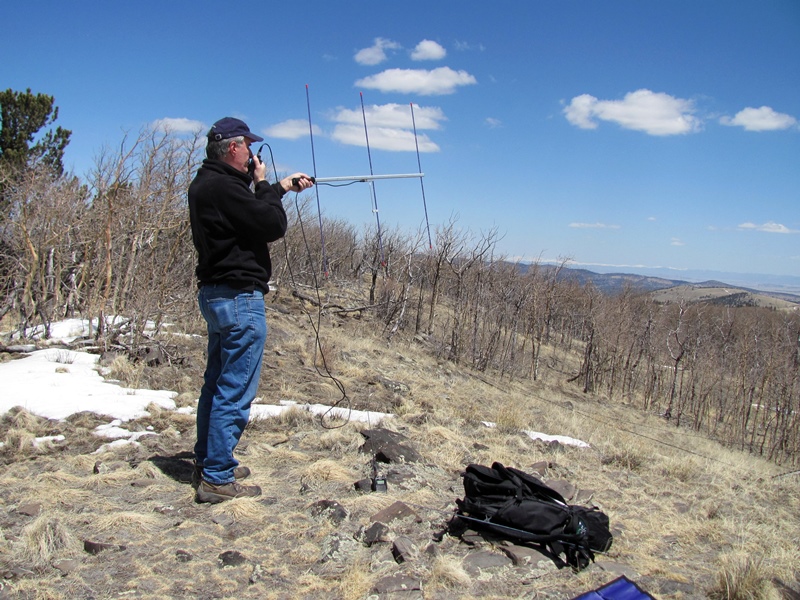
My portable station was a Yaesu FT-60 handheld and a couple of antennas. Shown above is my dualband Arrow II antenna with only the 2 Meter elements installed, resulting in a 3-element Yagi antenna. My other antenna is an omni-directional MFJ-1714 1/2-wave whip antenna, which is a little easier to handle for general use. Often that is the only antenna I bring along but this time I decided to add a few more dB of signal by using the Yagi. I also take along a Yaesu VX-8GR that pings my location on APRS (www.aprs.fi/k0nr-7).
After a few calls on 146.52 MHz FM, I worked KC8I in Woodland Park. A few minutes later, I caught Steve WG0AT operating from another SOTA peak (Mt Herman, W0/FR-063) for the QRP To The Field contest. A little later, I worked Ted N0ZPX who was fishing at Antero Reservoir, then N0VXE mobile near Salida and Ron N0MQJ in Ranch of the Rockies.
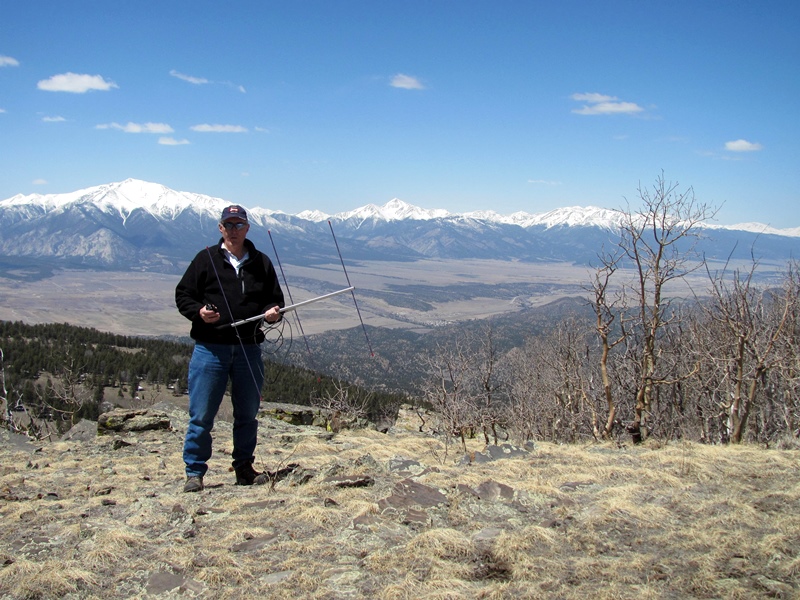
This photo shows the beautiful Collegiate Peaks in the background, with plenty of snow still showing. Needless to say, it is a gorgeous view from Aspen Ridge!
73, Bob K0NR
Bob Witte, KØNR, is a regular contributor to AmateurRadio.com and writes from Colorado, USA. Contact him at [email protected].
 Ham Radio Deluxe |
 W5SWL Electronics |
 Ham Radio Prep |
 KB3IFH QSL Cards  Hip Ham Shirts  HamRadioAuctions HamRadioAuctions Reliance Antennas Reliance Antennas Enigma Shop Enigma Shop |  morseDX  Ni4L Antennas  R&L Electronics R&L Electronics antennas.us antennas.us QRV QRV |
- Matt W1MST, Managing Editor
