 |
 A not inverted Vee
 6 May 2013 | by
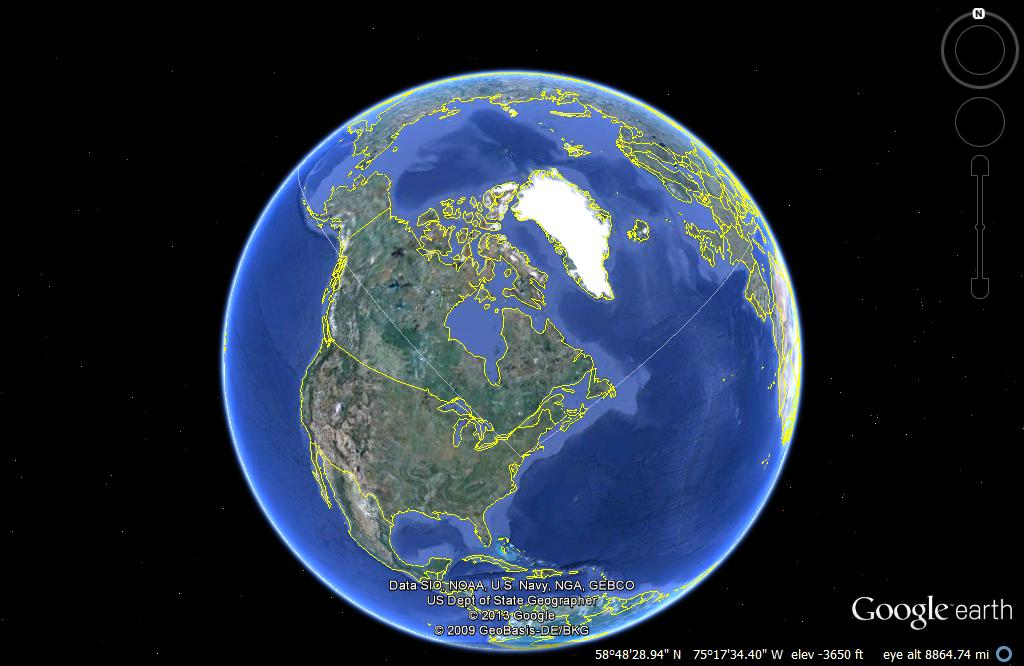
 And I’m not talking about antennas …….
Larry Makoski, W2LJ, is a regular contributor to AmateurRadio.com and writes from New Jersey, USA. Contact him at [email protected].
Max says it’s time to look at 50MHz again
The 50MHz and higher Es season seems to have taken a while to get started this year. For the last week or so, there have been some openings, but I’ve missed them.
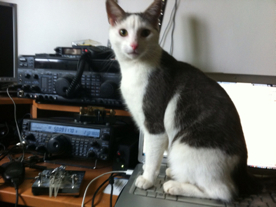
This weekend, I’ve at least managed a couple of contacts. The first, yesterday, with Max the cat’s help was a local one; M0RSE. A special call to promote morse code operated by members of FOC. Yesterday afternoon and evening there was some Es, but I didn’t get on until later. I was pleased to work CT1BXT for my first Es of the year.
You may remember that MW0IAN very kindly gave me a portable whip to work with the Palstar 50MHz handheld. It occurred to me this morning that it should work very well with the FT817, so I will try that on bike portable expeditions this summer. Thanks Ian!
Tim Kirby, G4VXE, is a regular contributor to AmateurRadio.com and writes from Oxfordshire, England. Contact him at [email protected].
SMD Project
When Steve, KD1JV, kitted another run of his MTR (Mountain Top Rig), I wanted one. It is however an SMD kit, but I thought why not take the plunge. However when the kit arrived with its cool looking case and I looked at the components I thought maybe I should have someone else build this kit. I didn't want to ruin such a cool radio with my learning mistakes. So I outsourced that one. However, I still wanted to learn SMD construction. Somehow I felt like a QRP wimp because I couldn't build SMD projects. So, what to do?
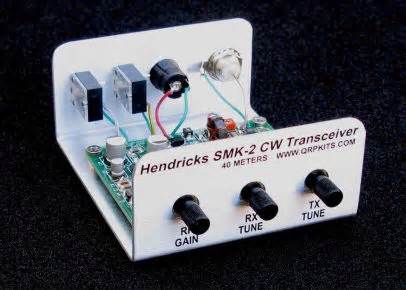
As I searched the QRP kit world, I found the perfect project. The SMK-2, a kit from Doug Hendricks, www.qrpkits.com, is a 300mw, 40m crystal controlled transceiver. It is specifically designed for SMD training. So I ordered the kit.

Mike Crownover, AD5A, is a regular contributor to AmateurRadio.com and writes from Texas, USA. Contact him at [email protected].
Alexloop on the deck calling CQ
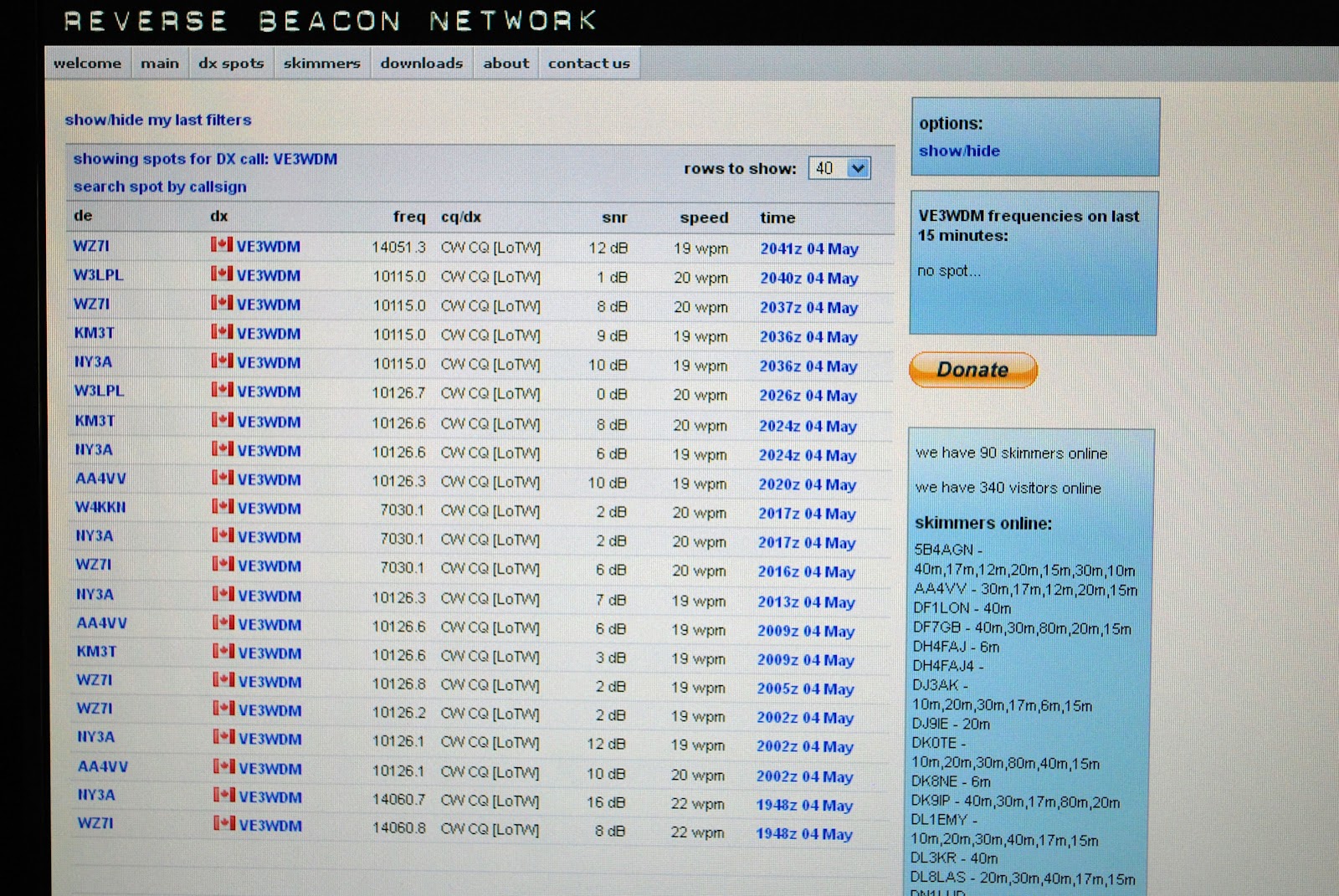 | |
| RBN spots (click to enlarge) |
Mike Weir, VE9KK, is a regular contributor to AmateurRadio.com and writes from New Brunswick, Canada. Contact him at [email protected].
ICQ Podcast S06 E09 – International Amateur / Ham Radio Beacon Project (5 May 2013)
Series Six Episode Nine of the ICQ Podcast has been released. News Stories include :-
- The P5 Project
- RILGES East Sussex Repeater Group
- New Amateur Radio Club for Bath
- New QRSS/WSPR ham radio kit
- Free WARD certificate
- South African Hams to get 472 kHz license
- ZB2TEN beacon is now fully operational
- Ham Radio 50 MHz operation in New Zealand
- MB7IDA - Danbury Echolink frequency change
- Taxi drivers fined for using GPS Jammers
- Norfolk Island
- Isle of Skye activation
- Queen's Award for Wood & Douglas
Leslie Butterfields (G0CIB) joins us to discuss International Amateur / Ham Radio Beacon Project plus Austalian report from Ed Durrant (VK2JI) and our new north American correspondent Frank Howell (K4FMH)
Colin Butler, M6BOY, is the host of the ICQ Podcast, a weekly radio show about Amateur Radio. Contact him at [email protected].
ICQ Podcast S06 E09 – International Amateur / Ham Radio Beacon Project (5 May 2013)
Series Six Episode Nine of the ICQ Podcast has been released. News Stories include :-
- The P5 Project
- RILGES East Sussex Repeater Group
- New Amateur Radio Club for Bath
- New QRSS/WSPR ham radio kit
- Free WARD certificate
- South African Hams to get 472 kHz license
- ZB2TEN beacon is now fully operational
- Ham Radio 50 MHz operation in New Zealand
- MB7IDA - Danbury Echolink frequency change
- Taxi drivers fined for using GPS Jammers
- Norfolk Island
- Isle of Skye activation
- Queen's Award for Wood & Douglas
Leslie Butterfields (G0CIB) joins us to discuss International Amateur / Ham Radio Beacon Project plus Austalian report from Ed Durrant (VK2JI) and our new north American correspondent Frank Howell (K4FMH)
Colin Butler, M6BOY, is the host of the ICQ Podcast, a weekly radio show about Amateur Radio. Contact him at [email protected].
Series Six Episode Nine – International Amateur / Ham Radio Beacon Project
Series Six Episode Nine of the ICQ Amateur / Ham Radio Podcast has been released. The latest news, Leslie Butterfields (G0CIB) joins us to discuss International Amateur / Ham Radio Beacon Project plus Austalian report from Ed Durrant (VK2JI) and our new north American correspondent Frank Howell (K4FMH)

- The P5 Project
- RILGES East Sussex Repeater Group
- New Amateur Radio Club for Bath
- New QRSS/WSPR ham radio kit
- Free WARD certificate
- South African Hams to get 472 kHz license
- ZB2TEN beacon is now fully operational
- Ham Radio 50 MHz operation in New Zealand
- MB7IDA - Danbury Echolink frequency change
- Taxi drivers fined for using GPS Jammers
- Norfolk Island
- Isle of Skye activation
- Queen's Award for Wood & Douglas

Colin Butler, M6BOY, is the host of the ICQ Podcast, a weekly radio show about Amateur Radio. Contact him at [email protected].
 Ham Radio Deluxe |
 W5SWL Electronics |
 Ham Radio Prep |
 KB3IFH QSL Cards  Hip Ham Shirts  HamRadioAuctions HamRadioAuctions Reliance Antennas Reliance Antennas Enigma Shop Enigma Shop |  morseDX  Ni4L Antennas  R&L Electronics R&L Electronics antennas.us antennas.us QRV QRV |
- Matt W1MST, Managing Editor
