Archive for the ‘Uncategorized’ Category
 Supporting D-STAR activity in France
 June 29th, 2010 |
  Author:
 You might remember that back in April, following a conversation with Neill, F5VLD, I wrote that I had learned that D-STAR activity (at least on-air) is illegal in France.
I read today on Twitter that there is a petition to support French amateurs in their campaign to use D-STAR. I’m not normally a fan of petitions – I’m more inclined to write or speak to the personal responsible – but on the other hand, a petition is a good measure of support.
So, anyway – here’s a link to the European Parliament petition

D-Star illegal in France
 Steve, GW7AAV, was quick off the mark to post about the announcement yesterday on the website of DR@F, the French association of amateur digital mode operators, that D-Star has been ruled illegal in France. The reasons for the ruling, if I understand correctly, are that D-Star permits a radio to be connected to the internet (which is apparently illegal in France) and that it breaches rules prohibiting encrypted communications on grounds of national security because parts of the patented proprietary AMBE codec are undisclosed.
The group is appealing for all European amateurs to sign a petition to the European Parliament against the ban. No doubt this will have as much of an effect as the two petitions to the British Parliament to get interference-causing internet-over-mains-wiring devices banned. Issues like this illustrate what a hopeless idea the European Union really is as it attempts to harmonize things between member states while countries (especially France, which started the EU but implemented only the directives that suited it) stick tenaciously to their own different rules and regulations when they want to.
I’m not sure if it is true that French amateurs are not permitted to connect radios to the internet, as if it were, Echolink nodes and APRS gateways would also not be permitted, and a quick check of some relevant websites show several of each with F callsigns currently operating. As for the argument that transmissions are encrypted, whilst the closed and proprietary nature of the codec does prevent someone from designing their own decoder, the chips (and indeed D-Star radios) are readily obtainable allowing anyone who wishes to do so to monitor communications.
I am not, as regular readers know, a fan of D-Star, but this looks to me a bit like the result someone who is also anti D-Star trying to abuse their position to get it made illegal in France. I hope our French comrades are successful in getting this ban lifted.

BBC to investigate interference complaints
Ofcom, the UK telecommunications regulatory authority, has announced that it will pass the responsibility for investigating reports of interference to TV and radio services to the BBC from July 1st. On that date, members of the public experiencing interference to radio or TV should lodge a complaint with the BBC using a web form, which may advise them of issues such as a local transmitter fault.
Some UK amateurs have expressed concern about the possible effect of this change, but I don’t consider it likely to make much difference. As far as I can see, Ofcom will still be responsible for issues of interference to amateur radio such as that caused by PLT devices. These days, TVI and BCI are fairly infrequently experienced and almost always caused by a poor or faulty antenna installation or receiving equipment. Putting the BBC in charge of investigating complaints of interference to its own services makes a lot of sense.

VX-8GR battery drain fault
This afternoon I was making some measurements to try to determine the current consumption of the VX-8G (and hence estimate the battery life) and I stumbled across a rather serious flaw. When the internal GPS is enabled it remains powered all the time, even when the radio is switched off. Enabling the GPS causes the current consumption to increase by about 30mA, and that same increase is noticeable in the current drawn when the radio is powered from the external DC socket, whether or not it is charging. This level of current drain would flatten the 1100mAH battery pack in less than two days!
I joined the Yahoo VX-8R group, which is the discussion group for the VX-8G as well, and noticed that some American purchasers of the radio had already discovered this problem. I hadn’t had the radio go flat on the shelf myself, mainly because in the three days since I got it I have been using it quite a lot. But my observation does help to explain why I found the battery life was poor. Like most people I suspect I have been charging it up after an outing and then taking it out of the charger in the expectation that it would still be fully charged the next time I used it. But with 30mA being taken from the battery all the time, even a 12 hour period off-charge would result in a significant loss of operating time.
The VX-8G isn’t yet available in the UK so there is not much point in contacting Yaesu UK for their comments on this issue. It’s possible that when the European VX-8GE version arrives Yaesu will have identified the problem and fixed it. If I was reading this and thinking about getting a VX-8G I’d certainly want to receive an assurance that the fault had been fixed before buying one. And if I’d bought this from a UK dealer I would probably be taking it back. So this is really an example of where buying from Hong Kong hasn’t paid off, even though the problem isn’t the fault of the dealer who sold the radio.
The workarounds would appear to be either to turn the GPS power off from the menu whenever you switch the radio off – a real hassle which will probably result in the GPS taking minutes to get a fix each time it is switched on – or else to leave it on charge all the time. The latter would seem to be the least painful.
It is a pretty annoying fault to be stuck with. I had been thinking about getting the high capacity battery pack but having found this problem I don’t think the VX-8GR will be a keeper. I shall look with renewed interest at the Kenwood TH-D72 APRS handheld when it becomes available, though I shall probably lose a lot on the exchange – giving publicity to this fault isn’t exactly going to help the VX-8GR’s resale value. 🙁

Deaf by design
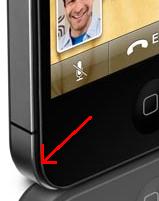 I’ve never been a fan of Apple products. I have always felt that Apple was a brand aimed at fashionistas concerned more with style and the coolness associated with owning a particular product than with practicality. So for example phones were made with non user-replaceable batteries in order to make them very slim.
Now it appears Apple’s engineers have made another slip-up in the name of style. Users of the new iPhone 4 are reporting that they lose the signal whenever they hold the phone. Apparently a section of the stainless steel band that runs around the phone is used as the antenna, and the part that radiates is on the lower left hand side – nicely surrounded by the fleshy palm of your hand if you hold the phone in your left hand.
It seems to be that Apple could do with a radio ham on its design team. Even the newest Foundation licensee – in fact even a CBer – could have told them that antennas are supposed to point upwards.

A most excellent day on four metres
Unexpectedly, owing to domestic circumstances, I found myself at home today. VHF was in good shape and from early on, 50MHz was going well. I decided to concentrate on 70MHz today and see what I could work.
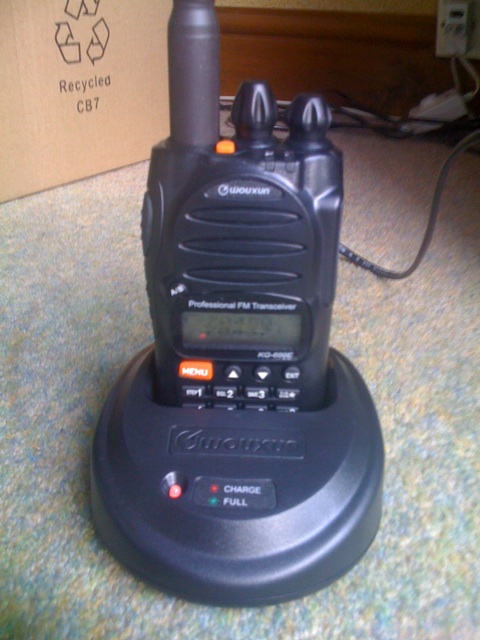
The Wouxun 70MHz FM handheld that arrived yesterday didn’t yield any contacts, but it was a great indicator on a couple of occasions that the MUF had reached 70MHz, when the broadcast FM from Eastern Europe was clearly audible on the handheld. I’m looking forward to playing with the handheld (even though I was the last person in the country to know about their availability, living here under my little rock…!)
So, as I was passing the shack, I kept checking 70MHz on the FT847. IZ8DWF (JM78) was first in the log, I worked him on SSB this time. I was pleased to find IF9/I2ADN (JM67) for a new square. I2ADN always goes to some great places for the Sporadic E season and it was good to work him for the first time on 70MHz, we’ve had many QSOs over the years on 50MHz.
I5OXT (JN52) made it into the log at lunchtime. Later on, IS0AWZ would have been a new one from Sardinia, but he called CQ CQ CQ and didn’t hear me. Lots of QRM from the East at that time, so I’m sure he was getting a lot of interference. At 1530z, I heard a weak SSB CQ on 70.200 which got louder. I was delighted to work YO9HP in KN35 for a new country on the band. ES1CW appeared briefly on 70.200 on the key, but I couldn’t attract his attention.
Just after 1600z the band opened nicely into Italy again. I worked IZ5EME (JN52), IW0FUK(JN61) and I6BQI (JN72). It was particularly nice to work Angelo, I6BQI – someone that we used to work back in the 1980s on 144MHz Meteor Scatter.

Fun with Larry & Coleman
Sharon & I spent last weekend visiting my friends Larry, N4VA, and Coleman, K4RZ who live in Virginia. Last year we visited them during the same weekend and I went with Larry & Coleman to W3LPL’s open house, which I wrote about when first attended in 2005. Sharon came with me last year as well and she visited with some friends who lived in the area while we visited the big aluminum farm. This trip has become an annual thing for us, and what happens is that I take off the day from work on Friday and drive down, arriving (hopefully) just before rush hour hits the DC area. We have a great barbecue dinner with some friends (mostly non-hams but also with Fred, K3ZO, who is fairly well-known in ham circles), go to W3LPL’s Saturday and head home Sunday, with the space in between (when not eating or otherwise having a great time) gets filled with “playing radio”, propagation permitting.
When we arrived on Friday, 6 meters was cooperating, and literally just as I walked in Larry had picked up Dennis, 5J0BV who was operating from San Andres Island (which is located to the east of Nicaragua but considered to be a “department” of Columbia). Dennis had a good signal but when I tried to work him with Larry’s paddle, I had a really tough time sending my callsign correctly. I make no secret of the fact that I normally send “computer assisted” CW from a keyboard, but given that I’d just gotten out of the car from the 5 hour drive, I was having a really tough time trying to use the paddles. (By the way, I’ll say that I had no trouble decoding what Dennis was sending by ear, I just could not get my fingers to cooperate.) Larry finally gave me a bit of an assist, and I was able to count this as a “new one” on 6 meters. Very shortly thereafter, Dennis switched to sideband and I was easily able to complete a contact there as well, even having a bit of time to chat and apologizing for the mess I’d made with the CW contact.
After dinner 6 meters continued to be open to the west, and I had a good time watching Larry pick up a bunch of new grid squares. Grid squares, like “countries” can be used to earn credit towards certain operating awards, the most popular being VUCC for grid squares and DXCC for countries. For both of these awards there are rules about where you have to be to gain credit, and those rules say that while you can get credit for any DXCC entity while working anywhere within the same entity/country (in other words, I can get DXCC credit regardless of where in the US I’m located), for the VUCC award you can only count new grids that you work from your home grid. (There is actually a little leeway, I’ll leave reading the rules as an exercise for the reader.) As a result, although my contact with 5J0BV counted for DXCC, it, along with the other grids that Larry was working that evening, don’t count for me for the VUCC award.
More to come …














