Archive for the ‘ham radio’ Category
 Basic CW Operating Procedures
 September 26th, 2011 |
  Author:
 Back when I first got on the air in 1978, CW QSO’s had a pretty standard format. That format didn’t change much until the last few years. But today there’s quite a hodgepodge of operating procedures out there. Most of the time it works, but it’s not uncommon to hear a downright jumbled mess — even from a CW operator who has been on the air long enough to send and receive at 10 wpm or more.
It’s important to learn good operating procedure, not just because it sounds polished but because it serves a practical purpose. You can get away with sloppy operating procedure under perfect conditions, but not if your signal is weak or if there’s much QRM, QRN, and/or QSB. Even under perfect conditions, you’re making the person at the other end work harder if you’re constantly surprising him with your own odd way of operating. Under poor conditions, he may miss some of what you’re trying to say. And even if he succeeds at copying what you’re saying he may well be relieved when the ordeal is over.
I’m not going to get into all of the details of good operating procedure here, but I would like to discuss some basics.
General structure
There is a general structure to a CW QSO that most operators expect. After establishing contact, the first transmission should stick to the basics — RST, QTH, and name. You don’t know yet how well the other fellow is copying you; if you’re a 329, you’re going to torture him if you go on and on about your rig, your power, your antenna, the weather, etc. Furthermore, you might lose the opportunity to hear even the basics from the other fellow if band conditions deteriorate while you’re sending all this on the first transmission. So stick to the basics — and do send them. Here’s the way we all used to do it years ago:
NØART DE NØIP R TNX FER CALL OM BT UR RST RST 579 579 BT QTH QTH GRANITE FALLS, MN GRANITE FALLS, MN BT NAME NAME TODD TODD BT SO HW CPY? AR NØART DE NØIP KN
Note the use of BT. That seems to have fallen out of favor, but once upon a time it was the standard way of changing the subject. The most important thing I want to point out here is to preface each of the three major elements of this first transmission with their labels: RST, QTH, and NAME. It takes a few seconds longer than sending something like, “UR 579 IN GRANITE FALLS, MN OP TODD,” but it is worth it. As the FISTS club puts it, “Accuracy transcends speed.”
The operator replying to this first transmission sends the same three basics in the same way. If he’s inclined (and if he’s received a reasonably good RST) he will probably go on to talk about his station, the weather, etc. As it turns into a ragchewing session you can pretty much send whatever you want.
Procedure signals
Just as the use of BT has fallen out of favor, so have other procedure signals fallen on hard times. I often hear them sent incorrectly and used improperly. Remember what these are — they are procedure signals. Learn to send them well and to use them well, and your operating procedure will improve substantially. The ones most commonly used are AR, AS, BK, BT, K, KN and SK.
Notice the line that appears over each one of the two-letter procedure signals. That means you send the two letters as if they are one character. For instance, KN isn’t sent as dah-di-dah dah-dit (KN) but dah-di-dah-dah-dit (KN).
- AR End of message: Send this after you are completely done sending everything — everything, that is, but call signs and KN. If it’s your last transmission, use SK instead.
- AS Wait:You might hear this if you’re working an experienced operator. If you hear this, the next thing you hear will probably be silence — maybe he has to answer the phone or something. Or maybe you’ll hear him hold his key down while he fiddles with his antenna tuner. Don’t start sending — he’ll start sending when he’s ready. This is a handy procedure sign to know, if you ever need to take a break yourself.
- BK Break: This might be used by a station who wants to enter an ongoing QSO — he’ll send BK between transmissions to see if they’ll let him in and turn their QSO into a “roundtable.” With the advent of full QSK keying, this also became popular among experienced CW operators who could interrupt one another right in the middle of a transmission (perhaps to answer a question or clarify something). But most commonly BK is used to rapidly turn the conversation over to the other station without sending any call signs. For instance, an operator might send something like “HOW CPY? BK” and then cease his transmission. If this happens to you, reply by simply sending BK and answer his question. You can go back and forth in this manner for as long as you want, but don’t forget to obey the law by identifying yourself with your call sign at least every 10 minutes.
- BT Separator: Usually used to change the subject, even if it’s just to go from sending RST to sending QTH. (If you hear the other fellow sending BT several times, it’s because he’s trying to think of what he wants to say next!)
- K Over: This invites anybody listening to reply. Send this after you’re done calling CQ. But if you’re in a QSO, you almost always want to use KN, not K.
- KN Over (to specific station): Send this after signing over to the other station in a QSO, e.g. NØART DE NØIP KN. KN tells other listeners that they’re not welcome to call you yet — you just want the station you’ve named to reply. Don’t send this after calling CQ — send K instead.
- SK End of contact: This lets the other operator know that you want to end this QSO, and this is your last transmission. Usually sent in place of AR right before signing over to the other station.
The Handshake
It has long been customary to send “dit dit” at the very end of a QSO, like a final handshake. On the very last transmisssion, the sending station sends “dit dit” and then the other station replies “dit dit,” and that’s the end. Or (like we did in the old days) you’ll hear the first station send “dit di-di-dit dit” and wait for the second station to send “dit dit” (“shave and a haircut, two bits!”).
But this is often fumbled. Here’s how it usually goes wrong. The first station to send his final farewell, e.g. TNX FER QSO HPE CU AGN 73 73 SK NØART DE NØIP KN, knowing full well that the other station still plans on bidding him farewell in the same manner, goes ahead and sends “dit dit” at the end of his transmission. Naturally, the other station ignores this faux pas, goes on to send his last transmission, and only when he is done does he finally offer “dit dit” for the other operator to send his own “dit dit” again.
Now, this is obviously not the most important point of operating procedure, but why not do it right? No need to be socially awkward at the end of a good QSO!
I’ve only covered a few basics here. For more on CW operating procedures, it’s worth checking out something like http://www.fists.org/basiccw.html. But the best way to learn good operating procedures is simply to pay attention to what proficient operators are doing — especially as you get into more advanced operation, like handling DX pileups. The more listening you do before you wade in, the better operator you will be.


Teaching Morse Code: The Importance of Perfect Dits and Dahs
My son and I had another lesson this evening before bedtime. This time I dug out my paddles and my electronic keyer, since I was afraid that my imperfect fist at the straight key could do him damage.
My fears were well placed!

HT: http://www.rfcafe.com/references/qst/this-business-of-code-feb-1941-qst.htm
It turns out that in our first lesson I made my “dahs” much too long. This caused him some grief when I started using my electronic keyer since the “dahs” and the “dits” sounded too much alike to him, accustomed as he was to my goofy fist (which shall now be rectified ASAP!).
So we spent most of this lesson just fixing my mistake, getting my son to discern between perfectly proportioned “dits” and “dahs.”
I’m glad we caught my mistake on this second lesson and not several months from now! But I still feel bad for exasperating my son.
So to all you would-be Morse Elmers out there, learn from my mistake! Whatever quirks you may have in your fist may be exacerbated at low speed. So unless you have a perfect fist with a straight key, use your electronic keyer right from the beginning when teaching Morse Code.


Teaching and Learning Morse Code: The Personal Method
There are all sorts of ways to teach Morse Code. There’s the old Army way (check out these youtube clips: part 1, part 2). Then there’s the way the ARRL taught me back in 1978 — with cassette tapes. And today, students can download software that will teach them Morse Code with the Farnsworth Method and the Koch Method. It all works, so long as the student sticks with it.
How do you get a student to stick with it? First and foremost, by cultivating within him an affection for Morse Code. As Antoine de Saint-Exupery purportedly said, “If you want to build a ship, don’t drum up people to collect wood and don’t assign them tasks and work, but rather teach them to long for the endless immensity of the sea.”1 But since so many things can thwart this affection (from discouragement to competing interests), sometimes you simply need to come alongside the student and encourage him. This is where cassette tapes and computer programs usually fall short. There’s nothing like The Personal Method — a real, live Elmer teaching you Morse Code.
Just ask my son! A few days ago I purchased a nifty Nye Viking Speed-X straight key and code practice oscillator to begin teaching him Morse Code.  I hooked up my own Speed-X to it so that we could both key the oscillator — him on one side of the table with his new practice set, and me on the other side of the table with my own key. Thus equipped, we had our first lesson before bedtime Wednesday night.
 I was surprised by how hard the bug bit him. At first he wasn’t so sure about the whole thing, but by the end of the lesson he was so excited he said he wouldn’t be able to get to sleep. He even told me that he wouldn’t enjoy his classical guitar lesson and horse-riding lesson quite as much the next day because he just wanted to have the next Morse Code lesson! The next morning, he woke me up by sending “GM” outside my door with this practice set. And later in the day, he started sending me code as went down the road, saying “dit” and “dah” like a true CW operator.
So to my fellow CW operators who know somebody that wants to learn Morse Code, I say let’s try The Personal Method. And to those of you who do want to learn Morse Code, try to find an Elmer who is willing to spend some time with you. If you can’t find one who can meet with you, hang in there with your cassette tapes or your computer program until you know enough code to work with an Elmer on the air. As the SKCC website says, “If you can only key at 3 words per minute, so be it.” There are SKCC Elmers who are eager to work with you (http://www.skccgroup.com/elmers.php). You’ll be amazed at how quickly you build up your speed, and you’ll enjoy the experience a thousand times more than by trying to learn all by yourself.
1 This quote is all over the Internet, but I’ve yet to see any citation for it. If you know where Antoine de Saint-Exupery wrote this, please let me know!


Handiham World for 21 September 2011
Welcome to Handiham World!
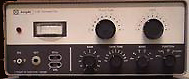
Image: Knight-Kit T-60 transmitter

Handiham World for 14 September 2011
Welcome to Handiham World!

 | Common sense is relative. Odd as it sounds, so-called “common sense” can be quite different from person-to-person, culture to culture, age to age… In fact, I am almost tempted to think there really is no such thing as “common sense”. I can remember being told one time that I was lacking in common sense and yet another time that I had an exceptional amount of common sense! How can both of those statements possibly be true? Of course what really happened was that a person who understood something in a certain way and discovered that I did not understand or perceive the situation in the same way he did then felt that I didn’t have any common sense. In his universe, everyone would understand that situation or concept exactly as he did. Naturally the opposite happened when another guy told me that I had lots of common sense, but what he really meant was that I was pretty smart because I understood the situation or concept exactly the same way that he did. Common sense is determined by life experience. People will have different life experiences because they have been born and raised in different geographical areas at different times and in different cultures. When you are talking about electricity and electronics, you cannot simply assume a “common sense” understanding of even the most basic underlying concepts. Yes, we might assume that everyone understands basic electrical safety, such as never putting one’s body between a voltage source and ground, but does a person from a culture where electricity isn’t common understand that? Does a small child? How about an elderly person visiting the ham shack? Or even your neighbor from down the block? The fact of the matter is that you simply cannot assume that everyone has the same common knowledge that you do or that you yourself necessarily have the common knowledge that might be considered very basic in the world of academia or engineering. In other words, you have to be cautious and thoughtful when communicating amateur radio concepts as a mentor. The person with whom you’re working does not necessarily understand things – even basic things – about electricity and electrical concepts the same way you do. |
| When people say that they understand, it isn’t necessarily so. I’ll bet all of us have been in the situation where we have been sitting in a classroom listening to the teacher telling us all about a concept that is complicated and new to us. The other people in the classroom seem to be following along with the lecture and understanding the concepts, so a person who doesn’t quite get what is going on can feel self-conscious about asking a question. Even if the teacher stops to ask if there are any questions, a self-conscious person might simply nod their understanding and hope whatever the teacher talked about doesn’t show up on the final exam! You can’t always assume that people are following along with your brilliant explanation of the FCC rules and regulations during that Technician licensing class you are teaching for the club. An experienced mentor will be watching for signs of puzzlement or misunderstanding and ask if perhaps there is another way that they can explain the concept. By the way, this goes for projects outside the classroom, too. If you are directing the organization of Field Day for your radio club, you cannot necessarily assume that everyone understands their roles exactly the same way that you do. You have to be flexible and willing to spend some extra time making sure that such a project runs smoothly and safely even though it may mean checking back twice with your other volunteers, just to make sure that everyone is “on the same page”. |
| You have to make some assumptions, but be careful! One of the worst bosses I ever had in my working career was a grumpy old sourpuss who always insisted that you should NEVER assume anything. I always felt that that was ridiculous advice because no one could ever get through their day without making hundreds of assumptions. For example, when I get out of bed in the morning, I place my feet on the floor. I have assumed that the floor is there and that I will not fall into a hole into the basement. I assume that when I turn on the water tap that water will flow. And – when it comes to electricity – I assume that when I flip on a switch or plug in a power cord that the circuit will be live and that electricity will flow. Sometimes assumptions are pretty sure things. I have never gotten out of bed and fallen through a hole in the floor to the basement, so I feel very safe indeed in assuming that the floor will be there. On the other hand, I have flipped on electrical switches and found that there was no power. Power outages happen for one reason or another, and we have all experienced them. The point here is that there are assumptions that a person can make with a high degree of confidence and others with perhaps only what we will call a high expectation. Other assumptions may be so wild and crazy as to be downright silly. An example would be to assume that you will win the lottery, so there’s no point in putting any money away for retirement. Making careless assumptions can get you into trouble when dealing with amateur radio and electricity. You should ALWAYS assume that an electrical circuit is live until you have disabled it with certainty so that you can safely work on it. When acting as a project leader for your radio club, you cannot necessarily assume that others will show up to participate, or that the right tools will be carried to the project site by other volunteers. You have to have a plan! Spelling things out carefully for those who will be helping you can be a huge timesaver when you actually get on site and ready to put up that big antenna. |

Handiham World for 07 September 2011
Welcome to Handiham World!

[email protected]
Handiham Manager

Help us win the Dr. Dave Challenge!
Nancy can take credit card donations via the toll-free number, 1-866-426-3442, or accept checks sent to our Courage Center Handiham address:
Courage Handiham System
3915 Golden Valley Road
Golden Valley, MN 55422
Be sure to put a note saying “Dr. Dave Challenge” somewhere in the envelope or on the note line of the check. If you donate online as detailed toward the end of your weekly e-letter, be sure to designate to Handihams and then send me an email letting me know you donated to the Dr. Dave fund: [email protected].
Thank you so much for your support!
W0GLU License Plate

This vintage automobile license plate was issued to Rex Kiser, W0GLU, in 1971 by the State of Minnesota. It has renewal stickers for 1972 and 1973. Rex is now a silent key, but had literally decades of volunteer experience for the Handiham program. The license plate was a gift to us from Miriam Kiser, Rex’s wife.
Rex’s specialty was repairing and modifying amateur radio equipment for the use of our members with disabilities. He soon became our crew leader, taking charge of shop activities. Back in the early days, the modifications to equipment included mounting clothespins on band-switch knobs so that people with muscle weakness could get enough leverage to change bands by themselves. The Handiham System also kept a “fleet” of loaner CW transceivers, Ten-Tec Century 21 models. These would be modified by Rex and his crew for use by blind hams. The mod included cutting away part of the plastic bezel covering the radio’s frequency display dial and putting tactile bumps on the dial to mark frequency intervals. The blind user could put his or her fingertips through the hole in the bezel and feel the raised markings on the frequency display dial. This was about as analog a frequency display as you can get! It was only in later years that frequency displays started going digital and the door began opening to voice frequency announcements.
In later years, Rex and his crew installed voice modules in radios like the venerable Kenwood TS-440SAT, a very popular radio that appeared in the late 1980’s. The VS-1 speech module made it the most blind-friendly HF radio of its day, and the built in automatic antenna tuner in the SAT version freed blind users from the hassle of fiddling with manual tuners. Needless to say, Rex and his crew knew these radios inside and out!
W0GLU was also a regular net control station on the PICONET, which meets daily except Sundays on 3.925 MHz. I would describe Rex as a well-rounded ham radio operator who enjoyed many aspects of radio and electronics. Injured serving his country during WW2, shrapnel pierced his spinal column and he never walked again. That didn’t keep Rex from driving his own car and maintaining his considerable upper body strength. I was surprised when he decided to take up adapted skiing with his disabled vets group, but I shouldn’t have been. As I said, Rex was a well-rounded guy, interested in helping others by volunteering and in living a good and worthy life.
Rex Kiser, W0GLU – A great ham radio operator who inspires us still.

Image: Rex poses for the camera in the Handiham repair shop.

Handiham World for 31 August 2011
Welcome to Handiham World!

 | Aesthetics. The antenna will be unsightly. Yes, you and I know that a good antenna is a thing of beauty, but your spouse and neighbors may not like seeing that monstrosity in the blue sky above your ham shack. This is an especially relevant concern these days when traditional TV antennas have pretty much disappeared because of TV cable and small satellite TV dish antennas. The TV antenna free clean look of the typical suburban roofline makes that HF antenna stick out like a sore thumb! |
| Power lines! They run where they run, and that is often exactly in the wrong place when HF antenna installation is concerned. Older neighborhoods typically have lines running along alleyways at the rear or side of a property. Power lines might also line the street in front of the house. The “drop” from the main power pole to the house sometimes crosses large sections of the property. You cannot safely run wire antennas above or below power lines, and running your antenna parallel to a power line may result in a higher than average interference from power line noise. |
| No antenna supports. Your lot may just not have any natural place to support a wire antenna. The trees may be too small or in the wrong places. |
| Budget! Your budget may not be generous enough to have a tower in the back yard. Like it or not, you may have to make do with less. |
| Space. Actually, it’s the lack thereof! Most city lots are a challenge when you are talking about getting wire antennas up for bands like 160 and 75 meters, but some are really, really small. |














