Author Archive
 Using The KØLR ‘Antenna Meter’ on 630m
 June 27th, 2014 |
 Author:
If you plan to become active on Canada's new 630m ham band, one of the first things you're probably thinking about is an antenna and how to make it resonant. Without the proper instruments, determining antenna resonance below the broadcast band can sometimes require a combination of good luck and black magic!
One of the most useful pieces of gear for me has been a simple 'antenna meter' designed by Lyle Koehler, KØLR, who was very active at one time on the 185KHz 'lowfer' band. Although the original circuit was designed to cover a lower frequency range, it can easily be modified to cover the 2200m and 630m bands.
The device is actually a low power (~1/2w) VFO-controlled transmitter designed to look into a 50 ohm antenna system. Since most LF antennas are matched to 50 ohms, either through a separate matching transformer or by tapping up from the bottom of the antenna's loading coil, the 50 ohm feedline from the antenna system is simply connected to the antenna meter's output and the VFO tuned for maximum deflection of the meter. The resonant frequency is then directly read from the calibrated scale of the antenna meter's dial. With most backyard LF antennas having a very narrow bandwidth along with a high-Q, the meter peak is quite sharp and easy to find. Look for a peak meter reading between 50-70ma as you sweep the VFO across the antenna. Normal current values will be very low until resonance is hit.
KØLR's original article gives more details and can be found here.
The 470pf capacitor (C in my diagram) determines the basic frequency range. To modify the circuit for dual range (both 2200m and 630m), I added a SPDT switch at pin 1 of the IC so that I could switch the value of "C". For coverage down to and below 136KHz, I used ~ 725pf (a 680pf + 47pf in parallel) while high end coverage up past 500KHz required just 250pf (220pf + 27pf in parallel). These values should get you very close to the required ranges and once installed it is an easy task to calibrate the tuning scale by listening to the signal on a receiver or measuring it with a frequency counter. I also chose to install the 1M 'modulation' resistor that gives the signal a distinctive FSK note.
The meter will quickly tell you if your antenna is too high in frequency (capacitive) or if it is too low (inductive) so that the proper corrective measures may be taken to resonate it within the 630m band. Once resonant, attention can then be paid to bringing the impedance match as close as possible to 50 ohms and a 1:1 match. Depending on your method of impedance matching, there may be some interaction between tuning for resonance and impedance matching but a perfectly resonant 50 ohm system can be achieved with a little juggling.
Although not updated for several years, KØLR's website contains much good information regarding simple backyard LF antenna systems (both transmitting and receiving), preamps and weak signal receiving techniques. It is well worth a close look if you are designing a new 630m station.
One of the most useful pieces of gear for me has been a simple 'antenna meter' designed by Lyle Koehler, KØLR, who was very active at one time on the 185KHz 'lowfer' band. Although the original circuit was designed to cover a lower frequency range, it can easily be modified to cover the 2200m and 630m bands.
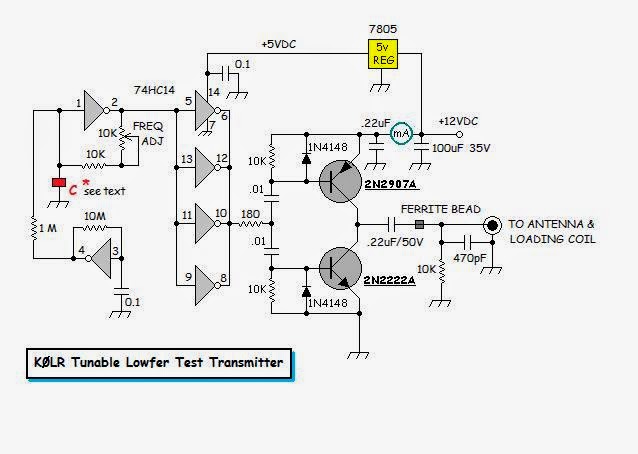 |
| The KØLR LF Transmitter |
The device is actually a low power (~1/2w) VFO-controlled transmitter designed to look into a 50 ohm antenna system. Since most LF antennas are matched to 50 ohms, either through a separate matching transformer or by tapping up from the bottom of the antenna's loading coil, the 50 ohm feedline from the antenna system is simply connected to the antenna meter's output and the VFO tuned for maximum deflection of the meter. The resonant frequency is then directly read from the calibrated scale of the antenna meter's dial. With most backyard LF antennas having a very narrow bandwidth along with a high-Q, the meter peak is quite sharp and easy to find. Look for a peak meter reading between 50-70ma as you sweep the VFO across the antenna. Normal current values will be very low until resonance is hit.
KØLR's original article gives more details and can be found here.
The 470pf capacitor (C in my diagram) determines the basic frequency range. To modify the circuit for dual range (both 2200m and 630m), I added a SPDT switch at pin 1 of the IC so that I could switch the value of "C". For coverage down to and below 136KHz, I used ~ 725pf (a 680pf + 47pf in parallel) while high end coverage up past 500KHz required just 250pf (220pf + 27pf in parallel). These values should get you very close to the required ranges and once installed it is an easy task to calibrate the tuning scale by listening to the signal on a receiver or measuring it with a frequency counter. I also chose to install the 1M 'modulation' resistor that gives the signal a distinctive FSK note.
The meter will quickly tell you if your antenna is too high in frequency (capacitive) or if it is too low (inductive) so that the proper corrective measures may be taken to resonate it within the 630m band. Once resonant, attention can then be paid to bringing the impedance match as close as possible to 50 ohms and a 1:1 match. Depending on your method of impedance matching, there may be some interaction between tuning for resonance and impedance matching but a perfectly resonant 50 ohm system can be achieved with a little juggling.
Although not updated for several years, KØLR's website contains much good information regarding simple backyard LF antenna systems (both transmitting and receiving), preamps and weak signal receiving techniques. It is well worth a close look if you are designing a new 630m station.
NDB DXing & The CLE183 Results
 |
| WC - 332KHz White Rock, B.C. |
 |
| source:http://www.spc.noaa.gov |
One of the beacons in my log this weekend is pictured above - 'WC' in White Rock, B.C. The beacon is located in a residential neighborhood, with homes on both sides...not a typical NDB location.
Here is my short log, all captured using Perseus:
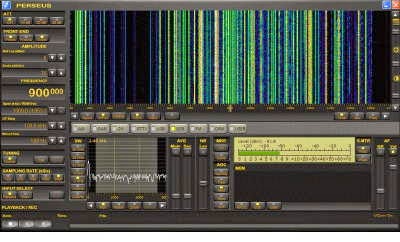
06 21 0600 323 W4 Jenpeg, MB
06 21 0600 325 YJQ Bella Bella, BC
06 21 0500 326 DC Princeton, BC
06 21 0600 326 XJ Fort St. John, BC
06 21 0500 328 5J Coronation, AB
06 21 0600 328 LAC Fort Lewis, WA
06 21 0701 328 YTL Big Trout Lake, ON
06 22 0846 329 PJ Whitehorse, YT
06 21 0600 329 TAD Trinidad, CO
06 21 0600 329 X2 Athabasca, AB
06 21 0600 329 YEK Arviat, NU
06 21 0500 329 YHN Hornepayne, ON
06 21 0600 330 3G Peggo, BC
06 21 0600 332 LBH Portland, OR
06 23 1130 332 POA Pahoa, HI
06 21 0600 332 VT Buffalo Narrows, SK
06 21 0500 332 WC White Rock, BC
06 21 0500 332 XH Medicine Hat, AB
06 21 0700 332 XT Terrace, BC
06 21 0600 333 STI Mountain Home, ID
06 21 0600 334 P2 Wetaskiwin, AB
06 21 0700 334 YER Fort Severn, ON
Some might wonder why listening for NDB's would be of any interest. For me, there are a number of reasons:
- the challenge of hearing distant low-powered transmitters below the broadcast band, particularly from one region...for me it is Alaskan NDBs
- the necessity to develop an efficient receiving antenna has led to numerous antenna trials using loops and wires in various configurations
- learning about LF propagation and how it compares with HF
- the ability to compare what is being heard at my location with what is heard just a few hundred miles away can often be surprising (and humbling)
If you are planning a 630m station, listening for NDB's is a good way to test your system's receive capability as there are hundreds of signals to be heard, many of them very close to our new 472KHz band.
An informative Introduction To Beacon DXing by Alan Gale may be found here. To find the location of any NDB's that have been heard in North America, check the always accurate RNA database by Martin Francis.
A 1935 Style QSL
 |
| '29 Style Card |
When I next became interested in mid-30's style construction, I decided it was time for another 'era-appropriate' card to match the transmitters. I began searching the web for vintage cards from the mid-30's and soon zeroed in on a card that I found particularly attractive...and from Canada as well.
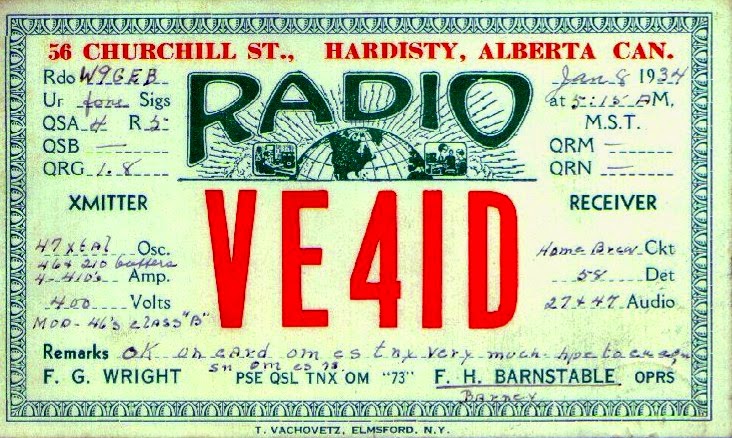
Once again, Dennis came to the rescue and worked enthusiastically with me to try and duplicate the features and look of the VE4 card that I wanted.
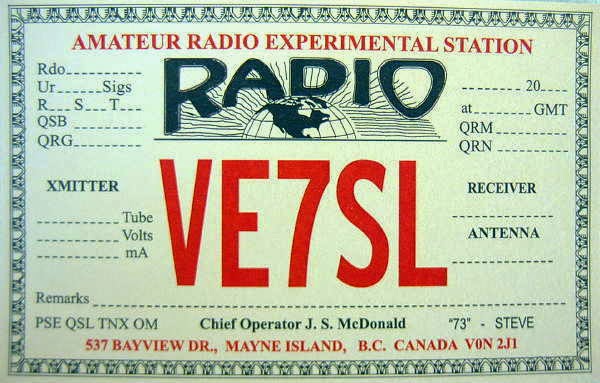 |
| '35 Style Card |
I think he did a super job once again and this past winter the new cards have gone out at a furious pace as I worked many new stations, all on 10m CW with my 6L6 Tri-Tet-Ten.
 |
| 6L6 Tri-Tet-Ten |
If you or anyone you know might be interested in a vintage style card (or any type of card) please get in touch with Dennis. I cannot speak highly enough about him and the quality of his work. You won't be disappointed.
E-Bay, China, and Free Shipping!
I read about many homebrewers purchasing electronics from China on e-Bay. Many of these are major purchases such as test equipment, FM handhelds, antennas etc. The vast majority seem to be happy with their experience while some are clearly not.
I recently had the choice of buying from Chinese suppliers when shopping around for a new Rigol oscilloscope but must admit that I whimped-out when it came time to buy and chose to buy from a U.S. dealer who would also honour the warranty. I did end up paying slightly more, considering shipping and exchange rates but I do not regret my choice.
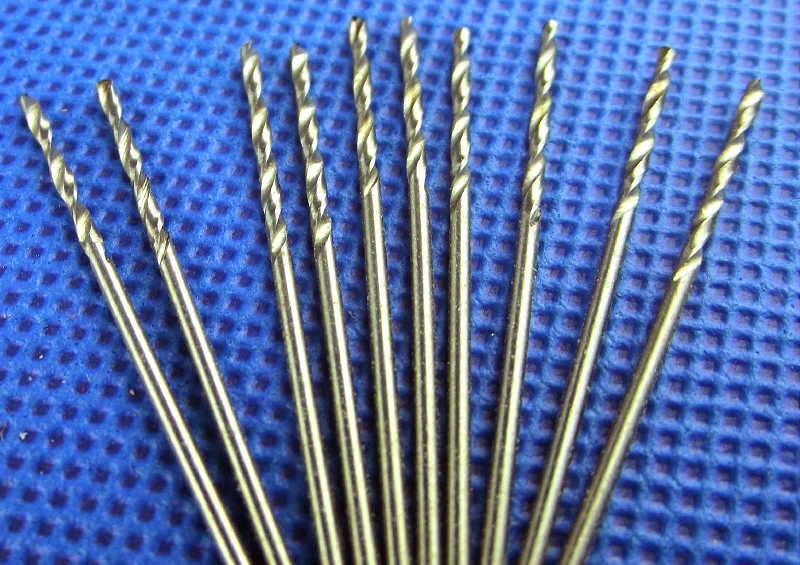
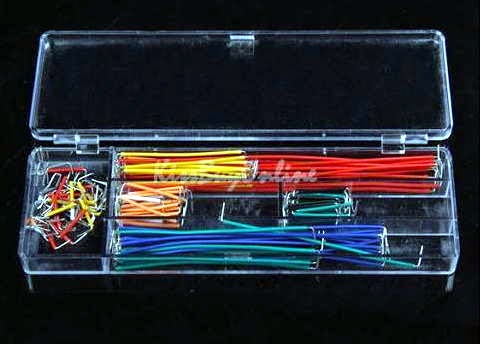
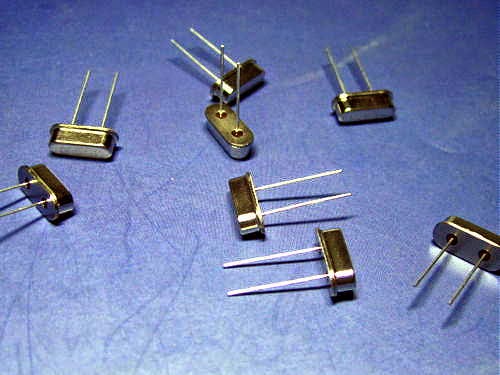
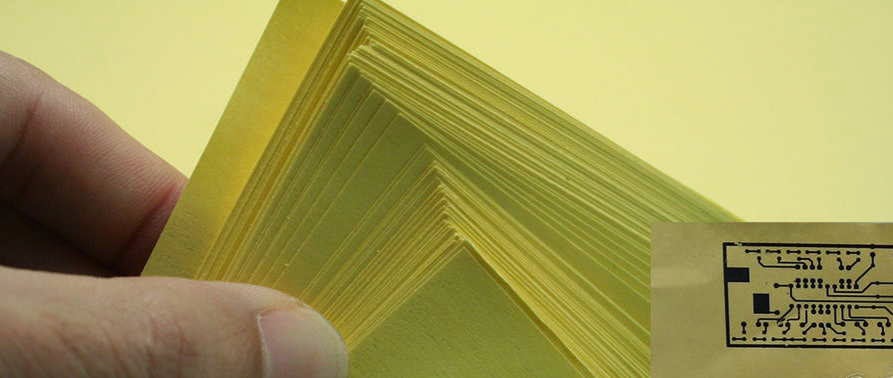
I have however made some smaller purchases from China, in an attempt to 'test the water'. I have seen some very attractive pricing on many homebrew-related goodies that would cost much more if purchased in North America and I reasoned that buying a few lower priced items would be a good way to test the quality. Politics aside and with a tiny bit of guilt, over the past few months I have purchased:
2 packages of HSS 1mm drill bits for PC work @ 25 cents each from
I happily admit that in all cases, I have been very pleased with not only the quality of the items received but also in the service. With the high cost of shipping anything to Canada, I find the 'free shipping' for all of these items to be particularly attractive.
Although all of these items are available from many e-Bay sellers in China, I think it pays to carefully search feedback records before purchasing. In many cases, a high rating does not always tell the story. I look for high volume dealers that have very few complaints within the past year. Check what complaints are being made...if it is the quality of what is being sold, then go elsewhere, as some dealers do a high volume of selling junk while others have only single-digit or even zero negative feedback.
It will still be some time, if ever, before I feel comfortable buying any high priced items from China but if you were brought up in the 50's, you will probably recall when buying from Japan was an invitation for disaster and look how that turned out!
I recently had the choice of buying from Chinese suppliers when shopping around for a new Rigol oscilloscope but must admit that I whimped-out when it came time to buy and chose to buy from a U.S. dealer who would also honour the warranty. I did end up paying slightly more, considering shipping and exchange rates but I do not regret my choice.
I have however made some smaller purchases from China, in an attempt to 'test the water'. I have seen some very attractive pricing on many homebrew-related goodies that would cost much more if purchased in North America and I reasoned that buying a few lower priced items would be a good way to test the quality. Politics aside and with a tiny bit of guilt, over the past few months I have purchased:
2 packages of HSS 1mm drill bits for PC work @ 25 cents each from
3 solderless breadboard jumper-wire kits @ $5.50 each from
10 small HC49 28MHz crystals @ 18 cents each from
50 sheets of PCB thermal transfer paper @ 20 cents each from
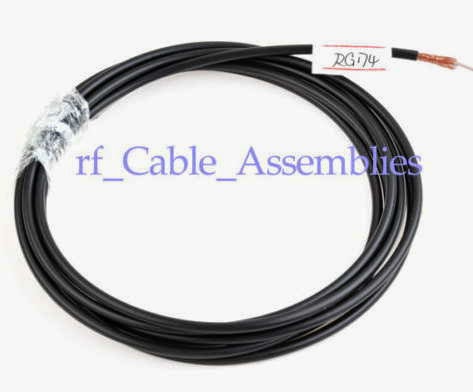
5m of RG174 coax @ 30 cents / ft. from
I happily admit that in all cases, I have been very pleased with not only the quality of the items received but also in the service. With the high cost of shipping anything to Canada, I find the 'free shipping' for all of these items to be particularly attractive.
Although all of these items are available from many e-Bay sellers in China, I think it pays to carefully search feedback records before purchasing. In many cases, a high rating does not always tell the story. I look for high volume dealers that have very few complaints within the past year. Check what complaints are being made...if it is the quality of what is being sold, then go elsewhere, as some dealers do a high volume of selling junk while others have only single-digit or even zero negative feedback.
It will still be some time, if ever, before I feel comfortable buying any high priced items from China but if you were brought up in the 50's, you will probably recall when buying from Japan was an invitation for disaster and look how that turned out!