Author Archive
 6m Polar Madness
 July 10th, 2014 |
  Author:
 In the wee hours of Wednesday morning, July 09, KL7KY (Kevin) had a massive over-the-pole European opening beginning about 1000Z. He worked at least six stations in Greece and a number of others in western Europe. One wonders how often this 'middle-of-the-night' path might actually be open as most west coast ops are sound asleep at this hour.
Looking at the path on DX Atlas shows an almost all-daylight path from VE7 to Europe, but for the first short hop out of the summer twilight.
Hoping to cash-in on any lingering Es, I ventured out to the shack last night at 1030Z (0330 local) to have a listen over-the-pole...knowing that the first hop into the daylight regions would be needed. Much to my surprise, this is what I first heard when turning the antenna north.
I was soon joined by John, VE7DAY, and we both began to CQ towards the sunlight after alerting several of the European operators via the ON4KST chat page. No 49MHz eastern Europe video signals were heard at all but this is often not a deal breaker. One beacon that always seems to be present when hearing Europe, the VA5MG/b in central Saskatchewan, was not heard either. After 90 minutes of no other indicators I headed back to bed.
In view of the high levels of summer Es in the sunlight-bathed Arctic / northern Canada regions, this crazy night time path might be worth exploring more closely during the last week of June and the first week of July. In view of the ungodly hour however, I fear that it may be some time before 6m reveals more of her secrets.
Looking at the path on DX Atlas shows an almost all-daylight path from VE7 to Europe, but for the first short hop out of the summer twilight.
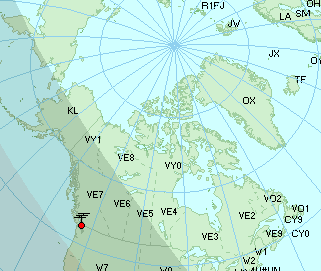 |
| VE7 - EU at 1100Z |
I was soon joined by John, VE7DAY, and we both began to CQ towards the sunlight after alerting several of the European operators via the ON4KST chat page. No 49MHz eastern Europe video signals were heard at all but this is often not a deal breaker. One beacon that always seems to be present when hearing Europe, the VA5MG/b in central Saskatchewan, was not heard either. After 90 minutes of no other indicators I headed back to bed.
In view of the high levels of summer Es in the sunlight-bathed Arctic / northern Canada regions, this crazy night time path might be worth exploring more closely during the last week of June and the first week of July. In view of the ungodly hour however, I fear that it may be some time before 6m reveals more of her secrets.
Wireless Headphone Hell
 For the past several years I have been aware of a very loud wideband FM signal just below the 6m band....about 49.8 MHz. Any time I listened to it, it seemed to be rebroadcasting TV audio so I assumed that it was a set of wireless headphones somewhere in the neighbourhood. I was thankful that it did not cause any problems to my 6m reception, being far enough down the band.
 About two weeks ago, during my normal early-morning band check, I noticed that the FM signal had suddenly shifted much higher and was now approaching the bottom edge of 6m. As the day got longer and the temperature climbed, so did the FM signal! Soon it was inside the band, but right at the bottom end. Within two days, its morning 'start' frequency climbed higher and higher and eventually the signal lodged itself smack dab into the working portion of the band, centering itself at around 50.090, depending on the temperature. Being such a wideband signal, it effectively wiped-out 6m operation for me when its wide raspy carrier was modulated....which was most of the time. Thankfully it would usually be just below the beacon portion of the band until the morning 'European window' time had past.
Two days ago I decided that it was not drifting any higher and had happily entrenched itself on 50.090. It needed to be eliminated.
Two days ago I decided that it was not drifting any higher and had happily entrenched itself on 50.090. It needed to be eliminated.
I constructed a 6m dipole (106") from some scrap aluminum tubing and dug out my Icom IC-R20 handheld scanner.
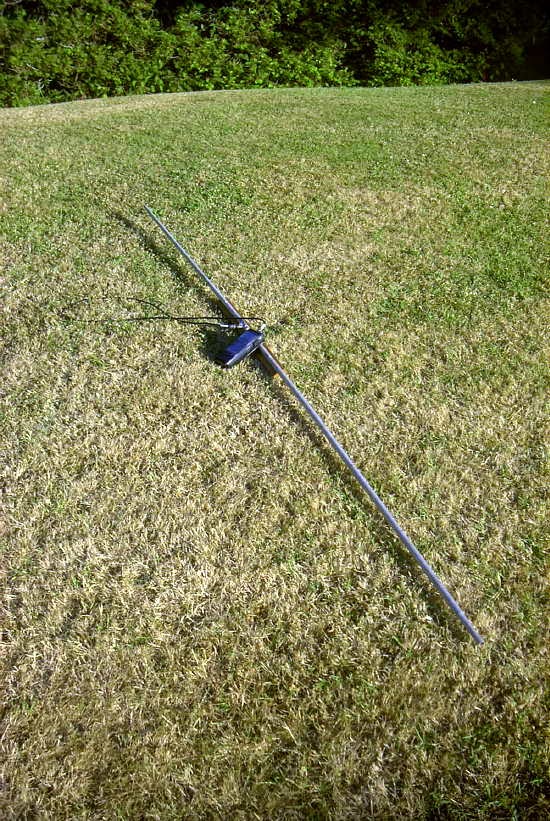
The next day I set about walking around the neighbourhood, taking bearings at various locations, as the signal was easily heard with the dipole. I had earlier determined the rough direction of the signal using my main 6m antenna, a 4 element homebrew Yagi at 55'.
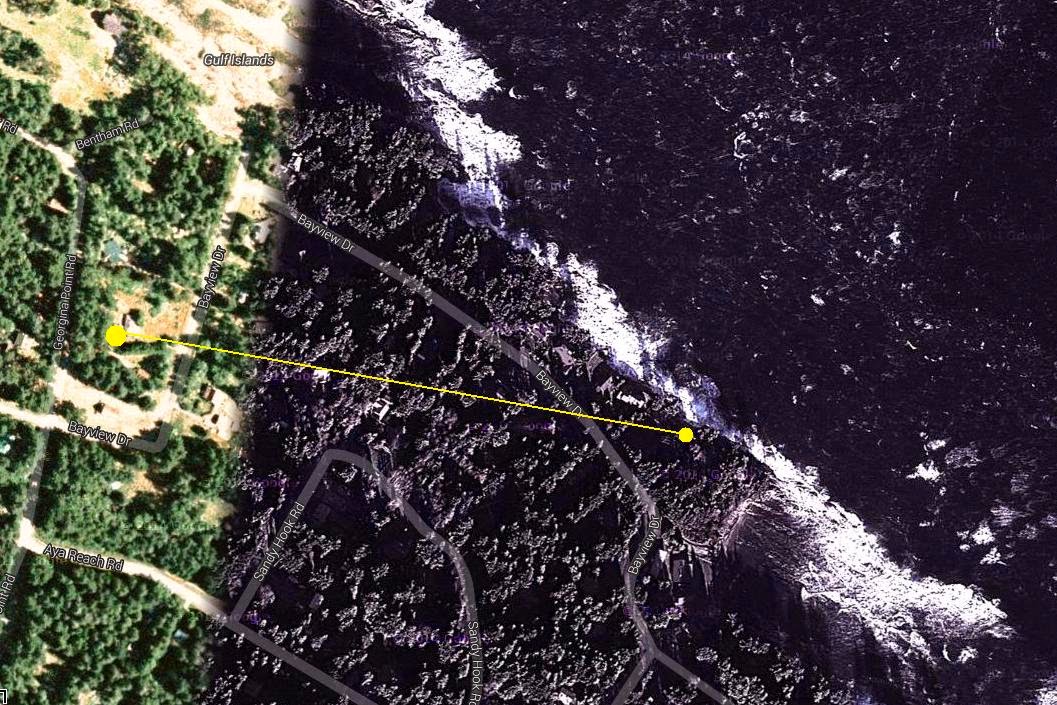 |
| Courtesy: Google Maps |
The band is wonderfully peaceful once again (except when the power lines start arcing at about noon) and within minutes of the headphone system shut down I was able to work a loud BV2DQ in Taiwan and several JA's, shortly before dinner time.
These amazing early July conditions continue on the magicband.
Great 6m Es Conditions Continue!
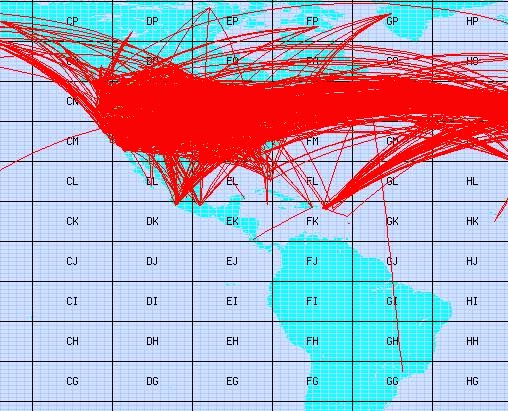 |
| 6m July 08 Courtesy: ON4KST.org |
Six meter operators in the western part of the continent exchanged signals with Japan, Taiwan, China and South Korea beginning at around sunset on the west coast and continuing until 0230 the next morning! Many stations on both ends of the path filled their logs during the heyday event.
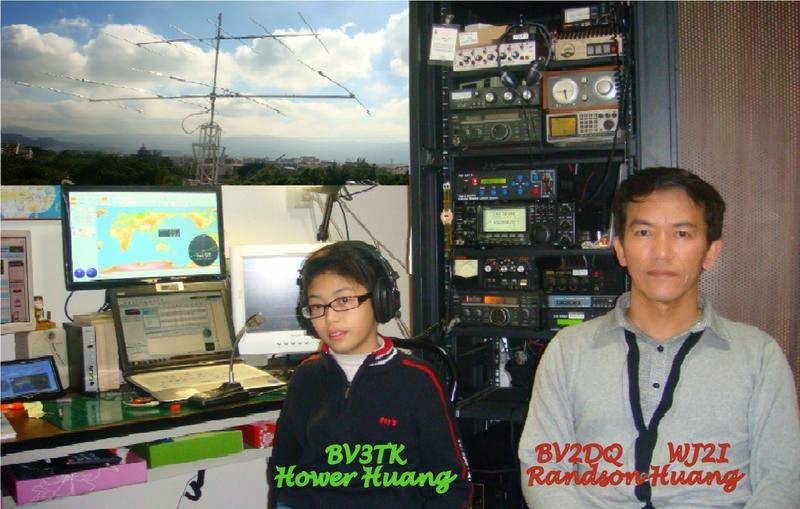
To add to the fun, BV2DQ (Ran) in Taiwan, was also active and gave several 6m ops a new country, working as far east as Colorado.
 |
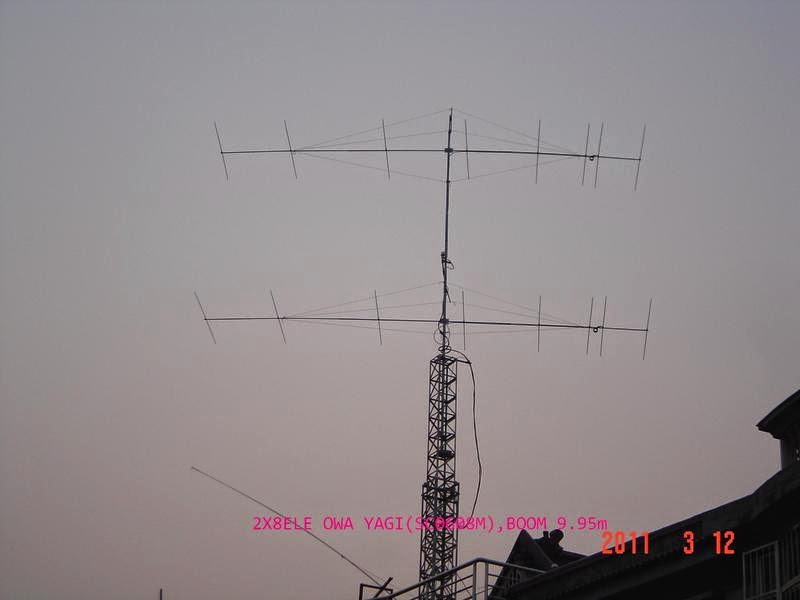 |
| BA4SI 6m stacked Yagis |
" W7FI Jim - That blows away my 113 JA last night, pile still calling when I qrt'd at 0800z. "
I was also present for the action, but worked only a few dozen of the strongest signals as I have been plagued with exceptionally high power line noise this summer, directly in line with Asia. Additionally, a new source of QRM has cropped-up in the form of an S9+ 49MHz wireless headset that has drifted up into the band. As the days get warmer, it has now drifted from below 50MHz up into the working part of the band and last night had settled itself smack on 50.090. Being a wide band FM signal, it effectively destroys any reception for about 50KHz of the band. As Murphy would have it, the crud is coming from the exact same direction as my beam heading to Asia. Yesterday I was able to roughly determine its location with a handheld Icom scanner and today I will use a quickly-built 6m dipole to zero-in on the offending source. Hopefully I can eliminate the problem soon.
West Coast Day For 6m
 |
| Courtesy DXMAPS.COM |
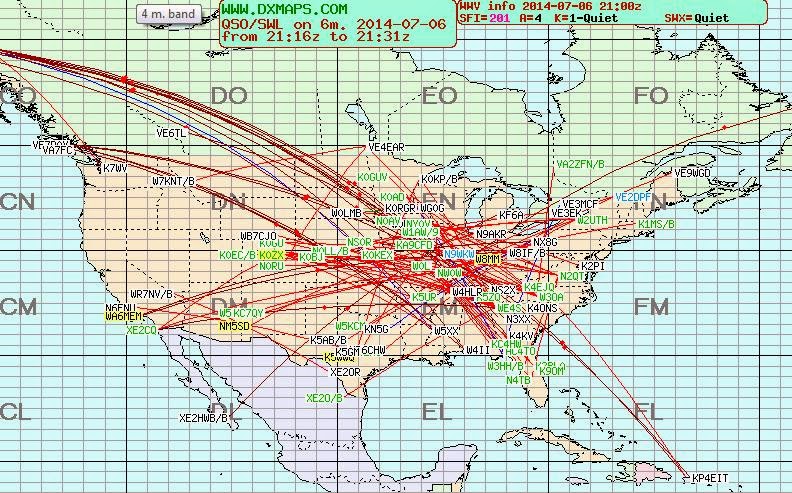
At 0700 I began to hear bits and pieces of CN8KD in Morocco while he was working 4's and 5's ...every once in a while his CQ's would briefly rise out of the noise but never long enough or loud enough for me to reply. He eventually faded and the band shifted to a more northerly path and at around 0900 local time, EA8DBM (Canary Islands, AF) showed up on SSB, while working into the SE U.S.A. He was much louder further to the south but at 1632z I was able to work him on phone and a few minutes later on CW, down the band. In over 40 years of being on 6m, this was only my second African QSO, with my other one also being into EA8.
The best part of the opening today was the number of west coast stations that were able to put rare Africa into the log....and, for a number of them, it was the completion of WAC on 50MHz....very tough from the left coast. VE7DAY, K7SS and NA6XX will all be celebrating today!
As I post this at 2130z, the KL7's are cashing-in on the magic while working across the U.S. as far south as Florida! I've always thought the first week of July to be the best of the season for 6m...lets hope it keeps going.
Third Peak For Cycle 24 ?
 |
| July 06, 2014 Courtesy: nasa.gov |
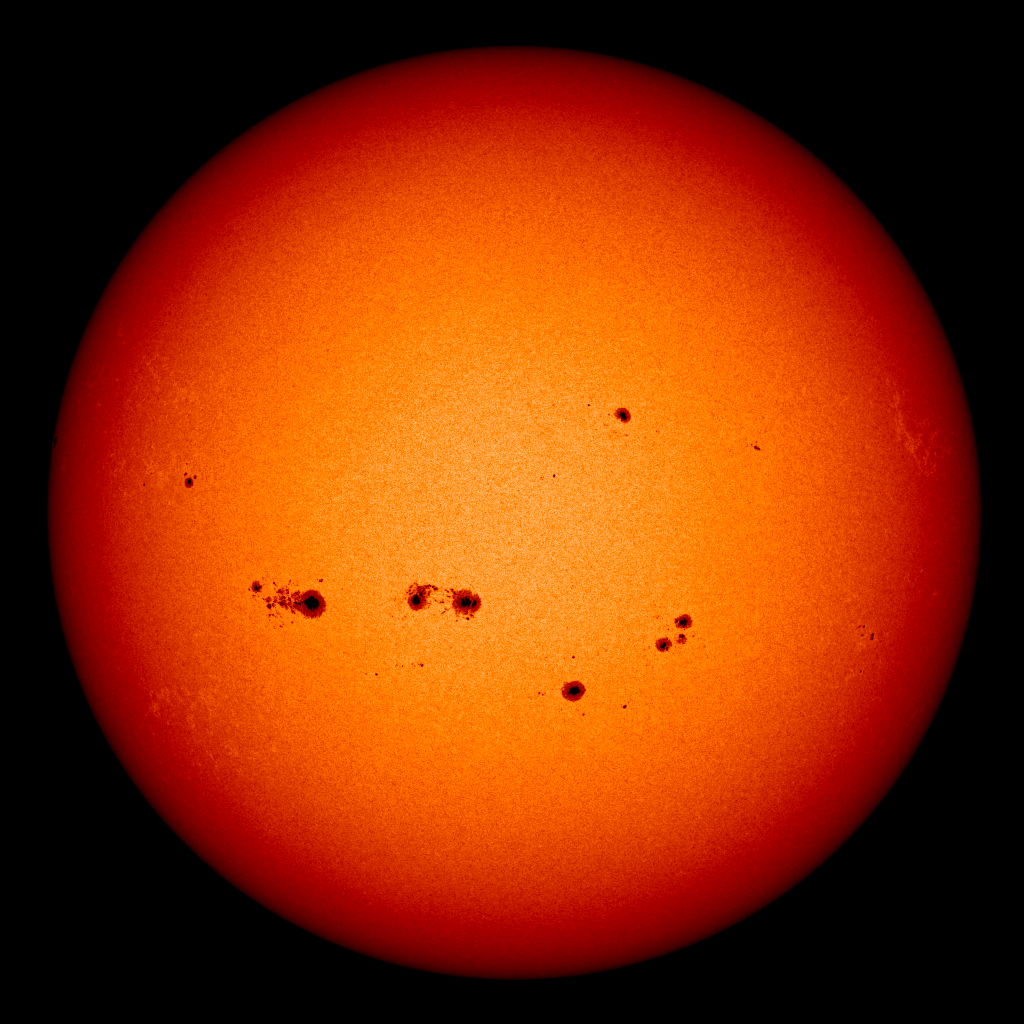
When looking at today's solar image, it's difficult to believe that Cycle 24 is the weakest cycle in the past 100 years. It's also hard to believe that it is on the way down. With the solar flux numbers hovering around the 200 mark, one wonders how great conditions might be had this been happening in mid-November rather than in mid-summer. In spite of the month, propagation over the pole from VE7 land continues to be excellent on the higher HF bands.
Vintage Radio Reading
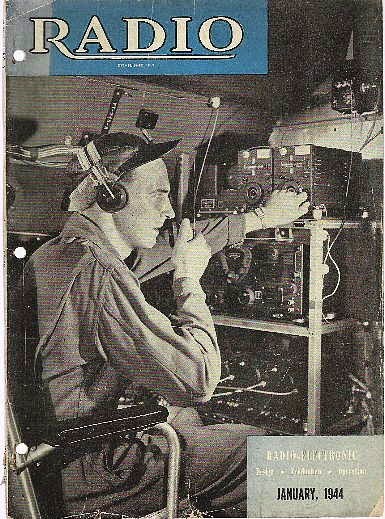
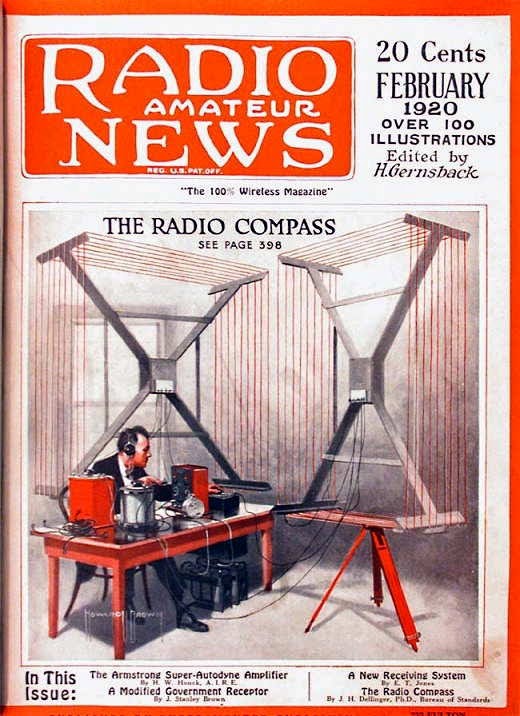 I really love old radio magazines, especially those from the 30's, but to purchase any original copies today is very costly. If you grew up in the 50's or earlier and became hooked by the magic of radio as I and thousands of other kids did, then you no doubt recall the plethora of great monthly magazines devoted to 'radio'.
 Now, thanks to AmericanRadioHistory.com, most of those great old hobby magazines of the past can be viewed online and enjoyed once again.
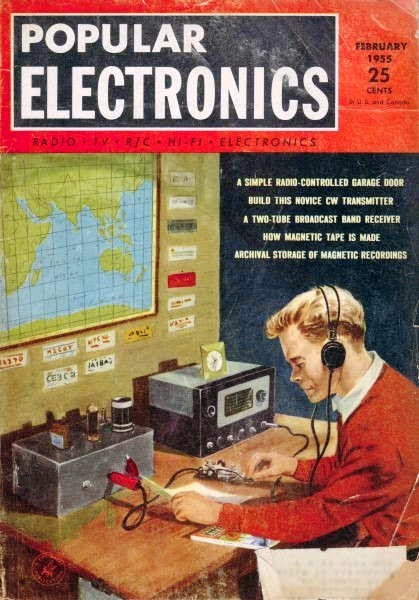 Just a few of the many magazines available are: Radio Craft, Short Wave Radio, Radio, Radio World, White's Radio Log, Popular Radio, Popular Electronics and Radio Amateur News, later to become Radio News.
As a pre-teen short-wave listener in the late 50's, I couldn't wait to get my hands on the latest edition of Popular Electronics, stuffed with its latest SW broadcast news, frequency lists and DX stories.
I'm not sure if all of this is the organizational work of just one person (Webmaster David Gleason) or of a larger group, but it is an incredibly rich resource that has been made freely available for everyone to enjoy.

Thanks to David Gleason's work, I always have several of my favorite classics downloaded to my I-Pad's bookshelf for offline reading. With hundreds of recent updates this spring, there appears to be a lifetime of vintage reading now available!
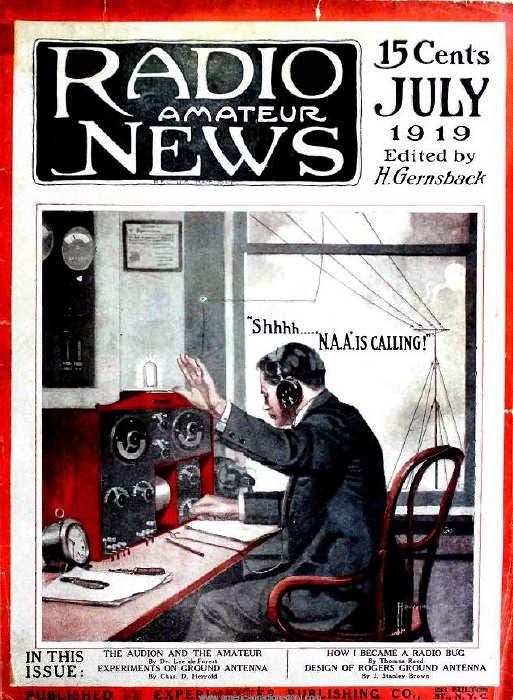
As a builder of vintage-style radios, particularly transmitters, I can often find new inspiration from the magazines particularly devoted to ham radio. If your workshop library is lacking in vintage reference material, you need look no further than this site for a vast source of building inspiration....transmitters of all description along with receivers from crystal tuners to complex multi-tube designs.
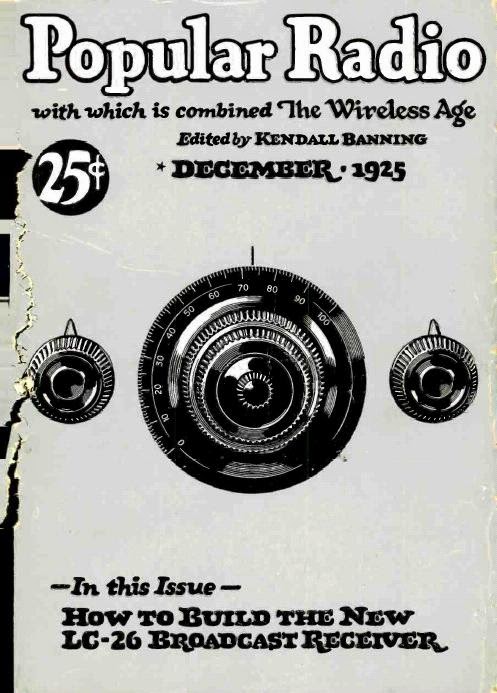 So many of these early publications were the brainchild of Hugo Gernsback, a prolific writer and editor of both technical and science fiction magazines but sometimes blurring the boundaries of each! I suspect that his wide variety of radio publications had some significant role in the way radio so quickly transformed the world.
 Even in the 50's, long after the 'golden years' of radio, it was not uncommon to still see radio antennas on most houses, at least in my neighbourhood!
If you haven't visited this wonderful resource yet, I'm sure you will be amazed at what you find.
Cycle 24 Still Crackling
 |
| The Sun Today / July 03 Courtesy: nasa.gov |
 |
| Cycle 24 Prediction (courtesy: nasa.gov) |
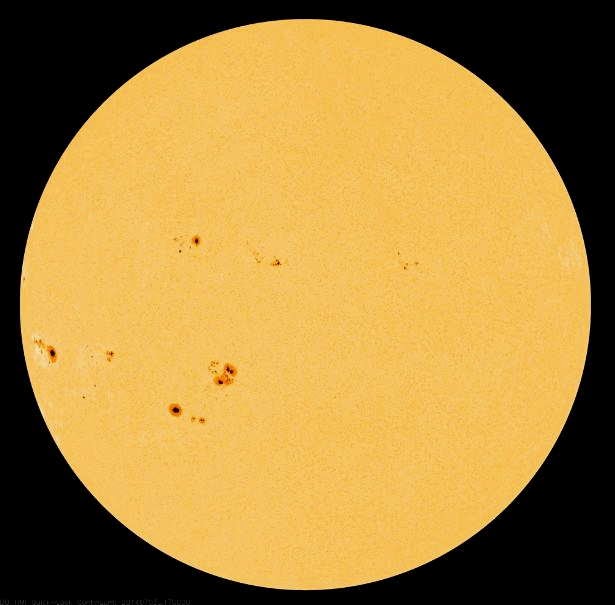
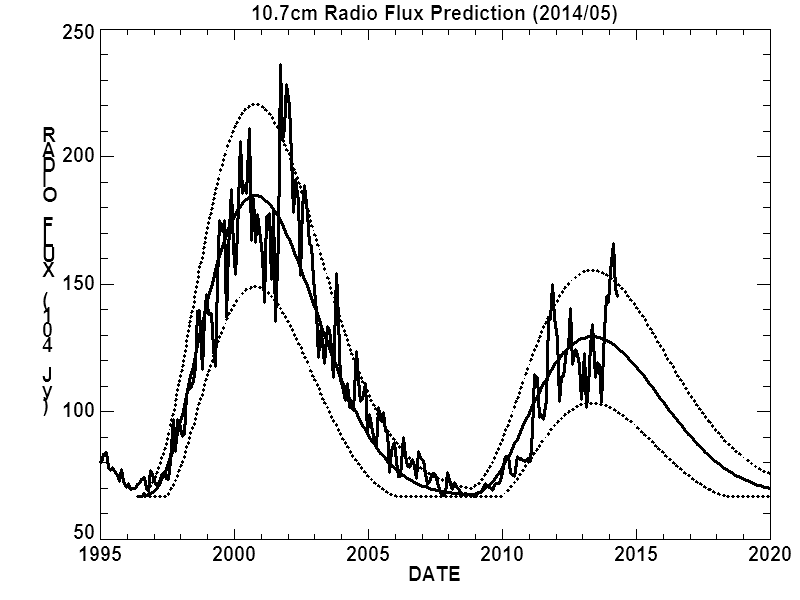
The present rotation has brought a number of active sunspot groups into view along with several small solar flares. The elevated solar flux has had an immediate effect on propagation, producing excellent F2 conditions on the higher bands. Today's solar flux is pushing 170 and on the rise! It makes one wonder what other strange tricks Cycle 24 might have up her sleeve for us yet?
Active flaring during the summer 50MHz sporadic-e season can often produce some odd long-haul paths along with the possibility of some transcontinental auroral-e propagation....so hold on, as it looks like the ride is not yet over!














