Author Archive
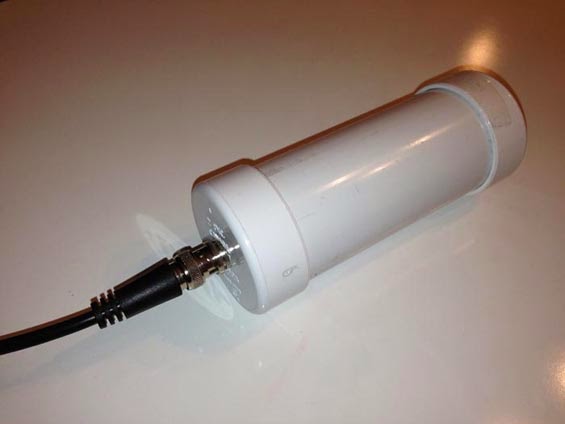
 More On The PAØRDT E-Probe
 November 17th, 2016 |
 Author:
 |
| Courtesy: http://www.leeszuba.com/projects/ |
Another recent reflector question about noise mitigation for active e-probe antennas brought further incite from Roelof Bakker, PAØRDT.
I found particular interest in his method of determining if the noise is being picked up by the antenna or being introduced by the feedline. As well, Roelof suggests one of the most important aspects of homebrewing ... keeping detailed notes of all tests or changes. He also suggests maintaining a healthy outlook regarding noise and rather than getting discouraged, take on the challenge of overcoming it!
Hello all,
I have been dealing with this subject for more then 10 years now and
I am pleased to pass on what I did learn so far.
The first item to look at is noise pick up on the feed line. This
can be a coax cable or a CAT5/6/7 network cable. Looking for noise
pick up on the feed line should be done without the active antenna
connected. Otherwise everything should be the same as when using the
antenna.
Ideally the antenna should be replaced by a 50 ohm termination that
can handle the power that is supplied by the DC-power supply feeding
the antenna. However, this is not necessary to achieve good results.
I am fortunate to own a PERSEUS SDR, that besides an excellent
receiver is also a nice piece of test gear. For noise pick-up
measurements I use HF-Span that changes the PERSEUS into a 0-40 MHz
spectrum analyser with a noise floor of -112 dBm. For narrow band
measurements the PERSEUS is used with Linrad, which can provide
accurate results.
Whilst looking at noise pick-up on the cable, one can unplug all
suspect devices and check if the noise is still present.
The most effective measure is grounding the shield of the coax cable
at the bottom of the mast, but I had still noise ingress of about -
100 dBm around 15 MHz. This could be solved by moving the power
supply and interface of the antenna from the operating position to
the location of the cable entry to the house. This minimises the
length of cable inside the house before the a rf-isolating
transformer used in the interface.
It is mandatory to use a separate radio earth, isolated from the
mains earth. My PC is connected to a mains outlet with a mains earth
connection, but no other equipment in the shack is using the mains
earth. This works for me.
There is also a discussion about the use of a common mode choke
versus a rf-isolating transformer. I have tried both and they both
work. However a rf-isolating transformer is much easier (and
cheaper) to build than common mode chokes with a winding of coax
cable.
In this regard, I should mention a source of interference that is
easily overlooked: receivers. It is not uncommon to own more than
one receiver and it appears that the antenna port is often far from
clean. I am using four SDR's which are fed from a balanced Norton
amplifier / four port splitter and these produce noticeable noise.
Using four rf-isolating transformers at the outputs of the splitter
eliminated the noise. My mini-whip is feeding up to 8 receivers
(hardware) via amplifiers /splitters / rf-isolating transformers
without degrading the receiver noise floor by mutual noise ingress.
The last point is about masts. A metal mast will decrease the signal
level when the antenna is mounted close to it. A short PVC extension
mast will help. The reason I am using a non-conductive mast is a
practical one as cheap and sturdy stackable camouflage net mast
sections were and are still available in western Europe. These are
ideal for either testing antennas and for permanent installations.
Metal masts can introduce problems by being resonant at a certain
frequency and receiving noise that can be transferred to the feed
line. However, checking the feed-line as described above will make
clear if this is the case or not. If there are no problems, there is
nothing against the use of a metal mast.
As every location is different, it is no use to provide an exact
recipe to solve noise problems. I believe that a systematic approach
is mandatory; take notes etc. as it is too easy to run in circles.
By all means do measure what you are doing, otherwise you will walk
in the dark for sure.
The good news is that it is still possible to build a low noise
reception system in the city and doing so can be fun! What might
also help is to change the attitude from 'it should not be there
after all' to 'what can I do about it!'
Best regards and 73,
Roelof Bakker, pa0rdt
If you're thinking about having a listen on LF or on 630m, the e-probe antenna can be a very effective solution .... and it takes up very little space. The finer details regarding the PAØRDT active antenna may be found here and here. All previous blog postings related to this topic may be found here.
Saturday’s 630m Crossband Night – Reminder
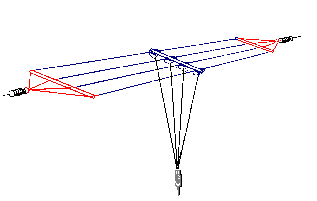
This is a reminder of tomorrow's '630m activity night'. Highlights of the evening will see six different Canadian stations seeking contacts with other amateurs in North America via the 'crossband mode' as they call CQ on 630m CW but listen for replies on their announced (QSX) HF frequency. As well, there will be an increased level of on-air activity from many of the U.S. experimental stations, as they beacon or work each other on various modes including CW and JT9, the WSPR QSO-mode. The experimental stations are also seeking your reception reports.
More information may be found here regarding the activity night, including a detailed list of participating Canadians along with their respective transmitting and QSX HF listening frequencies.
As is often the case, old 'Sol is threatening to throw some junk our way over the next day or two, right on time for our event but please don't let that stop you from participating as often this can actually enhance propagation, especially on the north-south path.
We hope to see many of you tomorrow night!
Worldwide SDR’s Online
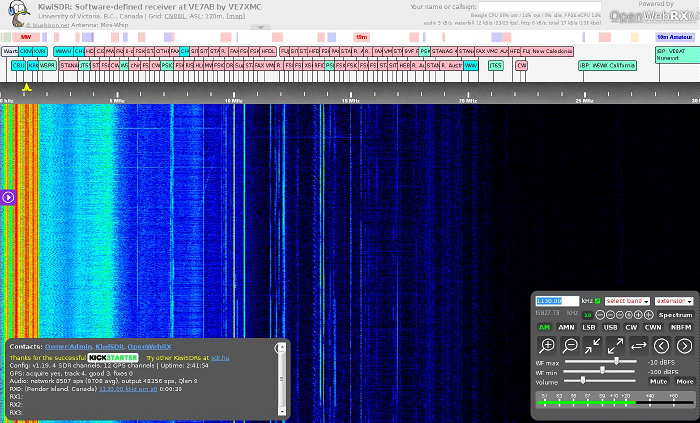 |
| The University of Victoria online SDR from SDR.hu |
The site is run by Andras Retzler, the author of the OpenWebRX software that enables these SDR's to be made seamlessly available online through your web browser. Since all of the sites use the same software, all receivers appear the same, thus providing a very short operational learning curve. At the time of this posting, there were 76 online SDRs, a number that fluctuates slightly throughout the day. Conveniently, the site also indicates how many users are currently using any individual receiver.
I can think of several very handy uses of such a resource, from checking your own on-air signal to confirming, in real time, a suspected DX catch that you might be hearing from your own location. You may even be interested in putting your own SDR online for others to share. It really is a very useful resource and while there, check out the rest of Andras's interesting site.
CLE 212 Results
 |
| Friday's auroral condx courtesy of :OVATION |
Well another CLE has come to pass with most listeners in North America reporting poor conditions ... other than those in the southern states.
As typically happens when hit with a serious geomagnetic event (why do they always coincide with our CLE's?), northernmost stations are affected worse than those further south. This disturbance was a strong and persistent solar wind, making the band very noisy. Signals in the Perseus SDR waterfall that looked as if they should be easy copy, were mushy and run together, making many idents uncopyable in the solar wind noise.
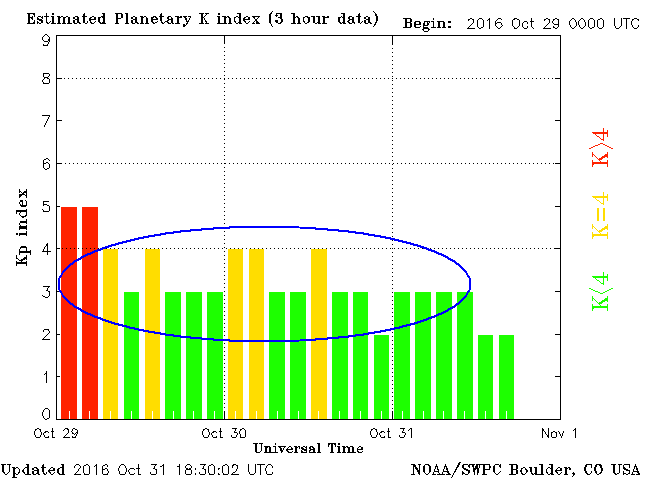 |
| Welcome to CLE 212 couretsy of: OVATION |
The east-west path, being reliant on quiet geomagnetic conditions, was totally absent, with no NDB's from Ontario making it into my log. Somewhat surprising was the rarely heard Galapagos Island NDB on 272 kHz ... heard widely throughout North American.
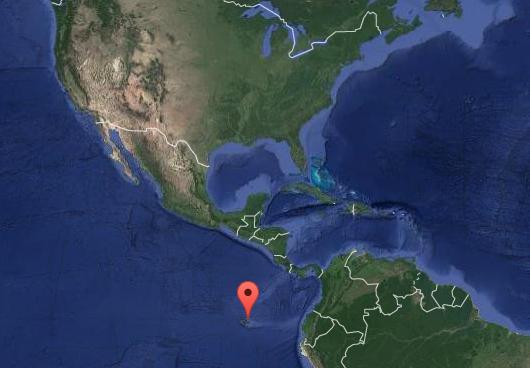 |
| GLS - 272 Galapagos courtesy: Google Maps |
As usual, my receiver for the CLE was the Perseus SDR along with my normal LF / MF inverted-L antenna, tuned to ~ 300kHz.
29 08:00 272.0 YLB Lac La Biche, AB, CAN
29 11:00 272.0 XS Prince George, BC, CAN
30 06:30 272.0 GLS Galapagos, GAL
29 05:00 274.0 FR Fort Resolution, NT, CAN
29 08:00 275.0 SF Williston, ND, USA
29 07:00 275.0 HIN Chadron,NE, USA
29 05:00 275.0 GEY Greybull, WY, USA
29 06:00 275.0 AV Winnipeg, MB, CAN
31 12:00 277.0 OT Worthington, MN, USA
31 05:00 280.0 GYZ Guernsey, WY, USA
31 13:00 281.0 CRN Sparrevohn, ALS
30 13:30 283.0 DUT Dutch Harbor, ALS
29 08:30 284.0 QD The Pas, MB, CAN
29 13:00 284.0 FHR Friday Harbor, WA, USA
29 08:00 287.0 ZWG Winnipeg, MB, CAN
29 08:30 287.0 PE Peace River, AB, CAN
29 08:30 290.0 YYF Penticton, BC, CAN
30 08:00 290.0 QR Regina, SK, CAN
30 08:00 292.0 ZET Edmonton, AB, CAN
30 08:00 293.0 TOR Torrington, WY, USA
29 08:00 293.0 MB Sidney, BC, CAN
30 08:00 295.0 8C Fairview, AB, CAN
29 08:30 296.0 LGD La Grande, OR, USA
29 08:30 299.0 TV Turner Valley, AB, CAN
30 10:00 302.0 QW North Battleford, SK, CAN
29 08:30 304.0 FH Mc Leod, AB, CAN
29 08:30 305.0 Z1 Three Hills, AB, CAN
29 08:30 305.0 ONO Ontario, OR, USA
30 06:30 307.0 M5 Manning, AB, CAN
29 08:30 308.0 ZZD Edmonton, AB, CAN
29 08:30 311.0 9Y Pincher Creek, AB, CAN
29 08:30 312.0 UNT Naramata, BC, CAN
29 08:30 317.0 VC La Ronge, SK, CAN
The results from all participants can be found in a few days at the NDB List website, or if you are a member of the ndblist Group, results will also be posted there.
The very active Yahoo ndblist Group is a great place to learn more about the 'art' of NDB DXing or to meet other listeners in your region. There is a lot of helpful information available there and new members are always very welcome. As well, you can follow and chat with other NDB chasers regarding antennas, techniques, unidentified signals and nightly propagation ... and, if you are building a 630m station, listening for NDB's is a great way to determine your receive capability and if it needs improvement.
November’s 630m Activity / CW Crossband Night!
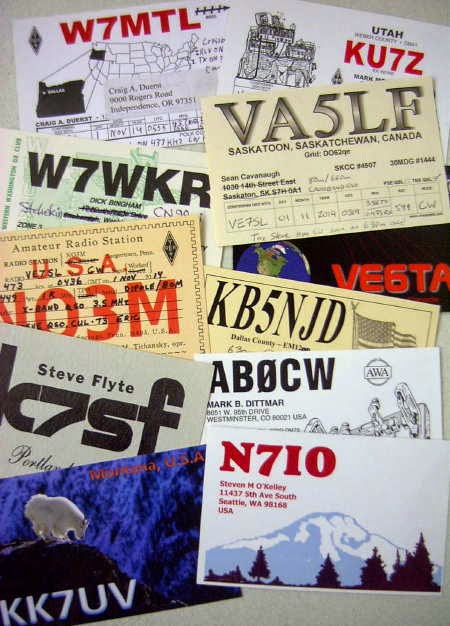
Once again the 630m band will become a cacophony of CW and other sounds on Saturday night, November 12th! The actual motivation for the weekend event is a celebration of the November, 1906, Berlin Treaty ... making 500 kHz the International Distress Frequency for the next eighty years. It's also a great excuse for a lot of 630m diehards to get on the air and celebrate the band.
Three different groups will participate:
U.S. Experimental Operators
Canadian Amateurs
Maritime Radio Historical Society
U.S. Part-5 Experimental Operators including WD2XSH stations and others will operate in the 472 – 479 kHz band. They will use CW transmissions for QSOs and beacons with special messages. There may also be some operation on 500 kHz itself.
Canadian Amateurs will be concentrating their efforts on providing two-way cross-band CW QSO's with other amateurs in the U.S.A. and Canada. They will be transmitting on specified frequencies (see below) and listening for replies to their 'CQ' on specified QSX frequencies within the 160, 80 and 40m CW bands.
The Maritime Radio Historical Society will activate its KSM/KPH transmitter at Bolinas, CA for a mini “Night of Nights” with special messages and bulletins.
Listeners are encouraged to send their reception reports to individual stations or via the LF/MF ON4KST chat page which should be very active during the event. Most experimental calls can be found via QRZ.com listings.
All amateurs are encouraged to participate in the cross-band activity by being able to listen on 630m but being able to answer on one of the specified HF bands.
So far this fall, propagation on the 630m band has been excellent and hopefully will continue well into November. Previous cross-band events have seen contacts made from coast-to-coast as well as west to Hawaii.
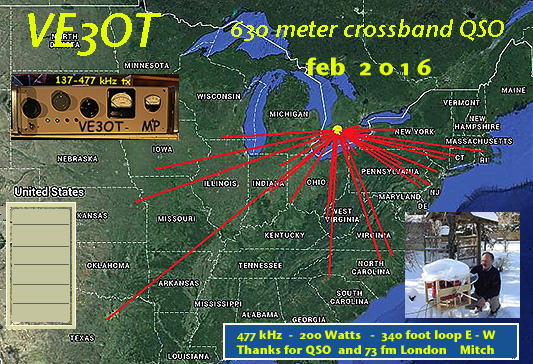 |
| VE3OT QSL and coverage from previous crossband event |
Confirmed Canadian stations include:
Station: VA7MM (Mark) CN89 Coquitlam, B.C.
Time: 0400Z – 0800Z (Saturday night Nov 13 Z)
TX Frequency: 475.0 kHz
RX (QSX) Frequency: 1801 kHz / 3574 kHz / 7062 kHz
Station: VE7BDQ (John) CN89 Delta, B.C. November 2016
Time: 0300Z – 0700Z (Saturday night Nov 13 Z)
TX Frequency: 474.0 kHz
RX (QSX) Frequency: 3555 kHz
Station: VE7CNF (Toby) CN89 Burnaby, B.C.
Time: 0300Z – 0800Z (Saturday night Nov 13 Z)
TX Frequency: 476.5 kHz
RX (QSX) Frequency: 1836 kHz / 3558 kHz / 7031 kHz
Station: VE7SL (Steve) CN88 Mayne Island, B.C.
Time: 0200Z – 0700Z (Saturday night Nov 13 Z)
TX Frequency: 473.0 kHz
RX (QSX) Frequency: 3566 / 7066 kHz
Station: VE7CA (Markus) CN89 North Vancouver, B.C.
Time: 0200Z – 0700Z (Saturday night Nov 13 Z)
TX Frequency: 477.5.0 kHz
RX (QSX) Frequency: 1820 / 3550 / 7048 kHz
Station: VO1NA (Joe) GN37 Torbay, Newfoundland
Time: 2130Z – 0130Z (Saturday night Nov 12 Z – Sunday Nov 13 Z)
TX Frequency: 477.7 kHz
RX (QSX) Frequency: 3562 kHz
Station: VE3OT (Mitch) EN92 London, ON.
Time: 0000Z – 0400Z (Saturday night Nov 13 Z)
TX Frequency: 477.0 kHz
RX (QSX) Frequency: 3563 kHz / 7058 kHz
Several US Experimental stations also will be in operation throughout the band, in two-way QSO mode with each other, using CW or JT9. Some stations will also use WSPR and QRSS CW beacon modes.
The success of this event largely depends upon the participation of as many amateurs as possible.
Hopefully you will be able to participate in the two-way cross-band activity by being able to listen on 630m and then able to switch over to HF to transmit. This could involve the use of a separate receiver / transmitter or can often be easily implemented via your transceiver's 'A/B' switch.
No antenna for receiving on 630m? Don't let that stop you from taking part in the fun. Surprisingly good results can often be had by using a low band wire antenna such as a dipole or inverted-L for listening on 630m ... the antenna does not necessarily need to be resonant. In fact, often times, a non-resonant receiving antenna can provide a better overall S/N ratio than one which is resonant, as these often gather more noise along with signals.
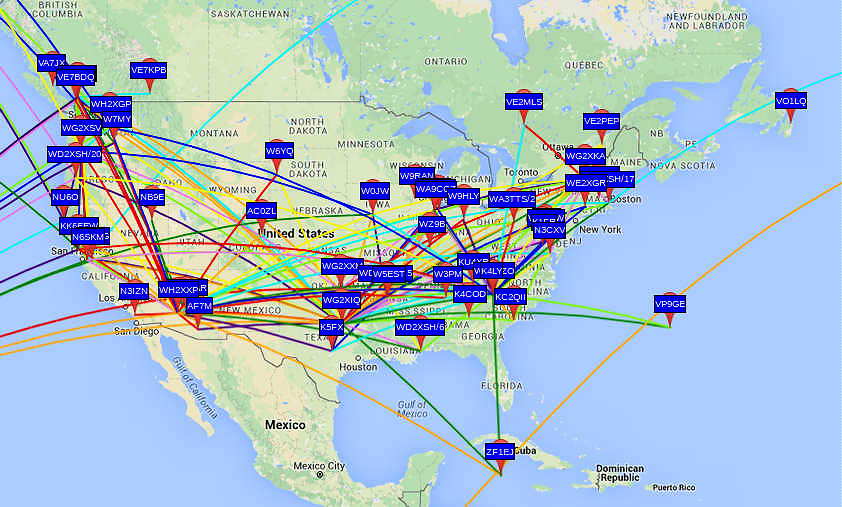
You may want to experiment before hand by listening to many of the numerous U.S. experimental stations operating nightly, mostly in the WSPR mode, between 475.6 and 475.8kHz. Most operators provide a CW identifier following their WSPR transmission but a better way to decode these signals is by installing the latest WSPR software, WSJT-X (freeware), at K1JT's website here. The software works extremely well and is easy to install and get working. If you set the software to 'upload spots', you can share your nightly catches with dozens of other listeners throughout the continent on the WSPRnet website.
 |
| courtesy: KB5NJD's 630m Daily Blog |
If you have further questions, please contact myself or John Langridge, KB5NJD / WG2XIQ.
Hunting For NDBs In CLE 212
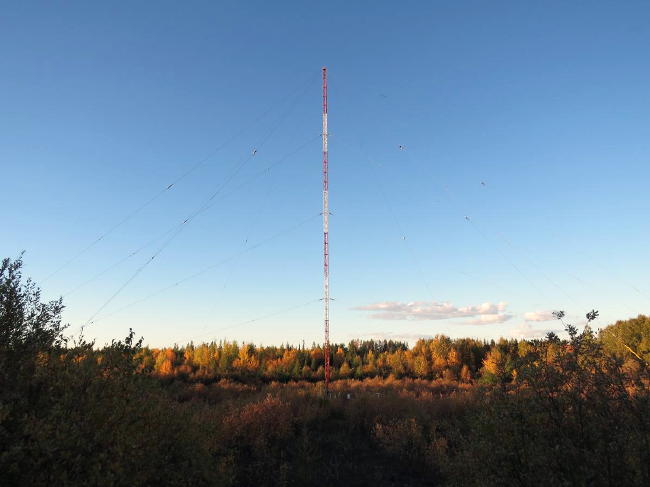 |
| YPM-274 courtesy: ve3gop.com |
Another NDB CLE challenge is in store this coming weekend with CLE 212. This time the frequency range is 270 - 319.9 kHz bringing it into the DGPS band, although these signals should not be reported.
A good target for this range is 25W YPM in Pikangikum, Ontario, transmitting on 274 kHz. It is widely reported throughout North America, thanks to its large antenna system, pictured here. Look for it on 274.361 kHz with your receiver in 'CW' mode. Remember that most Canadian NDBs use a ~ 400Hz tone for modulation while the U.S. ones are usually ~1020Hz on both sidebands.
'CLE's' are 'Co-ordinated Listening Events', and NDB DXers around the world focus their listening time on one small slice of the NDB spectrum ... but this time around, the range has been expanded.
From CLE coordinator Brian Keyte (G3SIA), via the Yahoo ndblist Group, comes the following reminder:
Hello all
The NDB List has really come back to life recently - you can see the effect
of the good recent propagation on the number of emails we have posted
to NDB List each month since last June:
Jun Jul Aug Sep Oct (so far)
197 279 404 663 768
Our 212th co-ordinated listening event is this weekend, covering a 50 kHz
frequency range - about three times wider than usual.
Days: Friday 28 October - Monday 31 October
Times: Start and end at midday, your LOCAL time
Range: 270.0 - 319.9 kHz (NOT DGPS beacons)
We can expect very good propagation, but in part of the frequency range
it will be a bit of a challenge to tease out the NDB signals from among
the DGPS ones.
Any first-time CLE logs will be very welcome, as always.
Please log the normal NDBs you can identify that are listed in the range
(it includes 270 kHz but not 320 kHz).
Please send your CLE log to NDB List, if possible as a plain text email
and not in an attachment, with 'CLE212' at the start of its title.
Show on EVERY line of your log:
# The Date (e.g. '2016-10-28' or just '28', etc.)
# UTC (the day changes at 00:00 UTC).
# kHz - the beacon's nominal published frequency if you know it.
# The Call Ident.
Those main items can be in any order within themselves, but BEFORE any
other optional details (Location, Distance, etc.) later in the same line.
Many of us in Europe will be changing our house clocks this weekend.
UTC time continues unchanged of course, but as we finish the CLE on
Monday at LOCAL midday we may win an extra hour's listening!
As always, give details in your log of your own location and the receiver,
aerial(s), etc. that you were using.
If you send any interim logs, please also send a Final (complete) one.
You can find anything else to help you, including seeklists for your part
of the World, from the CLE page, http://www.ndblist.info/cle.htm
I will send the usual 'Any More Logs?' email at about 18:00 UTC on Tuesday so that you can check that your CLE log has been found OK. Do make sure
that your log has arrived at the very latest by 09:00 UTC next Wednesday,
2nd November. I am hoping to make all the combined results on that day.
Enjoy your listening
Brian
----------------------------------------------------------
From: Brian Keyte G3SIA ndbcle'at'gmail.com
Location: Surrey, SE England (CLE co-ordinator)
----------------------------------------------------------
(Reminder: You could use any one remote receiver for your loggings,
stating its location and owner - with their permission if required.
A remote listener may NOT also use another receiver, whether local or
remote, to obtain further loggings for the same CLE).
These listening events serve several purposes. They:
- determine, worldwide, which beacons are actually in service and on-the-air so the online database can be kept up-to-date
- determine, worldwide, which beacons are out-of-service or have gone silent since the last CLE covering this range
- will indicate the state of propagation conditions at the various participant locations
- will give you an indication of how well your LF/MF receiving system is working
- give participants a fun yet challenging activity to keep their listening skills honed
Final details can be found at the NDB List website, and worldwide results, for every participant, will be posted there a few days after the event. If you are a member of the ndblist Group, results will also be e-mailed and posted there.
The very active Yahoo ndblist Group is a great place to learn more about the 'Art of NDB DXing' or to meet other listeners in your region. There is a lot of good information available there and new members are always very welcome. As well, you can follow the results of other CLE participants from night to night as propagation is always an active topic of discussion.
If you are contemplating getting started on 630m, listening for NDBs is an excellent way to test out your receive capabilities as there are several NDBs located near this part of the spectrum.
You need not be an ndblist member to participate in the CLEs and all reports, no matter how small, are of much value to the organizers. 'First-time' logs are always VERY welcome!
Reports may be sent to the ndblist or e-mailed to either myself or CLE co- ordinator, Brian Keyte (G3SIA), whose address appears above.
Please ... give the CLE a try ... then let us know what NDB's can be heard from your location! Your report can then be added to the worldwide database to help keep it up-to-date.
New – VE7SL Twitter Page

Research indicates that new brain cells are grown whenever you learn a new process or study new material. If that's the case, I've a head-full of new cells this week after deciding to set-up a Twitter account for the first time.
Setting up the account and trying to learn the ins and outs of tweets, hash tags, re-tweets, who sees what and who doesn't ... all without trying to mess things up too badly, has been fun. Although I haven't figured everything out with confidence, I'm far enough along to get going ... I think!
The link to my Twitter account is here and I will add a specific link on my blog page, at the top of the right hand sidebar.
Although I try to keep my blog's subject material related to my amateur radio interests and activities, I envision a broader range of subject commentary for Twitter ... not limited to just 'radio' but also some of my other interests and daily observations. As well, I can use it to announce my beaconing schedule and to report any interesting contacts or propagation conditions of note. Although I live on a small island, there is a lot to do here that keeps me busy ... I have many interests and activities, way too many for the number of hours in the day it seems, and some of these will be 'tweet' topic material.
In the meantime, I will begin the hunt for other Twitter users with similar interests who I would like to add to my 'follow' list and hopefully begin to build my own list of 'followers' over the months ahead. Although I can make no guarantees, I'll be trying not to end up in the naughty-corner by doing something dumb ... any and all input / advice gladly accepted!