Author Archive
 Will The Sun Get Too Quiet For Topband DX?
 April 13th, 2018 |
  Author: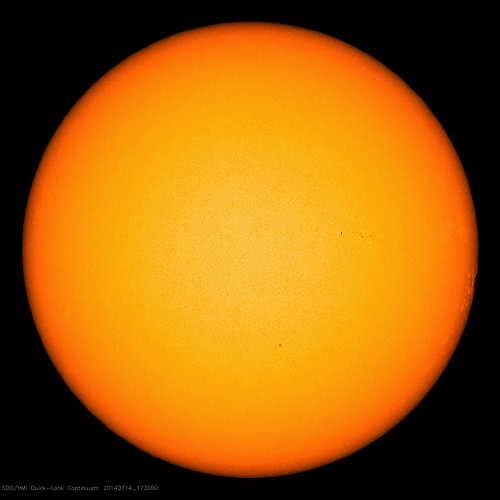
Those of us that like to hunt European DX on 160m from the west coast know that the best time for this is during the 'solar low' years, those quiet periods between the end of one solar cycle and the beginning of the next.
From the west coast, openings to Europe on 160m are not something that happens with much regularity and, unlike the more frequent paths to Europe enjoyed from the east coast, are almost exclusively limited to this quieter part of the solar cycle. The weakening of the Sun's magnetic field at these times allows for less prop-killing D and E-layer signal absorption, particularly through the northern auroral zone path required from the west coast.
In his October, 2016, posting to the Topband reflector, propagation guru Carl Luetzelschwab, (K9LA), suggested that the coming years of solar lows may actually be too low and that because of the likely unprecedented low levels not seen in our lifetimes, the planet could receive higher cosmic-ray bombardment than normally associated with these periods.
"Since galactic cosmic rays are mostly *very energetic* protons, they can get down to low atmospheric altitudes, causing collisional ionization in the D region (and lower E region). A cursory estimate using cosmic ray ionization rates confirms more ionization in the lower atmosphere. 160m is not very tolerant of more absorption, so we may see an adverse effect of the weakened solar magnetic field."
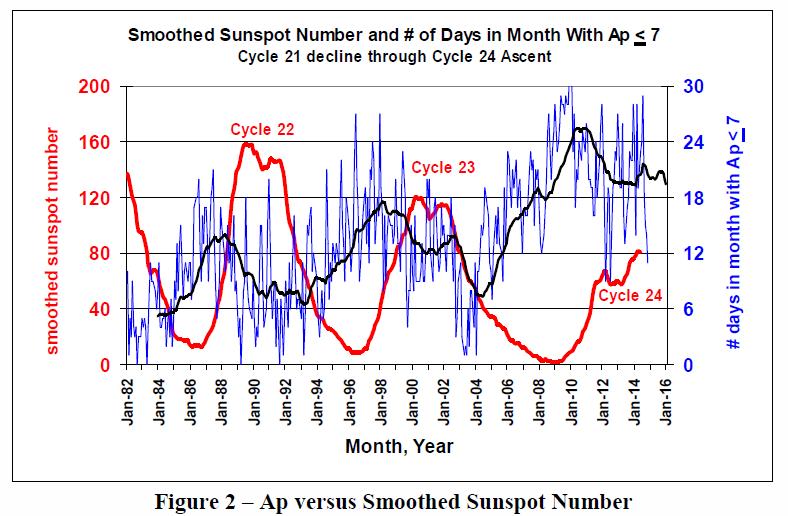
K9LA's Topband comments seems to have its roots in his May, 2015 article, "What's Going On With-160 Meters?", where he compares the solar minimum period between Cycles 22 and 23 to the minimum years between Cycles 23 and 24. Carl noted that the best 160m propagation period that he had seen in his lifetime was during the years between Cycle 22 and 23 and pondered why, during the even deeper prolonged low between Cycles 23 and 24, was it not producing the same levels of great propagation observed 11 years earlier. One possibility he puts forward was that ...
" ... it involves galactic cosmic rays (GCRs). At solar maximum, the Sun is more active, causing more geomagnetic field activity that is believed to be detrimental to 160-Meter propagation. Coupled with the Sun being more active is the fact that the Sun's magnetic field is stronger, which shields the Earth from galactic cosmic rays. Going the other way, when we're at solar minimum, the Sun's magnetic field is weakest, letting in more cosmic rays."
His graph shows the yearly trend of only the low Ap index days (geomagnetically quiet) versus smoothed sunspot numbers for several recent cycles. The blue line plots the trend of low Ap index values with the black line showing the smoothed values; the red line indicates the smoothed sunspot number (solar activity levels).
 |
| source: http://k9la.us/May15_What_s_Going_On_with_160-Meters.pdf |
Carl's earlier observations indicating that the best 160m propagation he had ever observed was during the low period between Cycle 22 and 23 and not during the much quieter low period between Cycle 23 and 24 are very much different than my own ... perhaps because of our different locations.
From the west coast, the most challenging topband path is over the pole to Europe. This only occurs during 'best propagation' periods as this path will only open during prolonged periods of very low geomagnetic activity. Unlike Carl's path to Europe, west coast signals need to traverse the signal-killing auroral zone.
During the first low period, I did experience several openings to Europe but nothing compared to what they were during the second low period, between Cycles 23 and 24, the one Carl did not experience propagation as good as the previous low. For several winters in a row, during the 23-24 low, I often found night after night of amazing propagation to Europe, the quality of which I had never heard before. Interestingly, on almost all of these nights, there were no other signals on the band but Europeans and nearby Washington or Oregon state W7s ... no signals at all from the rest of North America. At times it mimicked the sound of 20m CW to Europe, with signals often reaching S9 on my FT-1000 S-meter. I even worked one SM station on CW while running just 10W output!
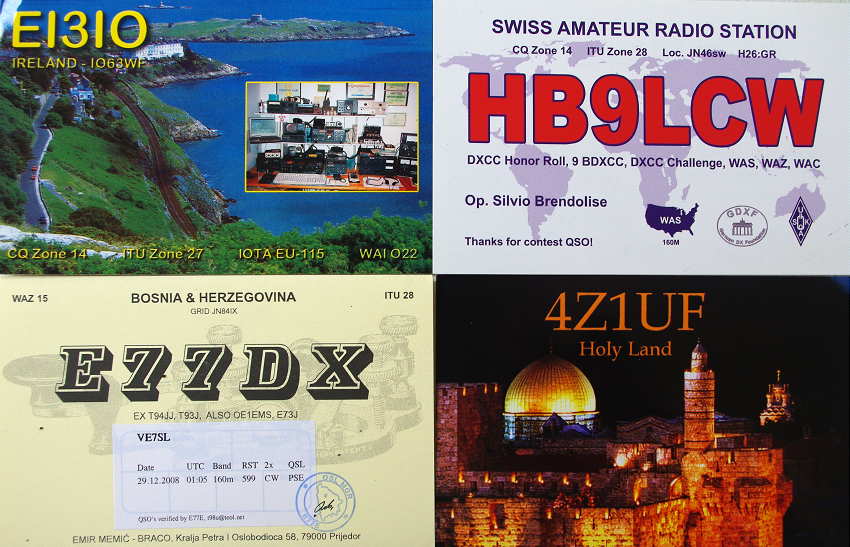
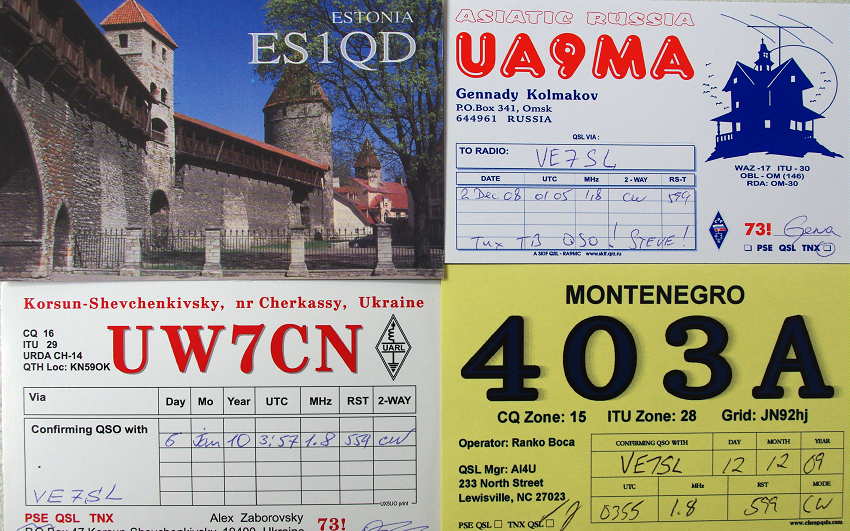
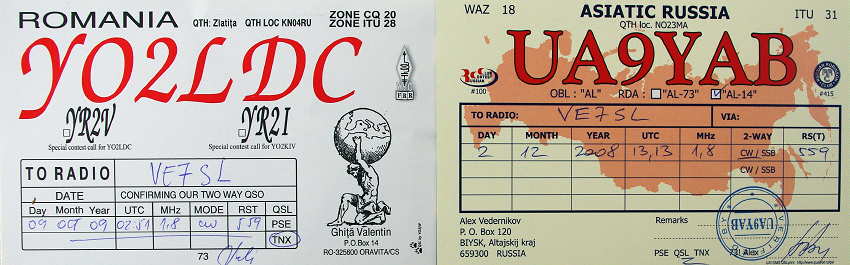
With this long intense low, cosmic ray bombardment should have been at an all time high ... maybe it was, but it didn't seem to be bothering the west coast path to Europe, via the seemingly dormant auroral zone.
I was prompted to address this topic after reading a recent report on the GeoSpace website, siting a new study led by Nathan Schwadron, professor of physics at the University of New Hampshire’s Space Science Center. In the study, recently published in the journal Space Weather, a publication of the American Geophysical Union, the researchers found that large fluxes in Galactic Cosmic Rays (GCR) are rising faster and are on a path to exceed any other recorded time in the space age.
The author's study predicted a 20% increase in radiation bombardment but their newest research shows current conditions exceed their predictions by about 10 percent, showing the radiation environment is worsening even more than expected.
With cosmic ray levels now predicted to increase by a whopping 30%, Carl and the rest of us may soon get some clarity on his original postulation that "maybe a solar minimum can be too deep for 160 meters."
With the next few cycles expected to be even poorer than the present one, the large increase in radiation levels from space may have profound impacts on more than just propagation ... satellites and, with a new appetite to return human activity to the moon, astronauts could be exposed to much higher radiation levels than ever before.
The next few years of (ultra?) solar-quiet should be very interesting!
630m – Winter One
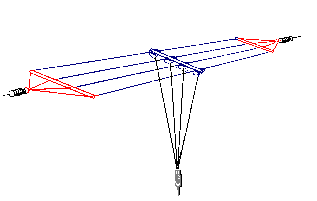
The steady arrival of new stations on the band was exciting to see and the increase in activity made nightly band-checking mandatory in order to keep up with the new arrivals. Not totally unexpected, a high percentage of the new stations were located in the eastern part of the country where ham populations are higher, giving even more incentive to watch propagation trends for those 'special' nights to put some of the new arrivals in the log.
Over the winter DX season I worked 37 'new' U.S. stations in 23 different states. Of these 23 states, 11 were on CW while 12 were on JT9. Many of the JT9 contacts could have been made on CW at the time, had that been the operating mode chosen.
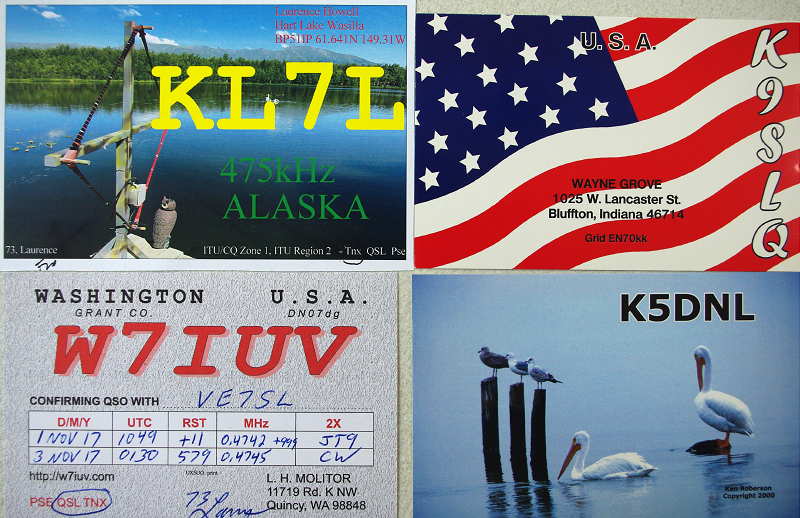
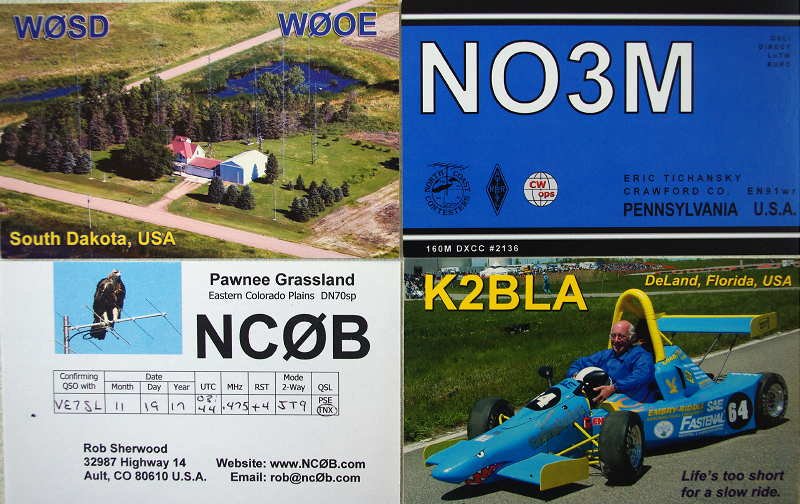
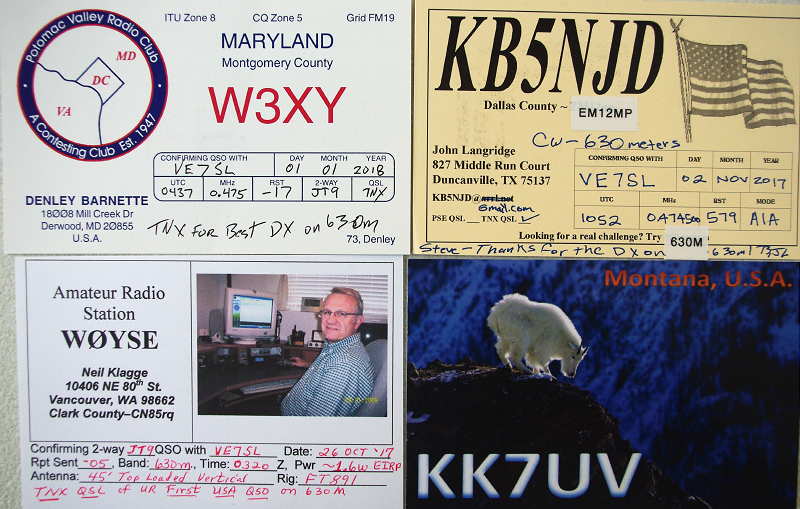
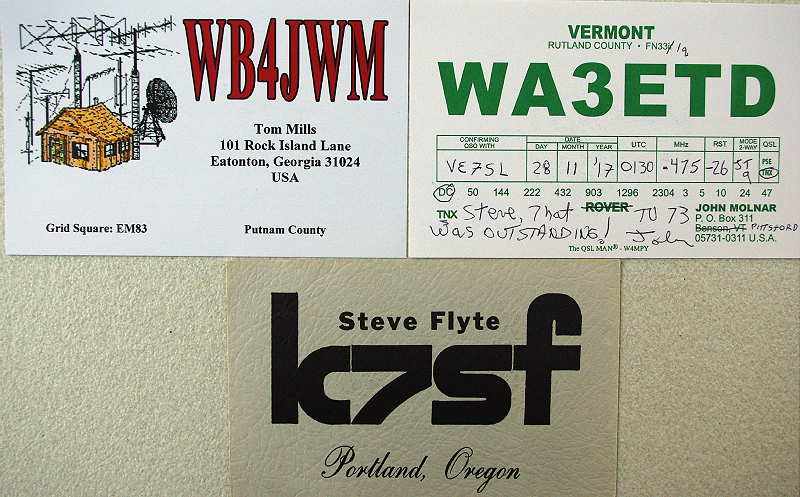
Hopefully the band will see an increase in CW activity next year as activity continues to grow. It is certainly much easier to get a capable CW signal on the air than a digital one and that is what many decided to do to get a quick start, while going the transverter route was the method chosen by most.
After being active all winter, the biggest surprise for me about 630m was just how little actual power is needed to exchange coast-to-coast signals, especially when using the weak-signal digital JT9 QSO mode.
Almost every new station that I worked was running less than 100 watts of total per output (TPO). A large number of these stations were in the 20 watt TPO range which I really found astounding, considering the relatively poor efficiencies of typical backyard antenna systems on this band. Propagation, always the great equalizer, was certainly playing a major role at times and watching conditions change from night to night was an education in itself.
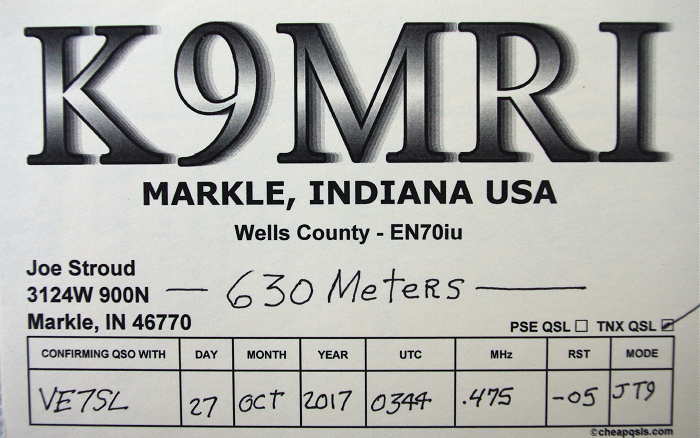 |
| K9MRI - 22W / 72' vertical wire / 140' tophat (72' x -140') |
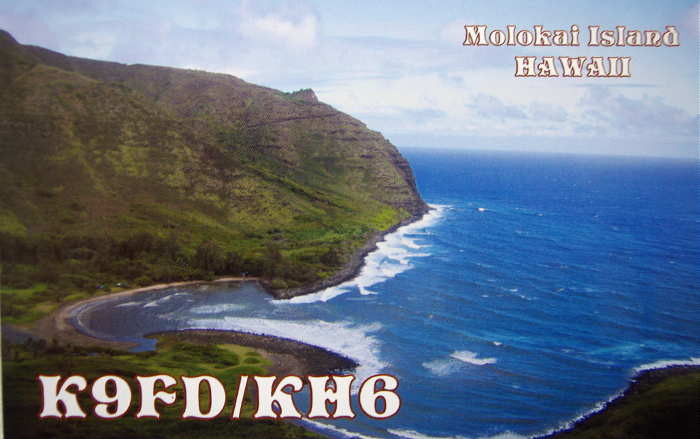 |
| K9FD/KH6 - 100W / 70' x 70' inverted-L |
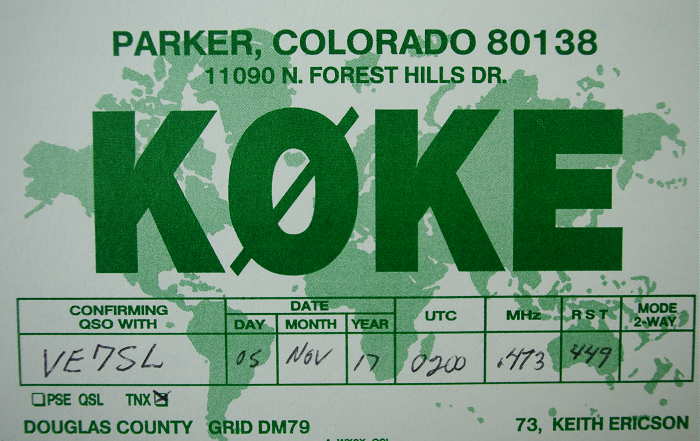 |
| K0KE (CW) - 75W / 70' x 50' inverted-L |
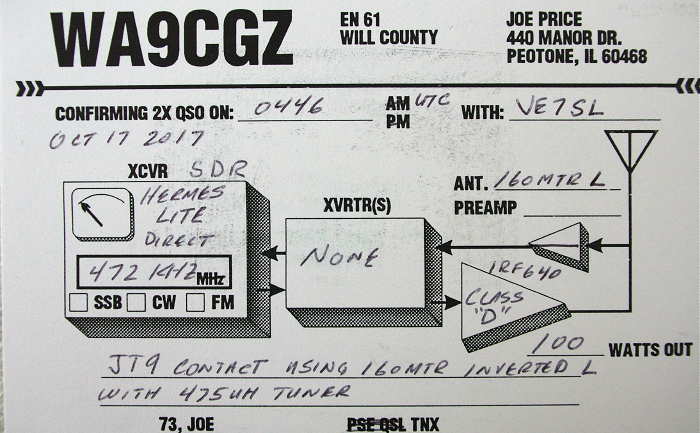 |
| WA9CGZ - 100W / base-loaded 160m inverted-L |
 |
| N1BUG - 20W / inverted-L |
 |
| KC3OL - 15W / base-loaded 'T' |
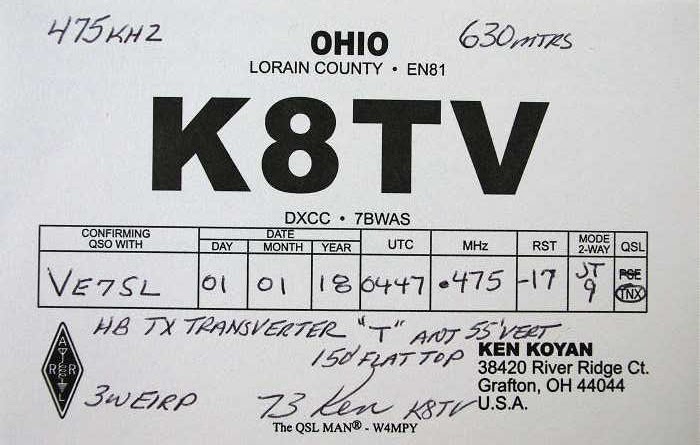 |
| K8TV - 3W eirp / 55' x 150' 'T' |
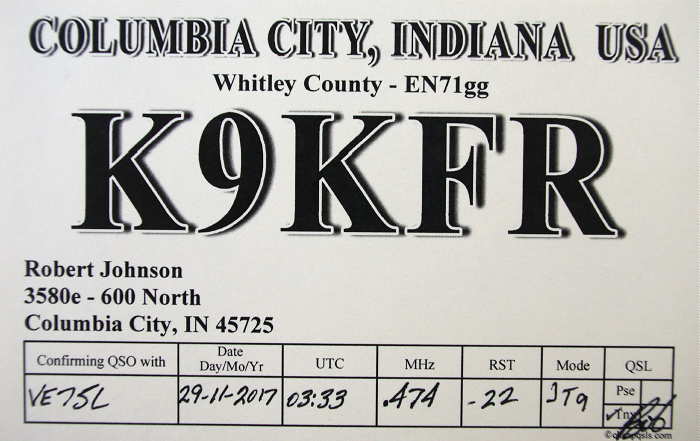 |
| K9KFR - 20W / 80' wire vertical |
 |
| KA7OEI (CW) - 25W / 200' circular loop at 30' |
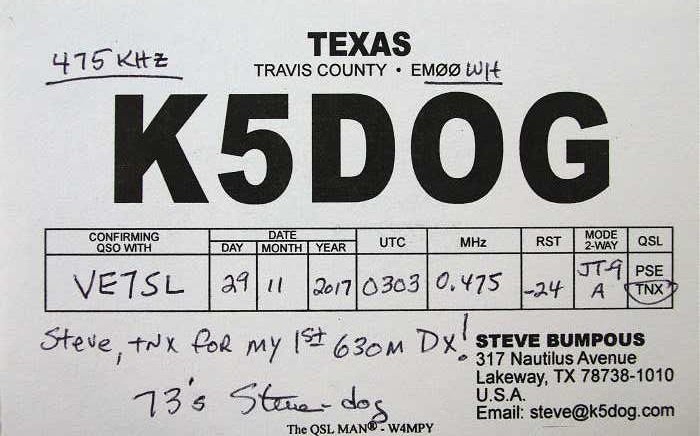 |
| K5DOG - 16W / 275' vertical loop |
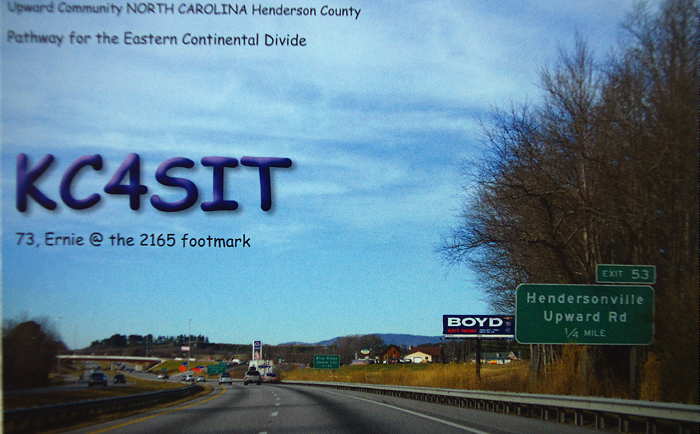 |
| KC4SIT - 60W / inverted-L |
Although Canada's west coast is now well-represented on 630m, it would be really great to see some interest and station building from provinces to the east ... VE6, VE5, VE4 ... The fast-approaching warmer weather should provide the ideal opportunity to get any needed antenna work squared away before the next DX season begins along with its anti-antenna building winter weather!
If you are one of many amateurs that may have been contemplating some 630m work but were discouraged about antenna sizes or having to generate gobs of power, hopefully the above information will encourage you to get on the band and join the fun.
You can find more information that may be helpful in your quest via the 630m links on the right side of my blog page or by clicking here.
CLE 230 Results
If you have joined the NDB List group, a copy of these will have already been sent to your mailbox.
It seems that compared to the last time these same frequencies were searched (CLE 213 Nov '16), my results were a little poorer, with 36 beacons heard this time versus 52 for the previous effort.
Propagation varied over the three night event depending upon what part of the world you were listening from and as usual, when there has been some recent coronal hole induced geomagnetic disturbance, the further away from the auroral zone you were, the better the prop seemed to be. The third and final night saw summer-like lightning noise for most North American listeners and the next several CLE weekends will be lucky to escape these rising levels until late in the fall ... but don't give up as there can be some great propagation in the summer and those quiet nights do come around when you least expect them.
In spite of the poor propagation here, there were some unusual quirks. Many of the 25 watt, normally easy NDBs from the central and southern states, were missing in action ... yet on all three nights, both FIS in Key West, Florida and SQT, up the coast on Florida's central eastern shoreline, were easy copy for several hours.
I can only guess that the reason for this is that both of these are 'big' beacons ... big antennas and power in the 300W plus class. They just managed to power through in spite of the poor propagation.
 |
| FIS - 332 kHz Key West, Florida (aka: The 'Fish Hook' beacon) |
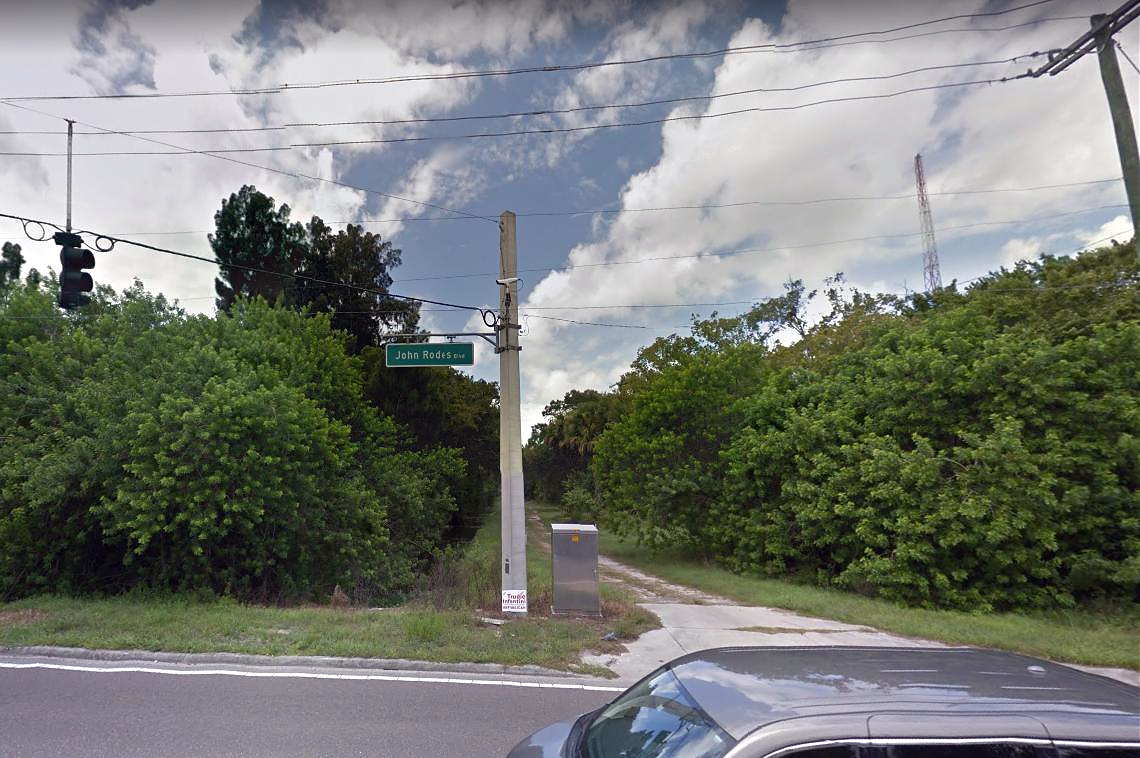 |
| SQT - 257 kHz Melbourne, Florida |
The other surprise was a loud signal on all three nights from FS in Sioux Falls, South Dakota, yet there was not even a hint of many of the other regular midwestern stations. Its reported 300W and 60' vertical is no doubt the reason.
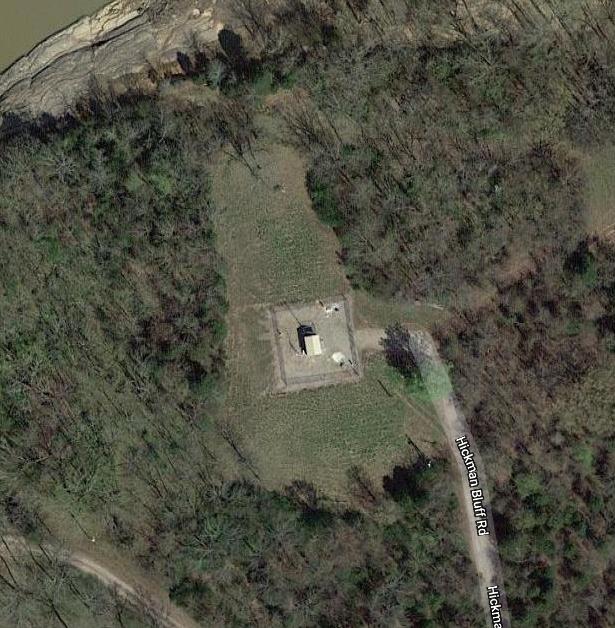 |
| FS - 245 kHz Sioux Falls, South Dakota |
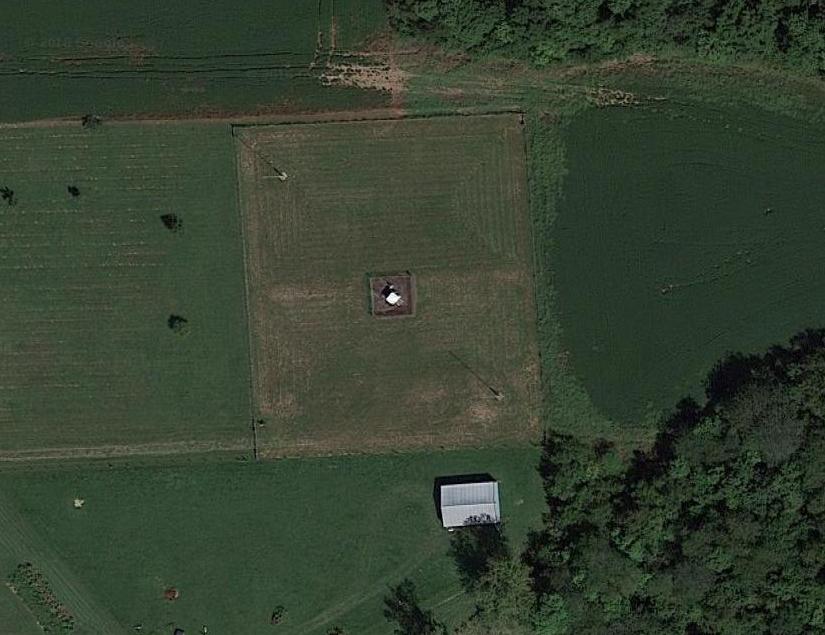 |
| DD - 253 kHz Columbus Ohio |
I managed only 36 stations but spent little time on Friday since conditions were truly dreadful.
25 04:00 240.0 BVS Burlington, WA, USA
25 08:00 241.0 YLL Lloydminster, AB, CAN
25 04:00 242.0 ZT Port Hardy, BC, CAN
25 04:00 242.0 XC Cranbrook, BC, CAN
25 07:00 244.0 TH Thompson, MB, CAN
25 05:00 245.0 YZE Gore Bay, ON, CAN
25 13:00 245.0 HNS Haines, ALS
25 06:00 245.0 FS Sioux Falls, SD, USA
25 08:00 245.0 CB Cambridge Bay, NU, CAN
25 08:00 245.0 AVQ Marana, AZ, USA
25 06:00 246.0 ZXJ Fort St. John, BC, CAN
25 07:00 248.0 ZZP Queen Charlotte Is, BC, CAN
25 04:00 248.0 WG Winnipeg, MB, CAN
25 07:00 248.0 QL Lethbridge, AB, CAN
25 07:00 248.0 QH Watson Lake, YT, CAN
25 09:00 248.0 PQF Mesquite, TX, USA
25 10:00 250.0 FO Flin Flon, MB, CAN
25 04:00 251.0 YCD Nanaimo, BC, CAN
25 11:00 251.0 OSE Bethel, ALS
25 04:00 251.0 AM Amarillo, TX, USA
25 07:00 253.0 GB Marshall, MN, USA
25 09:00 253.0 DD Commercial Point, OH, USA
25 09:00 254.0 ZYC Calgary, AB, CAN
25 09:00 254.0 SM Fort Smith, AB, CAN
25 09:00 254.0 EV Inuvik, NT, CAN
25 06:00 256.0 LSO Kelso, WA, USA
25 08:00 256.0 EB CFB Edmonton, AB, CAN
25 04:00 257.0 XE Saskatoon, SK, CAN
26 06:00 257.0 SQT Melbourne, FL, USA
25 04:00 257.0 LW Kelowna, BC, CAN
25 04:00 257.0 HCY Cowley, WY, USA
25 04:00 258.0 ZSJ Sandy Lake, ON, CAN
25 09:00 420.0 FQ East Chain, MN, USA
26 06:00 421.0 VLY McKenney, TX, USA
26 06:00 426.0 EN Council Bluffs, IA, USA
25 07:00 428.0 POH Pocahontas, IA, USA
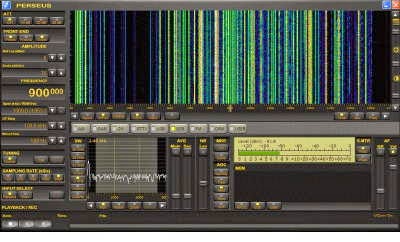
As usual, my receiver of choice was the Perseus SDR in combination with my MF inverted-L, tuned to 300kHz.
The very active NDB Group.io List is a great place to learn more about the 'Art of NDB DXing' or to meet other listeners in your region. There is a lot of good information available there and new members are always very welcome. As well, you can follow the results of other CLE participants from night to night as propagation is always an active topic of discussion.
Hunting For NDBs In CLE 230
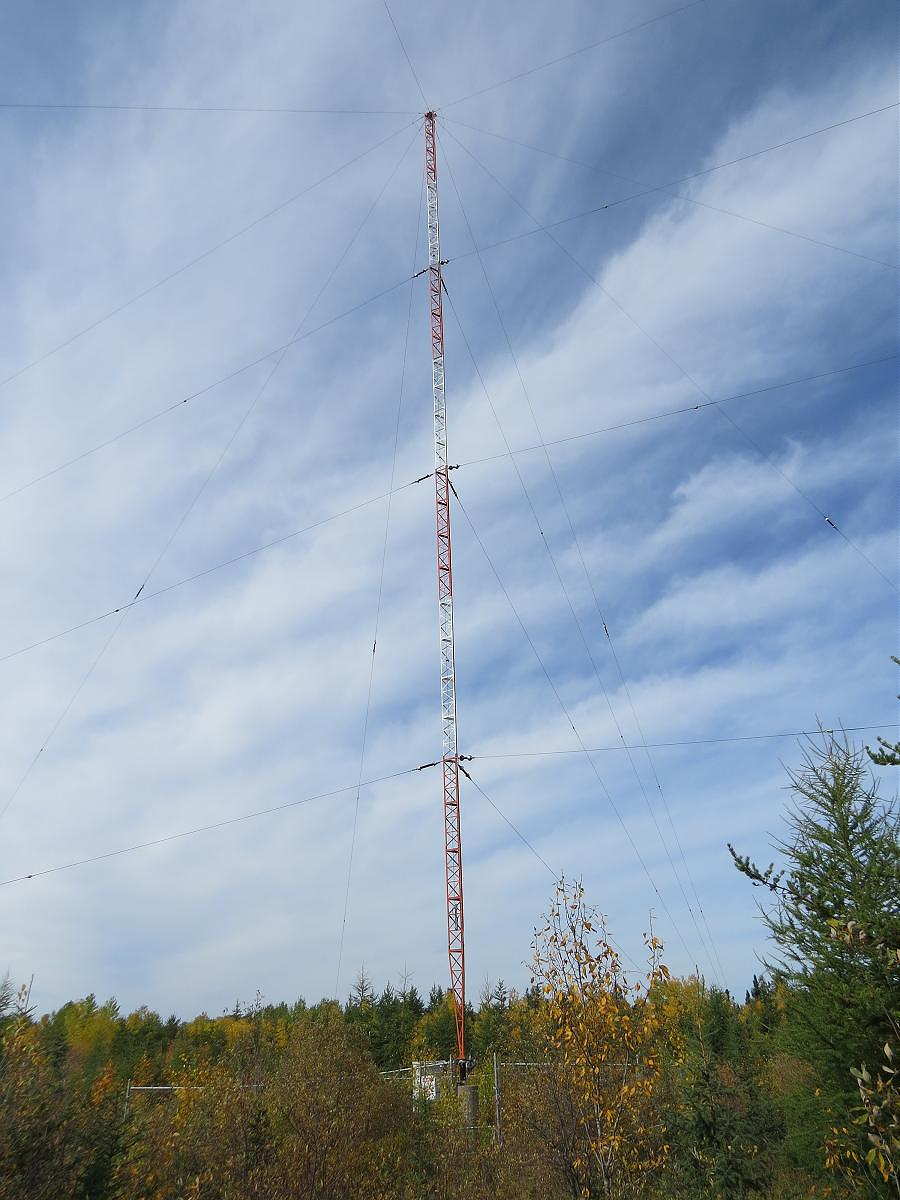 |
| ZSJ - 258 courtesy: http://www.ve3gop.com/ |
This coming weekend will see another monthly CLE challenge. This time the hunting grounds will be: 240.0 - 259.9 kHz and 420.0 - 439.9 kHz.
For those unfamiliar with this monthly activity, a 'CLE' is a 'Co-ordinated Listening Event', as NDB DXers around the world focus their listening time on one small slice of the NDB spectrum.
An easy challenge in this one is to hear the Sandy Lake (ONT) NDB, 'ZSJ', on 258 kHz. At 500W and a 150' vertical, it's well-heard throughout North America. Listen for its upper-sideband CW identifier (with your receiver in the CW mode) on 258.408 kHz.
Hopefully the propagation will co-operate but the Sun has been doing some strange things once again this week, as Cycle 24 continues its downward trend.
If you are interested in building a system for the new (U.S.) 630m band, the CLE will give you the chance to test out your MF receiving capabilities and compare against what others in your area might be hearing.
When tuning for NDBs, put your receiver in the CW mode and listen for the NDB's CW identifier, repeated every few seconds. Listen for U.S. NDB identifiers approximately 1 kHz higher or lower than the published transmitted frequency since these beacons are modulated with a 1020 Hz tone approximately.
For example, 'AA' in Fargo transmits on 365 kHz and its upper sideband CW identifier is tuned at 366.025 kHz while its lower sideband CW ident can be tuned at 363.946 kHz. Its USB tone is actually 1025 Hz while its LSB tone is 1054 Hz.
Often, one sideband will be much stronger than the other so if you don't hear the first one, try listening on the other sideband.
Canadian NDBs normally have an USB tone only, usually very close to 400 Hz. They also have a long dash (keydown) following the CW identifier.
All NDBs heard in North America will be listed in the RNA database (updated daily) while those heard in Europe may be found in the REU database. Beacons heard outside of these regions will be found in the RWW database.
From CLE organizer Brian Keyte, G3SIA, comes the details:
Here are the brief details for our 230th Co-ordinated Listening Event.
In the last Event we used a very big frequency range - 50 kHz.
This time we have 40 kHz to search in, a wide range again, but without QRM from the DGPS beacons and relatively free of NDBs too, all giving us some 'easy listening'?
Days: Friday 23 March to Monday 26 March
Times: Start and end at midday, your LOCAL TIME
Range: 240.0 - 259.9 kHz plus 420.0 - 439.9 kHz
(BOTH ranges are for ALL listeners)
Please listen for the NDBs whose nominal frequencies are in those ranges, plus any UNIDs you hear there.
The LF range will be very challenging from most of Europe.
The HF range will be very challenging from most of North America and from Australia.
S E Asia has some in both ranges.
First-time CLE logs will also be very welcome from anyone, anywhere.
Send your final CLE log to the List, preferably as a plain text email, not in an attachment, with CLE230 and FINAL at the start of its title.
Please show on EVERY LINE of your log:
# The full Date (or Day no.) and UTC (the day changes at 00:00 UTC).
# kHz (show the beacon's nominal published frequency if you know it)
# The Call Ident.
Other optional details, Location, Distance, etc., go LATER in the same line (or in footnotes). Any extra details about UNIDs, especially strong ones that may be near to you (maybe their approximate direction, etc.) will help us to discover more about them. Please make your log useful to old and new members alike by ALWAYS including your own location and brief details of the equipment and aerial(s) that you were using.
Good listening
Brian
---------------------------------------------------------------------
From: Brian Keyte G3SIA ndbcle'at'gmail.com
Location: Surrey, SE England (CLE co-ordinator)
---------------------------------------------------------------------
If you are interested in some remote listening - maybe due to local difficulties - you could use any one remote receiver for your loggings, stating its location and with the owner’s permission if required. A remote listener may NOT also use another receiver, local or remote, to make further loggings for the same CLE.
-------------------------------------------------------------------
These listening events serve several purposes. They:
- determine, worldwide, which beacons are actually in service and on-the-air so the online database can be kept up-to-date
- determine, worldwide, which beacons are out-of-service or have gone silent since the last CLE covering this range
- will indicate the state of propagation conditions at the various participant locations
- will give you an indication of how well your LF/MF receiving system is working
- give participants a fun yet challenging activity to keep their listening skills honed
*** NEWS FLASH ***
The Yahoo ndblist Group has just been moved to Groups.io and The NDB List Group will now be found there! The very active group is a great place to learn more about the 'Art of NDB DXing' or to meet other listeners in your region. There is a lot of good information available there and new members are always very welcome. As well, you can follow the results of other CLE participants from night to night as propagation is always an active topic of discussion.
You need not be an NDB List member to participate in the CLEs and all reports, no matter how small, are of much value to the organizers.
Remember - 'First-time' logs are always VERY welcome!
Reports may be sent to the NDB List Group or e-mailed to CLE co-ordinator, Brian Keyte (G3SIA), whose address appears above. If you are a member of the group, all final results will also be e-mailed and posted there.
Please ... give the CLE a try ... then let us know what NDB's can be heard from your location! Your report can then be added to the worldwide database to help keep it up-to-date.
Have fun and good hunting!
My 2018 Novice Rig Roundup (NRR) Highlights
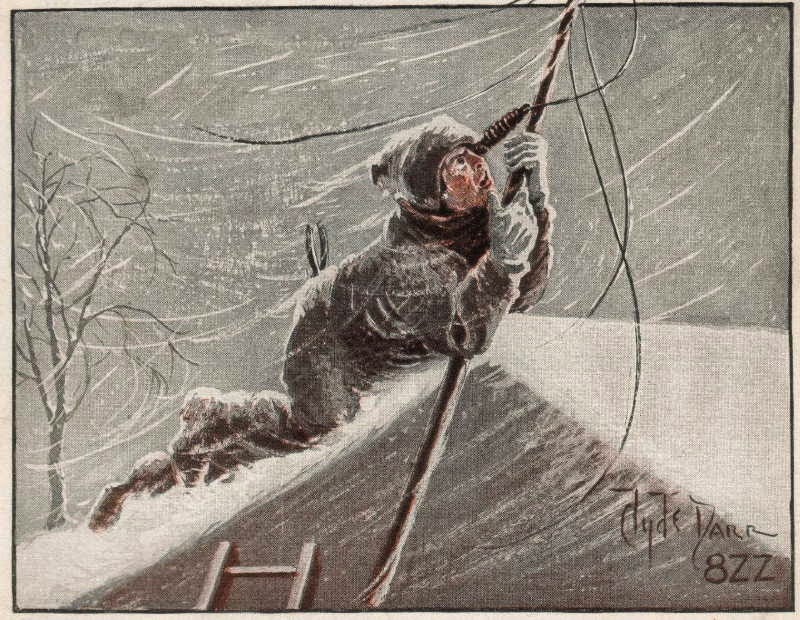 |
| courtesy: arrl.org |
Well this year's NRR has come and gone, providing a full nine days of CW fun for those of us that love old radios.
Once again, the ether filled with signals spawned from the old classic Novice-class workhorses that many of today's 'seasoned' amateurs used in their first stations, way back in their teen years. In many respects, the NRR is as close to a real time machine that you'll find, allowing participants to experience the joys, and sometimes the frustrations, of operating CW with their favorite old rigs from the past.
For me, just like last year, the NRR once again provided many notable highlights over the nine day event.
Almost topping the list was just experiencing the variety of old classics and hearing how well almost all of them sounded. Numerous Knight T-60s, Drake 2NTs, Heath DX-40s, Johnson Adventurers and Eico 720s, along with a nice variety of homebrew MOPAs and one-tube power oscillators graced the nightly airwaves. These oft-forgotten shelf-queens always seem to develop super-powers, far beyond their expectations, when the NRR rolls around!
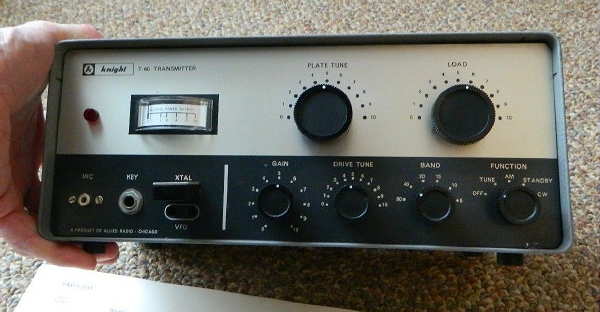
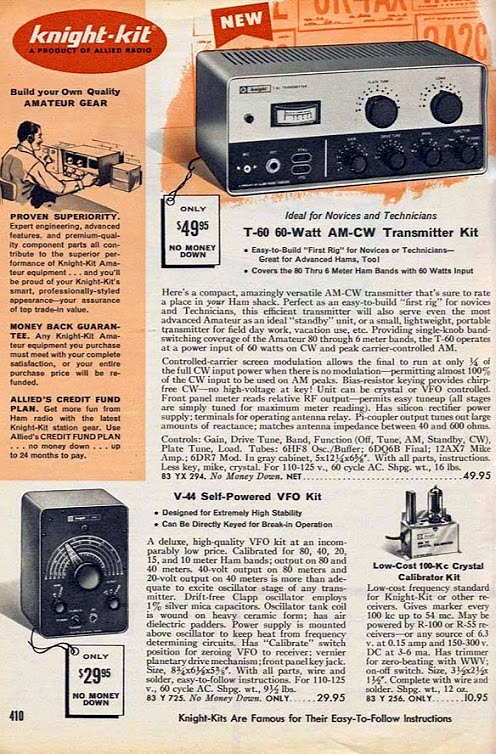
I was really surprised to work so many T-60s, a small and inexpensive 60 watt transmitter kit from 1962 using a popular 6DQ6 television sweep tube ... one never expected to achieve such RF greatness! I was very impressed with every one that I heard.
What radio-struck pre-Novice teen, dreaming about getting on the air, could resist a clever ad like this.
Scott, KA9P's 80m T-60 signal sounded as sweet as it looks in his 2018 setup, paired with his Heathkit HR-10B inhaler.
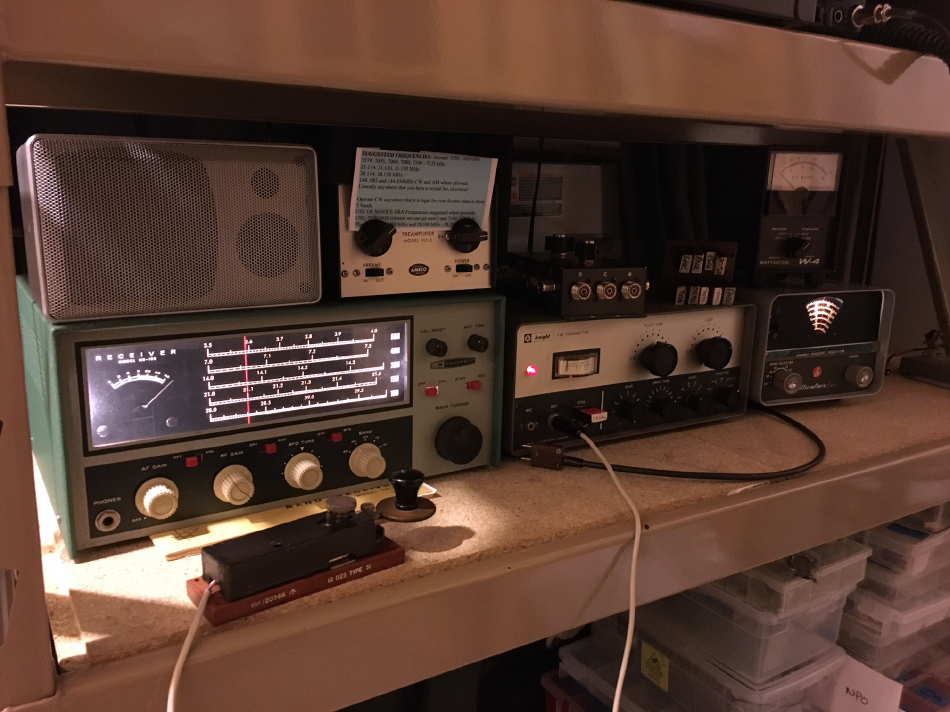 |
| KA9P 2018 NRR station with RAF Vulcan bomber Type 51 hand pump |
Right up there with the plethora of T-60s was the Drake 2NT, another great sounding radio and also my choice for this year's event. My summer refurbishing project, described here, proved a worthy companion, although my much-treasured VF-1 VFO's short term drift probably had my 2NT getting red in the face whenever I took her off of crystal control to scurry around the band, seeking out the CQ'ers. I've had a love-hate relationship with the VF-1 ever since buying my first one back in '63!
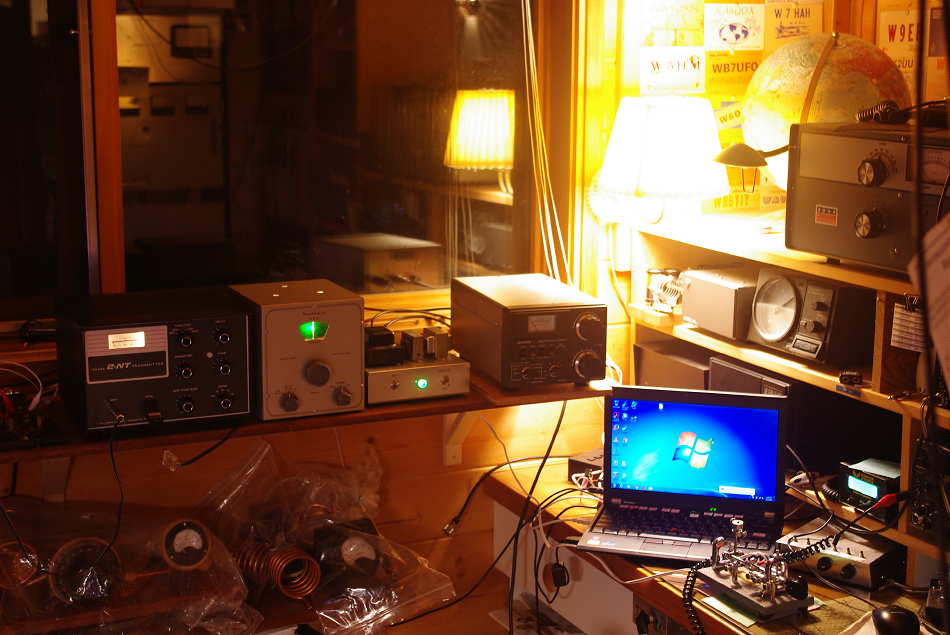 |
| VE7SL 2018 NRR with 2NT, VF-1 and my Original '63 Vibroplex |
Yet another 2NT packed a powerful punch from West Virginia, keyed by Dave, W3NP, when we exchanged 579 reports on 40m, 45 minutes before sunset.
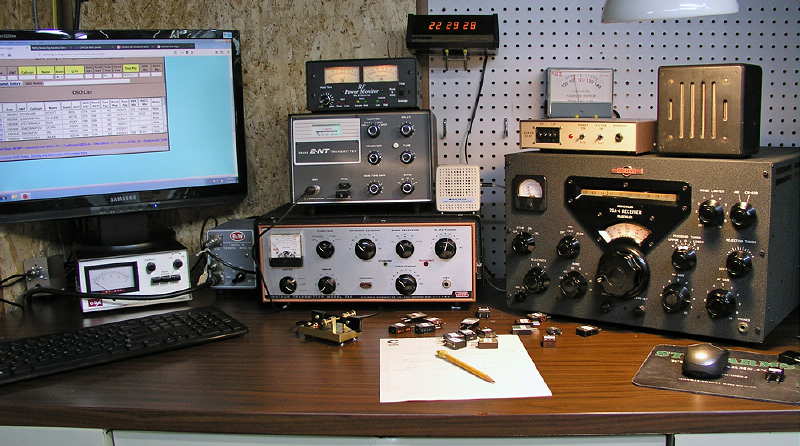 |
| W3NP - 2018 NRR setup |
I made three contacts on 15m this year: W5IQS in Texas, K2YWE in Maryland and WN4NRR in Florida, whose S9 reply to my 'CQ NRR' just about took my head off ... what a nice surprise to hear the booming signal from Bry's 2NT powerhouse. Dan, K2YWE, was no slouch either, as his Globe Scout was music to my ears when his signal quickly rose out of the noise just long enough to make the coast-to-coast journey. If the predictions for future solar cycles become reality, there may be many more NRRs before we experience the magic of 15m once again.
 |
| K2YWE's Globe Scout and Adventurer were worked on all three bands! |
My NRR exchanges with George, N3GJ (KA3JWJ) in Pennsylvania, truly demonstrated just how well the low bands were performing. More than an hour before my local sunset, I responded to his 569 40m 'CQ NRR' only to learn that his signal, now reaching a solid 579, was coming from an original Ameco AC-1! This one-tube crystal-controlled power oscillator has, over the years, reached Holy Grail status among many amateurs. Originals are guarded like precious jewels and handed down from father to son ... or in George's case, from uncle to nephew!
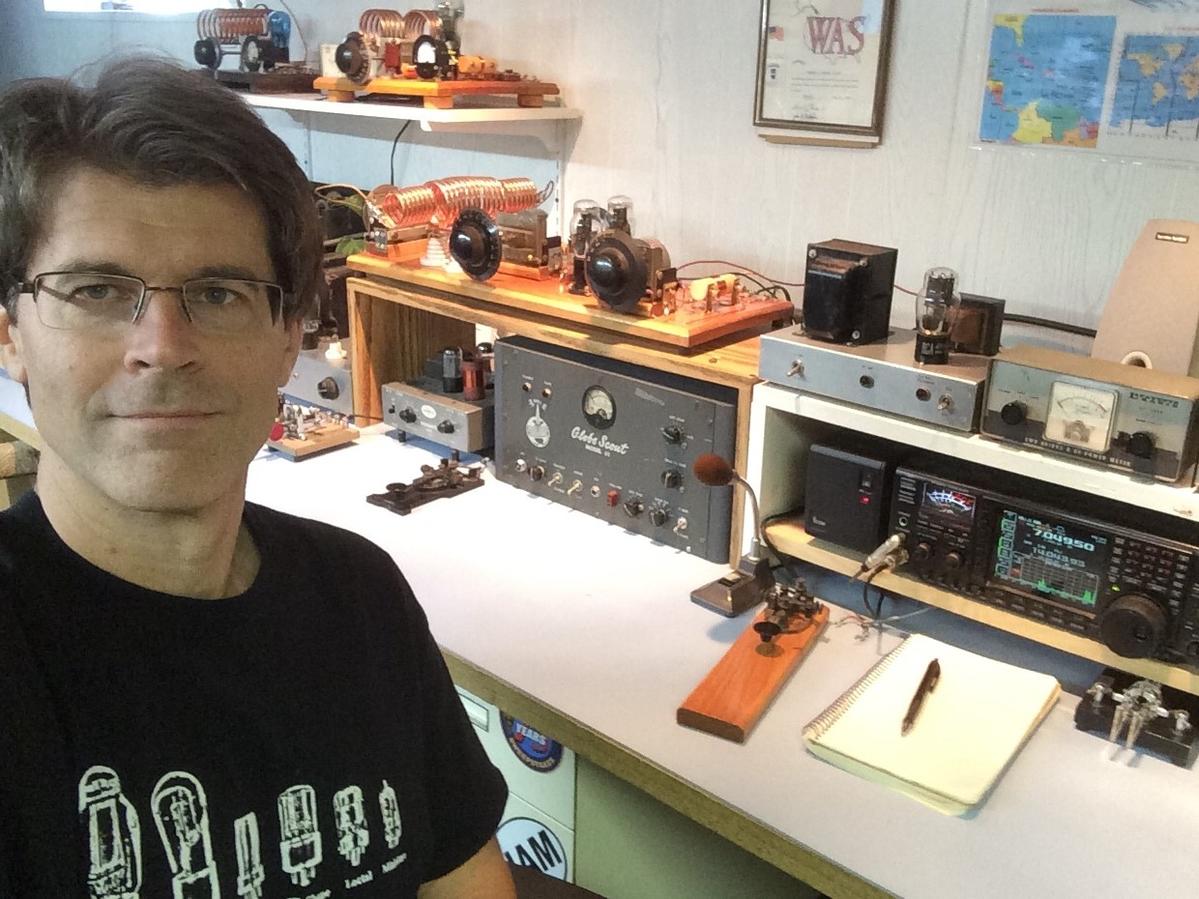 |
| N3GJ and his all powerful original AC-1 |
Heathkits were plentiful too, with the DX-60 seeming to be the rig of choice, often paired with the matching HG-10 VFO. Both Mark, VA7MM and Gary, W8PU, packed a wallop with these fine examples.
 |
| VA7MM - 2018 NRR set-up |
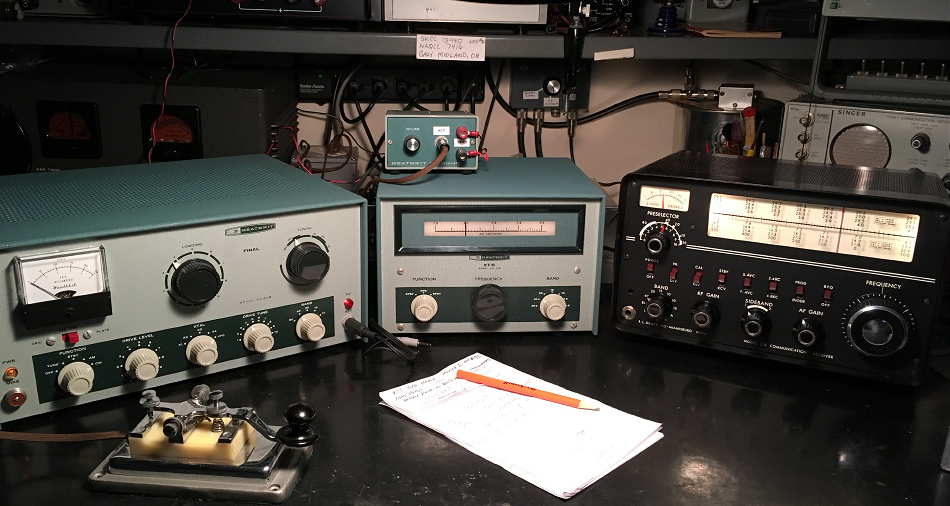 |
| W8PU - 2018 NRR set-up |
But it wasn't just DX-60s representing Benton Harbor engineering in the NRR. All of these neat old Heaths made it out to the west coast, sometimes on both 40 and 80. KN8RHM's (Rick) HW-16 made it here on 40m with a solid signal almost every night, while KE4OH (Steve) sported a modernized DX-20 in the form of Heath's HX-11. Steve even received the highly-treasured 'OO' report for his NRR chirp ... good job!
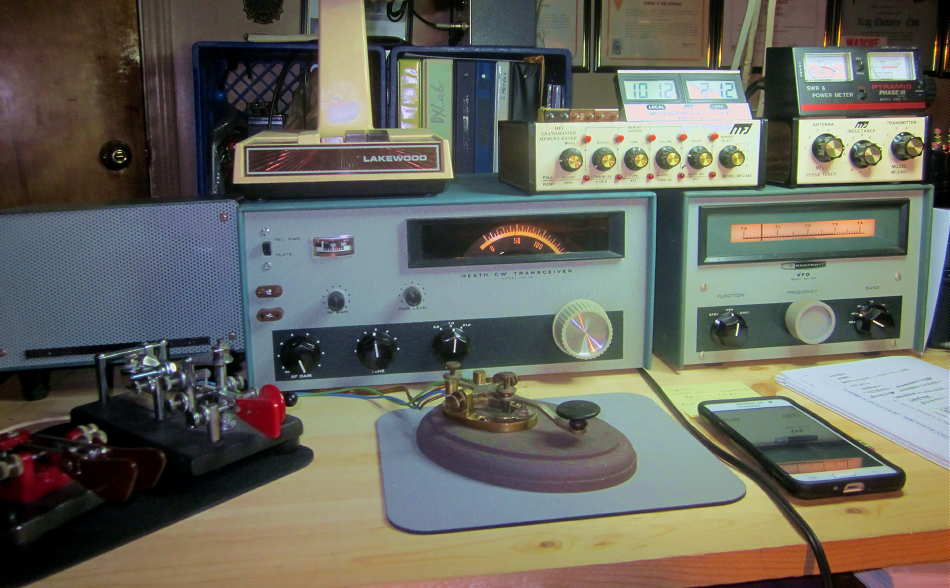 |
| KN8RHM - HW-16 NRR set-up |
 |
| KE4OH - HX-11 NRR station |
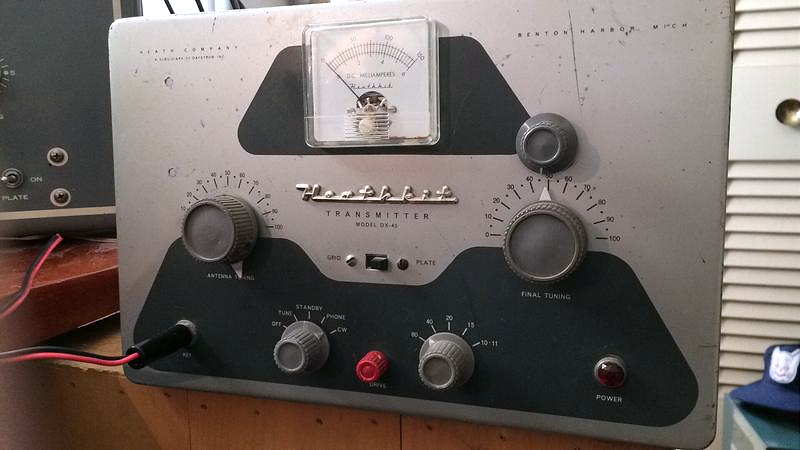 |
| N3PDT - DX-40 NRR transmitter |
Rich, WN7NRR / AG5M operating in nearby Washington state put some of his 44 crystals to work with his HW-16 ... that's some collection!
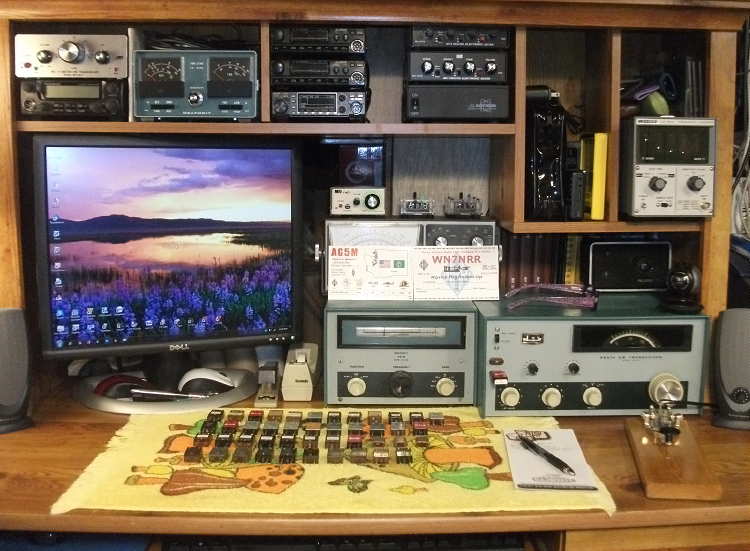 |
| WN7NRR - HW-16 NTT set-up |
Howie, WB2AWQ in Reno, was using his homebrew pair of 807s, driven with a Millen 90700 swing-arm VFO from 1945. Most shacks worldwide, including the Novices, found plenty of use for the 807 as they were dirt-cheap in the post war surplus market. The filament has a beautiful illumination and if a bit gassy as most are by now, emit a wonderous blue glow with each press of the key.
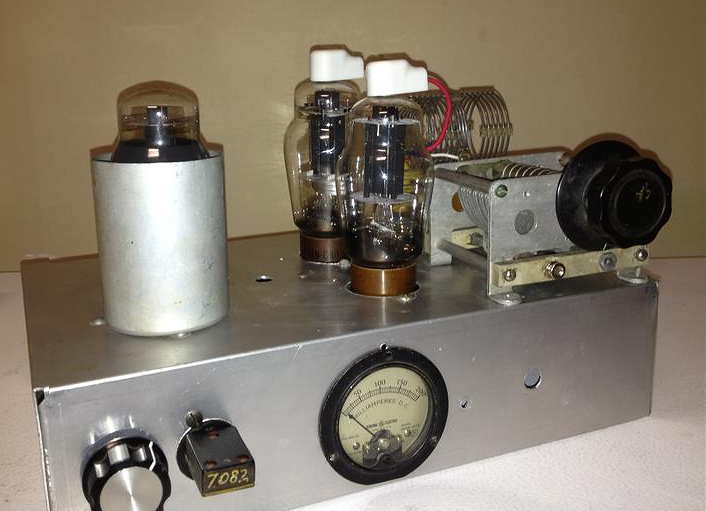 |
| WB2AWQ - 807s |
 |
| Millen VFO from 1945 at WB2AWQ |
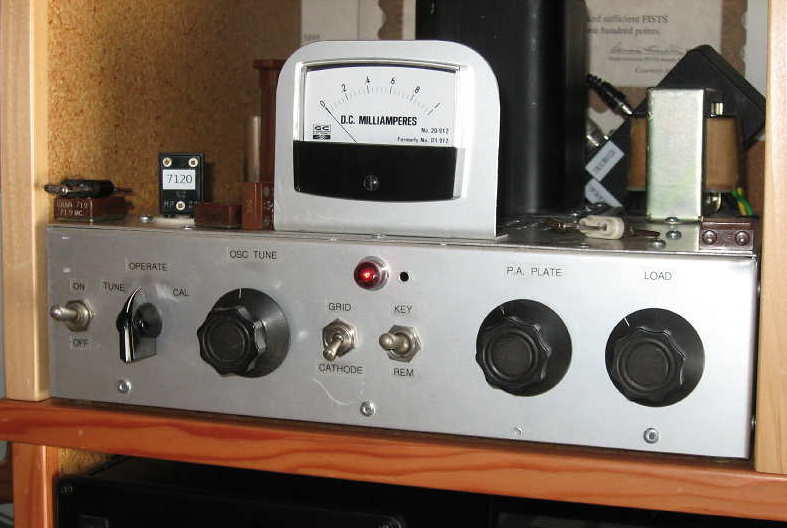 |
| KD7JG's 1625 NRR mainstay |
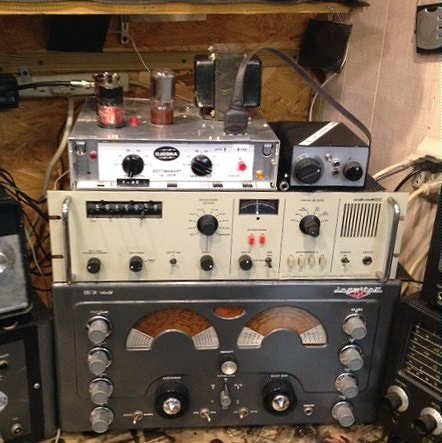 |
| K4IBZ's 10 watter |
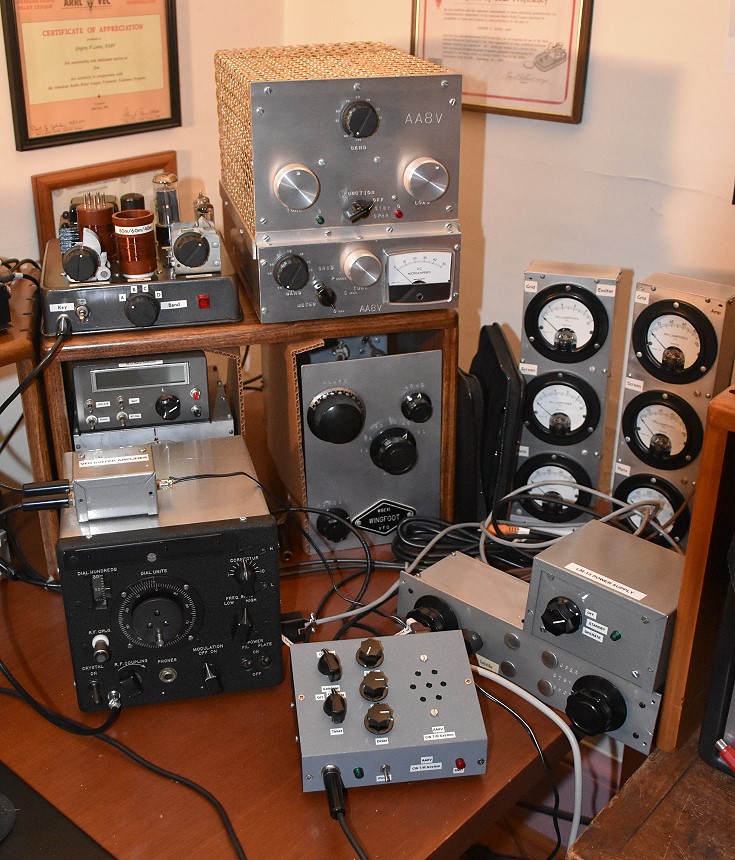 |
| AA8V's homebrew NRR stack |
 |
| VE3BDV / VE3AWA - 50C5 Bare - Essentials power oscillator |
I finished up the NRR with 123 contacts, a lot better than last year's event when I was running the Longfeller at 5 watts.
If you think that you might enjoy participating in the next event then now is the time to start preparing ... just 353 more sleeps until the 2019 NRR begins!!
Condo Hamming, The NRR and Ron’s Logs
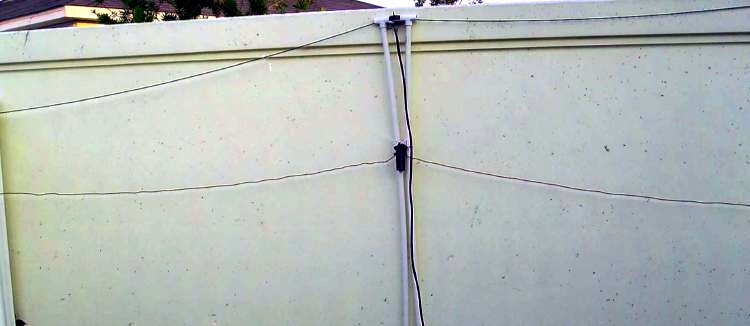 |
| courtesy: K4VRC Group |
Rick, KB2NAT, describes the learning curve in his 'How To Overcome Some Condo Issues' post.
Amateurs contemplating downsizing to a restricted development or those finding themselves in a similar situation to Rick will likely soon be subjected to more noise, less space, more neighbours and an abundance of rules. Hopefully the comments of Rick and others will be helpful if this is your situation.
For many restricted hams, Mag loops appear to be a popular choice and one of the comments points to a good deal of information on building one for yourself. The Villages Amateur Radio Club (K4VRC) group's 'resources' link will provide some interesting ideas for restricted antenna builders. As well, they have put together an informational presentation, full of great antenna ideas for those contemplating ways to get on the air from antenna-restricted locations.
If you live in the USA, the 'Freedom to Display the American Flag Act of 2005' has been used by many antenna-restricted hams, to legally erect their own 'antenna flagpole'! It may be an easy route for a nice antenna system for you as well.
The 'Novice Rig Roundup' Starts Tomorrow!
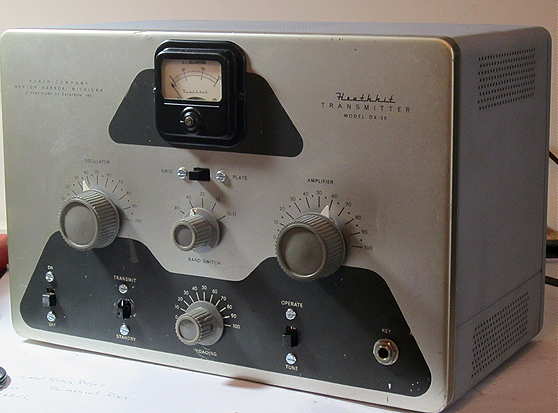
Just a reminder that 9 days of CW operating fun begins tomorrow afternoon. After last year's most enjoyable event, the NRR is now one of my 'must do' operating activities. You can read all about it here.
Ron's Logs
 |
| courtesy: California State Parks |
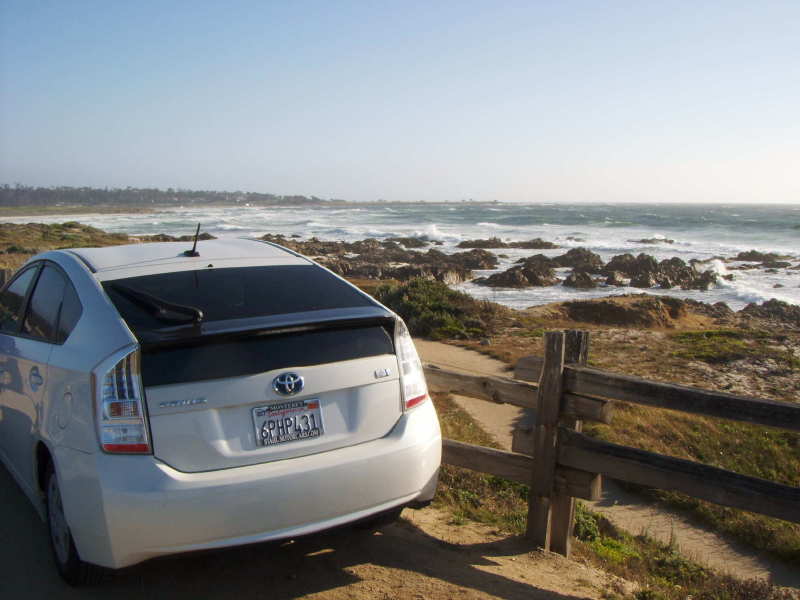
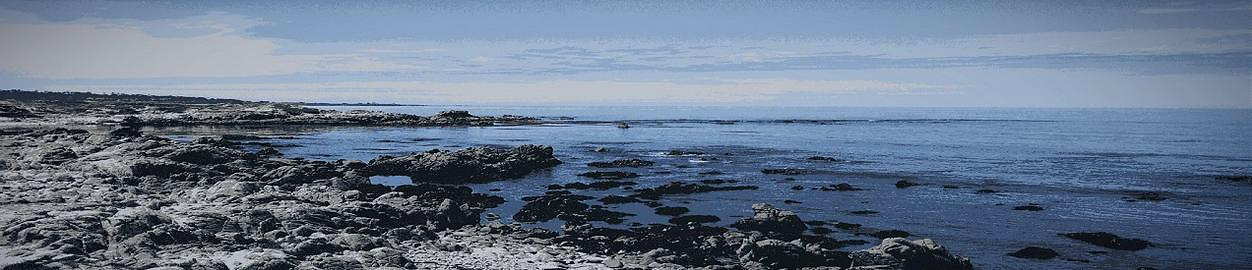
Ron lives in the seaside city of Monterey (CA) and on most mornings he makes the short pre-dawn drive to Asilomar State Beach (CA), a spectacular location on the coast.
After stringing out his 100' wire antenna on the nearby fence posts, Ron proceeds to log and record some truly exotic stuff before heading home.
Early last Fall, before being aware of Ron's daily regime, I had visited his exact location and after watching the big sea lions playing in the surf, had drooled over the location's great DX potential, little knowing that Ron had likely packed his gear up a headed home just a few hours before my arrival! I'm sure you'll be inspired to tune around the SW broadcast bands after checking out theses Group's daily posts.
Hunting For NDBs In CLE 229
 |
| YPM - 274 courtesy: VE3GOP |
This coming weekend will see another monthly CLE challenge. The hunting grounds will be the 50 kHz swath from 270 - 319.9 kHz, with much of this is being shared by DGPS signals here in North America.
The last time this range was covered was in CLE 212, back in October 2016. Conditions were particularly disturbed back then, as described in my CLE 216 Results blog at the time. Propagation should be much better this time, I hope!
For those unfamiliar with this monthly activity, a 'CLE' is a 'Co-ordinated Listening Event', as NDB DXers around the world focus their listening time on one small slice of the NDB spectrum.
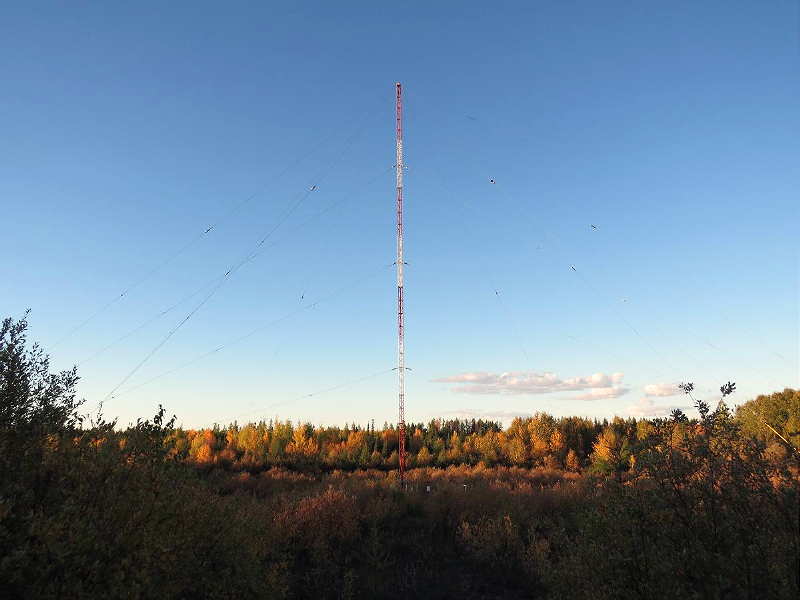
A nice challenge in this one is to hear the Pikangikum (ON) NDB, 'YPM', on 274 kHz. Although just a 25-watter, thanks to its large vertical, YPM is well-heard throughout North America. Will you log it as well?
Look for 'YPM's upper-sideband CW identifier, repeated every 10.5 seconds, on 274.352 kHz with your receiver in the CW mode.
If you are interested in building a system for the new (U.S.) 630m band, the CLE will give you the chance to test out your MF receiving capabilities and compare against what others in your area might be hearing. You will soon know how well your system is hearing.
When tuning for NDBs, put your receiver in the CW mode and listen for the NDB's CW identifier, repeated every few seconds. Listen for U.S. NDB identifiers approximately 1 kHz higher or lower than the published transmitted frequency since these beacons are modulated with a 1020 Hz tone approximately.
For example, 'AA' in Fargo transmits on 365 kHz and its upper sideband CW identifier is tuned at 366.025 kHz while its lower sideband CW ident can be tuned at 363.946 kHz. Its USB tone is actually 1025 Hz while its LSB tone is 1054 Hz.
Often, one sideband will be much stronger than the other so if you don't hear the first one, try listening on the other sideband.
Canadian NDBs normally have an USB tone only, usually very close to 400 Hz. They also have a long dash (keydown) following the CW identifier.
All NDBs heard in North America will be listed in the RNA database (updated daily) while those heard in Europe may be found in the REU database. Beacons heard outside of these regions will be found in the RWW database.
Here are the final details from CLE organizer Brian Keyte, G3SIA:
Hello all
Our 229th co-ordinated listening event is this weekend, covering a 50 kHz
frequency range - about three times wider than usual.
Days: Friday 23 February - Monday 26 February
Times: Start and end at midday, your LOCAL time
Range: 270.0 - 319.9 kHz
Targets: NDBs (NOT the DGPS beacons)
We can expect very good propagation, but in part of the frequency range
it might be quite a challenge to tease out the NDB signals from among
the DGPS ones.
Any first-time CLE logs will be very welcome, as always.
Please log the normal NDBs you can identify that are listed in the range
(it includes 270 kHz but not 320 kHz).
Please send your CLE log to NDB List, if possible as a plain text email
and not in an attachment, with 'CLE229 FINAL' at the start of its title.
Show on EVERY line of your log:
# The Date (e.g. '2018-02-23' or just '23', etc.)
# UTC (the day changes at 00:00 UTC).
# kHz - the beacon's nominal published frequency if you know it.
# The Call Ident.
Those main items can be in any order within themselves, but BEFORE any
other optional details (Location, Distance, etc.) later in the same line.
As always, give details in your log of your own location and the receiver,
aerial(s), etc. that you were using.
If you send any interim logs, be sure to send a FINAL (complete) one.
You can find anything else to help you, including seeklists for your part
of the World, from the CLE page, http://www.ndblist.info/cle.htm
Joachim or I will send the usual 'Any More Logs?' email at about 18:00 UTC
on Tuesday so that you can check that your CLE log has been found OK.
Do make sure that your log has arrived at the very latest by 09:00 UTC
next Wednesday, 28th February.
We are hoping to make all the combined results on that day.
Enjoy your listening
Brian
----------------------------------------------------------
From: Brian Keyte G3SIA ndbcle'at'gmail.com
Location: Surrey, SE England (CLE coordinator)
----------------------------------------------------------
(Reminder: You could use any one remote receiver for your loggings,
stating its location and owner - with their permission if required.
A remote listener may NOT also use another receiver, whether local
or remote, to obtain further loggings for the same CLE).
Our 229th co-ordinated listening event is this weekend, covering a 50 kHz
frequency range - about three times wider than usual.
Days: Friday 23 February - Monday 26 February
Times: Start and end at midday, your LOCAL time
Range: 270.0 - 319.9 kHz
Targets: NDBs (NOT the DGPS beacons)
We can expect very good propagation, but in part of the frequency range
it might be quite a challenge to tease out the NDB signals from among
the DGPS ones.
Any first-time CLE logs will be very welcome, as always.
Please log the normal NDBs you can identify that are listed in the range
(it includes 270 kHz but not 320 kHz).
Please send your CLE log to NDB List, if possible as a plain text email
and not in an attachment, with 'CLE229 FINAL' at the start of its title.
Show on EVERY line of your log:
# The Date (e.g. '2018-02-23' or just '23', etc.)
# UTC (the day changes at 00:00 UTC).
# kHz - the beacon's nominal published frequency if you know it.
# The Call Ident.
Those main items can be in any order within themselves, but BEFORE any
other optional details (Location, Distance, etc.) later in the same line.
As always, give details in your log of your own location and the receiver,
aerial(s), etc. that you were using.
If you send any interim logs, be sure to send a FINAL (complete) one.
You can find anything else to help you, including seeklists for your part
of the World, from the CLE page, http://www.ndblist.info/cle.htm
Joachim or I will send the usual 'Any More Logs?' email at about 18:00 UTC
on Tuesday so that you can check that your CLE log has been found OK.
Do make sure that your log has arrived at the very latest by 09:00 UTC
next Wednesday, 28th February.
We are hoping to make all the combined results on that day.
Enjoy your listening
Brian
----------------------------------------------------------
From: Brian Keyte G3SIA ndbcle'at'gmail.com
Location: Surrey, SE England (CLE coordinator)
----------------------------------------------------------
(Reminder: You could use any one remote receiver for your loggings,
stating its location and owner - with their permission if required.
A remote listener may NOT also use another receiver, whether local
or remote, to obtain further loggings for the same CLE).
__._,_.___
Posted by: "Brian Keyte" <[email protected]>
These listening events serve several purposes. They:
- determine, worldwide, which beacons are actually in service and on-the-air so the online database can be kept up-to-date
- determine, worldwide, which beacons are out-of-service or have gone silent since the last CLE covering this range
- will indicate the state of propagation conditions at the various participant locations
- will give you an indication of how well your LF/MF receiving system is working
- give participants a fun yet challenging activity to keep their listening skills honed
Final details can be found at the NDB List website, and worldwide results, for every participant, will be posted there a few days after the event. If you are a member of the ndblist Group, results will also be e-mailed and posted there.
The very active Yahoo ndblist Group is a great place to learn more about the 'Art of NDB DXing' or to meet other listeners in your region. There is a lot of good information available there and new members are always very welcome. As well, you can follow the results of other CLE participants from night to night as propagation is always an active topic of discussion.
You need not be an ndblist member to participate in the CLEs and all reports, no matter how small, are of much value to the organizers.
'First-time' logs are always VERY welcome!
Reports may be sent to the ndblist or e-mailed to either myself or CLE co-ordinator, Brian Keyte (G3SIA), whose address appears above.
Please ... give the CLE a try ... then let us know what NDB's can be heard from your location! Your report can then be added to the worldwide database to help keep it up-to-date.
Have fun and good hunting!
__._,_._













