Author Archive
 Hunting For NDBs In CLE262
 November 18th, 2020 |
  Author:
  |
| ZYC-254 courtesy: http://www.ve3gop.com/ |
Propagation on MF has been excellent this past week and hopefully will continue to be good.
A challenge target for listeners in North America is ZYC - 254kHz in Calgary, Alberta. It's widely heard throughout North America thanks to its lower than usual modulation frequency. Listen for ZYC's upper sideband on 254.361 kHz with your receiver in the CW mode.
When tuning for NDBs, put your receiver in the CW mode and listen for the NDB's CW identifier, repeated every few seconds. Listen for U.S. NDB identifiers approximately 1 kHz higher or lower than the published transmitted frequency since these beacons are modulated with a 1020 Hz tone approximately.
For example, 'AA' near Fargo, ND, transmits on 365 kHz and its upper sideband CW identifier is tuned at 366.025 kHz while its lower sideband CW ident can be tuned at 363.946 kHz. Its USB tone is actually 1025 Hz while its LSB tone is 1054 Hz.
Often, one sideband will be much stronger than the other so if you don't hear the first one, try listening on the other sideband.
Canadian NDBs normally have an USB tone only, usually very close to 400 Hz. They also have a long dash (keydown) following the CW identifier.
All NDBs heard in North America will be listed in the RNA database (updated daily) while those heard in Europe may be found in the REU database. Beacons heard outside of these regions will be found in the RWW database. These databases have recently been re-vamped and are slicker than ever before!
From CLE coordinator Brian Keyte (G3SIA), comes the following CLE info:
Hello all,
This coming weekend we have another chance to forget the current problems for a while and enjoy a Coordinated Listening Event.
All CLE logs will be very welcome, short or long.
Days: Friday 20 Nov. - Monday 23 Nov.
Times: Start and end at midday, local time at the receiver.
Normal NDBs in the ranges:
240.0 - 259.9 kHz plus 420.0 - 439.9 kHz
(BOTH ranges are for ALL listeners)
Please log the NDBs you can identify that are listed in the ranges, plus any
UNIDs that you come across there.
You can find details of the beacons in those ranges, lists and maps, if you
go to http://www.ndblist.info/cle.htm and click on the 'CLE SEEKLIST'
link.
Send your final CLE log to [email protected] with CLE262 and FINAL in the
email title.
Please show on EVERY LINE of your log:
# The full Date (or Day no.) e.g. '2020-11-20' (or just '20')
and UTC (the day changes at 00:00 UTC)
# kHz (the beacon's nominal published frequency if you know it)
# The Call Ident.
Other optional details - Location, Distance, etc. - go LATER in the same line (or in footnotes). Please make your log useful to old and new members alike by ALWAYS including your own location and brief details of the equipment and aerial(s) that you were using.
We will send an 'Any More Logs?' email at about 20:00 UTC on Tuesday evening so you can check that your log has been found OK.
To be included in the combined results your log must have arrived by 09:00
UTC on Wednesday 25 Nov. at the very latest.
We hope to complete making the Combined Results within a day or two.
Good listening
Brian and Joachim
---------------------------------------------------------------------
From: Brian Keyte G3SIA ndbcle'at'gmail.com
Location: Surrey, SE England (CLE coordinator)
---------------------------------------------------------------------
If you are interested in some remote listening - maybe
due to local difficulties - you could use any one remote
receiver for your loggings, stating its location and with
the owner's permission if required.
( e.g. see kiwisdr.com )
A remote listener may NOT also use another receiver,
local or remote, to make more loggings for the same CLE.
These listening events serve several purposes. They
• determine, worldwide, which beacons are out-of-service or have gone silent since the last CLE covering this range
• will indicate the state of propagation conditions at the various participant locations
• will give you an indication of how well your LF/MF receiving system is working
• give participants a fun yet challenging activity to keep their listening skills honed
Final details can be found at the NDB List website, and worldwide results, for every participant, will be posted there a few days after the event.
The NDB List Group is a great place to learn more about the 'Art of NDB DXing' or to meet other DXers in your region. There is a lot of good information available there and new members are always very welcome. As well, you can follow the results of other CLE participants from night to night as propagation is always an active topic of discussion.
You need not be an NDB List member to participate in the CLEs and all reports, no matter how small, are of much value to the organizers.
Remember - 'First-time' logs are always VERY welcome!
Reports may be sent to the NDB List Group or e-mailed to CLE co-ordinator, Brian Keyte (G3SIA), whose address appears above. If you are a member of the group, all final results will also be e-mailed and posted there.
Please ... give the CLE a try ... then let us know what NDB's can be heard from your location! Your report can then be added to the worldwide database to help keep it up-to-date.
Have fun and good hunting!
BCB DX + A (Possibly) Quieter Receive Antenna
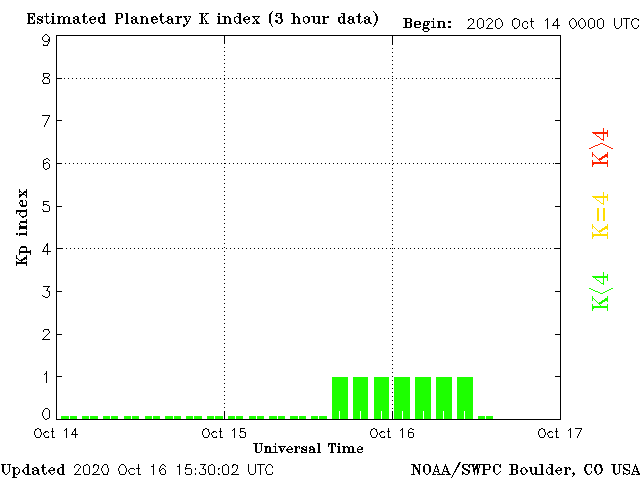
The earlier very quiet geomagnetic field has produced some amazing propagation on the AM Broadcast Band for west coast DXers. Where local blowtorches don't splatter the band, the past few nights have produced audible signals from several European countries while the mornings are filled with Asians and signals from Alaska ... yes, on the AM Broadcast Band!
The morning of October 11th was particularly good here, with 9 different stations in Alaska heard. Listen and see if you can hear the identification at the top of the hour (7 AM my time):
780 KNOM Nome https://qsl.net/ve7sl/knom.mp3
670 KDLG Dillingham https://qsl.net/ve7sl/kdlg.mp3
700 KBYR Anchorage https://qsl.net/ve7sl/kbyr.mp3
680 KBRW Barrow https://qsl.net/ve7sl/kbrw.mp3
890 KBBI Homer https://qsl.net/ve7sl/kbbi.mp3
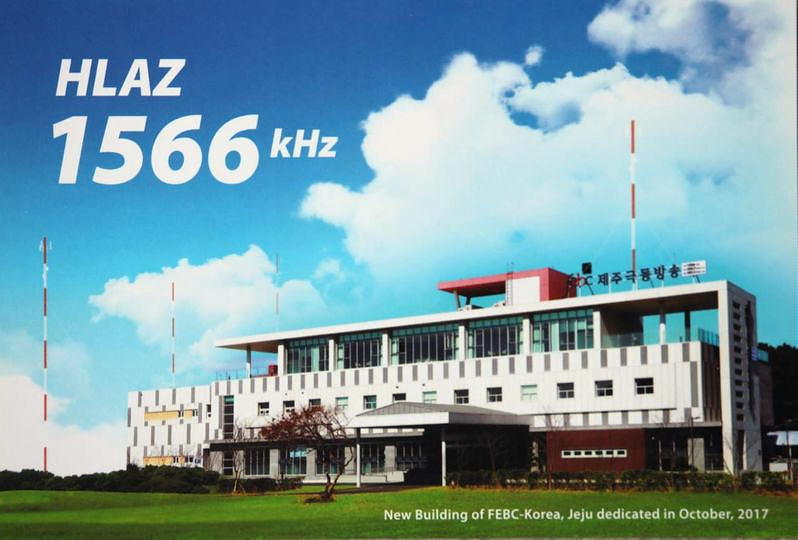
This is a short clip from HLAZ, Far East Broadcasting Company, with their 'Radio Liangyou' program in Japanese. HLAZ is located in Jeju, South Korea. They will also respond to reception reports with a nice card ... sadly a growing rarity with AM broadcasters nowadays.
These were received using my Perseus SDR and 10' x 20' active loop pointed to the NW.
Hopefully these nice conditions will continue for some time but on the other hand, I'd like to see the Sun ramp-up its sunspot production as fast as it can, which would likely put a damper on these quiet conditions. (post edit: and that's exactly what happened!)
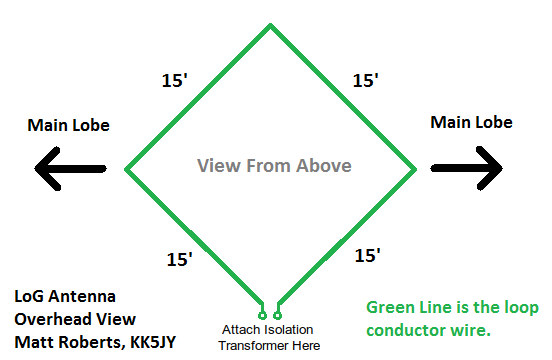
An interesting antenna that may help overcome their noise issues is described by KK5JY on his website here.
It looks simple enough to deploy and try to see if it overcomes your local noise issues. Those with underground utilities however, may find that it makes the noise worse.
 |
| courtesy: kk5jy.net |
Hunting For NDBs in CLE261
 |
| AP-378 Mayne Island, BC |
It's CLE time again!'CLE's are 'Co-ordinated Listening Events, and NDB DXers around the world focus their listening time on one small slice of the NDB spectrum.
This time the hunting ground is from 190.0 - 1740.0 kHz!
The challenge this time is to log just one (1) beacon from as many 'radio countries' as you can. In North America and other regions, an individual state or province counts as a radio 'country', so there are plenty of opportunities to fill your logbook.
Propagation on MF has been excellent this past week and hopefully will continue to be good.
A challenge target for listeners in North America is AP - 378kHz on Mayne Island, BC which is about 1/2 mile from me just down the beach! But 'AP' is a challenging target since, from what I can tell, has virtually no ground system. Although it has been heard as far south as Texas, it has never been heard further east than Nebraska. Listen for AP's upper sideband on 378.411kHz with your receiver in the CW mode.
When tuning for NDBs, put your receiver in the CW mode and listen for the NDB's CW identifier, repeated every few seconds. Listen for U.S. NDB identifiers approximately 1 kHz higher or lower than the published transmitted frequency since these beacons are modulated with a 1020 Hz tone approximately.
For example, 'AA' near Fargo, ND, transmits on 365 kHz and its upper sideband CW identifier is tuned at 366.025 kHz while its lower sideband CW ident can be tuned at 363.946 kHz. Its USB tone is actually 1025 Hz while its LSB tone is 1054 Hz.
Often, one sideband will be much stronger than the other so if you don't hear the first one, try listening on the other sideband.
Canadian NDBs normally have an USB tone only, usually very close to 400 Hz. They also have a long dash (keydown) following the CW identifier.
All NDBs heard in North America will be listed in the RNA database (updated daily) while those heard in Europe may be found in the REU database. Beacons heard outside of these regions will be found in the RWW database. These databases have recently been re-vamped and are slicker than ever before!
From CLE coordinator Brian Keyte (G3SIA), comes the following CLE info:
Our October Coordinated Listening Event is less than a week away.
Something very straightforward, but it is a first-time idea and it should be
good for everyone - including first time listeners.
It is a ‘One per Radio Country’ CLE!
Days: Friday 23 Oct. - Monday 26 Oct.
Times: Start and end at midday, local time at the receiver
Target: ONE NDB from each radio country
QRG: 190.0 - 1740.0 kHz
Yes, please log JUST ONE NDB from each radio country (not DGPS, NAVTEX,
Amateur or UNID).
All our radio countries are listed in the NDB List Website
(http://www.ndblist.info/ndbinfo/countrylist.pdf) There are 373 of them!
However most of the countries will be out of range for you and several are
without any active NDBs at all:
Region Radio
Countries
-------------- -------
N. America 66
C. America 35
S. America 20
Europe 63
Africa 68
Asia 60
Oceania 49
Antarctica 5
Int. Waters 7
-------
373
(UNIDs 8)
Even listening from the best location possible you will do very well if you
log 50 countries. Reaching 100 will be magnificent!
(If you would like one or more of our attractive listening awards, this
would be an ideal CLE -
Please see http://www.ndblist.info/ndbinfo/NDBAwardsList3.5.pdf)
Please look out for extra information in the Final Details in a few Days,
with advice on log-making, etc.
73
Brian
---------------------------------------------------------------------
From: Brian Keyte G3SIA ndbcle’at’gmail.com
Location: Surrey, SE England (CLE coordinator)
---------------------------------------------------------------------
If you are interested in some remote listening - maybe due to local difficulties - you could use any one remote receiver for your loggings,stating its location and with the owner’s permission if required.
A remote listener may NOT also use another receiver, local or remote, to make further loggings for the same CLE.
These listening events serve several purposes. They
• determine, worldwide, which beacons are out-of-service or have gone silent since the last CLE covering this range
• will indicate the state of propagation conditions at the various participant locations
• will give you an indication of how well your LF/MF receiving system is working
• give participants a fun yet challenging activity to keep their listening skills honed
Final details can be found at the NDB List website, and worldwide results, for every participant, will be posted there a few days after the event.
The NDB List Group is a great place to learn more about the 'Art of NDB DXing' or to meet other DXers in your region. There is a lot of good information available there and new members are always very welcome. As well, you can follow the results of other CLE participants from night to night as propagation is always an active topic of discussion.
You need not be an NDB List member to participate in the CLEs and all reports, no matter how small, are of much value to the organizers.
Remember - 'First-time' logs are always VERY welcome!
Reports may be sent to the NDB List Group or e-mailed to CLE co-ordinator, Brian Keyte (G3SIA), whose address appears above. If you are a member of the group, all final results will also be e-mailed and posted there.
Please ... give the CLE a try ... then let us know what NDB's can be heard from your location! Your report can then be added to the worldwide database to help keep it up-to-date.
Have fun and good hunting!
The 2020 Fall “Classic Exchange”
 |
| W7OS - Radio Club of Tacoma working the CX |
The "CX" encourages participants to use older vintage gear including any homebrew equipment, both receivers and transmitters. A unique scoring system provides bonus points for various equipment and combinations as well as encouraging 'repeat contacts' when you switch to different equipment. Some of the the CX's previous participants are shown here.
 |
| W8KM and his wonderful vintage station |
No vintage gear? ... no problem! All amateurs are invited to participate and get in on the fun no matter what they are using and submit their scores.
 |
| K3MD's Heathkit AT-1 and Hallicrafters HT-37 |
The CX is a low-key relaxing affair and the 'extra' Tuesday operating period should encourage a lot of midweek activity from the vast numbers of retired operators who cherish and run older gear.
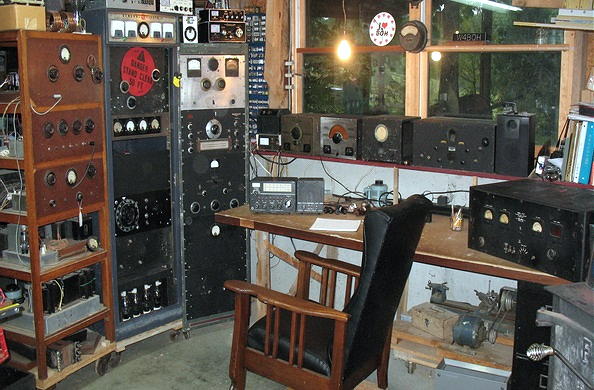 | ||||||||||||||||||||||||
| Lots of combos ready at W4BOH |
 |
| K6ZI, Las Vegas - WWII ARC-5s ready to go |
This year's event includes a new real-time chat page where participants can announce their operating frequencies or make skeds. For complete details, check out the rules here.
If you've never entered the Classic Exchange, why not give it a try this year as it truly is a case of 'the more the merrier' ... and eastern operators, make sure to keep the porch light on for us out west!
Hunting For NDBs In CLE260
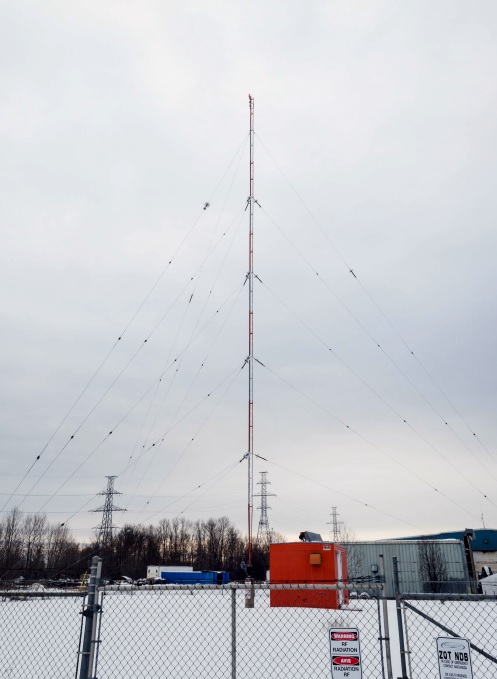 |
| ZQT-263 Thunder Bay, ON (ve3gop) |
It's CLE time again!
'CLE's are 'Co-ordinated Listening Events, and NDB DXers around the world focus their listening time on one small slice of the NDB spectrum.
This time the hunting ground is the slice from 260.0 - 269.9 kHz and 440 - 1740kHz.
Propagation on MF has been excellent this past week and hopefully will continue to be good.
A worthy target for listeners in North America is ZQT - 263kHz in Thunder Bay, southern Ontario, on the western shores of Lake Superior. ZQT has been logged from coast-to-coast but it's a challenging target. Listen for ZQT's upper sideband on 263.392kHz with your receiver in the CW mode.
When tuning for NDBs, put your receiver in the CW mode and listen for the NDB's CW identifier, repeated every few seconds. Listen for U.S. NDB identifiers approximately 1 kHz higher or lower than the published transmitted frequency since these beacons are modulated with a 1020 Hz tone approximately.
For example, 'AA' near Fargo, ND, transmits on 365 kHz and its upper sideband CW identifier is tuned at 366.025 kHz while its lower sideband CW ident can be tuned at 363.946 kHz. Its USB tone is actually 1025 Hz while its LSB tone is 1054 Hz.
Often, one sideband will be much stronger than the other so if you don't hear the first one, try listening on the other sideband.
Canadian NDBs normally have an USB tone only, usually very close to 400 Hz. They also have a long dash (keydown) following the CW identifier.
All NDBs heard in North America will be listed in the RNA database (updated daily) while those heard in Europe may be found in the REU database. Beacons heard outside of these regions will be found in the RWW database. These databases have recently been re-vamped and are slicker than ever before!
From CLE coordinator Brian Keyte (G3SIA), comes the following CLE info:
Hello all,
These are the final details for this weekend's Coordinated Listening Event which uses some challenging frequencies.
Any first-time CLE logs will also be very welcome, however modest.
Days: Friday 25 Sept. - Monday 28 Sept.
Times: Start and end at midday, your local time
Target: Normal NDBs (not NAVTEX or amateur beacons)
QRG: 260.0 - 269.9 kHz
plus: 440.0 - 1740.0 kHz
Please log the NDBs you can identify that are listed in those ranges plus any UNIDs that you come across there.
North America has a modest number of active NDBs in both ranges.
For Europe listeners there are LOTS of targets in the hf range, but they are mostly well to the east, many of them also competing with strong Broadcasting Stations.
Australia has a few NDBs in both ranges.
You can find details of the beacons in these ranges, lists and maps, if you go to http://www.ndblist.info/cle.htm and click on the 'CLE SEEKLIST' link.
If you are disappointed by having very few likely targets, you could maybe listen instead via a remote receiver located nearer to the action?
See kiwisdr.com (previously available via sdr.hu) and please also see the important footnote below.
Send your final CLE log to the List, preferably as a plain text email, not in an attachment, with CLE260 and FINAL at the start of its title.
Please show on EVERY LINE of your log:# The full Date (or Day no.) e.g. ‘2020-09-25’ (or just ‘25’) and UTC (the day changes at 00:00 UTC)
# kHz (the beacon's nominal published frequency if you know it)
# The Call Ident.
Other optional details - Location, Distance, etc. - go LATER in the same line (or in footnotes) Any extra details about new UNIDs, especially strong ones that may be near to you (maybe their approximate direction, etc.) will help us to discover more about them.
Please make your log useful to old and new members alike by ALWAYS including your own location and brief details of the equipment and aerial(s) that you were using.
We will send an 'Any More Logs?' email at about 19:00 UTC on Tuesday evening so you can check that your log has been found OK.
To be included in the combined results your log must arrive at the very latest by 08:00 UTC on Wednesday 30 Sept.
We hope to complete making the Combined Results within a day or two.
Good listening
Brian and Joachim
---------------------------------------------------------------------
From: Brian Keyte G3SIA ndbcle'at'gmail.com
Location: Surrey, SE England (CLE coordinator)
---------------------------------------------------------------------
If you are interested in some remote listening - maybe due to local difficulties - you could use any one remote receiver for your loggings,stating its location and with the owner’s permission if required.
A remote listener may NOT also use another receiver, local or remote, to make further loggings for the same CLE.
These listening events serve several purposes. They
• determine, worldwide, which beacons are out-of-service or have gone silent since the last CLE covering this range
• will indicate the state of propagation conditions at the various participant locations
• will give you an indication of how well your LF/MF receiving system is working
• give participants a fun yet challenging activity to keep their listening skills honed
Final details can be found at the NDB List website, and worldwide results, for every participant, will be posted there a few days after the event.
The NDB List Group is a great place to learn more about the 'Art of NDB DXing' or to meet other DXers in your region. There is a lot of good information available there and new members are always very welcome. As well, you can follow the results of other CLE participants from night to night as propagation is always an active topic of discussion.
You need not be an NDB List member to participate in the CLEs and all reports, no matter how small, are of much value to the organizers.
Remember - 'First-time' logs are always VERY welcome!
Reports may be sent to the NDB List Group or e-mailed to CLE co-ordinator, Brian Keyte (G3SIA), whose address appears above. If you are a member of the group, all final results will also be e-mailed and posted there.
Please ... give the CLE a try ... then let us know what NDB's can be heard from your location! Your report can then be added to the worldwide database to help keep it up-to-date.
Have fun and good hunting!
Just One More dB!

*** The following blog was originally published in 2016 but is still very applicable in 2020! ***
How often have you struggled to pull a weak signal out of the noise? "Just give me one more db", you tell yourself.
A recent posting to the Topband reflector by Frank, W3LPL, sent me to the interesting webpage of Dave, AB7E. Dave had been pondering two antenna systems, one of which would provide a 2db improvement in forward gain but at a much higher cost ... he wondered if the extra expense would be worthwhile and could he even hear the difference that 2db would make? He created a series of CW files, incrementing the signal level in 1db steps to see for himself!
Now I've always been told that you need to increase signal strength by at least 3db before your ears can detect any difference ... but listen carefully and you may be in for a surprise, as AB7E discovered.
It's probably best to listen to this signal with headphones but, even on my I-Pad's tiny speaker, the demonstration is clear. The first recording starts at "zero db", which is sent twice while the next signal is "one db", sent twice. See if you can hear the difference between each 1 db increment as he steps up to "six db":

Lastly, AB7E demonstrates the problem with sending too fast when conditions are very marginal. Here, several signals are sent at 20, 25, 30 and 35 WPM. Sending calls at high speed can often seem effective, even under poor conditions but this seems to demonstrate that slowing down just a bit would make it somewhat easier:
One of the more interesting comments posted regarding these recordings was from Bob, N6RW who cited his work in satellite communications:
"I spent part of my engineering career designing satellite command FSK
demodulators - including the deep space Pioneer Venus orbiter. To test
the performance of them, we would mix the test signal with white noise.
When you look at the FSK Bit-Error-Rate (BER) curve (bit errors versus
signal to noise ratio in a bandwidth equal to the bit rate), you can see
the BER improves by a factor of 10 to 1 for every dB in S/N ratio. In
other words, for every dB improvement, you get one tenth the errors."
Now Dave never did tell us if he bought the bigger antenna or not but I'm betting that he did ... it looks like "just one more db" may really be just enough after all.
Hunting For NDBs in CLE259
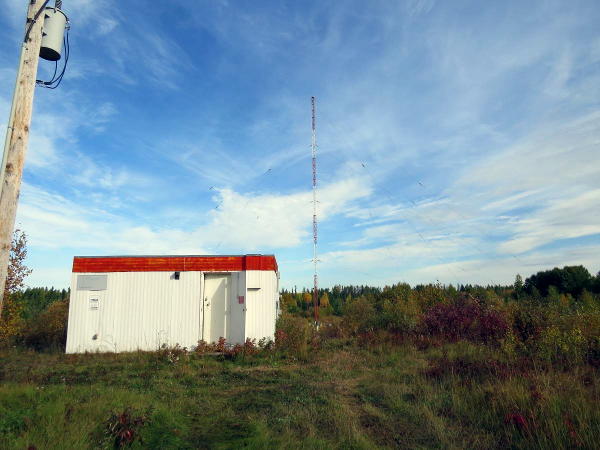 |
| YPM-274 Pikangikum, ON (ve3gop) |
It's CLE time again!
'CLE's are 'Co-ordinated Listening Events, and NDB DXers around the world focus their listening time on one small slice of the NDB spectrum.
This time the hunting ground is the 50kHz slice from 270.0 - 319.9 kHz. kHz
A worthy target for listeners in North America is YPM (274Hz) in Pikangikum, in western Ontario. YPM has been logged from coast-to-coast and out to Hawaii. Listen for YPM's upper sideband on 274.361kHz with your receiver in the CW mode.
When tuning for NDBs, put your receiver in the CW mode and listen for the NDB's CW identifier, repeated every few seconds. Listen for U.S. NDB identifiers approximately 1 kHz higher or lower than the published transmitted frequency since these beacons are modulated with a 1020 Hz tone approximately.
For example, 'AA' near Fargo, ND, transmits on 365 kHz and its upper sideband CW identifier is tuned at 366.025 kHz while its lower sideband CW ident can be tuned at 363.946 kHz. Its USB tone is actually 1025 Hz while its LSB tone is 1054 Hz.
Often, one sideband will be much stronger than the other so if you don't hear the first one, try listening on the other sideband.
Canadian NDBs normally have an USB tone only, usually very close to 400 Hz. They also have a long dash (keydown) following the CW identifier.
All NDBs heard in North America will be listed in the RNA database (updated daily) while those heard in Europe may be found in the REU database. Beacons heard outside of these regions will be found in the RWW database. These databases have recently been re-vamped and are slicker than ever before!
From CLE coordinator Brian Keyte (G3SIA), comes the following CLE info:
Hello all
Here are brief details for our 259th co-ordinated listening event next weekend.
It spans a 50 kHz frequency range - about three times wider than usual.
In that range, the Rxx database is showing about 200 active NDBs located in
Europe, 135 in North America, 35 in Oceania and about 250 more, scattered
in other parts of the World.
Days: Friday 28 August – Monday 31 August
Times: Start and end at midday, your LOCAL time
Range: 270.0 - 319.9 kHz (NDB signals only)
Part of the frequency range also has DGPS signals among the NDBs.
We last listened on these frequencies in CLE243 in April 2019.
Any first-time CLE logs will be very welcome, as always.
Please look out for our Final Details on the NDB List website, with full advice on log making, etc.,
in a few days.
Brian and Joachim
-----------------------------------------------------------------
From: Brian Keyte G3SIA ndbcle'at'gmail.com
Location: Surrey, SE England (CLE coordinator)
-----------------------------------------------------------------
These listening events serve several purposes. They:
• determine, worldwide, which beacons are actually in service and on-the-air so the newly-re-vamped Rxx online database can be kept up-to-date
• determine, worldwide, which beacons are out-of-service or have gone silent since the last CLE covering this range
• will indicate the state of propagation conditions at the various participant locations
• will give you an indication of how well your LF/MF receiving system is working
• give participants a fun yet challenging activity to keep their listening skills honed
Final details can be found at the NDB List website, and worldwide results, for every participant, will be posted there a few days after the event.
The NDB List Group is a great place to learn more about the 'Art of NDB DXing' or to meet other DXers in your region. There is a lot of good information available there and new members are always very welcome. As well, you can follow the results of other CLE participants from night to night as propagation is always an active topic of discussion.
You need not be an NDB List member to participate in the CLEs and all reports, no matter how small, are of much value to the organizers.
Remember - 'First-time' logs are always VERY welcome!
Reports may be sent to the NDB List Group or e-mailed to CLE co-ordinator, Brian Keyte (G3SIA), whose address appears above. If you are a member of the group, all final results will also be e-mailed and posted there.
Please ... give the CLE a try ... then let us know what NDB's can be heard from your location! Your report can then be added to the worldwide database to help keep it up-to-date.
Have fun and good hunting!













