Author Archive
 Hacking a USB GPS
 August 26th, 2010 |
  Author:
 As regular readers will know, I’ve been playing about with APRS quite a lot in recent weeks and I’m starting to get the urge to build something APRS related. I’m planning to order one of the inexpensive FoxTrak kits, which lets you use a standard VHF FM radio to transmit position reports. To do that you also need a serial GPS and on searching eBay I became aware that serial GPSes seem to be rather more expensive than USB or even Bluetooth devices. This led me to wonder whether it would be possible to hack a USB GPS to use with a tracker like the FoxTrak. My investigations led me to this article by Primiano Tucci on GPS Hacking.
This post is basically an un-loseable bookmark to myself, since it will probably be a few weeks before I get around to working on this and by then I’ll have lost the article and never be able to find it again. But it might be of interest to someone else or provoke some interesting comments.
Although I’ll probably build the the FoxTrak as-is and test it with one of my 2m rigs I’m really interested in trying HF APRS on the move without having to buy an expensive TNC or lug a laptop around me so I can use AGWPE to generate the 300baud audio. So I’d also be interested to know whether anyone has modified the FoxTrak (or the TinyTrak which I believe is very similar) for the 300baud tones? I know the OpenTracker+ from Argent Data does 300baud “out of the box” but it’s quite a bit more expensive, enough more expensive to attract the punitive import fees that will almost double the price.

Cut the quotes, please
Why do some people find it necessary to put some irrelevant quote after their signature in forum and mailing list postings? When you see posts from these people several times a day it becomes incredibly irritating.
One person whose posts I seem to encounter frequently has two quotes after his signature: “Whoever said nothing is impossible never tried slamming a revolving door!” and “A government big enough to give you everything you want, is strong enough to take everything you have.”
I can’t say I ever found the first one very funny but it has got very old after the 100th viewing. And I didn’t join a ham radio mailing list to learn about people’s political opinions, whether or not I agree with them. So please, just stop doing it.

A new use for old technology
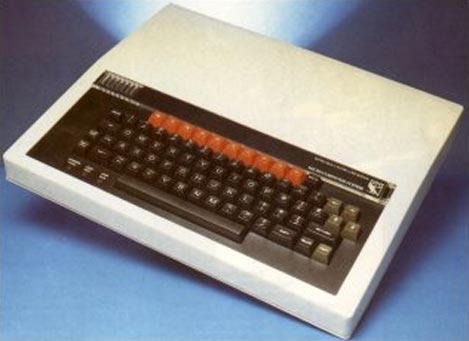
The National Museum of Computing at Bletchley Park has found a use for 30-year-old BBC Micros – teaching students how to write programs. One ICT teacher said: “The computing A-level is about how computers work, but if you ask anyone how it works they will not be able to tell you. Modern computers go too fast. You can see the instructions happening for real with these machines. They need to have that understanding for the A-level.”
I often think back wistfully to the days of programming early microcomputers where each instruction or subroutine you wrote had a direct effect on the hardware. Even the way things appeared on the screen were a direct result of my own coding. Today, Windows manages all input and output and actually prevents the programmer from directly accessing the hardware. In modern programming you never see a machine instruction. It’s all done using high-level language commands to set the properties of “objects” – software “black boxes” that simplify and speed up complex programming tasks but hide the mechanics of their operation. You couldn’t write modern software the old way, but I still miss the simplicity of early computing.
I have pretty similar reasons for being concerned at what developments like SDR and D-Star will do to the ham radio hobby. The technology is so complex that the average amateur will have no understanding of how they work, only how to use them. I miss the days when you could open a schematic and follow the path of a signal from one end to the other.
Of course, you can still buy kits to build simple radios. I hope that there will always be a place in our hobby for simple, analogue radios that the average amateur can understand, and I don’t mean just in a museum.

A DAB of interference
I think it is important when operating a ham radio station from home to ensure that none of your own domestic equipment suffers from interference. It’s a sign that everything is OK, and if a neighbour should complain then it helps to prove the point that it is not your fault if you can demonstrate that your own TV, phone, stereo etc. are not affected by your transmissions. I’ve been surprised at the amount of power I’ve been able to run using antennas in the attic without experiencing any problems.
Last night I decided to use the digital DAB band of my radio tuner to listen to the Promenade Concert on BBC Radio 3 because Olga complained of hearing some high pitched noise (inaudible to me) on the analogue FM band, when played through a stereo amplifier and a pair of large 40 year old IMF monitor speakers. For a few minutes it was fine, then there were a couple of interruptions to the broadcast which I guessed were caused by the transmission of my APRS beacons. I think that the DAB transmissions are quite close in frequency to 2m so I shut down the 2m APRS gateway and we enjoyed the rest of the concert without interruptions. I imagine that the neighbours, if they listen to radio at all, will use analogue FM just as we normally do, but it is a bit of a concern that just 10W of 2m FM can cause interference to anything.
The only other known problem caused by my radio transmissions is a neighbour’s security lights. I imagine this is a common problem. I installed an identical looking PIR controlled security light at the front of the house a few years ago after a couple of drunk youths wandered up our cul de sac one night and decided to uproot some of the plants in a neighbour’s garden. I found that I could turn the lights on with as little as 5W on 20m. The solution was to leave our lamp turned off and hope that the neighbour thought it was the wind blowing the bushes around that was triggering his ones. Fortunately it is often windy here and I didn’t used to go on the air in the evening all that often.
But my APRS gateway runs from morning to night and runs 50W output on 30m so the problem will become more evident as the nights draw in unless I adopt the simplest solution which is to shut it down (or switch to receive only) at nightfall. Breaking cover by admitting to a neighbour that I have been causing this to happen risks opening a can of worms that could put me off the air entirely, and remedying the problem would be expensive as his lights are part of a professional security installation that I would not be allowed to tamper with even if I wanted to.


Time to call it a day
QRZ.com has just come back online after another lengthy server outage. Scanning the forums I came across this lengthy personal attack on me by 2W0UZO over postings I made about the ROS digital mode several months ago in this blog.
I thought about how to respond but I decided I could not be bothered to dignify his diatribe with a reply. However it has given me cause to reflect on why I bother writing this blog when it seems that no matter how hard I try to explain the reasons why I hold a particular opinion the usual response from the other side is that I am “against innovation”, “against new licensees” or whatever stereotypical old-fart criticism they wish to label me with.
Jeff KE9V has decided to pack in ham radio blogging. I think I’ll follow his example. Just think how much more time I’ll have to actually do things with the radio.

The Windows Genuine Disadvantage
If you visited a shop whose owner appeared to suspect you of being a thief and sometimes insisted on searching your bags before you left, you would probably take your custom elsewhere. And that’s pretty much how I feel about Microsoft. Several times in the last few years since the company developed its obsession with software piracy I have been subjected to heart-stopping moments when, instead of working normally when started up in the morning, one of my computers decided that my copy of Windows wasn’t genuine and I had to waste time jumping through hoops to prove that it was.
The latest occurrence was this morning when I switched on the shack computer – an HP mini-tower – in order to start my APRS gateway, Microsoft Security Essentials popped up a message saying “You may be a victim of software counterfeiting” and stating that it would stop working in 30 days unless I did something about it. It offered a link to check the system. This opened in Firefox where I was requested to download a plug-in. After that I was asked to click a Continue button which was supposed to run the validation check. Nothing appeared to happen. Eventually I tried the second option provided for browsers on which the first one wouldn’t work, which downloaded an .hta file to my desktop. With no other instruction as to what to do next, I clicked on it – all the time wondering if this wasn’t some clever software hoax to trick me into installing malware on my system. Fortunately it wasn’t. I was informed that, hoorah, hoorah, my copy of Windows supplied by HP was indeed genuine after all. Thank you, Microsoft, that’s ten minutes of my life you just wasted. But by the by, if you must be so anal about pirate copies why do you have to make the checks so intrusive and complicated?
The previous time something like that happened was the trigger for me to dump Windows and install Linux on my shack computer. However, as I have written previously, I found Linux forced me to make too many sacrifices which is why in the end I went back to Windows. Linux the OS is fine, it’s the lack of high quality applications (particularly in the ham radio sphere) and the decision by many hardware manufacturers not to provide Linux drivers that makes it frustrating. Having said that, most of the programs I regularly use are either available in Linux versions (like Fldigi) or will run on it under wine (like APRSIS32.) But the truth is, the older I get the more I feel that life is too short for faffing around with computers.














